A homeowner calls on Tuesday because the water has turned cloudy and guests are coming Saturday. They ask for “weekly pool service,” but that phrase can mean chemical treatment only, full cleaning, equipment checks, or a rescue visit followed by regular care. If the office books a standard route stop without sorting that out, the technician inherits the misunderstanding at the gate.
The right response is to qualify the pool before offering a plan. Confirm that the address fits the route, learn the pool and equipment setup, document its present condition, explain exactly what the recurring visit includes, and schedule an initial assessment when the pool is not ready for routine service. The signup call should produce a serviceable account, not a name on next Thursday’s list.
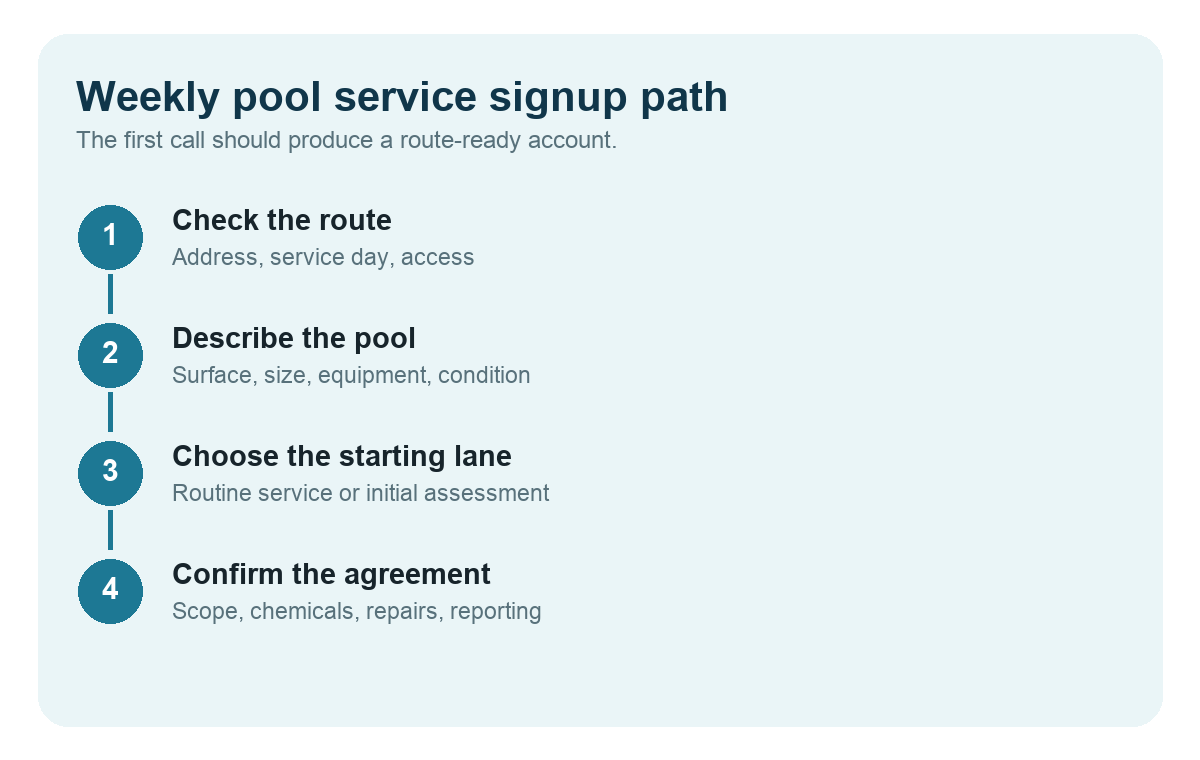
Start with the service address
Ask for the address early. Weekly pool work depends on route density, and a customer outside the normal service area can turn an ordinary stop into a bad fit for years. The office should know which neighborhoods belong to each service day, where the boundary sits, and who may approve an exception.
Do not promise a weekday or arrival time before checking the route. A cleaner may visit a neighborhood every Wednesday, but weather, equipment trouble, and earlier stops can shift the hour. Give the scheduling commitment your company can actually keep. If service is performed within a day or time window, say that plainly.
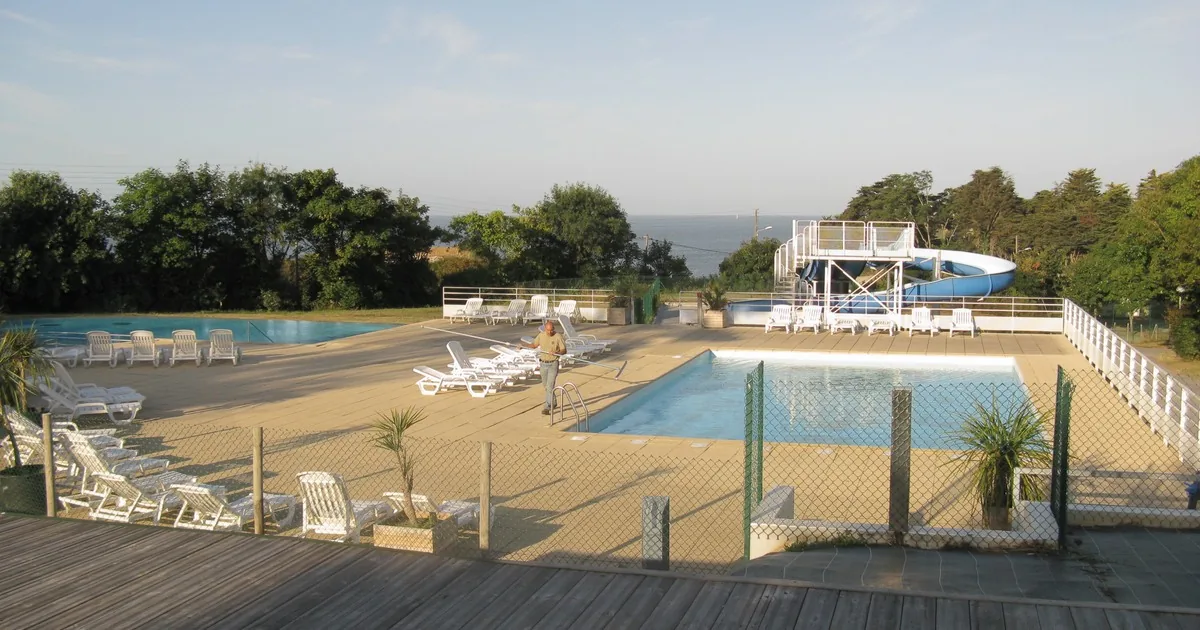
Address intake needs more than a ZIP code. Record the full service address, community or gate name, parking constraints, and any rules that affect contractor access. A downtown pool behind a staffed desk creates a different stop than a backyard pool with a side gate.
Define what “weekly service” means at your company
Pool companies use similar plan names for different work. One plan may cover water testing and chemical adjustment. Another adds skimming, brushing, vacuuming as needed, basket cleaning, and an equipment check. Filter cleaning, salt-cell service, repairs, storm cleanup, and specialty chemicals may sit outside the base rate.
Give the caller a concrete scope. A useful explanation sounds like this:
“Our weekly visit includes skimming, brushing, vacuuming, basket cleaning, water testing, and balancing standard chemicals. Specialty treatments, filter breakdowns, repairs, and storm cleanup are quoted separately. We document each visit and send a digital service report with readings and notes.”
The scope details matter. A real company should publish its own included tasks, chemical policy, exceptions, and report format rather than borrow a competitor’s package. Industry descriptions of weekly service commonly include surface cleaning, brushing, basket care, water testing, and equipment observation, but there is no universal package. The Pool & Hot Tub Alliance’s residential pool standard connects water clarity with filtration and chemical operating conditions. Your contract still has to state who handles each task.
Set one boundary with unusual care: a weekly visit does not replace all water monitoring between visits. The CDC’s guidance for home pools and hot tubs recommends testing disinfectant concentration and pH at least twice per day, with more frequent testing during heavy use. A company selling one visit per week should tell the customer what the service does and what the owner must monitor until the next stop. Avoid the broad promise that the pool will always be safe or perfectly balanced.
Gather the pool and equipment details
The person answering the phone does not need to diagnose the system. They do need enough information to place the account in the right service tier and prepare the first visit.
Capture:
- Pool type, approximate dimensions, surface, and whether there is an attached spa, water feature, or overflow basin
- Sanitizing system, including chlorine, salt, mineral, or another setup the company supports
- Pump, filter, heater, cleaner, and automation brands when the caller knows them
- Current water condition, visible algae, staining, debris load, and the last known service date
- Known leaks, noisy equipment, low flow, error messages, or components that are already out of service
- Screen enclosure, tree cover, nearby construction, frequent rental use, or other conditions that change debris and demand
- Gate instructions, pets, locked equipment areas, and whether a responsible adult must be present
Ask for photos of the pool, equipment pad, filter label, and any visible trouble. Photos help the service manager review the setup without asking a homeowner to open a filter, handle chemicals, or inspect energized equipment.
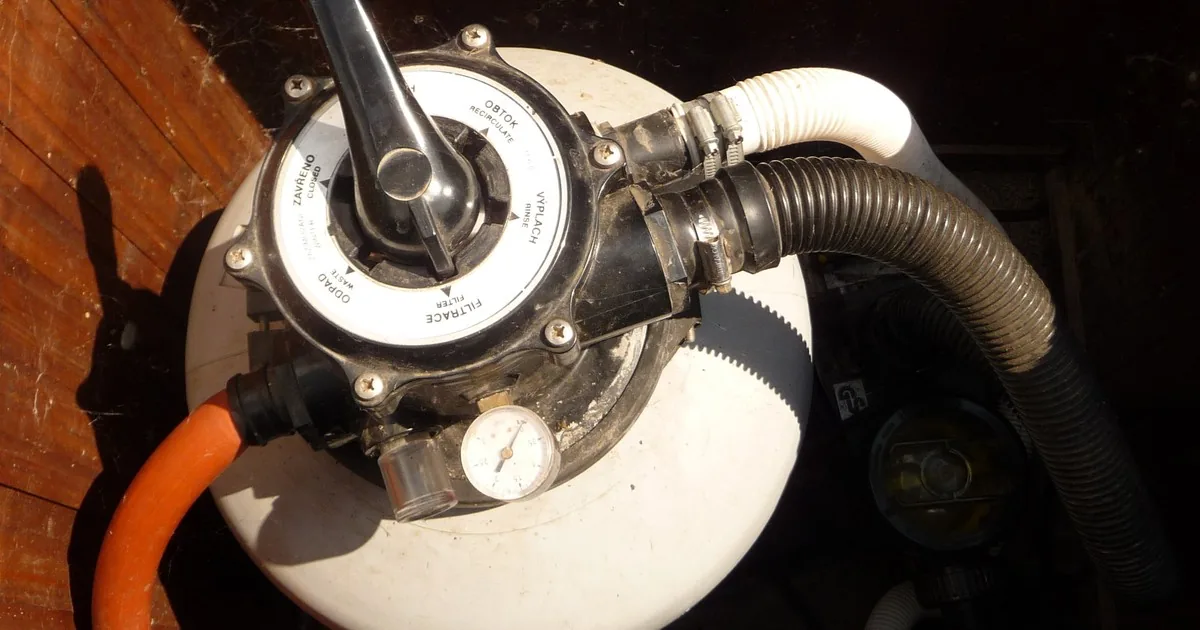
Equipment questions also protect the caller from casual technical advice. Filter systems can remain pressurized after the pump stops. Pentair’s filter safety guidance instructs users to shut off the pump and relieve pressure before service. Intake staff should record “filter leaking at clamp” or “pressure gauge reads high,” then escalate under company policy. They should not coach a caller through opening the tank.
Separate routine maintenance from recovery work
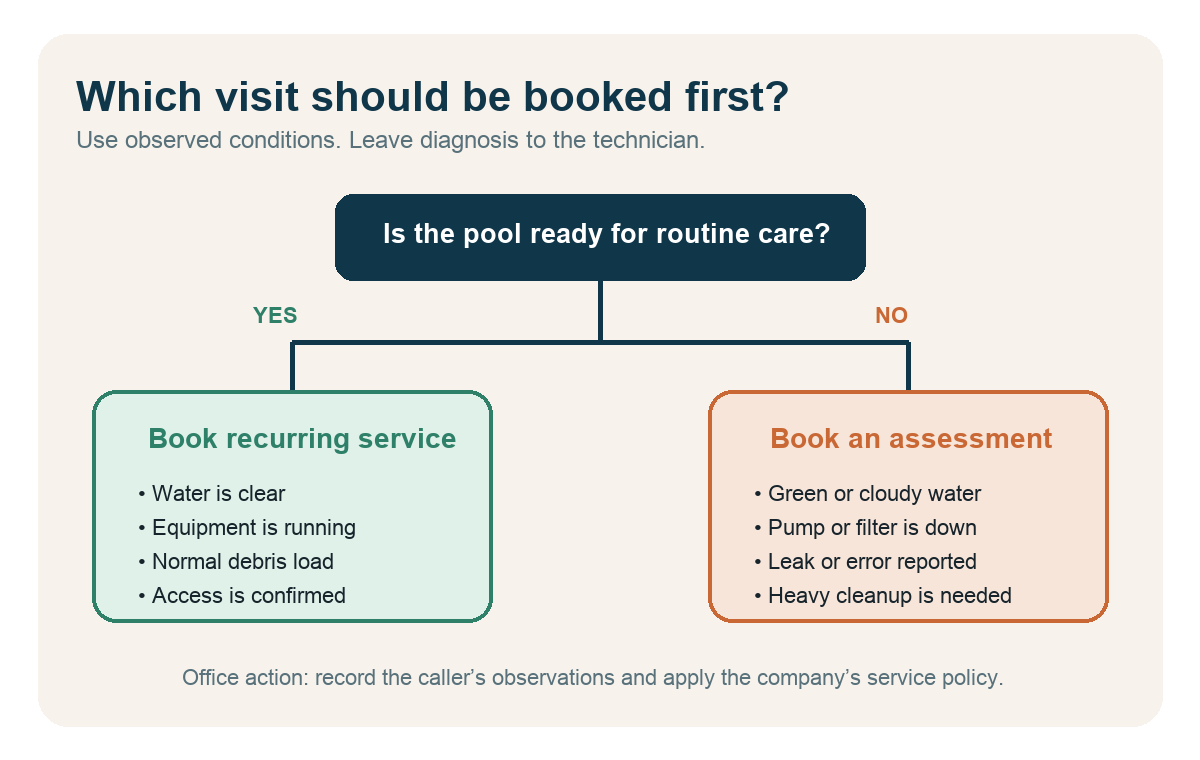
A green pool, non-running pump, major leak, or heavy post-storm debris load is not ready to drop into a normal weekly slot. Book an assessment or recovery visit first. The technician can inspect the water and equipment, define the work needed to reach the company’s service baseline, and then set the recurring start date.
This distinction needs to happen on the first call. Otherwise, the new customer expects the standard weekly price to include hours of cleanup and repeated treatment. The route technician arrives expecting a maintenance stop. Nobody wins that argument beside a green pool.
Use neutral wording:
“Based on the current water condition, we start with an assessment before regular service. The technician will document what the pool needs, explain any recovery work, and confirm when weekly maintenance can begin.”
Do not promise that cloudy or green water will clear by a particular day. Weather, circulation, the condition of the filter, water chemistry, and the source of contamination all affect the work. An upcoming party is useful scheduling context, but it does not change the technical facts.
Explain chemicals, repairs, and authorization
Three policies cause most signup friction: chemical billing, repair approval, and work outside the normal visit. Put each one in the call script and the written agreement.
If standard chemicals are included, define what “standard” covers. If chemicals are billed separately, explain how charges appear. State how the company handles specialty treatments, unusual demand, or a pool that needs corrective work after neglected owner responsibilities. Never improvise a price when the water and system have not been assessed.
Repairs need an authorization rule. Decide whether technicians may complete small repairs up to a customer-approved limit, whether every repair requires consent, and how urgent leaks or failed circulation are reported. Record the customer’s chosen threshold in the account. A vague note such as “call if needed” leaves a technician waiting by the equipment pad.
Chemical handling also deserves a firm boundary. The CDC’s pool chemical safety guidance recommends worker training, preventive maintenance, and safe storage practices. Receptionists should never advise callers to mix products, guess at a dose, or combine a homeowner’s treatment with a technician’s plan. Capture the product name and the time it was added, then give that information to the service professional.
Make access part of the agreement
A recurring account fails quickly when the cleaner cannot enter the yard. Ask how the gate opens, where the key or code is kept, whether the code changes, and what should happen if access is blocked. Record dogs, automatic gates, alarms, steep approaches, and equipment tucked behind a locked door.
The customer should also know the missed-access policy before the first route day. Will the visit be charged? Will the technician perform any work available from outside the yard? Does the account move to another day, or wait until the next scheduled stop? Use the company’s written terms.
Access notes should be visible on every work order, not buried in the original call recording. “Dog in side yard; owner confirms dog will be indoors before service” is actionable. “Has pet” is not.
Confirm the first visit in writing
End the call by reading back the service address, plan scope, recurring day or window, initial assessment requirement, billing method, chemical policy, repair authorization, and access instructions. Then send the same information in the service agreement or booking confirmation.
Include the pool and equipment details the caller provided. Ask them to correct mistakes before the visit. If the company sends visit reports, explain what the report contains and where it will arrive. A sample report may show completed tasks, test results, technician notes, photos, or a repair recommendation, depending on the actual system.
The EPA WaterSense pool guide identifies evaporation, cleaning, leaks, and splashing as sources of pool water use, and it provides maintenance guidance for owners and professionals. That makes water-level changes and suspected leaks worth capturing during intake. It does not make every weekly cleaner a leak-detection contractor. Record the observation and route it according to the services your company performs.
An AI receptionist can ask these questions after hours and save the answers in a structured record. The company still owns the service map, safety boundaries, plan language, and escalation rules.
Before the next signup call, open one of your current agreements and compare it with the phone script. If the caller hears “full service” while the contract lists a narrower set of tasks, fix the script first. The cleanest weekly route begins with two documents that say the same thing.