A homeowner calls in April and asks, “How much to open the pool?” The short request can hide four different jobs: remove and store the winter cover, return winterized equipment to service, clean a debris-filled basin, and investigate anything that failed during the off-season.
Start with photos before quoting a standard opening. Ask for one wide image of the entire pool, one of the cover and anything sitting on it, and one of the equipment pad with every pump, filter, heater, valve, and controller visible. Then define the requested endpoint. Does the customer want the cover removed and circulation started, or do they expect clear, balanced, swim-ready water?
That distinction protects the schedule. It also gives the technician a work order built around the property in front of them.
Separate the opening into visible work areas
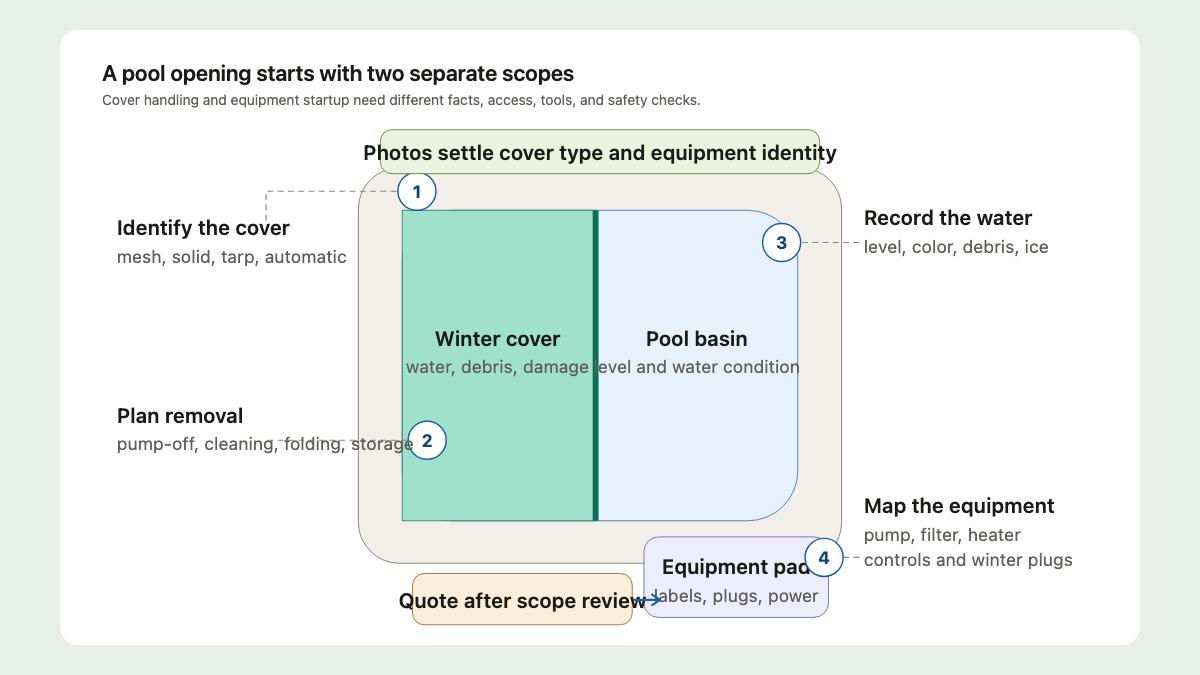
A useful intake treats the pool as a small jobsite. The cover, basin, deck, and equipment pad each answer a different dispatch question.
The cover determines how removal is planned. A mesh safety cover held by springs is handled differently from a water-bag tarp, solid safety cover, solar blanket, or automatic cover. The basin shows the water level, color, leaves, sediment, ice, and visible damage. The deck reveals anchors, storage space, gates, stairs, and the route for moving wet material. The equipment pad identifies what must be returned to service.
Pentair’s pool-opening guidance describes opening as a sequence that includes cover removal, equipment inspection, circulation startup, cleaning, and water treatment. Those stages belong in the appointment scope. They should not be compressed into one vague line called “open pool.”
Identify the cover before assigning labor
Ask the caller what holds the cover in place. Springs attached to deck anchors suggest a safety cover. Water bags or cable hardware point to other systems. Tracks, a recessed housing, and a keyed control may indicate an automatic cover. Request a photo when the description is uncertain.
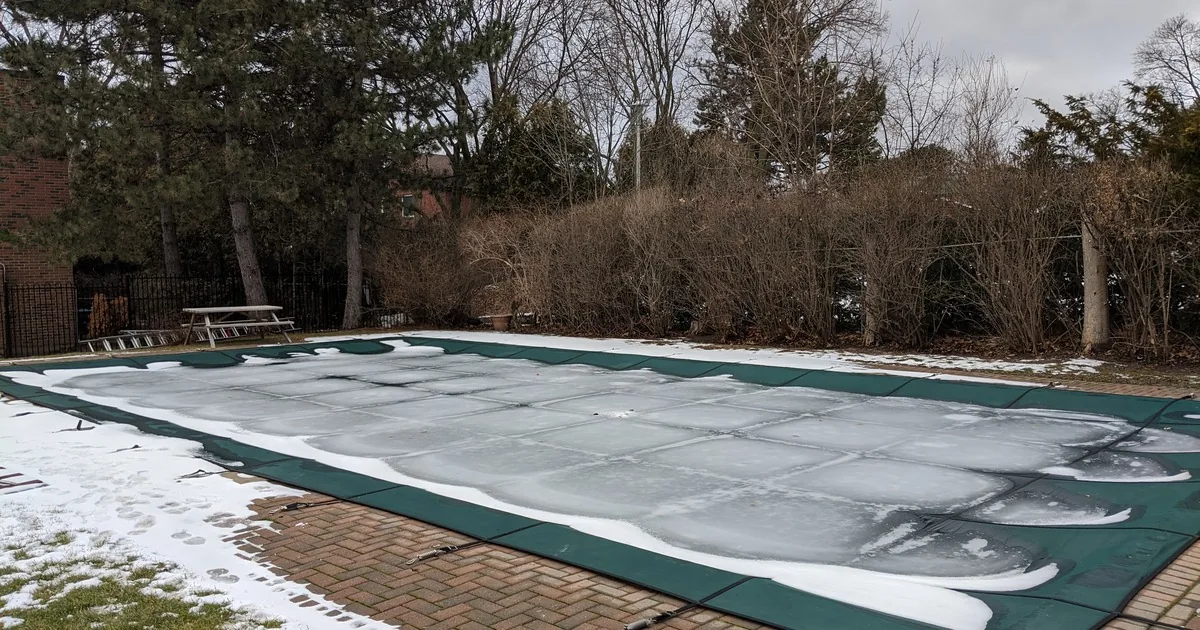
Then ask what is on top. Record standing water, leaves, branches, snow, ice, a cover pump, loose straps, torn fabric, displaced anchors, or a sagging section. Do not tell the caller to walk onto the cover or operate unfamiliar equipment during the call.
Cover condition changes the first hour of the visit. LOOP-LOC’s removal and storage guidance calls for debris removal, careful release of the restraints, cleaning, drying, folding, and protected storage. Ask where the cleaned cover goes. “In the shed” is useful only after the office knows whether the shed is unlocked, dry, and reachable without dragging the cover across gravel.
Automatic covers need their own lane. The Automatic Pool Covers owner guide instructs owners to remove water, debris, the cover pump, and obstructions before operation. A cover that will not move, runs crooked, or stops under load should be recorded as a cover-service problem. Do not promise that the seasonal opening crew can repair the mechanism unless that work is part of the company’s service offering.
If the caller is shopping for a new cover or replacement fabric, route that request to the separate pool safety cover quote intake. A seasonal opening ticket should stay focused on the installed cover and current property condition.
Capture the pool condition under the cover
Ask whether the caller has looked beneath the cover safely from the deck. Record the water level relative to the skimmer opening. Ask whether the water appears clear, cloudy, green, dark, or full of leaves. Note visible staining, floating debris, a detached liner edge, cracked tile, or another condition the caller can photograph without entering the pool.
The office should keep observations separate from diagnoses. “Water is six inches below the skimmer and dark green” is a useful note. “The pool leaked all winter and needs an algae treatment” goes beyond what the phone call established.
A green or debris-heavy pool may need more than an opening visit. It can require repeated cleaning, water testing, circulation time, filter attention, and a return visit. Use the green-pool recovery intake when the caller expects a recovery plan. Explain the company’s real scope: the crew may start the process during the opening, but the first visit does not automatically make every neglected pool ready for swimming.
Timing matters too. Ask whether there is a party, rental turnover, inspection, or holiday behind the requested date. Record the event and date as a request. Water condition, equipment condition, weather, and crew availability still control what can be completed.
Map everything that was winterized
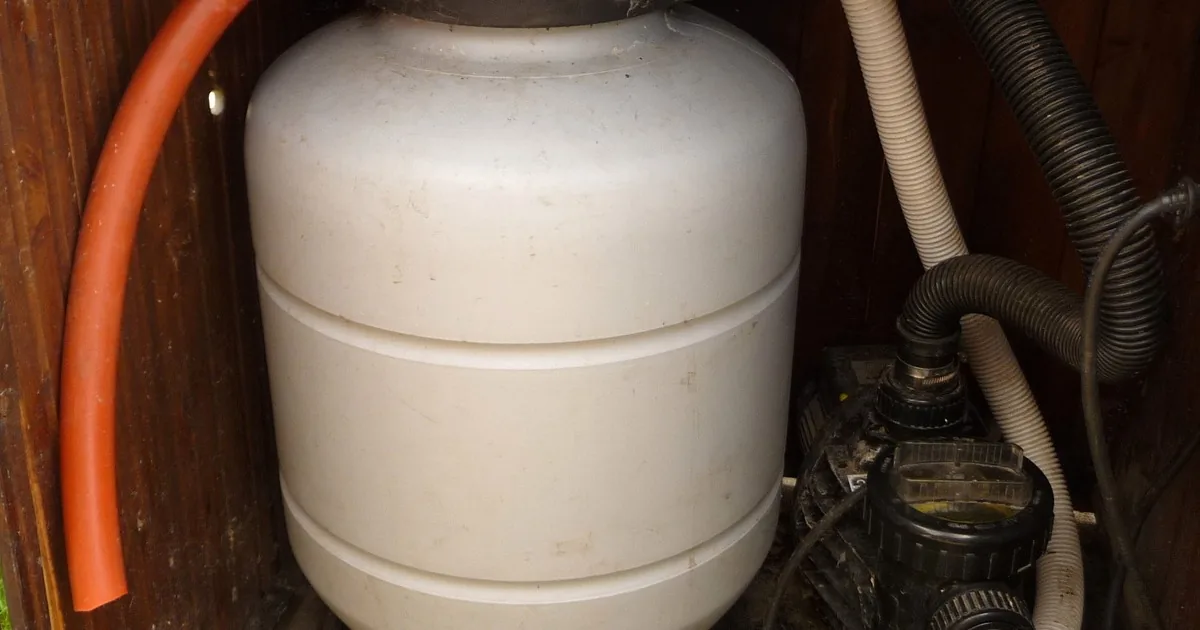
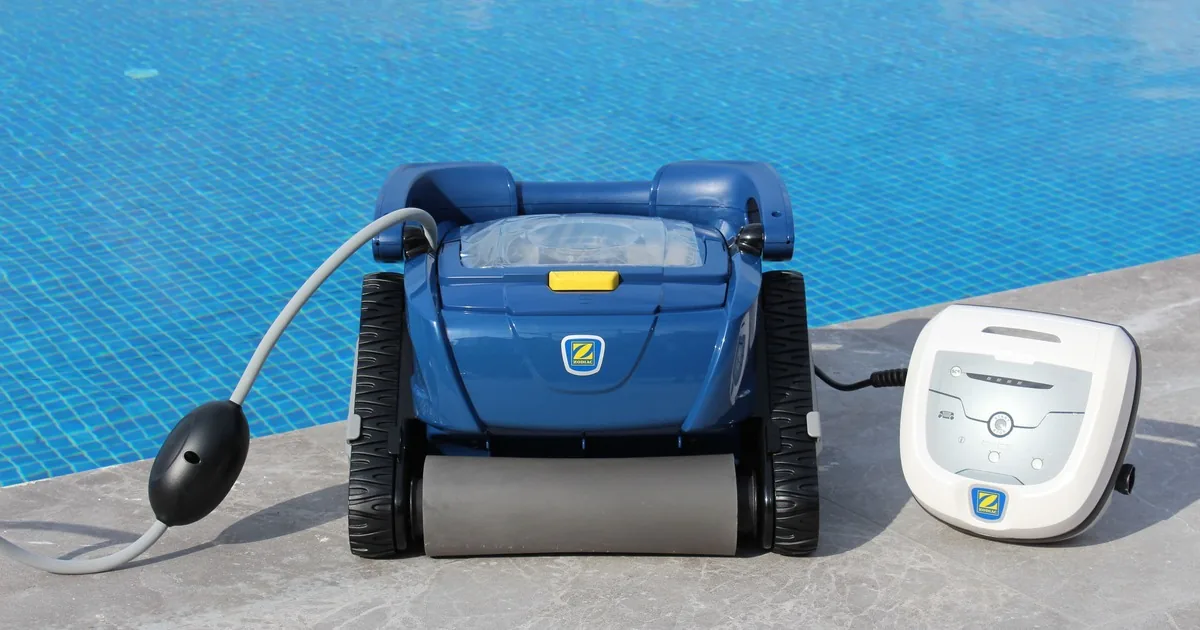
A wide equipment-pad photo saves several rounds of guessing. Ask for readable close-ups of model labels after the wide image arrives. Capture the pump, filter type, heater or heat pump, sanitizer, automation panel, valves, pressure gauge, attached spa equipment, water features, cleaner, and any separate booster pump.
Find out who closed the pool and whether that company left a winterization sheet. Ask where drain plugs, pressure gauges, skimmer fittings, return fittings, baskets, ladders, handrails, and other removed parts were stored. A bag labeled “pool plugs” in the garage should be on the ticket, along with who will provide access.
The office also needs the recent history. Ask whether anyone worked on the equipment since closing, whether utilities were shut off, and whether the property had a freeze, flood, outage, construction project, or landscaping work near the pad. Record visible cracks, disconnected wires, damaged conduit, leaking fittings, rodent damage, or a controller with no display.
Reception should not coach the caller through pump priming, valve changes, breaker work, heater startup, or pressure-vessel service. Installed manuals and the technician’s procedure govern startup. If the complaint already includes a leaking filter, silent pump, damaged tank, or electrical symptom, add the pump and filter repair intake so the visit carries the right diagnostic scope.
Define what the quoted opening includes
Customers use “open the pool” to mean different endpoints. State the company’s package in ordinary language before the appointment is accepted.
A complete intake record should cover:
- Service address, site contact, gate code, pets, parking, stairs, narrow access, and the person authorized to approve extra work
- Cover type, attachment system, standing water or debris, visible damage, cover-pump status, cleaning area, and storage location
- Pool type, attached spa, water level, water appearance, heavy debris, ice, and visible surface or liner concerns
- Equipment brands and models, filter type, heater, sanitizer, controls, winterized accessories, and readable label photos
- Closing company, winterization notes, stored plugs and fittings, utility status, recent property events, and visible equipment damage
- Requested service date, event deadline, included opening tasks, excluded repair or recovery work, and the approval process for added scope
Price language should match that record. A company might offer a base opening that includes cover removal, equipment reassembly, circulation startup, and an initial test. Cover pumping, heavy debris removal, damaged parts, automatic-cover repair, repeated cleanup, or chemical recovery may be separate. Use the company’s actual policy. Avoid a flat promise before the cover and equipment photos have been reviewed.
Give the technician one clean opening note
The final work order should tell a short story in the order the crew will meet it. For example:
“Mesh safety cover with deck springs. Leaves present; no standing water visible. Customer requests cover cleaning and storage in unlocked rear shed. Pool water is below the skimmer and cloudy green. Pentair variable-speed pump, cartridge filter, gas heater, salt system, and automation shown in photos. Winter plugs and gauge are labeled in garage. Narrow side gate; attached spa. Base opening approved. Green-water recovery and any damaged parts require separate approval.”
That note gives dispatch a realistic slot and tells the technician what to load. It also gives the customer a clear boundary between seasonal startup, repair, and water recovery.
A consistent phone system helps during the spring rush. A trained receptionist, human or automated, can request the same photos and fields after hours. The best result is still the work order: cover identified, equipment mapped, access confirmed, and expectations written before the truck leaves the shop.