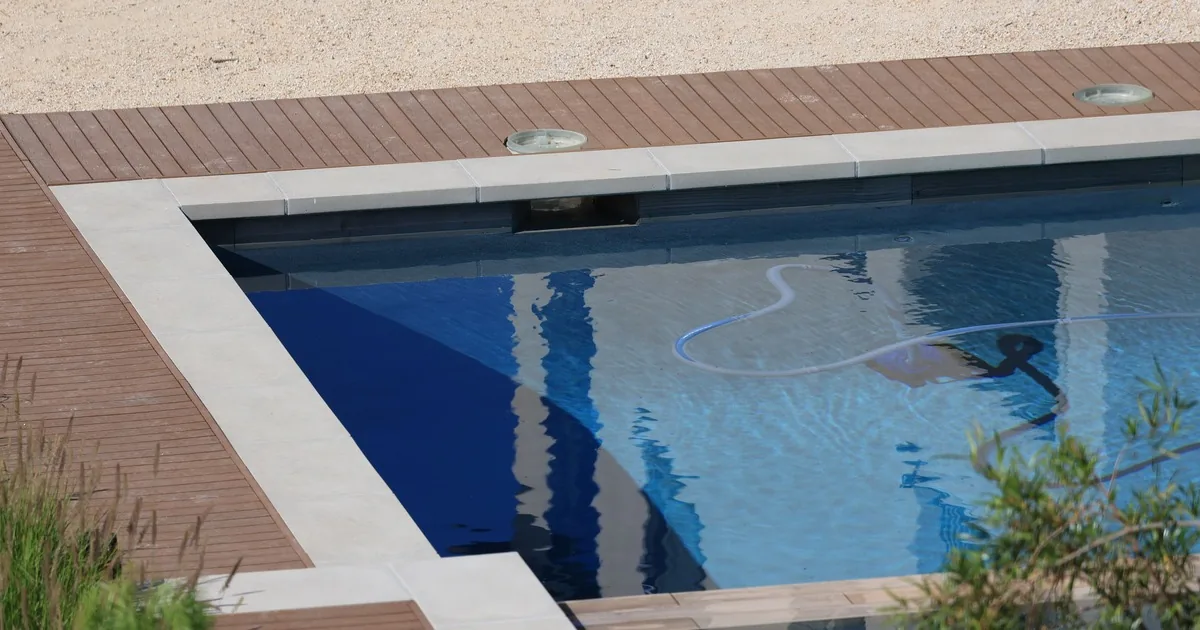
“My pool dropped two inches again” sounds specific until the office asks when it was last filled. The caller may be comparing today’s waterline with a mark from four days ago, after a hot windy weekend, a backwash cycle, and a birthday party. Or the automatic fill may have hidden the loss for weeks.
Start with the water-level record. Ask how much the level changed, over what period, and how the caller measured it. Then capture weather, swimming, cleaning, backwashing, refill activity, pump operation, visible water, and the pool’s construction and equipment. Those answers shape the visit. They do not prove where the water went.
Measure the report before naming the problem
Record the starting level, ending level, elapsed time, and reference point. “Below the tile” is weak because tile bands vary. “The water moved from the middle of the second blue tile to the bottom edge in 36 hours” gives the technician something repeatable. A pencil mark on tape or a ruler reading is better still.
Ask what happened during that period. Did it rain? Was the weather unusually hot or windy? How many people used the pool? Was the filter backwashed, a waste line opened, or a robotic cleaner removed with water in its hose? Did anyone add water? These events belong in the same note as the measured drop.
The EPA WaterSense pool guide separates evaporation, cleaning, leaks, and splashing as possible sources of water use or loss. Its bucket-test method compares the pool with water in a bucket exposed to the same conditions for 24 hours. EPA calls for a day without rain or heavy wind and for filtration, cleaners, and automatic fills to be shut down during that test.
Reception should ask whether a bucket test has already been completed and record the setup and result. Avoid coaching a caller through equipment shutdown unless the company has an approved script for that exact system. A variable-speed pump, attached spa, freeze-protection routine, chemical feeder, or water feature can make generic instructions unsafe or misleading.
Find out whether the pool is filling itself
An automatic fill can make a leaking pool look stable. Ask whether the pool has one, whether it is currently on, and whether the caller hears or sees it running. If the customer tracks household water use, note any unexplained change without turning that change into a diagnosis.
Manual filling matters too. Record when a hose was last used, where the waterline started, how long the hose ran, and where the level ended. If the caller says, “I top it up every Tuesday,” capture that routine. It is more useful than the broad statement that the pool “always needs water.”
EPA advises owners with automatic refill to turn it off periodically for leak checks, and it notes that a fill valve can malfunction and send water toward an overflow. The office should record the fill system and route its inspection. Do not tell the caller to disassemble a valve or plug an overflow during an intake call.
Capture the pool and circulation setup
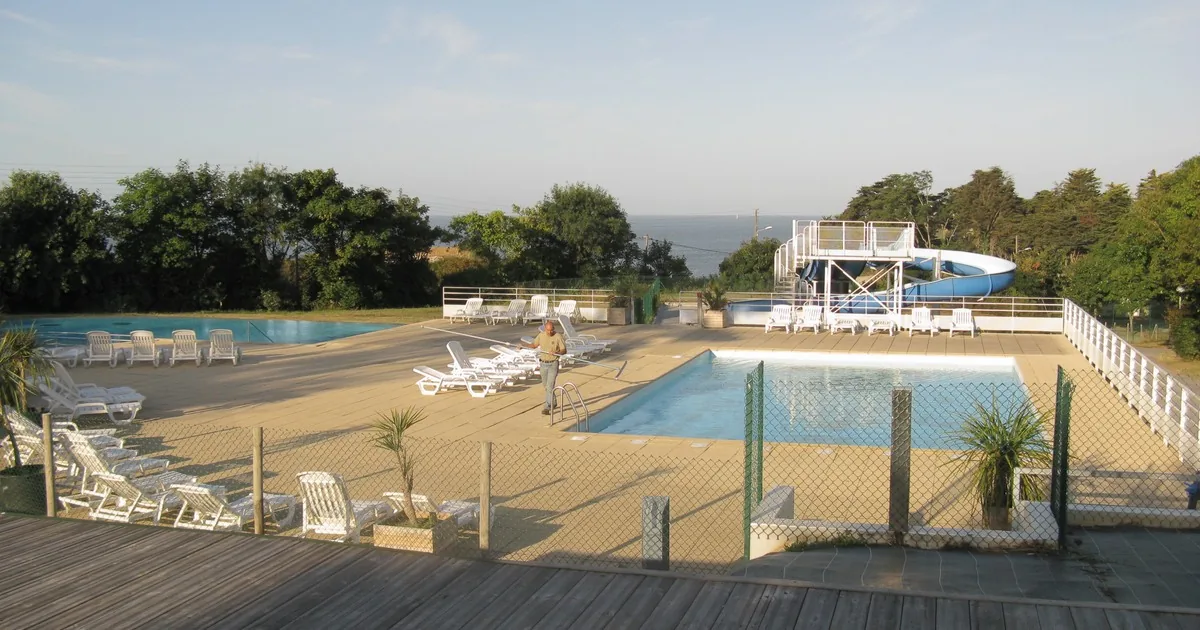
The technician needs a quick system inventory before arrival. Ask whether the pool is concrete, fiberglass, or vinyl-lined, and whether it is in-ground or above-ground. Record the approximate dimensions if the customer knows them. Note an attached spa, waterfall, raised wall, infinity edge, slide, fountain, solar heating loop, in-floor cleaning system, or separate catch basin.
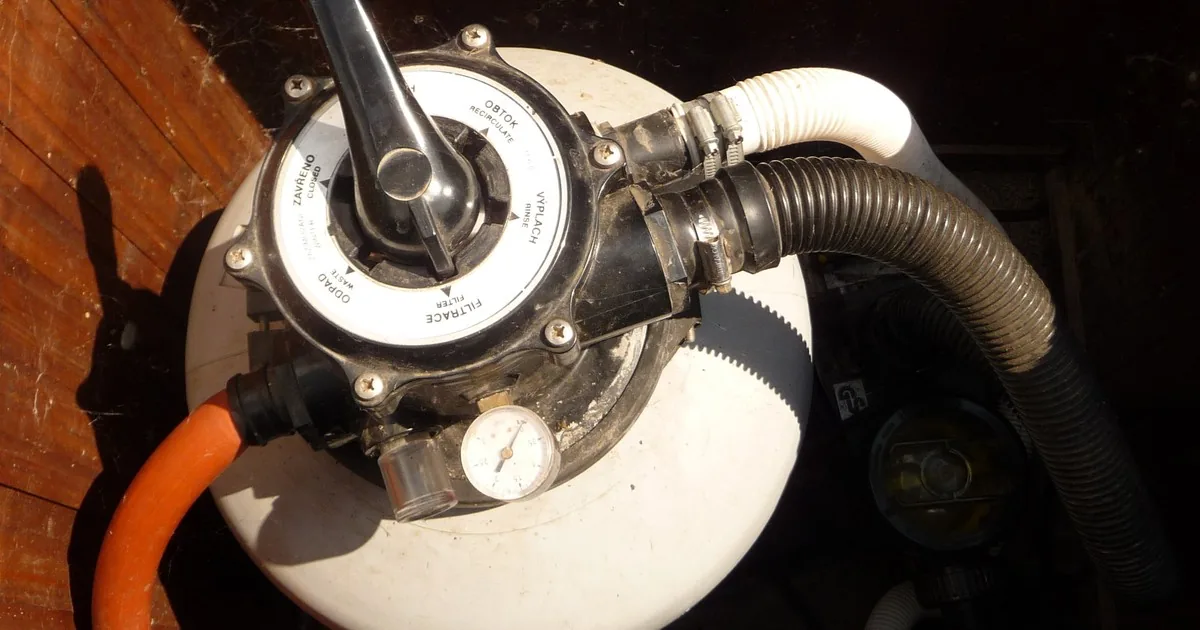
Then move to circulation. How many skimmers and pumps are there? Is there a main drain, dedicated cleaner line, heater, salt system, cartridge filter, sand filter, or diatomaceous earth filter? Does the pool share equipment with the spa? Has any valve, pump, filter, heater, light, skimmer, liner, or deck area been repaired recently?
The caller may not know the equipment names. Ask for clear photos of the full equipment pad and its labels under company policy. One wide image often tells dispatch more than a long attempt to identify every valve by phone.
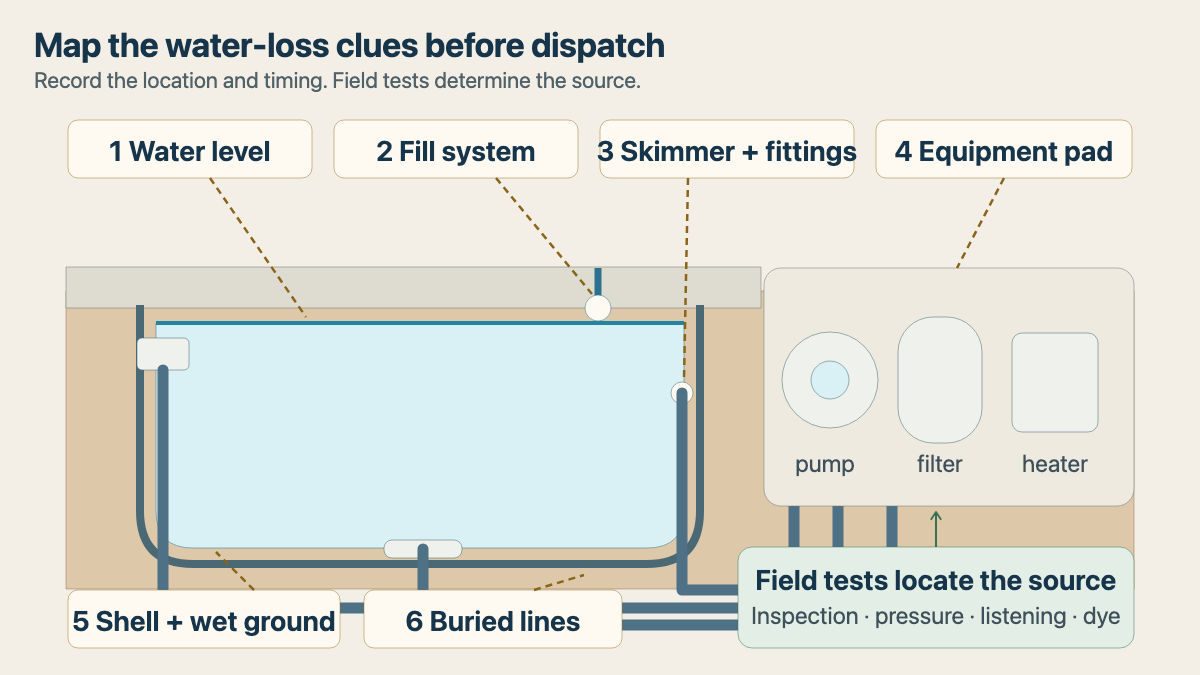
Put each observation on the system map
Ask where water is visible outside the pool. Check the equipment pad, backwash or waste line, downhill soil, deck joints, retaining walls, and the area around the skimmer. Record whether the spot stays wet when the equipment is off. Do not ask the caller to open electrical panels or reach behind running machinery.
Listen for air clues. Does the pump basket contain persistent air? Do bubbles appear at the returns? Does the pump lose prime or sound different? Capture the observation and the equipment state at that moment. Air can help a technician decide what to inspect, but reception should not name a suction-line failure from one symptom.
Ask whether the loss seems different when the pump is running. This works best as a history question: “Have you already noticed a difference between pump-on and pump-off periods?” It should not become an improvised test that leaves the pool without needed circulation or protection.
The waterline may provide another clue. Ask whether the level keeps dropping or appears to stop near a skimmer mouth, return fitting, light, step, liner seam, or tile line. Again, record the level and timing. A stopping point can guide inspection, but it does not establish the failed part.
Screen rapid loss and equipment hazards first
Some calls should move ahead of routine scheduling. Escalate for immediate human review when the caller reports fast ongoing loss, water approaching or falling below the safe operating level, a pump drawing air or running dry, active flooding near buildings, significant deck or soil movement, or water around electrical equipment.
Reception should keep the response narrow. Tell the caller to keep people away from an electrical hazard and use the company’s emergency procedure. Do not instruct anyone to enter the water, touch wet electrical equipment, excavate, pressure-test a line, or deliberately drain the pool.
Pool type matters here. A vinyl liner, fiberglass shell, and concrete pool respond differently when water levels change. The office should never promise that continued draining is harmless. Route the condition to someone qualified to give system-specific instructions.
Book diagnosis without promising the repair
State what the appointment includes. A clean version is: “I’ve recorded a measured one-inch drop over 24 hours, no rain, the automatic fill turned off, wet soil beside the skimmer, and air in the pump basket while it is running. I can schedule a leak-detection visit so the technician can inspect and test the system. We will confirm any repair scope after the source is located.”
That language gives the caller a next step without selling certainty. Professional field work may include visual inspection, isolated pressure testing, electronic listening, or dye placed next to a suspected opening. The Aquatic Services overview and Leslie’s troubleshooting guide describe those methods and the observations that lead into them.
Confirm whether detection and repair are separate services at your company. Explain the diagnostic fee, what systems are included, whether attached spas and water features add scope, and who can authorize further work. Use the company’s actual policy. Do not imply that every underground line, shell defect, or equipment leak will be found and repaired in one visit.
The appointment record should include:
- Service address, onsite contact, gate access, pets, parking, and equipment location
- Measured loss, time period, reference point, weather, use, backwashing, and refill history
- Pool surface, attached features, circulation equipment, automatic fill, and recent work
- Visible wet areas, drips, waste-line flow, air symptoms, waterline stopping point, photos, and prior test results
- Urgent conditions, diagnostic scope, quoted fee, authorization contact, and what was promised
Ask the caller to leave the pool accessible and follow only the company’s approved preparation instructions. Some technicians need the water clear enough to inspect fittings and surfaces. Some need pumps, valves, and controllers available in their normal configuration. The office should send the preparation that matches the booked service, not a generic checklist copied from the web.
The weekly pool-service signup guide helps offices define recurring maintenance scope. The pump and filter call guide covers equipment-specific intake. A suspected leak call needs both kinds of detail plus a time-based water-loss record.
An AI receptionist can collect the same approved fields after hours and send rapid-loss or electrical reports to a human. The company still owns the emergency rules, equipment scripts, service boundaries, and fee language. When the technician arrives, the ticket should show a measured pattern and a mapped set of observations, not a leak location chosen over the phone.