A hotel engineer calls at 2:20 p.m. about a noisy circulation pump. The pool is posted open until 10, a swim lesson starts at 4, and the overnight manager has no key to the chemical room. “Come after closing” sounds workable until dispatch asks who will clear the deck, unlock the plant, receive the service record, and decide when the venue can reopen.
Treat a commercial pool call as an operating handoff before treating it as a calendar slot. Record the posted hours and the real program schedule, the person who can close the venue, access to the pump and chemical rooms, the exact equipment observation, any incident or exposure concern, and the person authorized to release the pool after service. The technician should arrive with a controlled work window, not a hope that the water will be empty.
Start with the real operating day
Commercial pools rarely follow one simple opening time. A hotel pool may be open to guests before the engineering office is staffed. An apartment pool may use resident fobs. A school can have classes, team practice, rentals, and public sessions on the same day. A gym may keep the building open around the clock while the aquatic area closes overnight.
Ask for the posted pool hours, then build the actual day. Record lessons, teams, therapy sessions, lifeguard shifts, cleaning crews, contractor access, events, deliveries, and quiet hours that affect tools or alarms. If the caller says the pool is “usually empty after eight,” ask whether it will be formally closed and controlled during the visit.
The CDC’s guidance for operating public pools recommends trained operating staff, accurate testing and maintenance records, preventive maintenance, and a communication chain for operating problems. Those responsibilities shape the appointment. A technician may be available at 9 p.m., but the visit still fails if the trained facility contact leaves at 8:30 with the only plant-room key.
Commercial pool is a broad label. CDC’s Model Aquatic Health Code overview names hotels, apartment complexes, clubs, schools, and waterparks among the settings that operate aquatic venues open to the public. Their staffing and approval chains differ. The MAHC is guidance, not federal law, and local adoption varies. Intake should capture the facility and jurisdiction without making a compliance promise.
Book the whole controlled interval
Do not schedule only the wrench time. Some work needs a closure period before the technician begins, followed by restart, verification, documentation, and a facility release decision. The pool may look empty while a lesson is about to enter. A finished repair may still leave an operating hold that the service office does not control.
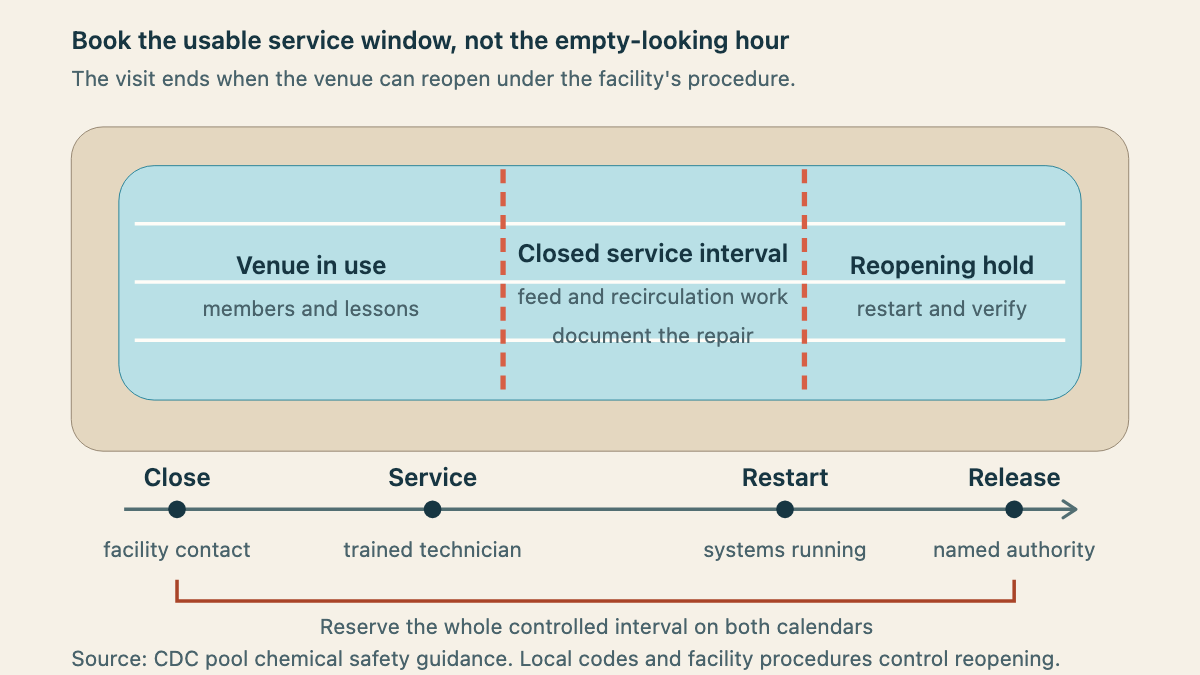
Use five times on the work order when they apply:
- The last swimmer exits and the venue is placed under controlled closure
- The technician may enter the plant and begin work
- The expected service window ends, stated as an estimate if the condition is not yet diagnosed
- The facility begins its required restart and verification process
- The named facility authority decides whether the venue can reopen
The CDC pool chemical safety guidance says a venue should be closed to swimmers if recirculation is not running or before servicing chlorine or pH control feed or recirculation systems. It also describes restart and water-quality conditions before swimmers return. Reception should not turn that guidance into a universal reopening script. The equipment, work performed, local requirements, facility procedure, and field readings all matter.
Write the boundary plainly: “Technician service window begins after the facility closes and engineering confirms plant access. Reopening belongs to the facility manager after the required checks.” That sentence prevents a repair appointment from becoming an unsupported promise that the 6 a.m. swim class will run.
Map access beyond the pool gate
A street address and parking note are not enough. Ask where the technician checks in, which entrance works after hours, whether security needs a vendor list, and who can escort the technician. Record loading limits, elevator access, roof or basement routes, restricted corridors, alarm zones, and where tools may be staged without blocking an exit.
Then map the plant. Does the technician need the pump room, chemical room, controller cabinet, electrical room, balance tank, surge tank, filter area, roof equipment, or a remote mechanical space? Ask who holds each key or credential. “Maintenance will be there” needs a name, direct number, arrival time, and backup.
CDC recommends securing chemical storage and pump rooms, limiting unauthorized access, and keeping appropriate personal protective equipment and current safety data sheets accessible. Those are operational reasons to confirm access before dispatch. They are not reasons to ask an untrained caller to enter a locked room, open a controller, handle a container, or inspect energized equipment.
Request safe evidence. Useful photos include the equipment label, controller display, visible leak location from a safe standing position, room entrance, and a wide view of the plant. Ask the caller to copy an alarm message exactly. Keep owner observations marked as observations. “Pump makes a grinding sound and flow alarm reads E17” is a sound intake note. “Bearings failed” is a diagnosis the caller did not establish.
For a new commercial account or a larger scope change, use a separate commercial pool maintenance bid intake. A bid needs site dimensions, records, service frequency, staffing boundaries, and proposal requirements. A repair call needs control of today’s venue and an exact field handoff.
Route incidents outside a routine work order
Ask why the call started. Equipment noise, loss of flow, a controller alert, visible water loss, cloudy water, an odor, a spill, a reported exposure, a fecal incident, storm damage, or a health-department direction can all sound like “pool service” at the front desk. They do not belong in the same scheduling lane.
When anyone reports coughing, breathing trouble, eye injury, a strong chemical odor, visible gas, fire, an active spill, or another immediate danger, follow the company’s emergency procedure. Do not keep asking routine estimate questions while people remain exposed. Reception should record the caller’s exact words, time, location, substances or labels if safely known, actions already taken, and which emergency or facility contacts were notified.
A contamination event also needs the venue’s trained response plan. Do not promise a reopening hour by phone. A stopped recirculation system should be reported as an operating condition and routed under the facility’s closure procedure. The service office can dispatch qualified help and preserve facts. It cannot certify swimmer safety from a call recording.
For an ordinary pump or filter complaint, the dedicated equipment repair intake guide helps capture model information, symptoms, access, and approval boundaries. Keep incident response separate so a routine ticket does not bury a safety-critical detail.
Name one closure chain
The cleanest commercial work order names four owners: the person reporting the condition, the person controlling closure, the technician controlling the repair, and the facility representative controlling release. One person may fill two roles. Write each role anyway.
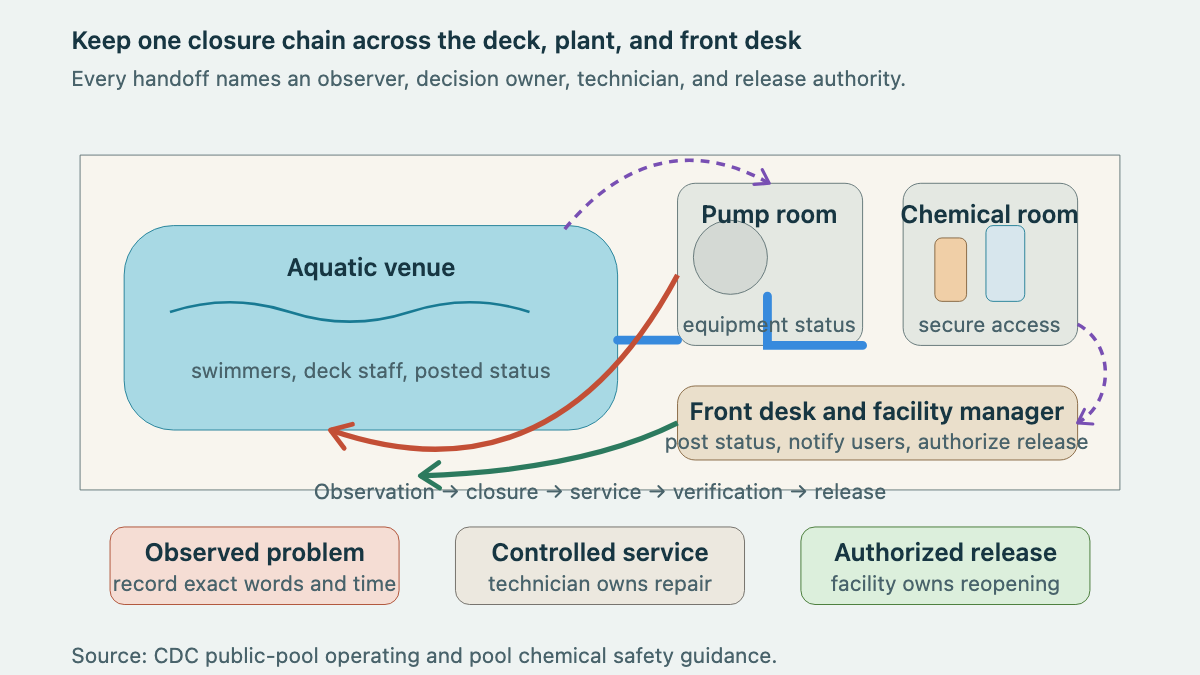
Ask how closure is communicated. The answer may involve deck staff, lifeguards, guest services, residents, coaches, signs, an app, or a building announcement. Record who handles those notices and whether the technician must call before arrival, before shutdown, after diagnosis, or before restart.
Approval belongs in the same chain. Capture the billing entity, purchase-order requirement, after-hours authorization limit if the customer uses one, and the person who can approve added work. Never assume that the employee with the key can approve a motor, controller, or emergency return visit.
At completion, route the record to the right people. The technician’s note may include arrival time, observed condition, work performed, parts used, system status, readings taken under company procedure, photographs, remaining restrictions, and recommended follow-up. The facility decides how that record fits its operating log and reopening process.
Write a dispatch note that survives shift change
Commercial calls often cross departments and shifts. The afternoon engineer may place the call, security may admit the technician, and an overnight manager may receive the report. A note that depends on one person’s memory will break.
Use a final readback such as: “Indoor lap pool at Harbor Fitness. Posted hours end at 9 p.m.; the aquatics director closes the deck at 8:45 after the last lesson. Technician access begins at 9:10 through the loading entrance. Security has the vendor name. Jordan unlocks the pump room and chemical room. Caller reports a low-flow alarm and louder pump noise; no spill, odor, or exposure was reported. Jordan can approve diagnostic work under the facility’s policy. Send the service record to Jordan and the overnight manager. The facility manager owns reopening after the required checks.”
An AI receptionist can collect that record after hours and route urgent language consistently. The pool company still owns technical dispatch, and the facility still owns access, closure notices, operating records, and release. When the next shift opens the ticket, every name, door, clock time, and decision should already be there.