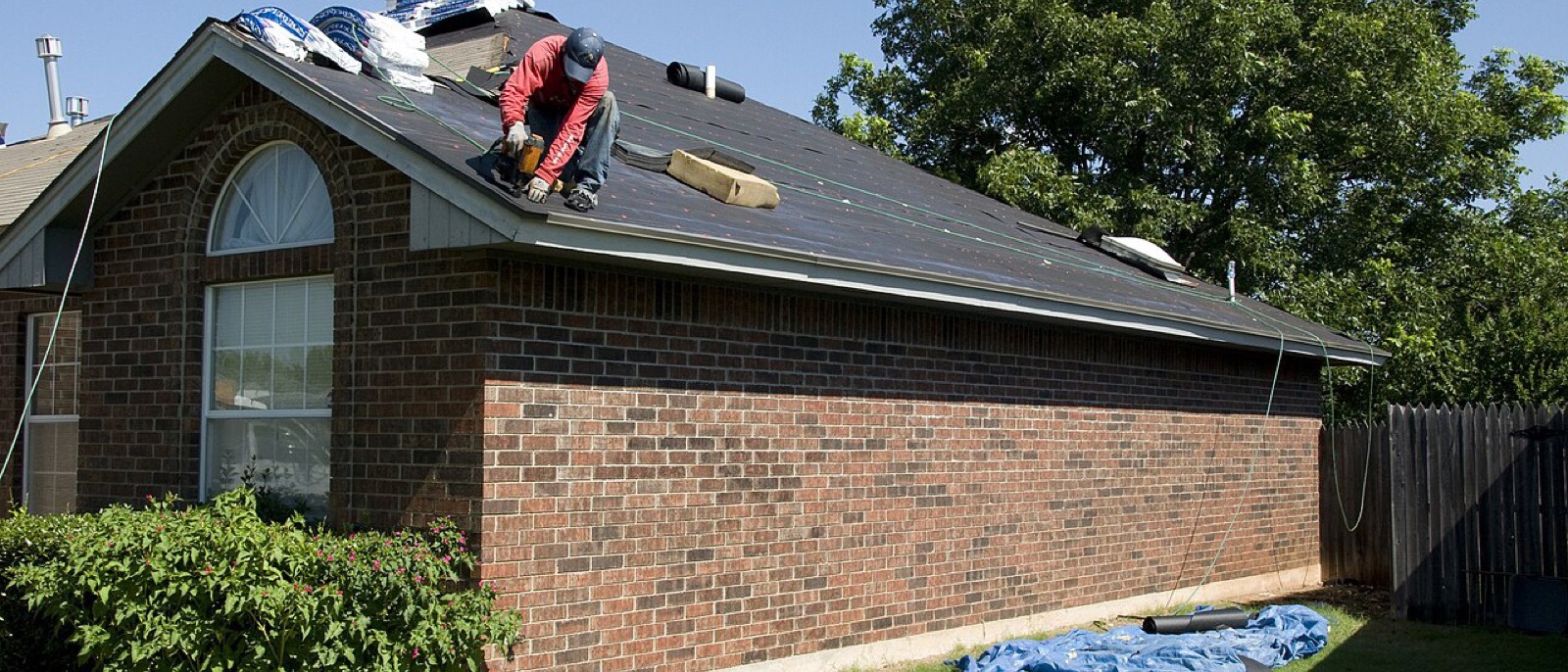
A homeowner calls in October because a downspout came loose and she wants someone to reattach it. Twenty minutes of work, maybe a minimum service charge. That call ends one of two ways. Either you write a small ticket and go back to the queue, or somebody on your end says, "While we're out there, do you want us to look at the whole roof? We have an annual plan that covers the inspection and small fixes like this one."
The second version costs about eight seconds of phone time. Most roofing offices never say it, because nobody decided whose job it was.
Maintenance plans get built as a marketing project. A landing page, a tri-fold, a line item on the estimate. Then enrollment stalls, because the moment a homeowner is most likely to say yes is when a roofer is already on the phone with them about something else, and the phone is the one channel the plan program never got wired into.
Where the plan conversation actually fits
There are three calls where the offer lands, and a much longer list where it just annoys people.
The small-repair caller. Loose flashing, one blown-off shingle, a gutter pulling away. She has already accepted that her roof needs attention and she is already paying for a truck to come out. The plan reframes a one-off ticket as ongoing coverage, and the visit she just agreed to becomes the first plan visit.
The post-installation follow-up. You replaced a roof six or twelve months ago. That homeowner has the highest opinion of your company she will ever have, and a manufacturer warranty in a drawer that almost certainly has maintenance language in it. Most roofers never make this call, because nothing in the calendar says "phone the March installs in September."
The inspection that came back clean. You climbed up, found nothing structural, and now you get to tell a homeowner she does not need the work she was bracing for. That is a moment of unusual trust, and the natural place to say the roof is fine today and the way to keep knowing that is a schedule.
Where it does not fit: an active leak, a storm-damage call, or anyone in the middle of an insurance claim. Pitching a subscription to a woman with water running down her kitchen wall reads as opportunism, and she will remember it. Fix the emergency. Note the account. Call back in six weeks.
What a plan typically includes
Programs vary by company and region, so the honest answer to "what's in it" is your actual agreement. Most roofing plans are still built out of the same parts.
Scheduled inspections, usually twice a year. Spring and fall is the common shape, timed so one visit lands before winter and one after. Some contractors run a single annual visit on standard residential work and reserve two for flat roofs and commercial accounts, where drainage failure moves faster.
Debris and drainage clearing. Gutters, valleys, drains, and scuppers. On a flat roof this is often the substance of the visit rather than a side task, because standing water is what kills membranes.
Minor repairs included up to a defined limit. This is the part homeowners care about and the part contractors most often leave vague. Resealing exposed fasteners, replacing a handful of shingles, re-bedding a loose vent boot, touching up pipe collar sealant. Define the ceiling in writing, whether it is a dollar cap, a labor-hour cap, or a named list of covered items. A plan that says "minor repairs included" without a boundary produces an argument on the roof, in front of the customer, between your crew lead and someone holding a contract.
Written documentation of each visit. Dated photos, a condition report, notes on anything trending toward a problem. This is the piece that quietly does the most work later.
Priority scheduling for members, and often a member rate on work that falls outside the plan.
On documentation, be careful how you describe the benefit. Manufacturer warranties frequently include maintenance and workmanship conditions, and insurers investigating a claim may ask whether a roof was maintained. A file of dated inspection reports is evidence you can produce if either question comes up. It is not a guarantee that a warranty holds or a claim pays, and anyone on your phone who says otherwise is writing a promise your company has to keep. The accurate version is short: we document every visit, and if your manufacturer or your carrier ever asks for maintenance records, you will have them.
Saying it in twenty seconds
The pitch that fails is the one that explains the whole program. Nobody on an inbound call wants a feature list. They want to know what it costs, what shows up, and whether they are stuck.
Something in this shape works:
"We have an annual plan a lot of our customers are on. We come out twice a year, clear the gutters and valleys, check the flashing and seals, and small fixes like the one you're calling about are covered. You get a photo report each visit, so you have records for your warranty. It is $399 a year, and you can cancel with notice. Want me to put today's visit down as your first one?"
That is four sentences and one question. The question matters more than the pitch. An offer that ends in a statement invites "let me think about it." An offer that ends in a specific scheduling question gets answered.
Give whoever answers your phone a price they are allowed to say out loud. If every plan question has to route to an estimator, enrollment dies at the handoff, and you lose the one advantage the phone has: the answer arrives while she is still thinking about her roof.
The objections you will actually hear
"My roof is only three years old." Age is the argument for enrolling, not against it. Warranty terms are strictest early, small problems are cheapest to fix before they move, and the documentation trail starts from a known-good condition. Say that plainly and do not oversell it.
"I'll just call you when something breaks." She is not wrong, and pretending otherwise sounds like a script. What the plan buys is a look at the parts that fail without visible symptoms: sealant at penetrations, boot cracking, lifted flashing, granule loss in valleys. By the time a roof announces a problem indoors, the repair is usually past the scope a maintenance visit would have covered.
"Is this a contract? Am I locked in?" Answer with the exact terms, then stop talking. Term length, notice period, whether it auto-renews, and how to cancel. Roofing carries a reputation problem in a lot of markets, and homeowners are actively listening for a trap. A blunt answer does more for the close than any benefit you could add.
"That's more than I want to spend right now." Do not discount on the phone. Ask whether she wants the plan noted on her account so the estimator can go over it at the visit. That keeps the door open without training callers that your price moves when they push.
"What if you find something big?" Tell her the truth: a major repair is quoted separately, at the member rate, and she decides. Homeowners expect the plan to be an entry point for upsells. Naming that dynamic before she does makes the rest of what you said more credible.
"I already have someone who does my gutters." Fine. The plan is a roof inspection with drainage work attached, and if the gutter guy is on a ladder rather than the roof, he is not looking at your flashing. Offer the inspection-only tier if you have one. If you do not, this objection is a decent reason to build it.
Book the first visit before the call ends
An enrollment without a scheduled visit is a maintenance plan that lives entirely in your billing system. The customer paid, nothing happened, and the first thing she experiences is a charge.
Put the first inspection on the calendar during the enrollment call. When the caller already has a repair booked, the easiest close in the whole conversation is converting that appointment into visit one of the plan. When there is no visit pending, offer two concrete windows rather than asking when works. And book the second visit at the same time if your scheduling system will hold it that far out, or set the reminder that generates the call.
Then make sure the record carries what the crew needs: plan tier, what is covered, the enrollment date, the install date if you did the roof, and the manufacturer warranty on file. A crew that shows up not knowing which tier the customer bought will either do too much or too little, and both cost you.
The calls you are not there for
Plan renewals, seasonal reminders, and small-repair calls have a habit of arriving at 7 p.m. or during the two weeks after the first hard freeze when your office is buried. Those are exactly the calls where the offer would have landed.
Coverage matters more than polish here. A briefed answering service holding your actual plan terms beats a voicemail box. Tools like Answara sit in the same slot and can describe the plan, quote the price you configured, answer the cancellation question, and put the first inspection on the calendar, then hand your office a structured record instead of a callback list. The call handling and scheduling pages cover that handoff.
Whatever picks up, the standard is the one your best phone person already meets: know the price, know the terms, and end the call with a date on it.