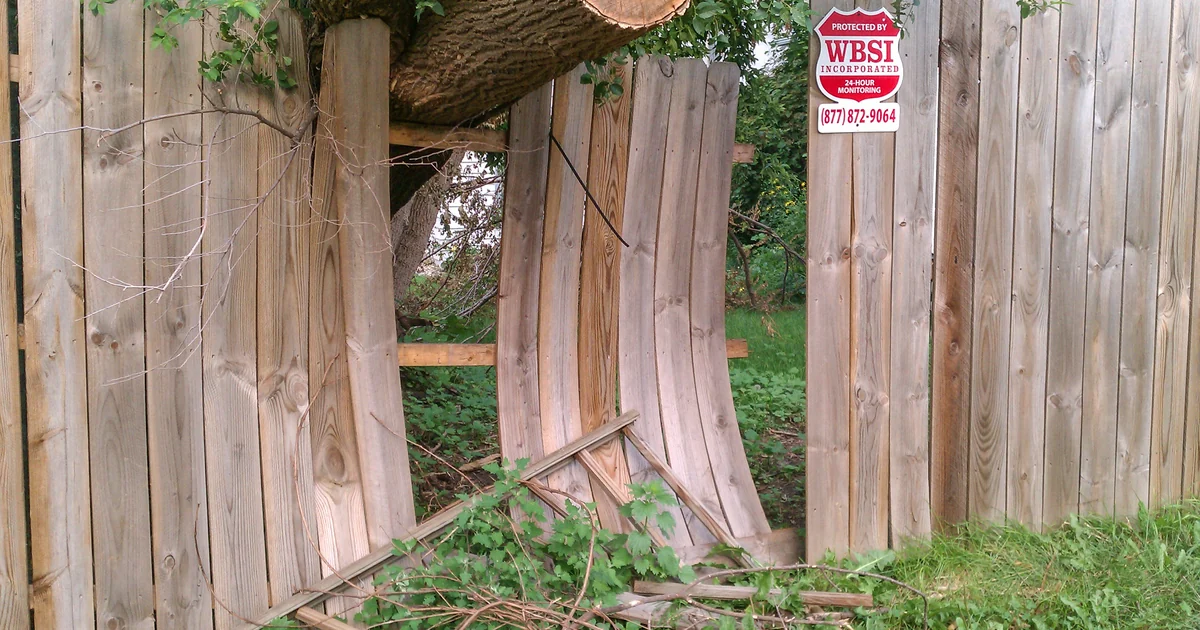
A homeowner calls after a windstorm and says, “I need a fence quote.” One panel is flat in the yard, two posts lean, and the gate dragged even before the storm. Is this a repair lead or a replacement lead?
The office should resist deciding over the phone. The useful answer is to record where the damage sits, how much of the fence is affected, whether the remaining structure feels sound, and what the customer wants the finished fence to do. That gives the estimator enough context to route the visit and inspect the fence without forcing the caller through a diagnosis they cannot make.
A strong intake separates three kinds of work: an isolated repair, a larger section rebuild, and a likely full replacement. It also catches hazards and access problems before a crew reaches the property.
Start with the failed part, not the customer’s label
Callers use “repair” and “replacement” loosely. Someone may ask for a repair because they expect it to cost less, even though rot runs through every post along the back line. Another caller may request a new fence when a sound run has one broken rail and a gate that needs adjustment.
Ask the caller to describe what they can see. Keep the language concrete:
- What happened, and when did you first notice it?
- Is the problem limited to one post, panel, rail, gate, or section?
- Are any posts leaning, loose at ground level, split, or visibly rotted?
- Do panels move when the wind blows, or is the movement confined to one spot?
- Does the gate latch, swing freely, and stay aligned with its post?
- Are boards missing, cracked, bowed, or pulling away from the rails?
- Has this section been repaired before?
These questions establish distribution. One damaged picket tells a different story than repeated post failure across the whole rear boundary. An office can make that distinction without promising which remedy the estimator will recommend.
Photos help. Ask whether the caller can send one wide image of the entire run and close images of the failed posts, rails, panels, and gate hardware. A close-up of a broken hinge may explain the immediate complaint. The wide image shows whether the hinge sits inside a fence that is leaning for thirty feet.
Record the fence material and construction
“Wood fence” leaves too much unsaid. The estimator needs to know whether the property has individual pickets on rails, prefabricated panels, split rail, privacy board, or another build. The same applies to vinyl, chain link, ornamental aluminum, steel, and composite systems.
Ask for the material, approximate height, and style. Then capture what the caller knows about the posts. Are they wood or metal? Do they appear to be set in concrete? For chain link, ask whether the damage involves fabric, top rail, terminal posts, line posts, or a gate. For vinyl, find out whether a panel slipped out, a rail cracked, or a post shifted.
Matching matters on partial work. An older profile, color, cap, or panel pattern may be hard to source, and sun exposure can make a new section look different beside the original. The office should flag matching concerns for the estimator. It should never promise an exact match before the material has been identified.
Age belongs in the notes if the owner knows it. So does maintenance history. A fence that was stained recently and has one storm-damaged bay presents a different inspection than an unknown-age fence with soft posts and years of patched rails. “I’m not sure” is still a useful answer. Do not make the caller hunt for a receipt while the lead waits.
Ask how far the problem extends
Linear footage can be hard for a homeowner to estimate. Offer reference points they can answer: one panel, the side yard between the house and gate, the full back line, or the entire perimeter. Ask how many distinct sections appear damaged.
The goal is routing, not remote pricing. A crew prepared for one post replacement may arrive without enough material for six failed bays. A salesperson scheduled for a full replacement consultation may be the wrong person for a loose latch.
Repeated symptoms deserve their own note. If a caller reports that posts keep leaning after prior repairs, record the locations and any drainage or grade issues they mention. If several panels blew down while neighboring sections remain upright, note that pattern. Soil, wind exposure, installation details, impact damage, vegetation, and water can affect what the estimator finds. The person answering the phone should capture observations without assigning a cause.
Surface the customer’s reason for calling now
Condition is only half the scope. The desired result can change the job.
Ask what prompted the call today. A storm may have opened the yard to a road. A dog may now be able to get out. A gate may be too narrow for new equipment. The owner may want more privacy, a different style, or a fence that meets current pool-barrier requirements. A sale, insurance inspection, neighbor conversation, or planned landscaping project can add a deadline.
Pool barriers need special handling. The U.S. Consumer Product Safety Commission publishes Safety Barrier Guidelines for Residential Pools, but local requirements control the actual project. Record that a pool is present, whether the damaged section controls access, and whether a gate or latch has failed. Escalate the call under the company’s safety policy. Do not tell the homeowner that a proposed height, spacing, or latch will satisfy local code until the applicable rules and site have been checked.
Likewise, a fence down beside a street, an exposed sharp edge, loose material near a walkway, or an unsecured yard with children or animals warrants a prompt review. The receptionist can mark urgency and give only company-approved safety guidance. Technical repair instructions belong with the contractor who can see the condition.
Capture the property constraints before booking
Fence work can stop at the property line, sometimes literally. Ask whether the caller owns the property and whether another owner, landlord, association, or neighbor must approve the work. Find out whether the fence is shared and whether the boundary is known. A site visit can proceed with uncertainty in the notes, but the contractor should know about it before discussing placement.
Permit rules vary by jurisdiction and by project scope. The District of Columbia, for example, lists repair, replacement, and new installation within its fence permit guidance. That does not establish the rule anywhere else. Ask for the job address so the office can check the correct city, county, or other authority. Record HOA restrictions if the caller mentions them, including rules about material, color, height, and finished-side orientation.
Access affects the appointment too. Can the estimator reach both sides of the fence? Is there a locked gate, a dog in the yard, dense planting, a shed tight against the run, or a steep grade? Does an alley provide access? Will an adult decision-maker be present?
For any work that may disturb the ground, utility locating belongs in the project workflow. The national 811 service directs professional excavators to contact the appropriate state center before digging, with notice requirements set by state law. Intake should capture the address and any known private lines such as irrigation, propane, pool equipment, or lighting. The contractor still follows the local locate process and company policy before excavation.
Keep price answers tied to an inspection
A caller may ask, “Can you tell me if repairing it is worth it?” The office can explain how the company evaluates the choice without giving a verdict.
A useful response is: “The estimator will look at how much of the fence is affected, the condition of the posts and rails, whether replacement material can be matched, and what you want to change. I’ll capture what you’re seeing so we schedule the right visit.”
Avoid universal percentage rules. A threshold published by one contractor may reflect its labor rates, materials, warranty practices, and local market. It does not become an industry standard. Repair value depends on the condition of the remaining fence and the scope of the proposed fix. The written estimate should make those assumptions visible.
If the company charges for inspections or estimates, state the fee and credit policy exactly as written. Clarify what the appointment includes and whether the caller should send photos first. Never imply that a fee guarantees same-day work, a final price, or material availability.
Build a handoff the estimator can use
The final call record should read like a field note, not a message that says “customer needs fence fixed.” Include the caller’s contact details, service address, material and style, approximate affected area, failed components, prior repairs, photos received, urgency, access, animals, pool presence, boundary uncertainty, approval parties, desired outcome, timing, and price question.
Then assign the next step. An isolated hardware issue may follow the repair-estimate workflow. Widespread movement, repeated failures, or a requested design change may need a replacement consultation. Safety concerns may require faster review. The company defines those routing rules, and the phone team applies them consistently.
This article complements a broader process for scheduling fence estimate calls. The repair-versus-replacement branch simply adds better condition questions before the appointment lands on the calendar.
An AI receptionist can collect the same approved details after hours and flag calls according to the contractor’s rules. The lasting value comes from the intake design itself. When Tuesday’s estimator opens the record, they should know whether to bring a hinge, study a long failing run, or prepare for a conversation about an entirely different fence.