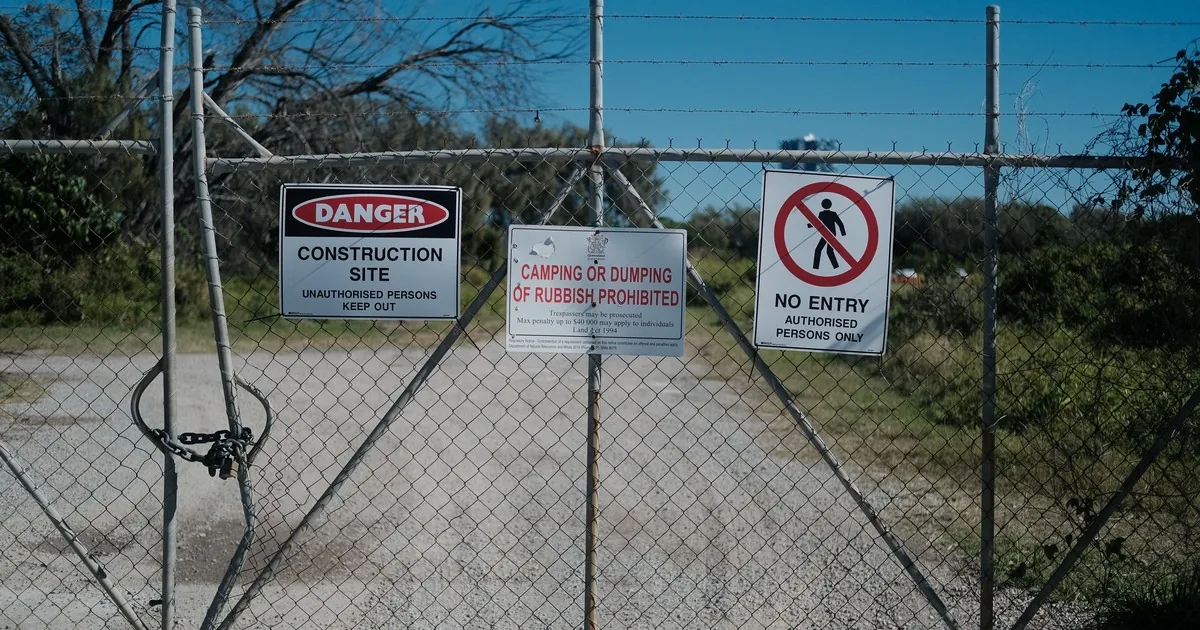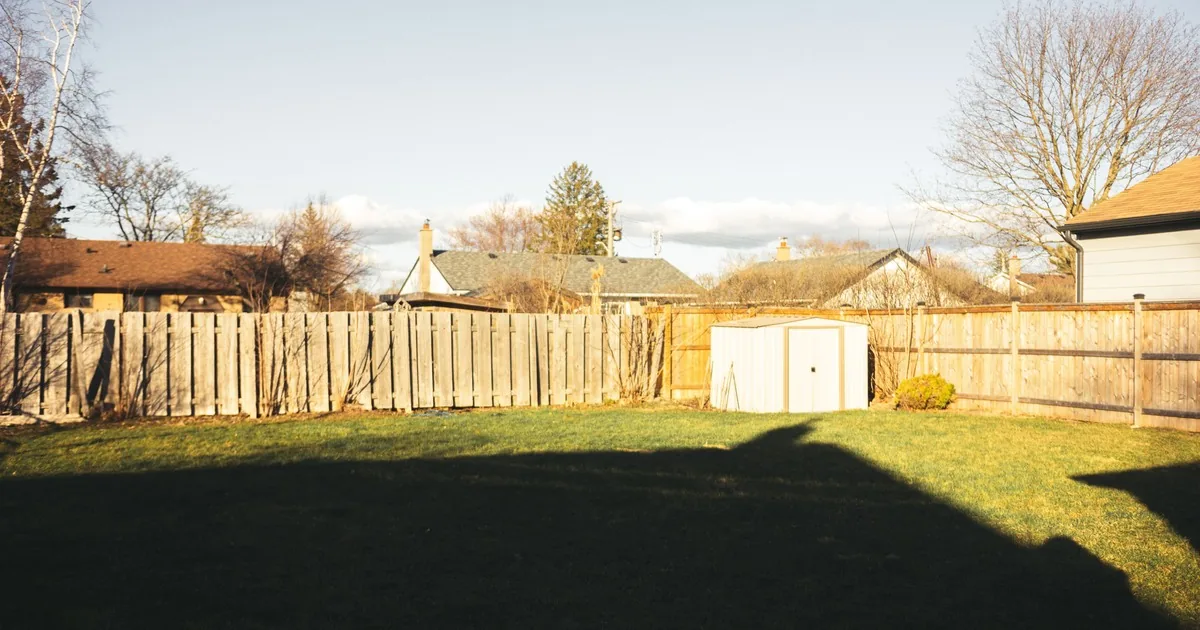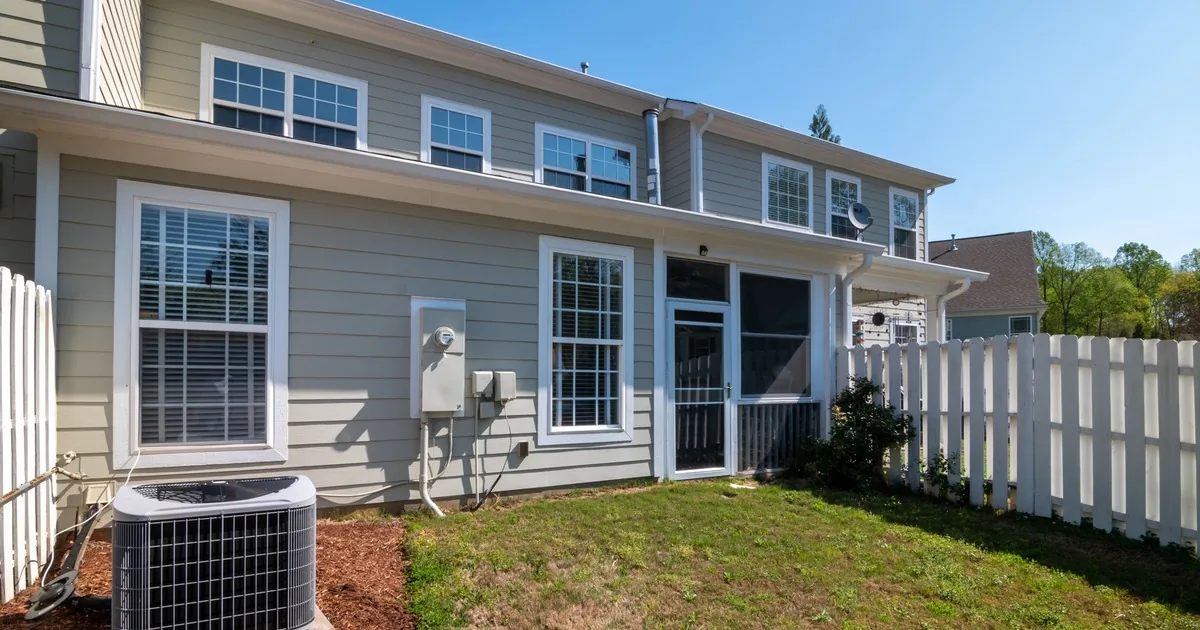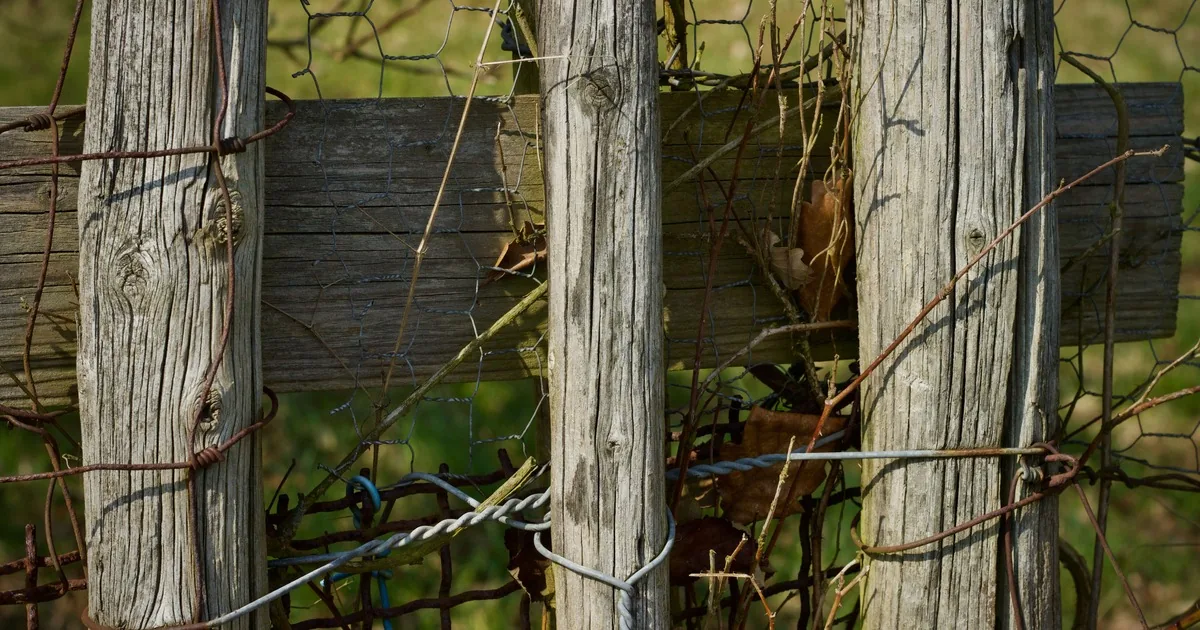
A homeowner asks for a price to “take out about 80 feet of old fence.” The photos show wood panels. They do not show the concrete around every post, the wire buried under ivy, the narrow side gate between the backyard and the street, or the neighbor's shed attached to one corner.
Before giving a number, define the work. Ask what sections must leave, what must stay, whether posts and concrete come out, what is attached to the fence, how crews can reach it, where each debris type can go, and how the ground should look afterward. The field estimator can then price one scope instead of discovering a different job on removal day.
Define the fence that is actually leaving
Start at the address and walk the caller around the perimeter in words. Which side of the property is involved? Where does the run begin and end? Is the request for one damaged section, every fence on the lot, or the shared line behind two homes? Record approximate length, height, material, gate count, corner count, and visible changes in construction.
“Wood fence” is too broad for a removal ticket. Ask whether it has individual pickets, prefabricated panels, horizontal boards, lattice, wire backing, metal posts, wood posts, or masonry columns. A run may change halfway around the yard. One section could be chain link hidden behind vines while the visible street section is cedar.
Ask what remains. The owner may want panels removed but hope to reuse sound posts. A replacement installer may want every post and footing out. A neighbor may own a gate that connects to the final post. Mark each endpoint and attachment on a wide photo. Never assume that “full removal” has the same meaning to the caller and the crew.
The office should also ask why the fence is coming out. Replacement, storm damage, redevelopment, pool removal, landscape work, a property sale, or a boundary concern can create different schedules and handoffs. A rushed closing date should be recorded, not promised.
Separate visible demolition from underground work
Posts are where a simple quote changes. Ask whether they appear to be driven into soil, set in concrete, mounted to a slab, fastened to a wall, or built into a masonry column. The caller may not know. Record “unknown” and request close photos at the base, plus a wide view showing grade and nearby hardscape.
Then make the post-removal choice explicit. Will the crew pull the post and footing, break concrete below grade, cut a post at grade, leave selected supports, or let the replacement contractor decide? Reception should not choose a method. It should make sure the estimator knows which finished condition the customer expects.
Post extraction can disturb buried facilities. 811 Before You Dig tells anyone planning to dig to contact the applicable state 811 center a few business days before work so member utilities can mark the approximate location of buried lines. The ticket should state who owns that step and when it must happen.
Also ask about private lines and site systems: irrigation, low-voltage landscape lighting, invisible pet fencing, pool equipment, propane, septic components, well lines, drains, and wiring between detached buildings. Do not tell the caller that an 811 visit will identify every private system. Record known locations and send uncertainty to the estimator.
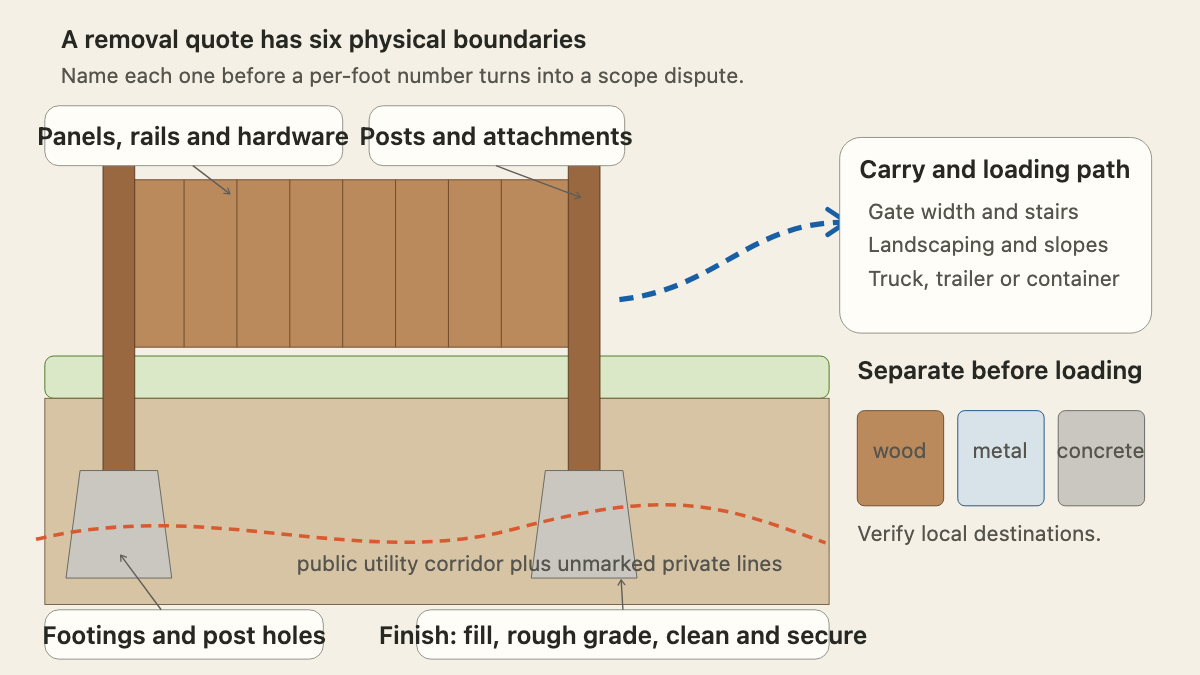
Price the route between the fence and the truck
Debris does not teleport from a backyard to a trailer. Ask where a truck, dumpster, or trailer can park and how material will travel from the fence line. Measure or photograph the narrowest gate. Note stairs, slopes, retaining walls, soft lawns, pavers, pool decks, septic areas, overhead branches, low wires, and tight turns.
The best photo set follows the carry route. Request one wide view of each fence run, one view looking back toward the loading point, and close views of posts, footings, fasteners, attachments, and damaged areas. If the route crosses a neighbor's drive or a common area, flag the permission question before scheduling.
Vegetation needs its own scope. Ask about ivy, vines, hedges, volunteer trees, roots, and branches woven through the fence. Who will cut them? Who owns them? Should plant debris leave with the fence? Thick growth can hide wire, fasteners, unstable sections, and attachments. Reception should report what the caller can see and avoid declaring the route clear.
Occupied sites add another layer. Note children, pets, tenants, customers, livestock, pool access, and any security role the fence serves. If removal opens a yard to a road, alley, pool, or neighboring property, ask how the site must be secured between demolition and replacement. The estimator should decide whether temporary protection or same-day sequencing belongs in the proposal.
Give every debris stream a named destination
Ask the caller what they expect to happen to wood, metal, vinyl, concrete, gates, hardware, and vegetation. “Haul it away” leaves important questions unanswered. The written estimate should say whether the contractor loads and transports debris, whether disposal fees are included, whether reusable pieces stay on site, and whether another party supplies a container.
The EPA's construction and demolition materials guidance identifies wood, concrete, metals, plastics, and salvaged components as separate material streams. Local outlets decide what they accept. A contractor may be able to route clean metal and concrete differently from mixed debris, but the office should confirm the company's actual plan before promising recycling or reuse.
Old treated wood needs care. EPA says chromated copper arsenate, or CCA, was used in residential structures before manufacturers discontinued most homeowner uses at the end of 2003. Its CCA disposal guidance says this wood should not be burned in a residential setting or reused as mulch. EPA also directs households and businesses to state or local programs because disposal instructions can differ.
A call taker cannot identify treatment chemistry from color, age, or a photo. Ask when the fence was installed, whether stamps or records exist, and whether the contractor's receiving facility has acceptance rules for treated wood. Unknown material should stay unknown in the ticket until someone qualified verifies the route.
State what the property looks like when work ends
Removal exposes the difference between “debris gone” and “site finished.” Ask whether the customer expects post holes filled, soil compacted, the line roughly graded, loose fasteners collected, ruts repaired, pavers reset, plants trimmed, and the yard left ready for a new fence. Each item should be included or excluded in writing.
Replacement timing matters. If another crew installs immediately, it may want open locations or preserved layout references. If the yard will remain unfenced for a month, the owner may want every hole filled and the boundary secured. Ask who performs the next step and whether the companies have exchanged plans.
Boundary uncertainty must remain separate from demolition. An old fence can be crooked, offset, shared, or placed by a prior owner. It does not prove the legal line. Use the property-line and survey call guide when ownership or location is disputed. Collect surveys, written agreements, names, and the caller's stated facts. Do not authorize removal of a contested section by phone.
Read back an estimate-ready scope
A clean handoff could sound like this:
“Remove the north and west backyard runs, approximately 80 feet of six-foot wood privacy fence with one gate. Keep the east run. Construction changes near the northwest corner, where wire mesh and vines are visible. The fence connects to a neighbor's post and a shed corner; ownership and detachment need field review.
“Caller wants posts and concrete removed, holes filled, loose hardware collected, and the line rough graded for a replacement fence. Post setting is unknown. Irrigation and pet-fence wiring may cross the route. The estimator must confirm the 811 process and private-line plan.
“Backyard access is through a narrow side gate with two steps. No vehicle access reaches the fence. Wood, metal, concrete, and vegetation need separate acceptance checks. Treated-wood status is unknown. The owner wants all debris hauled away and the yard secured for a dog between removal and replacement.”
That note gives the estimator the work above ground, below ground, along the carry path, at the disposal facility, and at the final walkthrough. For wider project intake, use the fence estimate scheduling guide. If the customer is unsure whether removal is needed, route the call through the rotten post repair guide before pricing demolition. An AI receptionist can collect the approved questions after hours, but the estimator still owns the method, disposal route, and final scope.