A homeowner calls after leaning on a fence post and feeling it move. “It is rotten at the bottom. Can you replace that one post?” The office has a named problem and a requested fix, but neither has been verified.
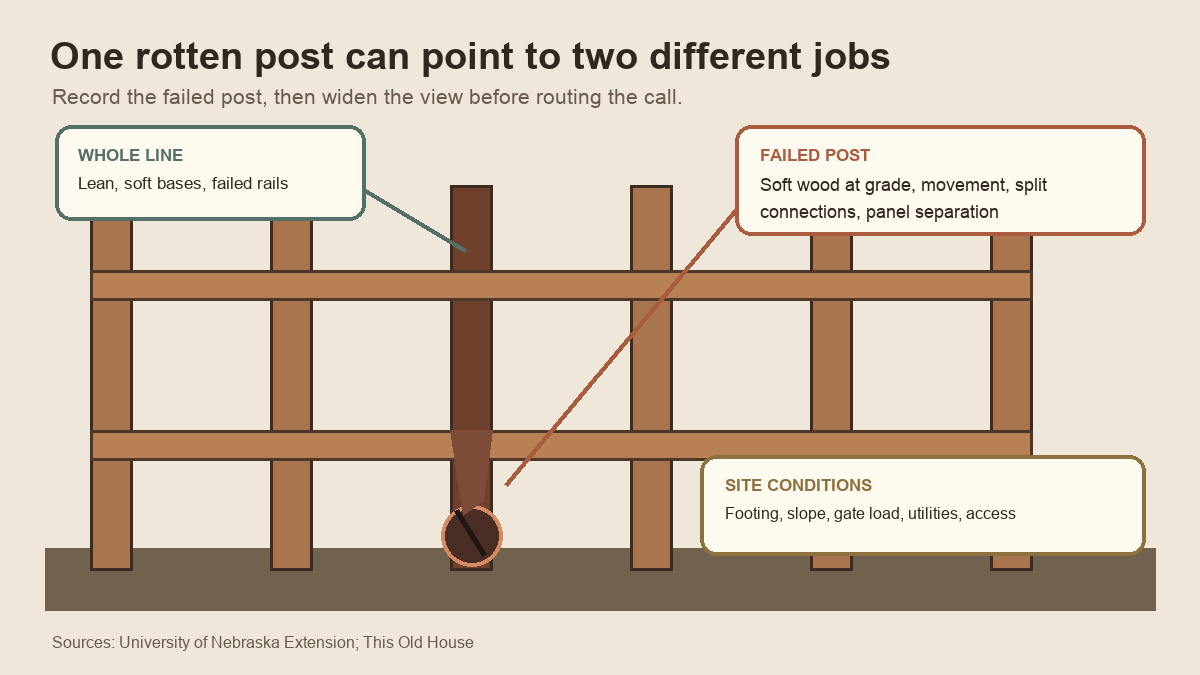
Start by recording the post location, visible condition, movement, attached rails or panels, gate load, adjacent-post condition, footing, access, and any immediate fall or sharp-fastener exposure. An apparently isolated failure can go to a repair assessment for that section. Repeated soft posts, rail separation, or a longer run out of line calls for a wider fence inspection. Field staff make the repair decision.
That boundary matters. The best rotten fence post repair call produces a clean inspection record, not a diagnosis delivered from behind a desk.
Ask whether the section can wait for a routine visit
Handle immediate exposure before measurements. Ask where the failed post sits and what could happen if the section moves farther. A loose backyard panel over grass is a different scheduling problem from a panel leaning into a public sidewalk, pool area, driveway, play space, or neighboring yard.
Do not ask the caller to shove a post that already looks unstable. Use what they have noticed during ordinary use. Does the panel sway in wind? Did the post move when a gate closed? Are boards separating from a rail? Are nails, screws, or broken wood exposed where someone could brush against them? Has the section dropped far enough to block a gate or path?
If a panel may fall or sharp hardware is exposed, tell the caller to keep people and pets clear. Escalate the record according to company policy. Office staff should avoid promising an emergency repair time until the field team has accepted the job and checked access.
A gate deserves special attention because opening and closing it puts load into its posts and hardware. If the complaint centers on a dragging or twisted gate, use the sagging gate call guide to capture hinge, latch, post, and clearance details.
Describe the post in plain, observable terms
“Rotten” can mean dark color, peeling finish, a soft patch, a split, insect holes, or wood that has crumbled away at grade. Record the caller's words first. Then ask a few concrete questions without turning the call into a homeowner inspection exercise.
Where does the damage appear: at ground level, above the concrete, around a rail connection, at the top, or down one face? Does the wood look soft or crumbly? Is there visible fungal growth? Does the post lean, twist, or move separately from the rest of the panel? Have rails pulled away from it?
University of Nebraska-Lincoln Extension's guide to native wood fence posts explains that post durability depends on wood species, preservative treatment, environment, and drainage. It also identifies ground level as a common high-decay area. Those facts help the office ask where the caller sees damage. They do not let anyone determine hidden condition by phone.
Material belongs in the record too. Ask whether the post is wood, metal, masonry, or a material the caller cannot identify. For wood, request any known species or treatment information from an old proposal or invoice. Do not guess based on color. Weathered wood and old coatings can hide useful visual clues.
Widen the view to the connected fence line
One failed post rarely works alone. It supports rails, panels, pickets, or a gate, and those parts connect it to the next post. A tight intake checks the surrounding system before labeling the job “replace one post.”
Ask the caller to stand back and look along the fence without touching it. Is the run straight, or does it wave and lean? Do the rails remain level on each side of the reported post? Are the neighboring posts upright? Has a panel pulled away at either end? Does the same softness or crumbling appear at other post bases?
This Old House's decayed fence post replacement guide lists visible rot, soft or crumbling wood, leaning, instability, and panel separation as relevant signs. It also advises checking adjacent posts when one has decayed, especially if the posts were installed at the same time.
That does not mean one rotten post proves the entire fence is failing. It means the office should preserve the pattern. “Customer reports one soft post; adjacent posts appear upright” is useful. So is “customer reports soft wood at three consecutive bases and a rail separating near the middle post.” The estimator can decide how far the inspection should extend.
The footing and attachments can change the job
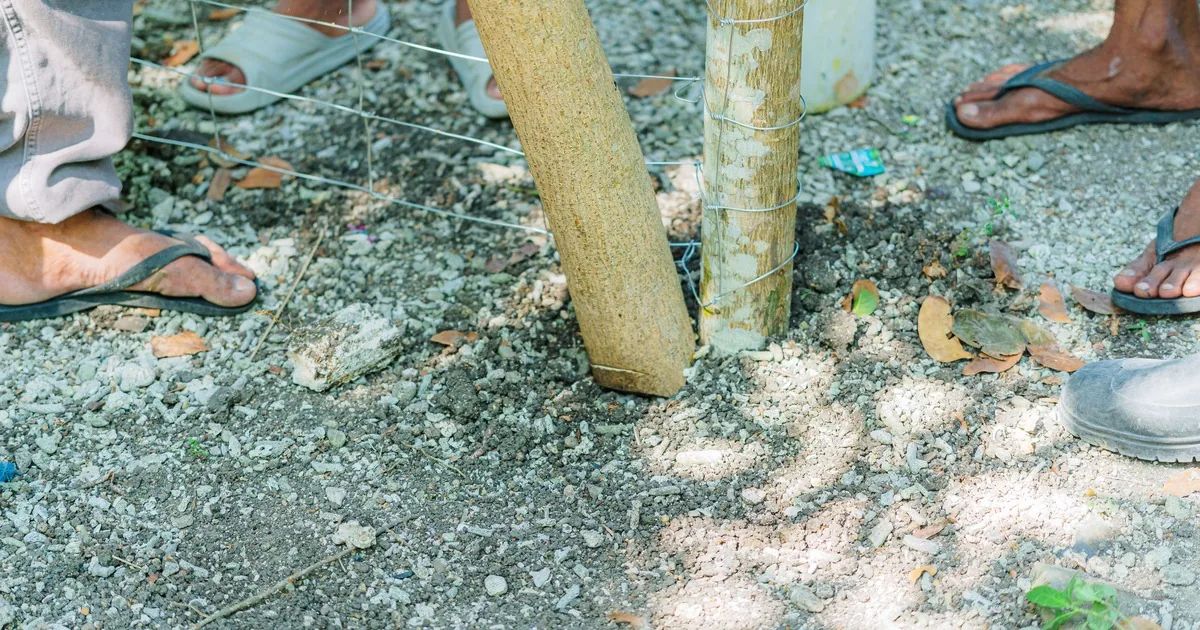
Ask what the caller can see at the base. Is the post set in exposed concrete, surrounded by soil or mulch, attached to a metal support, or mounted on a hard surface? Is water collecting nearby? Are vines, shrubs, stacked materials, or a raised garden bed covering the area?
Keep the answer descriptive. A photograph of concrete around the base does not show its size underground. A post that moves could have decayed wood, a shifted footing, failed hardware, or more than one problem. The repair crew needs room to expose and remove materials safely before it can confirm method and scope.
The attached fence matters just as much. Count the rails meeting the post. Note whether panels are prefabricated or built in place, whether pickets overlap the post, and whether a cap, trellis, lattice panel, mailbox, light, or gate is attached. Ask whether boards appear reusable, but leave that judgment open.
This Old House's replacement sequence includes detaching rails or panels, removing the old post and debris, checking alignment, preparing the post location, setting the replacement, and reconnecting the fence. The exact method varies. For call intake, the lesson is simpler: a post repair includes everything that must come off, stay supported, and go back together around it.
Get photos that answer scope questions
A caller may send ten close-ups of brown wood and still miss the fence line. Ask for a small, deliberate photo set:
- One wide view that shows the full affected section and adjacent posts
- One view from each accessible side of the failed post
- A close view of the post at ground level and at each rail connection
- Separate views of a gate, exposed fasteners, concrete, vegetation, or another damaged post
Photos should document the complaint, not prove structural condition. Tell the caller to take them from a stable walking surface and avoid entering a neighbor's property without permission. Nobody needs to dig, pry, remove a cap, pull on a panel, or probe soft wood for the sake of an estimate request.
Record which views were requested and received. If the image set skips the adjacent posts, ask once more before routing. A close-up can confirm visible damage while hiding a long lean across the run.
Access details belong in the work order
A clean photo does not tell the crew whether it can reach the post. Ask which side is accessible, whether a locked gate controls entry, and who will be present. Note narrow side yards, steep grades, stairs, retaining walls, pools, sheds, dense planting, pets, and neighbor-side access.
Ask about nearby underground or mounted services without claiming where any utility runs. Sprinkler lines, low-voltage lighting, gate wiring, drainage, and other site features can affect the field plan. The contractor should follow its utility-location and excavation process before ground disturbance.
Property control also matters. Is the caller the owner, a tenant, a property manager, or a neighbor? Does the fence sit wholly on the caller's property, or is its location uncertain? The office records what the caller says and who can authorize work. It should not settle a boundary or permission question.
For a broader repair decision involving multiple sections, route the caller to the fence repair versus replacement intake. That article covers the whole-fence choice. This call record should stay focused on the reported post and the evidence that widens the inspection.
Route by the failure pattern, not the requested fix
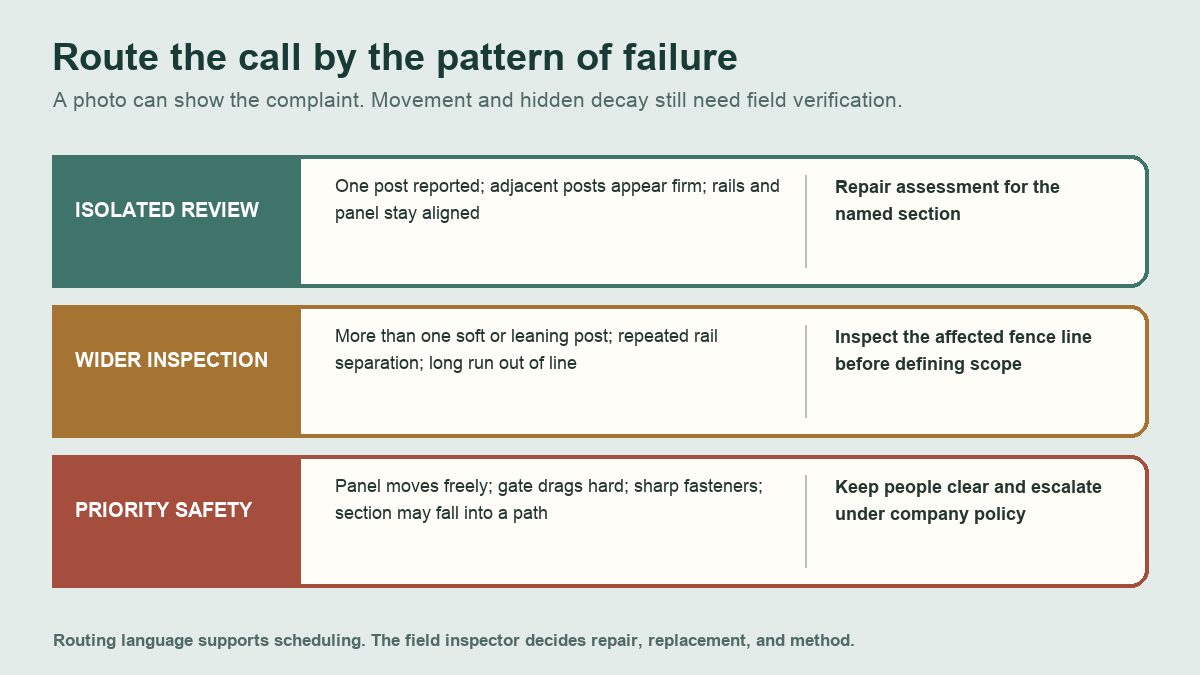
An isolated review fits a report limited to one post when adjacent posts appear firm, rails remain attached, the panel stays aligned, and access is clear. Call it a repair assessment. Avoid promising a one-post replacement until the contractor sees the footing and connected materials.
Choose a wider fence-line inspection when the caller reports more than one soft or leaning post, repeated rail separation, several misaligned sections, mixed repairs from different years, or uncertainty about how far the movement extends. The appointment record should say which run needs review and where the visible pattern begins and ends.
Use priority escalation when a panel moves freely, a gate cannot operate safely, sharp fasteners are exposed, or a section may fall into an occupied path. Company policy controls the response. The office's job is to describe the exposure clearly enough for the field lead to make a quick decision.
San Mateo County's guidance on estimates and scope of work calls for repair tasks to be recorded line by line with dimensions, measurements, and explanations. A fence repair office can apply that discipline to intake: identify the section, reported damage, connected parts, site constraints, photos, requested timing, and next review step.
Read the record back before ending the call. “I have one wood post reported soft at ground level beside the rear gate. The gate drags, the next two posts look upright, concrete is visible at the base, and shrubs block the neighbor side. Please send the four views we discussed. We will review them and confirm whether the appointment covers that section or a wider fence inspection.”
That is a useful handoff. The estimator opens the job knowing what failed, what remains uncertain, and where to look first.