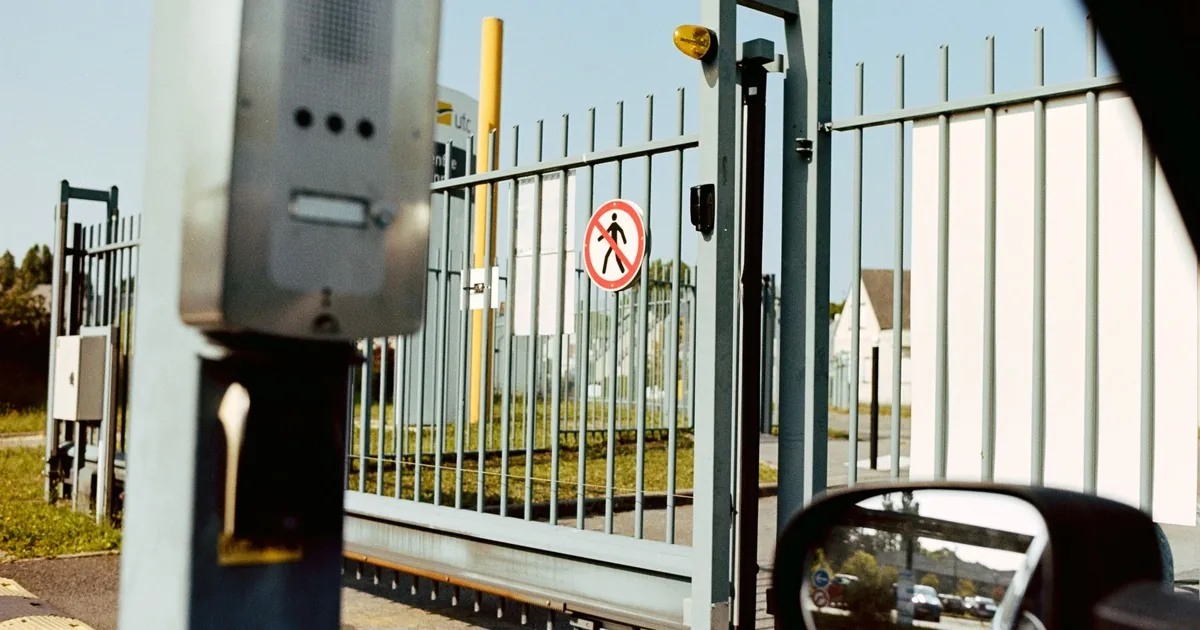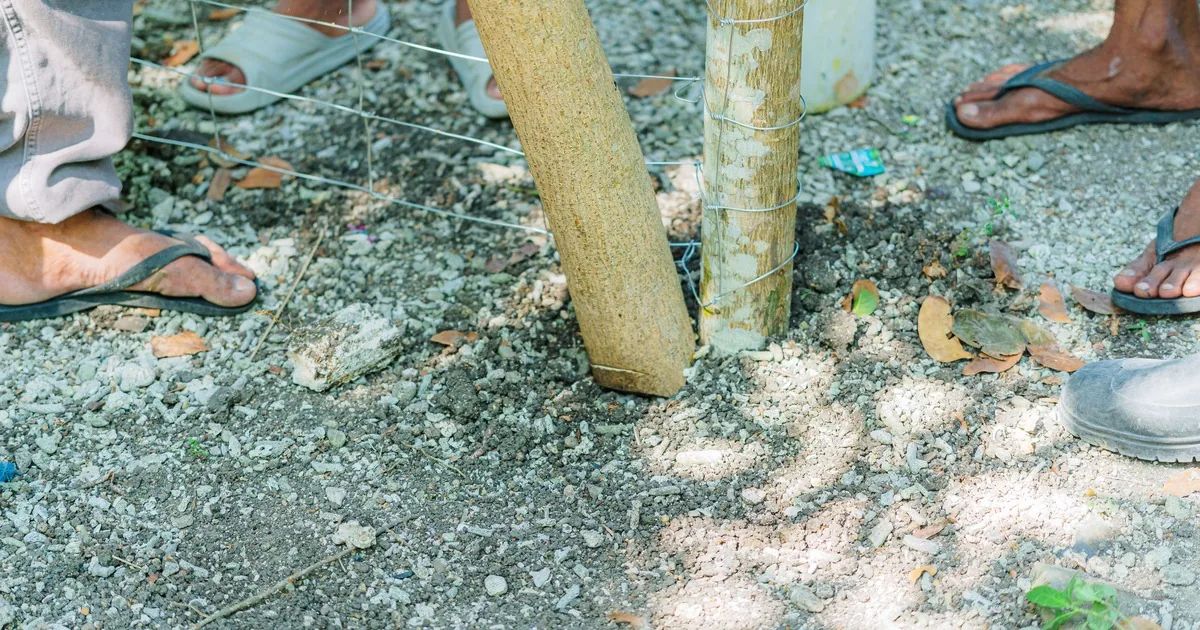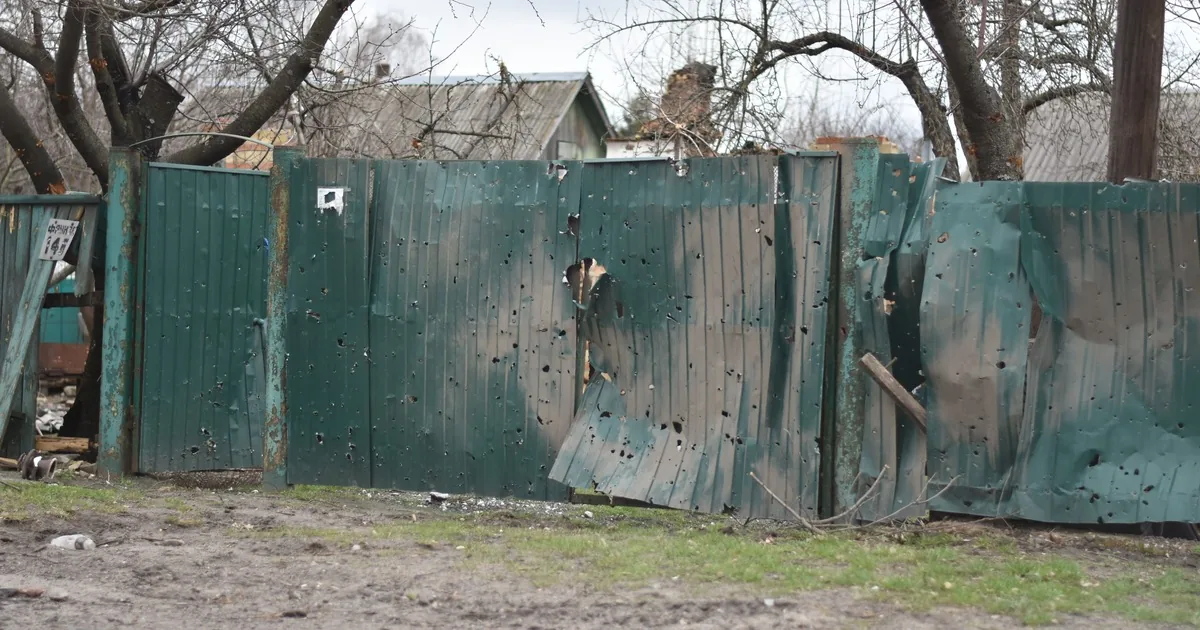
The first windy night drops three sections of privacy fence across a backyard. By breakfast, the office hears, “My fence blew down. Can somebody come today?” The useful answer starts with a short safety screen, then moves through the fence material, damaged components, access, photographs, and who can authorize the work.
That order matters. A flat panel in open grass may belong in the estimate queue. A fence touching a fallen wire, a broken pool gate, or a tree limb hanging above the work area needs a different handoff before a fence crew enters the site.
Stop the estimate script when the site is unsafe
Ask where the damaged fence is and whether anyone can approach it safely. Do not ask the caller to walk through debris for a closer picture. You need their current observations, not a better photograph at the cost of exposure.
Screen for a downed or sagging wire, a tree or limb resting on the fence, a suspended branch, unstable masonry, standing water around electrical equipment, or debris blocking a street or public walkway. FEMA storm guidance tells people to avoid downed power lines, large branches, and debris during cleanup. If the caller reports one of those conditions, pause ordinary fence dispatch and follow the company’s hazard policy. The utility, emergency services, a tree company, or the property manager may need to clear the site first.
Next ask what the fence contains. Does it enclose a swimming pool? Did a gate stop latching? Can a child or pet now leave the yard? Is a commercial property unsecured? The CPSC pool-barrier guidance treats the enclosure and self-latching gate as safety controls. Office staff should flag a failed pool barrier for priority review without promising that a temporary board, rope, or closed gate restores compliance.
Record the exact words. “Caller sees a cable across the rear fence and has kept everyone inside” is useful. “Electrical hazard confirmed” goes beyond what the office knows.
Build a fence map while the caller is looking at it
Once the site passes the safety screen, locate the damage. “The back fence” is too vague for a crew arriving at a corner lot with several fence runs. Ask whether the failure is along the rear boundary, a side yard, a street edge, a pool, a garden, or a driveway gate. Note the nearest fixed reference, such as the shed, utility meter, alley gate, or northwest corner.
Then capture the fence itself:
- material, including wood, vinyl, chain link, ornamental metal, composite, masonry, or mixed construction
- approximate height and the number of affected panels, bays, posts, rails, pickets, or gate leaves
- what changed during the storm: leaning, rotation, cracking, bending, detachment, impact, washout, or a section lying flat
- whether the damage reaches a corner, transition, gate opening, retaining wall, or another structure
- whether loose pieces remain attached or have been moved
Use the caller’s count as an estimate. “Three six-foot wood panels appear down” tells the field team far more than “about 24 feet needs replacement,” especially when the caller has not measured the run.
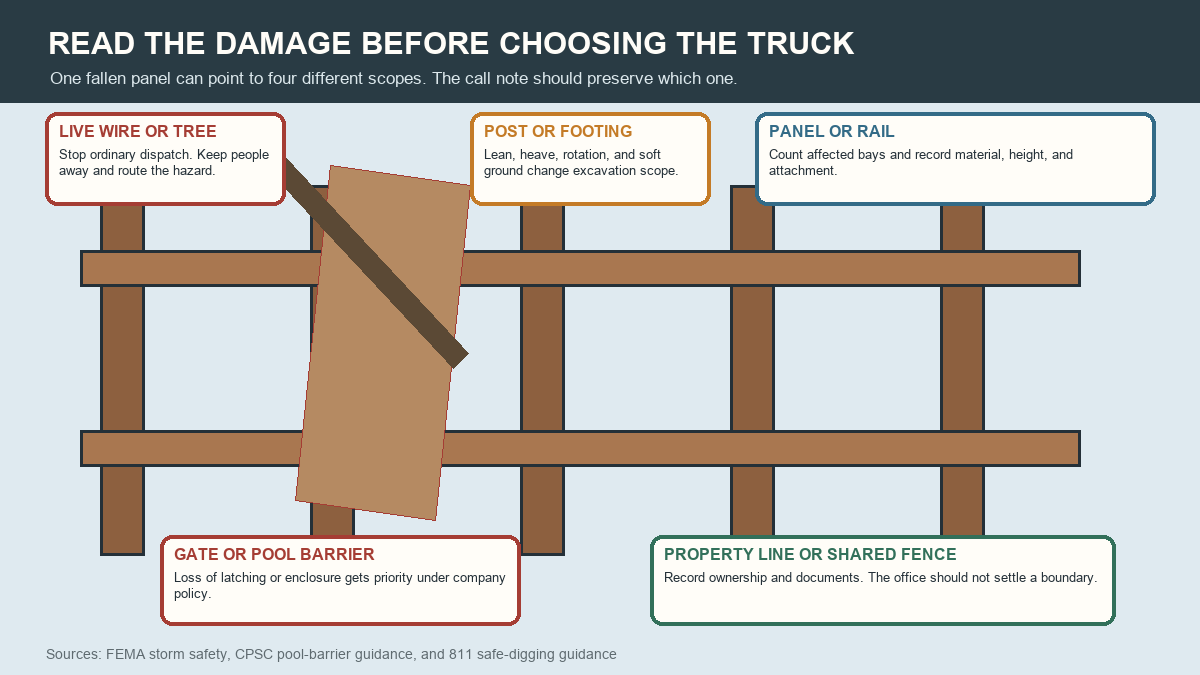
A wide photograph should show the failed section in relation to the yard. Closer images can show a leaning post, split rail, bent bracket, broken weld, detached hinge, cracked concrete, or impact point. Contractor storm-repair pages commonly request photographs from several angles, affected-component details, and measurements to prepare an estimate. The office can use those inputs to size the visit. They do not prove the final scope.
Keep repair evidence separate from repair conclusions
Storm callers often ask whether the fence can be repaired or must be replaced. The office should resist a quick verdict. A panel may look intact while its posts have rotated in softened soil. A wooden post can break at grade where a photograph hides the decay. Vinyl sections may be reusable, but matching an older profile could be a separate issue. A gate that still swings may have lost its alignment or reliable latch.
This is where a storm-damage intake stays distinct from a general repair-versus-replacement quote call. The storm call begins with immediate site conditions and the event that caused the failure. The technician still owns the repair decision after seeing posts, footings, rails, fasteners, adjacent sections, soil movement, and available materials.
Ask what struck the fence. Wind loading, a falling branch, a whole tree, moving water, a vehicle, or flying debris can produce different damage patterns. Ask whether nearby sections now move when the wind blows, but do not tell the caller to push, pull, climb, or remove anything. Note earlier lean, rot, corrosion, loose hardware, or prior patches as history rather than cause.
If the caller has an insurance claim in mind, capture the carrier’s request and any inspection date. Promise a written estimate only if that matches company practice. Fence staff should document the damage and proposed work, while the insurer decides coverage.
Access and ownership can change the appointment
A crew may reach the outside of a rear fence only through a neighbor’s yard, an alley, or a narrow gate. Ask about vehicle parking, gate width, steps, steep grade, soft ground, locked areas, pets, tenants, and landscaping beside the fence. A fallen tree may block the direct route even after its immediate hazard has been cleared.
Find out who owns or manages the property and who can approve work. For a rental, condominium, commercial site, or managed community, record the owner or manager contact and the person who will provide access. If the fence sits on a shared boundary, note what the caller believes and whether a survey, site plan, prior invoice, or association document exists. The office should not settle ownership or a property line during intake.
Post work raises another question: will the likely scope require digging? The national 811 safe-digging service names fence installation among projects that need underground utilities marked before excavation. State notice periods and rules differ, so record the job address and let the company’s local process determine the ticket and schedule. An old post hole does not guarantee a new excavation is clear.
Do not promise a permit outcome either. Fence height, location, pool use, corner visibility, historic districts, and local rules can all affect review. The address lets the office check the right jurisdiction after the call.
Turn the intake into one job file
A field-ready note lets the next person understand the property without replaying a rushed conversation. Keep four lanes together: safety, damage, access, and authority.
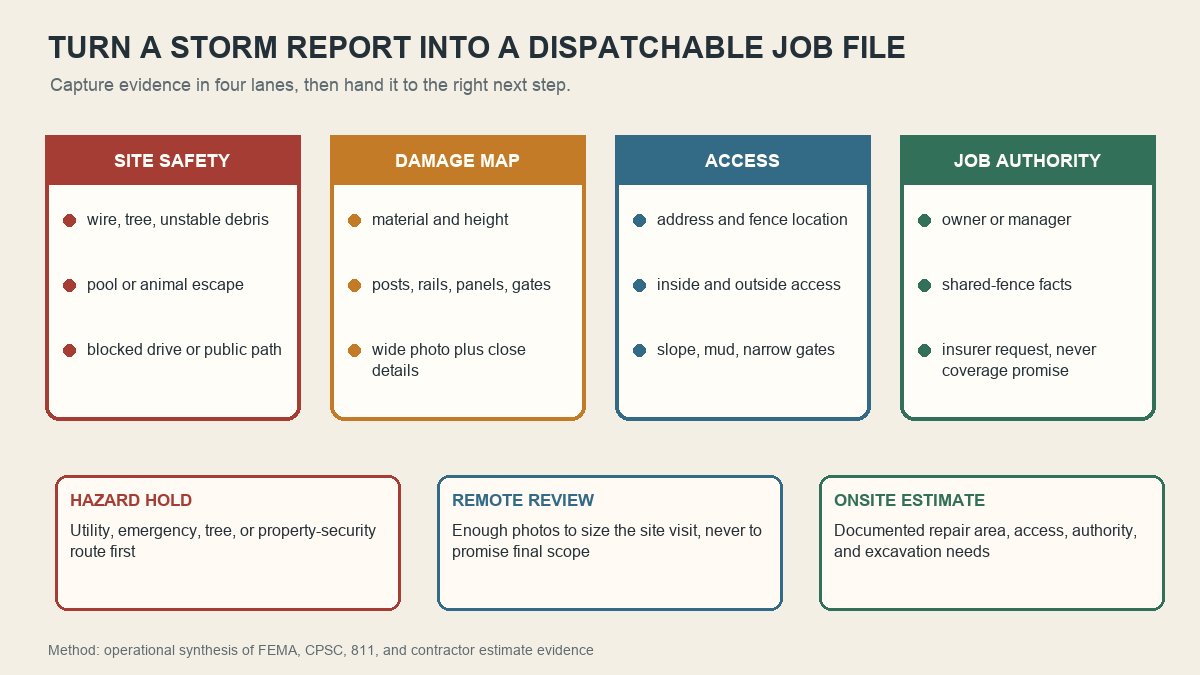
A strong entry might read: “Rear-yard six-foot wood privacy fence. Caller reports three panels down and two posts leaning after overnight wind. No wires seen. Fallen branch rests on one panel; tree company visit is scheduled before fence access. Pool absent. One dog is being kept indoors. Crew access through a 42-inch side gate; soil is muddy. Owner can approve work. Wide and close photos attached. Review after branch removal, then schedule onsite estimate.”
That note avoids diagnosis. It also tells the estimator what remains unresolved.
The handoff usually falls into one of three lanes. A hazard hold keeps a fence crew out until the reported wire, tree, public-access, or property-security issue follows company policy. Remote review lets an estimator inspect photographs and decide what kind of site visit to book. An onsite estimate fits a documented, safely accessible repair area with the owner or authorized manager identified.
During a widespread storm, tag calls by hazard and access status before sorting them by who called first. A broken pool enclosure or fence touching a wire should not sit behind a cosmetic picket repair. An AI receptionist can capture the same fields after hours, but the routing rules and technical decisions still belong to the fencing company.
The best callback begins with one concrete update: “The branch is cleared, the yard is accessible, and the owner uploaded six photos.” At that point, the estimator is opening a job file rather than starting the storm story again.