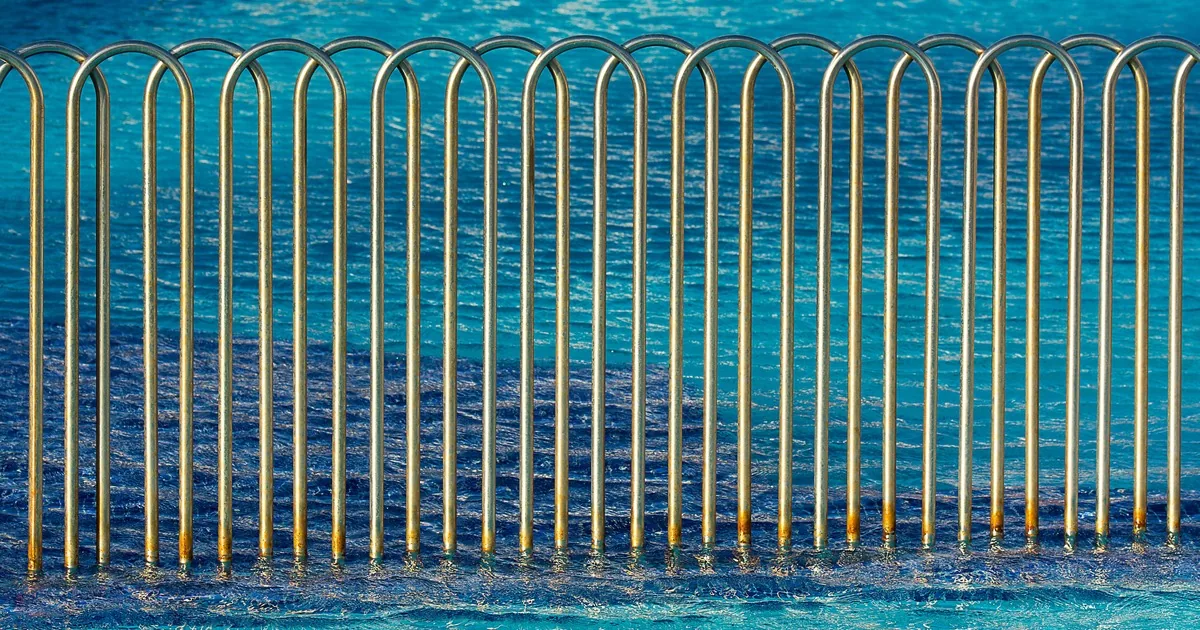
The caller says, “I need about 80 feet of black aluminum fence around a new pool. Can you price that?” Linear footage helps. It does not define a pool-barrier project.
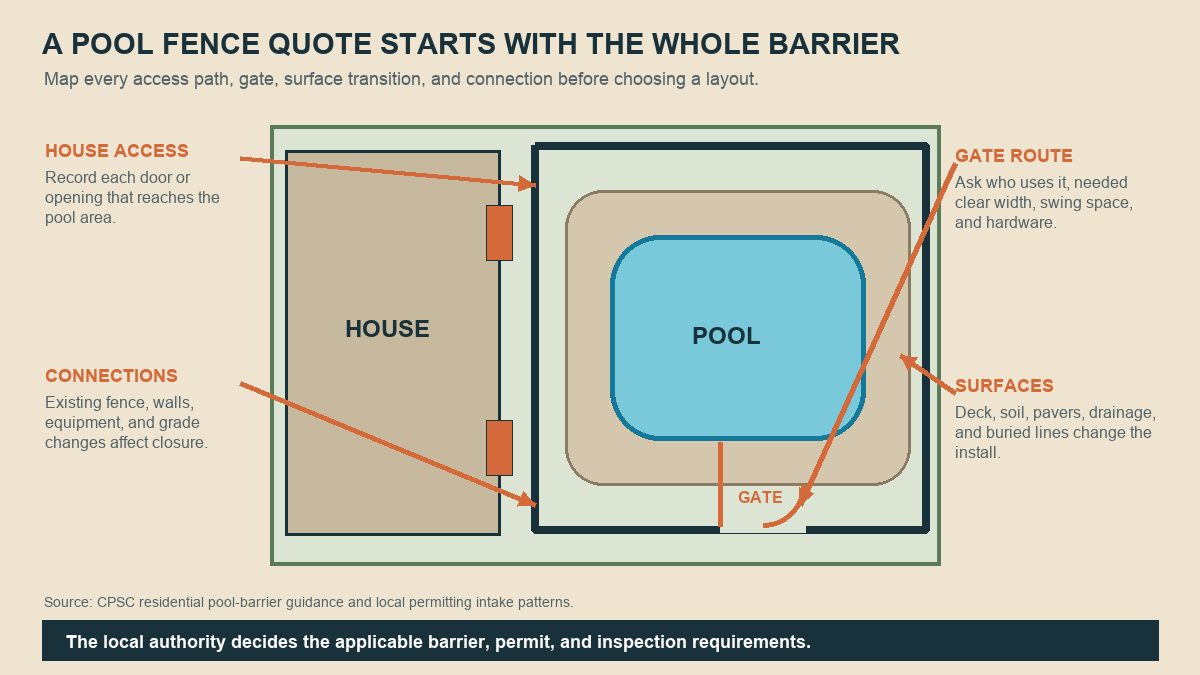
A useful pool fence installation call records the property address, pool type and construction status, the complete proposed barrier, every way a person can reach the pool, existing fence sections, gate count and use, mounting surfaces, grade, known utilities, permit stage, and target date. The office should book a site measure and local requirement review before promising a layout, material package, final price, or compliance.
Start with the pool and the project address
Get the address first. Pool-barrier requirements come from the authority that governs that property, and the office needs the correct city, county, or other local path before discussing permits or inspections. A general safety guide cannot settle a local code question.
Ask what is being enclosed. Is the caller planning an in-ground pool, an above-ground pool, a spa, or a combination? Is it an existing installation, active construction, or a project that has not started? Record the pool builder, general contractor, landscape designer, or property manager when another company is coordinating the work. The fence schedule may depend on a construction sequence that the homeowner does not control.
The requested completion date needs context. “Before the pool opens” could mean before water goes in, before a final inspection, before a family event, or before the owner moves into the house. Write down the actual milestone. Do not promise that a fence slot guarantees another contractor’s inspection or approval date.
Ask whether plans have been submitted and whether the caller has a site plan, survey, permit documents, or written comments from an inspector. The City of Raleigh’s pool and spa permit guidance is one example of a local process with drawings, permits, barrier details, and inspections. Those particulars belong to Raleigh. The useful national lesson is narrower: identify the project address and current review stage, then verify the rules that apply there.
Map the whole barrier before discussing material
A request for aluminum, vinyl, wood, chain link, or removable mesh often arrives before the perimeter is settled. Ask the caller to describe what will surround the pool on every side. Will the new fence form a complete enclosure? Will it connect to the house, a garage, a retaining wall, an existing yard fence, or another structure? Which portions already exist?
Existing fence cannot be treated as approved because it looks tall in a phone photo. Record its material, apparent condition, gate locations, openings, horizontal members, grade changes, and every place where old and new work would connect. Field measurement and local review determine whether it can remain part of the plan.
The U.S. Consumer Product Safety Commission’s residential pool-barrier guidance covers barriers, gates, house access, above-ground pools, and other ways young children can reach the water. CPSC also tells readers to check local requirements. That makes the guidance useful for intake, but it does not authorize the office to certify a design over the phone.
Request photos that preserve context. One image should show the pool and yard together. Others should show each proposed fence run, every connection point, the house side facing the pool, existing gates, steps, deck edges, retaining walls, and narrow access. A tight picture of a preferred picket style cannot reveal the site.
Give each gate its own intake record
Gate questions deserve more than a count. Ask where people need to enter, who uses each opening, and what must pass through it. A pedestrian route, mower path, pool-service entrance, wheelchair route, and equipment access opening may have different clear-width and hardware needs. Record whether the caller wants a single or double gate, but leave the final choice to the measured design.
Ask about swing space. Steps, sloped pavement, furniture, landscaping, pool equipment, and a narrow side yard can interfere with a proposed gate. Note any closer, latch, alarm, access control, or removable hardware the caller expects. If a pool service company needs routine entry, capture how the owner plans to manage that access.
CPSC’s drowning-prevention guidance recommends layers of protection, including barriers with self-closing and self-latching gates surrounding pools. The receptionist can record those functions and explain that the estimator will review the gate setup. Phone staff should not name an exact latch position, gate direction, opening size, or barrier dimension as a universal rule. Adopted requirements vary, and the site still has to be measured.
An existing gate that does not close or latch belongs on a different route. Ask whether pool access is currently uncontrolled, whether children are present, and whether the gate or post appears unstable. Follow the company’s prompt safety and repair policy. Avoid coaching the caller through hardware adjustment or a makeshift closure.
Record the ground, deck, and route to the work
The same fence style can involve driven posts in soil, core drilling into concrete, surface-mounted posts on a deck, attachments near masonry, or transitions across several surfaces. Ask what lies under each proposed run. Note concrete decks, pavers, lawn, gravel, artificial turf, retaining walls, raised decks, and visible drainage features.
Grade matters. A slope can change clearances and panel layout. A retaining wall can create a drop or an attachment question. Water moving across the site may affect excavation and footing planning. Keep the phone note descriptive: “The yard drops toward the back corner” is better than a guessed degree of slope.
Then ask how the crew and materials reach the work. Is there side-yard access, or must everything pass through the house or an existing gate? Record steps, tight turns, overhead lines, soft ground, septic areas, irrigation heads, pool equipment, outdoor kitchens, mature planting, and restrictions on work hours. Tenant-occupied and managed properties need the onsite contact and the person authorized to approve changes.
Post and footing work can disturb the ground. Call 811’s contractor guidance directs professional excavators to use the applicable state 811 process before breaking ground. The intake should also record private systems the owner knows about, such as irrigation, low-voltage lighting, propane, pool plumbing and electrical, invisible pet fencing, or private utility feeds. The field team decides the locate and excavation plan.
Separate local review from the sales conversation
Pool-fence callers often ask a direct question: “Will this pass inspection?” The honest answer is that the company must confirm the site, proposed design, and requirements for that address.
Record who is responsible for the permit and who supplies drawings. Some fence companies handle part of that work; others give the owner or pool contractor the documents needed for a separate application. Use the company’s actual policy. Capture HOA or architectural approval too, but do not treat it as a substitute for government review.
Ask whether an official has already rejected or commented on a plan. Save the written correction or inspection note when possible. A message such as “the gate failed” is too vague. The field and office teams need the exact cited condition, the drawing version, and the authority that issued it.
Material preferences still belong in the record. Ask about style, color, privacy, view, maintenance expectations, existing fence match, and budget conversation. Keep them behind the safety and site questions. A material that the homeowner likes may still require a different layout, gate package, or connection detail after review.
Match the call to the correct first appointment
Four similar requests can require different starts. A new pool with no settled barrier plan needs a site measure and local requirement review. A caller hoping to reuse an existing yard fence needs a whole-barrier assessment before anyone promises that old sections can stay. A failed gate needs prompt repair routing. A site with a deck, steep grade, retaining wall, or congested buried services may need a senior estimator or installation specialist.
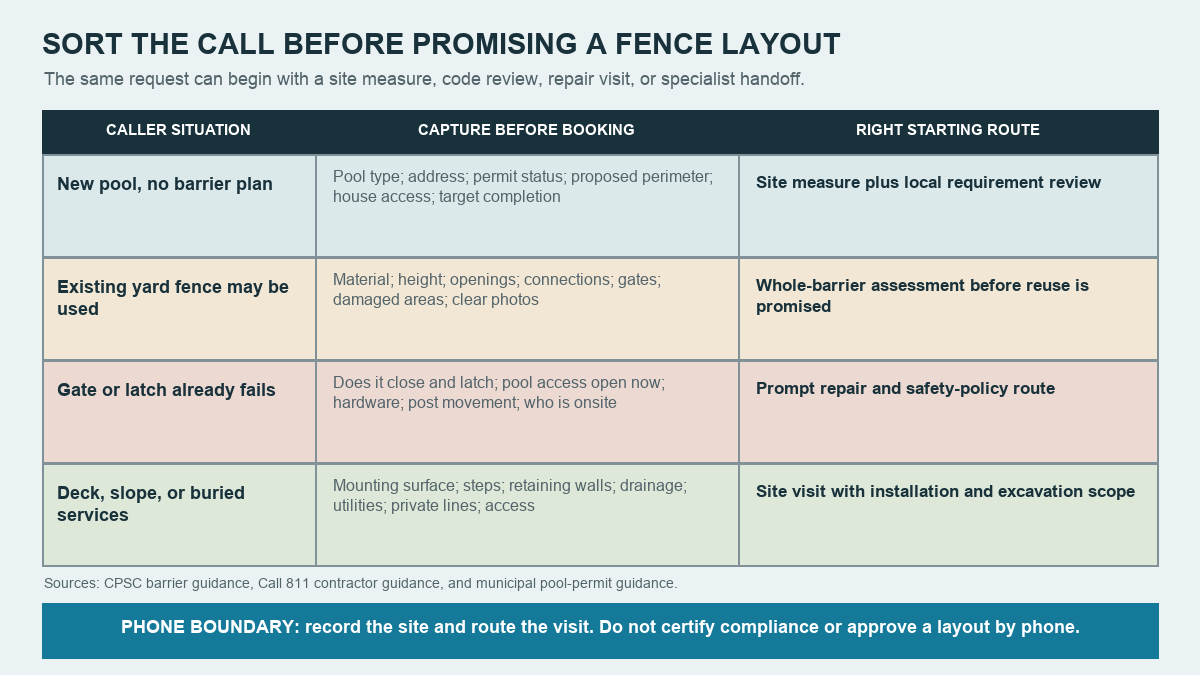
This installation workflow sits beside the broader fence repair-versus-replacement intake guide. If the caller’s immediate problem is a gate that drags or misses its latch, use the sagging gate repair call guide to capture movement, post condition, and access without guessing at the failed part.
When the caller presses for a number, explain what the estimate still needs: measured fence runs, connection details, gate count and function, materials, surfaces, excavation, access, permit responsibilities, and local review. Give the company’s real estimate policy. Do not convert an unverified footage guess into a final quote.
The field estimator should arrive with a usable picture of the property before opening a tape measure: where the pool sits, how people reach it, which boundaries already exist, where gates may go, what the crew must cross, and which authority will review the work. That record is the first piece of the barrier.