A homeowner calls about “about 150 feet of black aluminum fence with two gates” and asks for a price. The footage and color sound useful. They still leave the estimator blind to the questions that can change the layout: what the fence must do, where each run starts and stops, how the grade changes, who uses the gates, what lies underground, and whether a pool or small pet sets tighter constraints.
A strong aluminum ornamental fence estimate call records the property address, purpose, proposed runs, known measurements and their source, height and style preferences, grade, gates, connections, access, approval status, and digging conditions. The office should schedule a field measure before promising a product, layout, compliance, or final price.
Start with the job the fence must perform
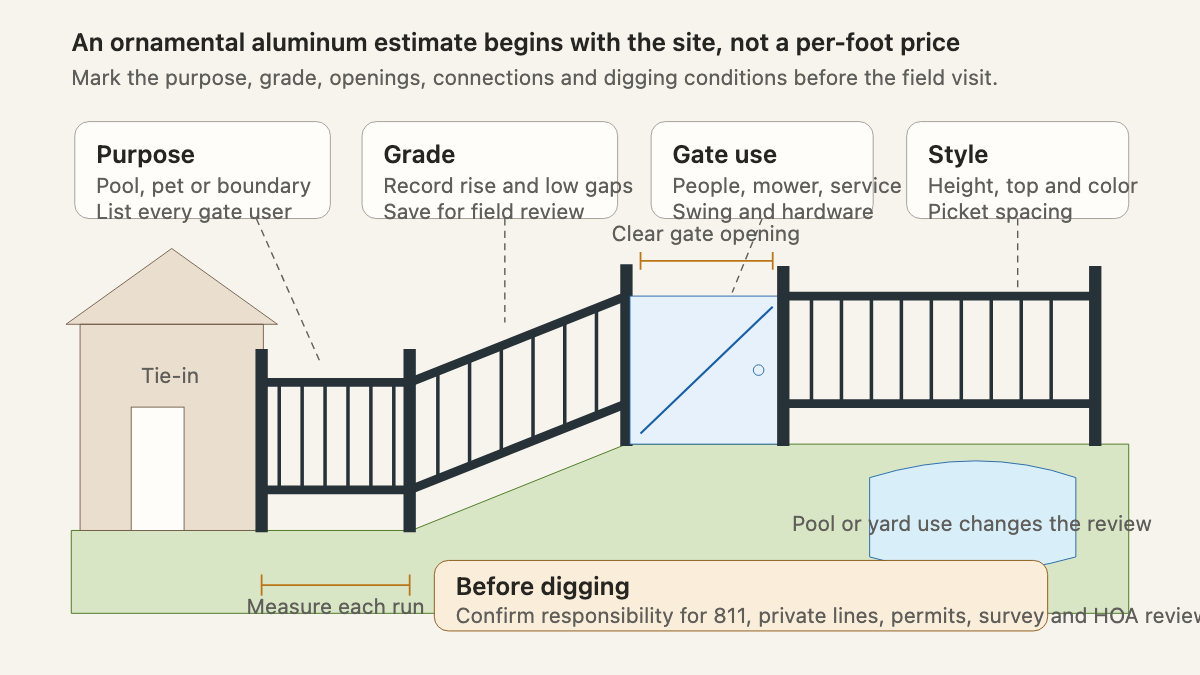
Ask why the caller wants ornamental aluminum. Common answers include defining a front yard, preserving a view, enclosing a pool, containing a dog, replacing a rusted steel fence, or adding a finished boundary around a patio. Write down the caller's reason in plain language. “Keep a small dog inside without blocking the lake view” gives the estimator more direction than “residential aluminum.”
Then get the project address. Local zoning, permits, pool-barrier rules, easements, corner visibility requirements, and HOA standards can vary by property. The office can record the approval path and any documents the caller already has. It should not declare a fence compliant from a product photo or a neighboring installation.
If a pool is involved, move that fact to the top of the record. The U.S. Consumer Product Safety Commission's residential pool-barrier guide recommends a complete barrier, limits on openings and bottom clearance, and self-closing, self-latching pedestrian gates. CPSC also says its booklet is guidance, not a mandatory national standard, and tells owners to check local requirements. That distinction matters on the phone. Capture the pool, gate, house-access, grade, and project-address facts, then route the job for local review.
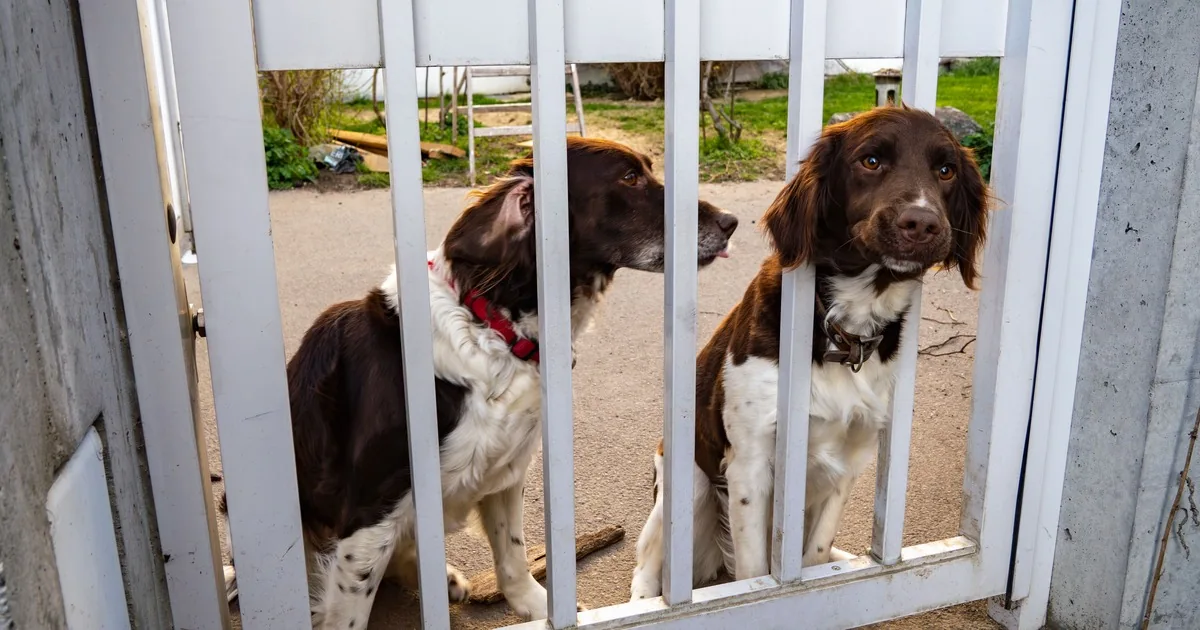
Pet containment needs its own details. Ask what kind of animal the customer is trying to contain, whether it digs or squeezes through openings, and whether the caller has a preferred picket spacing or lower section. Do not promise that a named panel will contain a particular animal. The estimator needs the animal context and the actual site.
Trace each run instead of accepting one footage number
A single total hides corners, changes in grade, house connections, existing fence, and gate openings. Ask the caller to describe the route in sections: left front corner to side gate, side gate to rear property line, rear line to patio wall. Record where each run starts, ends, turns, or changes height.
Ask where the footage came from. A survey, scaled plan, contractor drawing, wheel measurement, online map, and visual guess carry different levels of confidence. Keep the number and its source together: “Owner estimates 150 feet from an online map; not field measured.” That sentence protects the estimator from treating a rough planning number as a material takeoff.
Boundary questions stay separate from fence measurements. Ask whether the property line is marked and whether the owner has a survey. If the caller mentions a disagreement, missing pin, shared fence, or neighbor approval, route the issue under the company's normal boundary policy. The property-line and survey call guide covers that conversation without asking phone staff to settle ownership.
Connections deserve a note too. Will the new fence meet a house, masonry column, retaining wall, wood fence, chain-link section, deck, or existing ornamental panel? Request a wide photo and a close photo of each tie-in. A close image shows hardware and surface condition. The wide view shows whether the connection sits beside a step, downspout, utility meter, gate swing, or grade break.
Grade changes the panel plan
“Mostly flat” often means one side yard drops several feet toward the street. Ask where the ground rises or falls along the route and whether the change is gradual or concentrated in a short section. Note retaining walls, swales, exposed rock, tree roots, wet areas, and low spots where the caller sees a gap under an existing fence.
Ornamental panels can follow grade in different ways, depending on the specific system and the slope. Ameristar's Echelon Plus installation instructions use product-specific post spacing and panel details, and the guide says footing conditions vary with local weather and soil. Manufacturer documents are useful evidence that the system and site matter. They are not permission to choose a panel over the phone.
Ask for a side-on photo that includes enough ground to show the change. Do not ask the homeowner to climb a bank or stand in traffic for a better angle. The estimator can measure rise, panel behavior, bottom clearances, and post conditions safely during the visit.
Give every gate a purpose and clear opening
“Two gates” is a count, not a scope. Create a short record for each opening. Ask who or what passes through it: people, a mower, trash bins, pool service, a wheelchair, a utility cart, or a vehicle. Record the desired clear opening if the caller knows it, along with the object that drives that width.
Next, ask where the gate should sit and what surrounds it. A sloped walk, step, hedge, downspout, retaining wall, narrow side yard, or outward-opening door can affect swing room. Note whether the caller expects a single or double leaf, self-closing hardware, keyed access, keypad, or connection to an existing access system. The field team should verify hardware, posts, clearances, direction, and local rules.
Pool gates need careful language. CPSC recommends that pedestrian gates open away from the pool and use self-closing and self-latching hardware, with additional guidance for latch placement and nearby openings. Cite those points as federal safety recommendations. The adopted rule for the address still comes from the relevant authority.
Ask whether any existing gate drags, fails to latch, or stands open. That may be a repair or immediate safety issue rather than a routine new-fence estimate. Route it according to company policy and use the sagging gate repair intake guide when the request centers on a failed gate.
Record style choices without locking the product
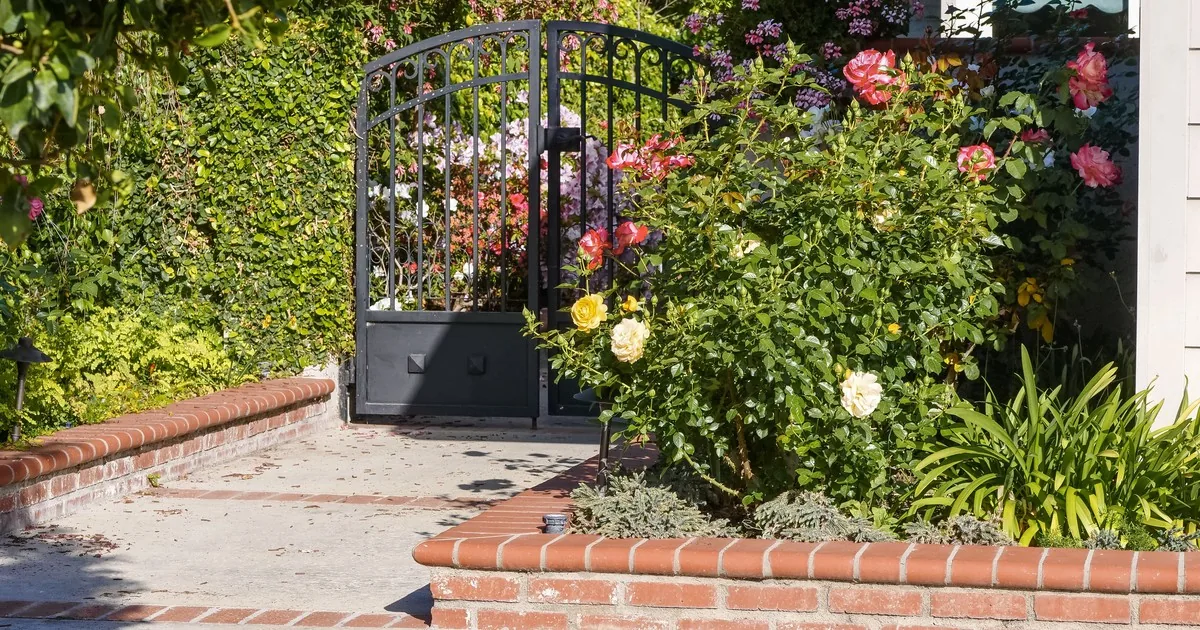
Ornamental aluminum callers often arrive with a screenshot. Ask them to send the source page or product name with the image. Then capture the visible preferences: black, bronze, or another finish; flat top or exposed pickets; straight or arched gate; approximate height; decorative rings or finials; and desired spacing.
Use ordinary words in the intake. The estimator can translate “simple flat top with narrow spaces near the bottom” into available product lines after checking purpose and site conditions. Avoid promising that two products from different manufacturers will match because both are black. Rail shape, picket size, panel width, finish, post profile, brackets, and ornament can differ.
If the new fence must connect to an existing ornamental section, request the manufacturer label if one is visible, plus photos of an intact panel, post, rail, cap, gate, and connection. Ask for old invoices or warranty papers. A match can still require field measurement, and an aged finish may look different beside a new panel.
Surface and digging details belong in the first call
Ask what lies under each run: lawn, planting bed, gravel, pavers, asphalt, concrete, deck, or retaining wall. Record known irrigation, landscape lighting, pool plumbing, septic components, propane, invisible pet fence, private electrical feeds, and drainage lines. Public utility locating does not identify every private line on a property.
The national 811 homeowner guidance tells people planning excavation to notify the state 811 center before breaking ground, wait for responses, confirm that affected utilities have responded, respect the marks, and dig carefully. State timing and procedures vary. The intake should identify who handles the locate request under company policy and whether the caller knows of private services near the route.
Crew access is a separate issue. Ask how panels, posts, concrete, and equipment reach the work. Note narrow side yards, stairs, locked gates, soft lawns, overhead lines, septic areas, protected landscaping, and restricted work hours. If the only route crosses a finished patio or passes through the house, the estimator needs that fact before scheduling a standard appointment.
Build a field-ready handoff
Before booking, read the project back as a route, not a shopping list. A useful handoff might say: “The homeowner wants black ornamental aluminum to contain a small dog while preserving the rear view. The owner estimates 150 feet across three runs from an online map. The left side slopes toward the street. One pedestrian gate serves the trash bins, and one wider gate must pass a 48-inch mower. The fence connects to brick columns at the patio. Irrigation and low-voltage lighting are reported near the rear run. Survey and HOA approval are pending.”
That record gives the estimator a starting point. It does not turn a visual estimate into a contract.
This material-specific intake sits beside the broader fence estimate scheduling guide. Use the general guide for booking and lead handling. Use this one when aluminum panel systems, grade, gates, spacing, and finish compatibility control the visit.
An AI receptionist can capture the same route, gate, approval, and access questions after hours, but the script should preserve uncertainty. The last line in the handoff should name what the field visit must verify: measurements, boundaries, grade, product, openings, attachments, excavation conditions, approvals, and price. The estimator can then begin at the first corner with the right questions already answered.