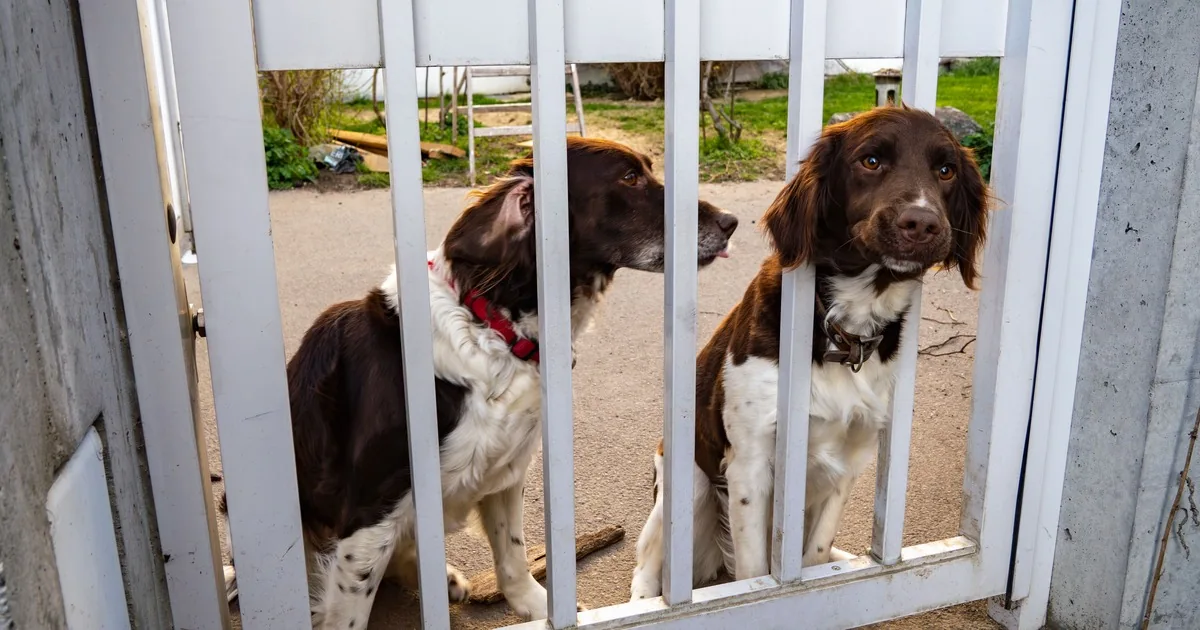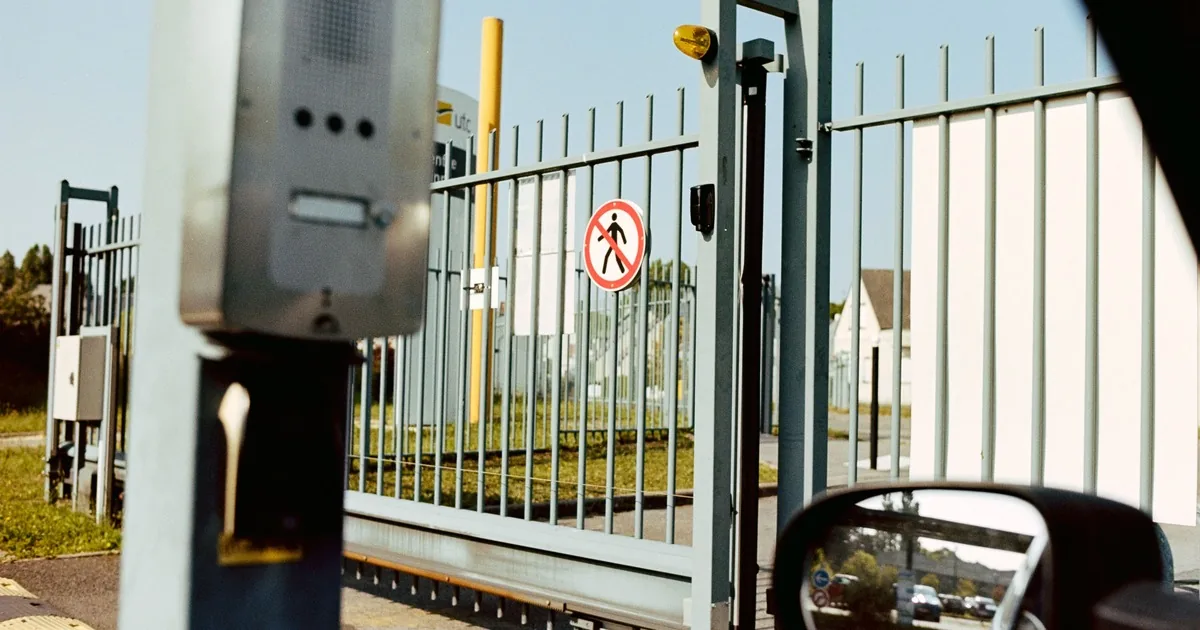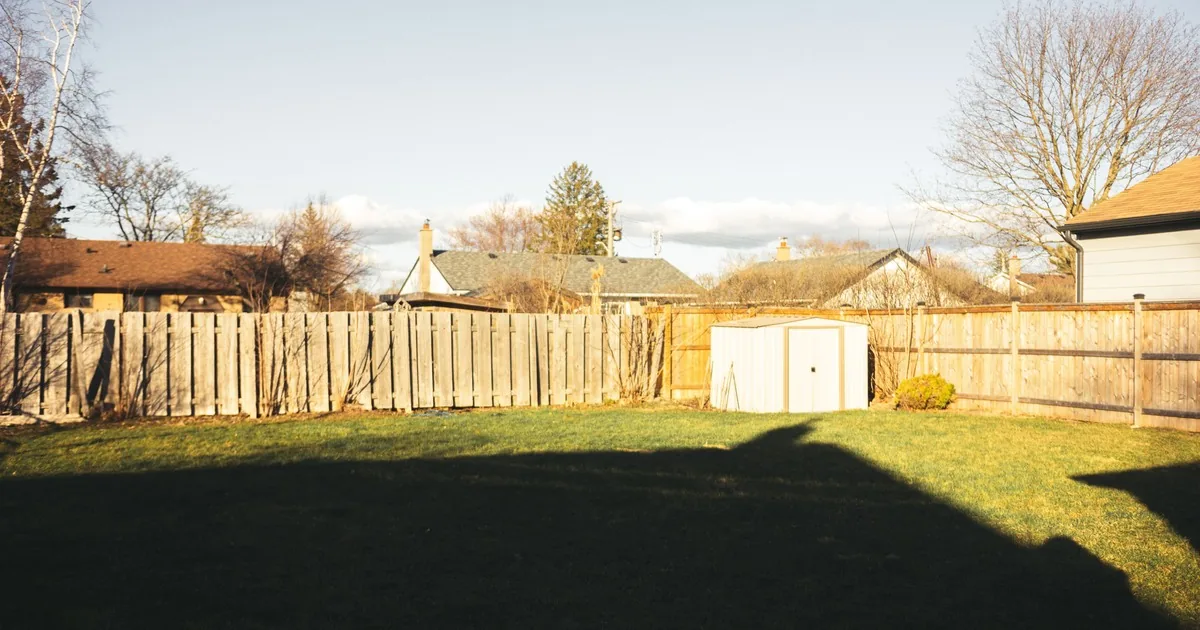
A homeowner calls from the back porch and says, “We need about 180 feet of six-foot privacy fence, probably wood, with one gate.” That sounds ready for a quote. It is still missing the facts that make the visit useful: what the customer wants screened, where the fence begins and ends, who measured the footage, how the yard slopes, what must pass through the gate, and whether the crew can reach the rear line.
A strong backyard privacy fence quote call captures the project address, purpose, proposed route, source of the measurements, height and material preferences, grade, gates, existing fence, property-line confidence, HOA or permit status, underground services, and access. Treat every phone measurement as a planning note until the field team verifies it.
Start with the privacy problem and the route
Ask what the customer wants the fence to do. “Privacy” might mean screening a neighbor's deck, enclosing a dog run, separating a pool area, blocking headlights from an alley, or creating a quieter-looking patio. The answer affects where solid panels matter and where an open section, shorter return, or gate may be acceptable.
Write down the view or activity the customer wants screened. A useful note says, “Rear neighbor's raised deck overlooks the patio; privacy is most important along the back line.” “Wants privacy” gives the estimator far less to work with.
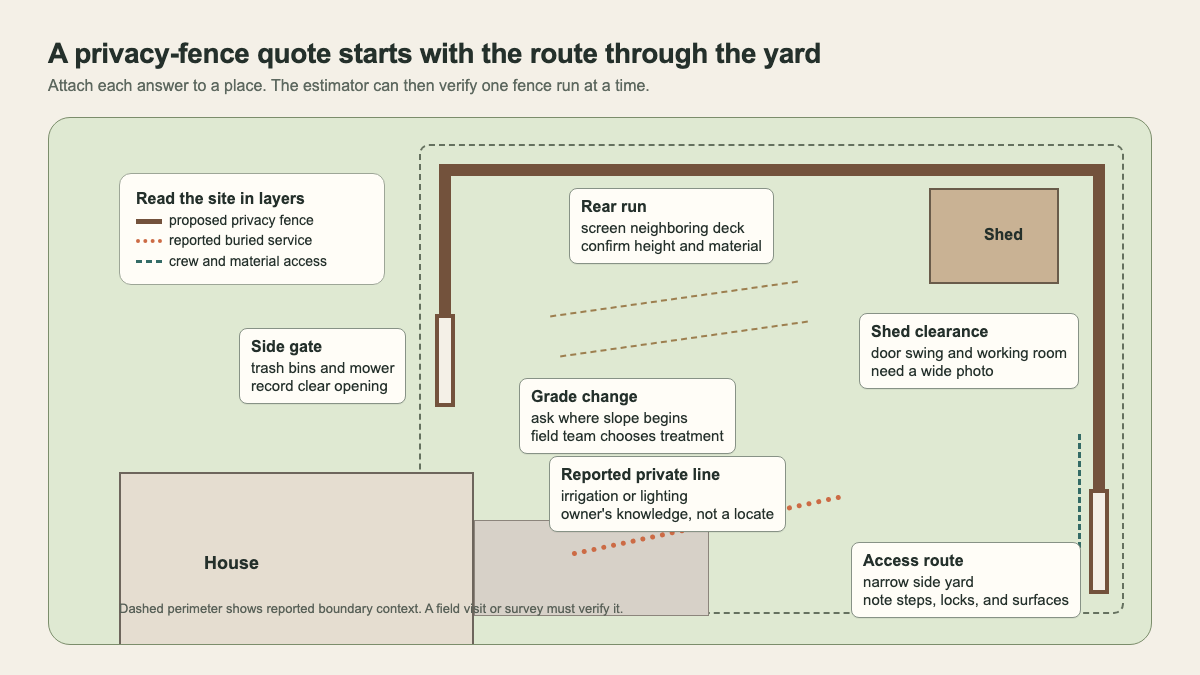
Then trace the proposed route in sections. Ask the caller to begin at a fixed object: the rear corner of the house, an existing post, a masonry wall, or the driveway edge. Follow the line to every corner and gate. Record each run separately, even when the customer has only a total footage estimate.
The route can be spoken in ordinary language: “House to side gate, side gate to rear-left corner, across the back behind the shed, then forward to the garage.” Request a wide photo of each run. Close photos help later with tie-ins or damage, but they rarely show grade, trees, access, or the relationship between a gate and a walkway.
Keep rough footage attached to its source
Ask how the customer got the measurement. They may have used a tape, measuring wheel, survey, contractor sketch, online parcel map, or a visual guess. Keep the number and the method together: “Owner estimates 180 feet from an online map; not field measured.”
Do not let a confident total become a material quantity in the office record. Corners, gate openings, offsets, changes in height, and tie-ins need field verification. The estimator also needs to know whether the number follows the proposed fence line or the property perimeter. Those are often different.
Boundary confidence gets its own field. Ask whether the owner has a current survey, visible pins, or a marked line. If the caller mentions a disputed boundary, shared fence, missing marker, or neighbor objection, route the issue under the company's boundary policy. The property-line and survey call guide covers that narrower conversation.
A parcel map can help a caller describe the yard. It does not settle a legal boundary. Local agencies may publish much more specific advice. For example, the New York City Department of Buildings lists local fence rules and recommends hiring a licensed land surveyor to make sure a fence stays inside the property line. That page applies to New York City, yet it proves the broader point: verify rules and boundary procedures at the project address.
Height and material preferences need context
Ask the desired height and why the caller chose it. A homeowner screening a raised deck has a different problem from someone enclosing trash bins. Record any HOA design standard, existing approval, permit research, or corner-lot concern. Phone staff should never promise that a requested height is allowed.
Next, capture material preferences without forcing a decision. Ask whether the customer is considering wood, vinyl, composite, masonry, or another solid-screen system. Note the look they want, maintenance concerns, color, orientation of finished faces, and whether they have a product link or photo.
If the caller is deciding between common panel systems, send the discussion to the wood and vinyl fence consultation guide. Keep this intake focused on the whole site. Material choice matters, but the route, gate use, grade, and access still control the estimate visit.
Grade belongs to a specific fence run
“Mostly flat” is too vague. Ask where the ground rises, falls, or drops beside a retaining wall. Tie the answer to a run: “Back line is level; right side falls toward the street after the shed.” Request a side-on photo with enough ground in view to show the change.
The treatment depends on the fence system and site. The Home Depot's guide to fencing on a slope describes contour and stepped approaches. A call taker does not need to select either one. The useful job is locating the slope, recording whether it is gradual or abrupt, and flagging gaps that matter for a pet or privacy screen.
Ask about swales, wet ground, exposed roots, rock, retaining walls, and spots where soil has washed away. Avoid remote design advice. The field team must see the grade, drainage path, soil, selected system, and local requirements.
Give every gate a job
“One gate” is a count. Ask what must pass through it: a person, mower, trash bins, wheelbarrow, mobility device, utility cart, or vehicle. Record the object and any known width. The estimator can verify the clear opening, posts, hardware, swing, and surface during the visit.
Location matters. A gate beside a step, downspout, retaining wall, narrow walk, or steep side yard can create a different scope than the same opening on level lawn. Ask which direction the customer expects it to open and what sits on each side. Treat that answer as a preference until the site and applicable rules are checked.
If a pool lies inside or beside the proposed enclosure, mark the project for pool-barrier intake. Do not blend a general privacy request with a safety-barrier promise. The pool fence installation call guide covers the full enclosure, openings, access points, and local review.
Existing fence and removal change the visit
Ask whether a fence already follows any part of the route. Record its material, approximate height, visible condition, and whether the customer expects removal and haul-away. Find out whether the old posts or concrete footings are still in the ground.
Photos should include corners, gates, leaning sections, heavy vines, and connections to buildings or other fences. Mention large trees and hedges that touch the line. The estimator needs to see whether vegetation blocks measurement or crew access. The office should not promise that roots, footings, masonry, or buried debris can be handled as ordinary removal.
Shared or neighbor-owned fencing needs careful language. Capture what the caller believes, then flag ownership and boundary questions for verification. Never tell a customer that a fence may be removed solely because it appears to sit on their side of the yard.
Record access before assigning a standard appointment
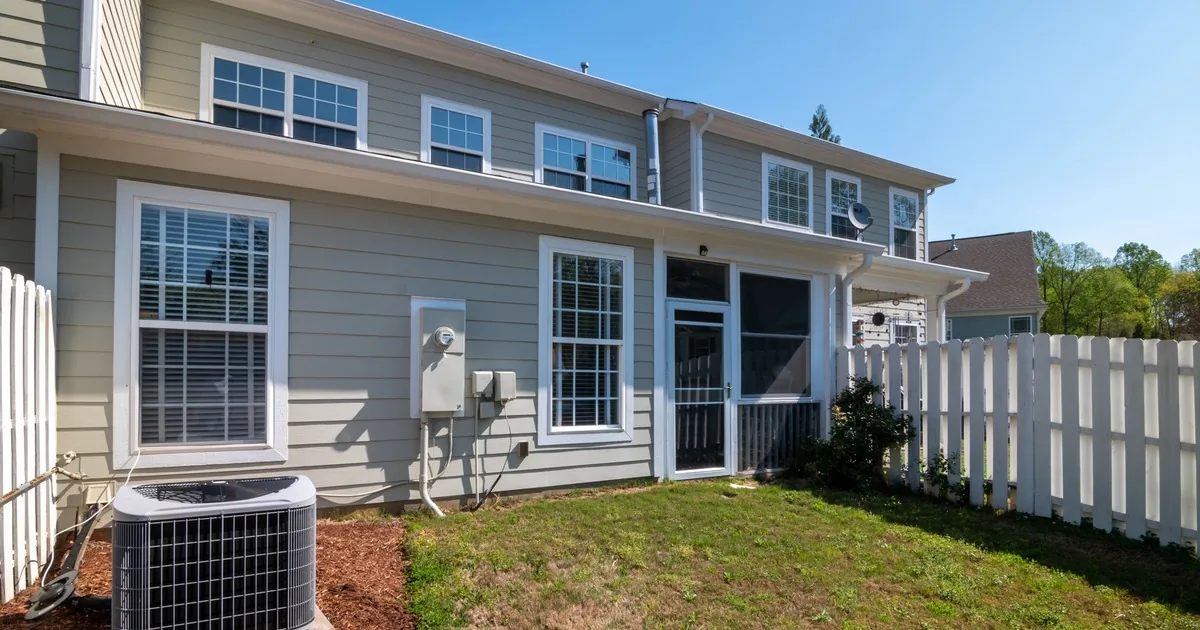
Ask how posts, panels, concrete, tools, and debris can reach the backyard. Note the narrowest side passage, steps, locked gates, finished patios, soft lawns, septic areas, overhead wires, and any route through a garage or home. A fence that looks simple from an online map may sit behind a thirty-inch passage with an air-conditioning condenser in the middle.
Ask whether dogs, tenants, children, or another contractor will be present. Record parking restrictions and gated-community entry details. If access crosses a neighbor's property, flag it for the customer and estimator to resolve before work is scheduled.
Good access notes are factual: “Right side passage is narrow between the house and condenser; owner will send a photo with a tape measure visible.” They should not promise a machine, crew size, or installation method.
Digging questions belong in the first call
Fence posts require excavation, so the intake should identify known underground conditions early. Ask about irrigation, landscape lighting, invisible pet fence, pool plumbing, septic components, propane, drainage, and private electrical feeds. Record where the owner believes each service runs and whether any recent repair exposed it.
The national 811 service tells people planning to install a fence to contact their state 811 center before digging. Its process includes providing the project address and work area, waiting for utility responses, and checking the marks before excavation. Timing and procedures vary by state.
The office should state who submits the locate request under company policy. It should also preserve a separate warning for private services. Do not treat an owner's memory, a faded flag, or a public locate request as proof that every underground line has been identified.
Build the handoff as a route record
Before ending the call, read the project back in the order an estimator can walk it. One useful handoff might say:
“The owner wants a solid backyard screen because a raised rear deck overlooks the patio. The proposed route starts at the left rear house corner, passes one pedestrian gate, crosses the rear line behind a shed, and returns along the driveway side. The owner estimates 180 feet from an online map. The right side slopes toward the street. Wood and vinyl are under consideration. An old wood fence and footings remain along the rear run. The side passage is narrow beside the condenser. Irrigation and low-voltage lighting are reported near the patio. Survey and HOA approval are pending.”
That paragraph gives the field team a place to begin. The visit still has work to do.
Use the broader fence estimate scheduling guide for booking policy and lead handling. This privacy-fence intake should sit behind it as the site-specific question set.
An AI receptionist can collect the same route, gate, grade, removal, approval, and access details after hours. The final note should list what remains unverified: measurements, boundary, height, material, grade treatment, gate clearances, underground services, crew access, local requirements, and price. Then the estimator can start at the house corner and walk the route without rebuilding the call from memory.