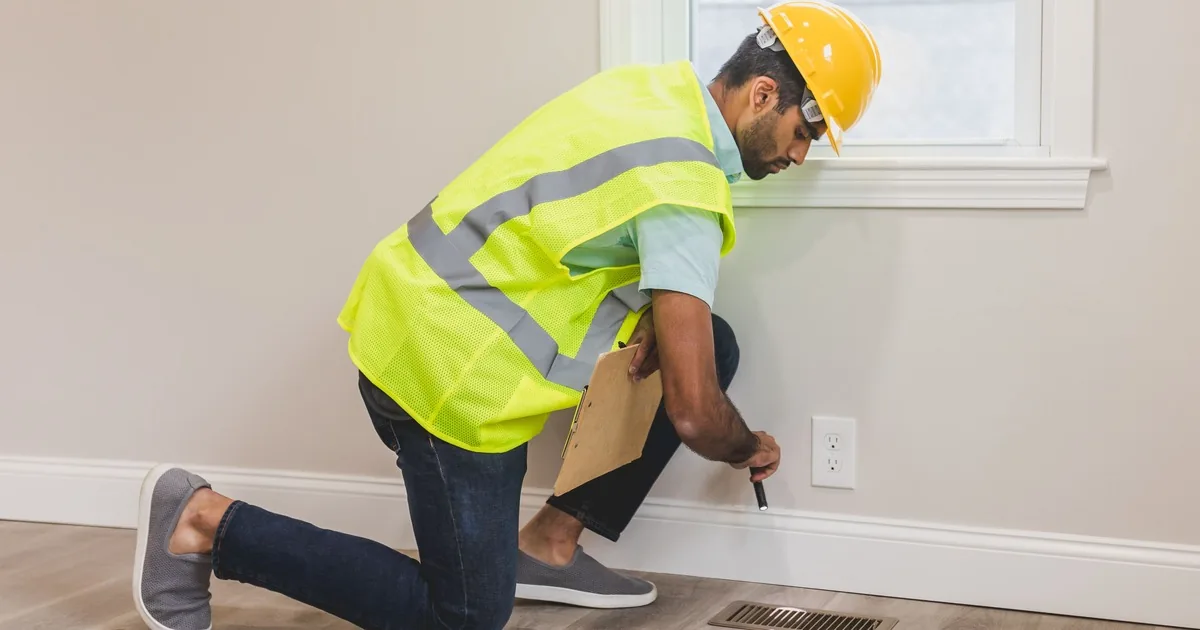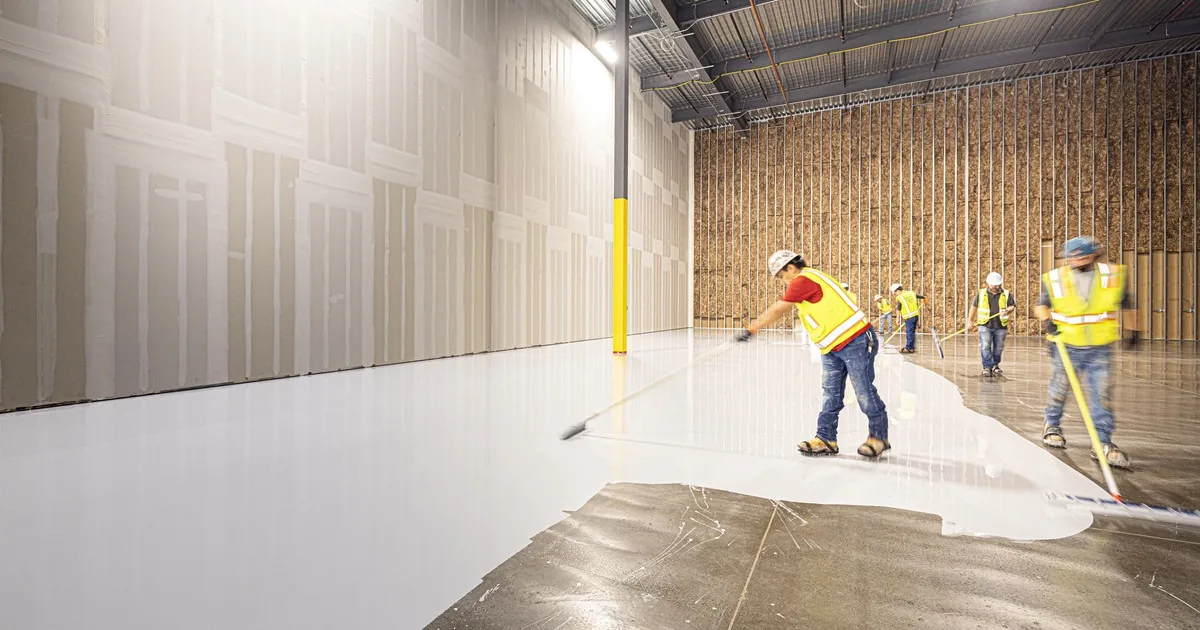
A general contractor calls on Thursday afternoon. Luxury vinyl plank is due Monday, the concrete looks dry, and someone obtained a handheld meter reading near the loading door. The caller wants the flooring office to confirm that installation can proceed.
The office cannot make that call from one number.
A useful concrete moisture testing appointment starts with the exact slab area, planned flooring and adhesive, test purpose, existing coverings, slab treatments, building conditions, prior reports, access, responsible parties, and the date when a documented decision is needed. The tester then follows the required method, maps each location, records site conditions, and compares the results with current instructions for the selected installation system. Reception should book and document that work. It should not convert a caller’s meter reading into pass or fail.
Book the test around the selected flooring system
Start with the material that will touch the slab. Ask for the flooring manufacturer, collection, product number, adhesive or underlayment, and installation method. Request current technical documents when the customer or project team has them. “Glue-down vinyl” is too broad because the flooring and adhesive instructions may set different testing, preparation, moisture, and pH requirements.
If the product is undecided, record that fact. A contractor may still inspect the slab or establish baseline information, but a final installation decision needs a defined system. The same reading can lead to different next steps under different written specifications.
This is the main distinction between a moisture-test call and a general flooring estimate. Collecting a number is only one part of the appointment. It must connect a documented slab condition with the product that is supposed to be installed there.
Ask why the caller needs the test. Common answers include pre-bid investigation, pre-installation verification, a general contractor’s closeout item, a flooring manufacturer requirement, a prior high result, or investigation after a floor problem. Label the purpose in the work order. A test made for a new installation should not quietly become a diagnosis of an existing failure.
Separate surface screening from documented slab testing
Callers often say, “We already tested it,” when someone pressed a meter against the surface. Keep that result, including the instrument name, reading, location, date, and person who took it. Then ask which method was used.
Tarkett’s SureStart installation instructions make a useful distinction. They describe a non-destructive electronic meter under ASTM F2659 as a preliminary way to obtain comparative information. The same instructions identify ASTM F2170 in-situ probes and ASTM F1869 calcium chloride testing as concrete moisture test methods for that installation system.
Those methods do not answer the same question. A surface scan can help identify areas that differ and deserve attention. An in-situ relative-humidity test measures conditions within the slab at specified locations. The current standard, manufacturer instructions, and project specification determine the procedure. The office should never tell a caller that one handheld reading substitutes for all required testing.
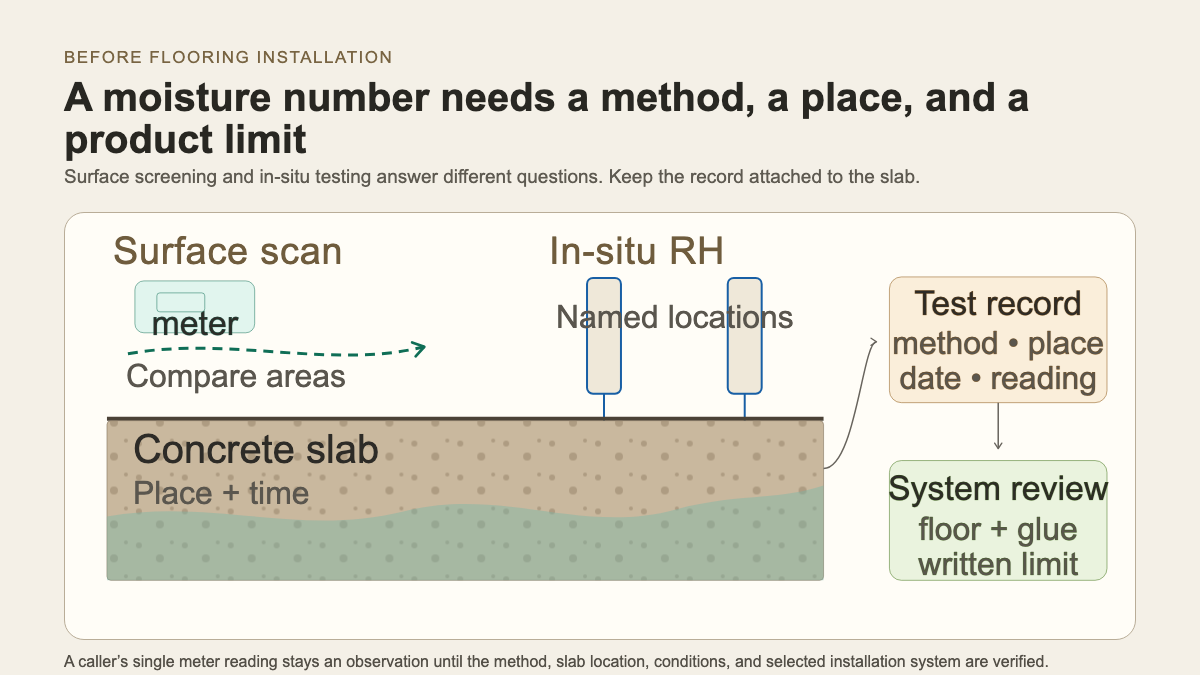
The public page for ASTM F2170 gives another boundary that belongs in every test conversation: results indicate the slab’s moisture condition only at the tested locations and at the time of testing. “The whole building passed forever” is not a responsible summary. A location map and date are part of the meaning.
Map the slab before the tester arrives
A street address does not identify a slab. Ask for the building, floor, suite, room, grid line, tenant area, or other project label used on the plans. Confirm whether the work covers one continuous pour, several additions, isolated rooms, or separate slabs. Record square footage as reported, but leave the test count and placement to the governing method and qualified tester.
Grade and construction history matter. Capture whether the slab is above grade, on grade, or below grade if the caller knows. Ask about the pour date, additions, topping slabs, lightweight concrete, patching, trenches, repaired cracks, radiant heat, and visible joints. Mark all uncertain details as unverified. Slab age by itself does not establish readiness.
Existing materials can hide the test surface. Note carpet, resilient flooring, tile, coating, paint, adhesive residue, curing compound, sealer, hardener, or a prior mitigation system. Ask who will remove existing material and prepare safe test locations. The office should not tell a customer to grind, scrape, or drill unknown material before the visit.
MAPEI’s technical bulletin on treated concrete shows why this history matters. Slabs with silicate admixtures, topical sealers, hardeners, or curing compounds may need system-specific review that includes moisture, pH, porosity, compatibility, surface preparation, or bond testing. “Bare concrete” can hide a treatment that changes the preparation plan.
Record the building conditions and project timeline
Testing takes place in a building, not a lab abstraction. Ask whether permanent HVAC is operating, whether doors and windows are enclosed, and whether the space is near expected service conditions. Record the current use of temporary heat, dehumidifiers, fans, or open-air ventilation. Do not coach the caller to alter conditions to chase a better reading. The tester and project specification should control preparation for the test.
Ask about recent water events too. Rain through an opening, plumbing leaks, wet cleaning, saw cutting, curing water, or a failed roof can affect the story. Note the area and date. A dry-looking surface does not settle what is happening within the slab.
The schedule needs exact milestones:
- When is the test area accessible and clear of other trades?
- When are flooring and adhesive scheduled to arrive?
- What installation date is being held?
- Who needs the report, and in what format?
- Is there a bid, inspection, turnover, or tenant deadline?
- Who can authorize added testing or technical review?
- Which party owns slab preparation, mitigation, and schedule changes?
A rushed deadline should change the escalation path, not the result. “Installers arrive tomorrow” cannot turn an incomplete record into approval.
Build a test record that another person can audit
The work order should tell the tester where to start and the report should let someone else understand what happened. Use the project’s room names or drawing references. A photograph of a probe or meter without a location key is weak evidence because it may not show which slab area produced the result.
For each result, preserve the method, instrument, location, date and time, ambient conditions required by the procedure, slab or surface condition, reading, and tester identity. Attach the plan, marked photograph, or location sketch that ties the number to the building. Keep calibration or verification records where the method and company process require them.
Then attach the current flooring, adhesive, underlayment, or coating requirement used for review. Tarkett directs installers to its adhesive label and specifications for acceptable moisture and pH limits. That is the right model for the office: compare documented results with the actual system’s current written requirements. Do not keep a universal “safe number” on a receptionist’s cheat sheet.
The luxury vinyl plank installation quote guide covers a neighboring issue. Flatness and moisture can affect the same project, but they need separate observations, tests, and scope decisions. A slab can meet one requirement and still need work for the other.
Route high, missing, or disputed results
When a result exceeds the selected system’s limit, the office should state what the record shows and send it to the responsible technical reviewer. It should not prescribe a primer, membrane, adhesive, waiting period, or drying plan during the intake call.
Tarkett’s instructions say installation must not proceed under that system when results exceed its limits until the problem is corrected. They also decline to recommend one universal remediation procedure. MAPEI ties moisture mediation and compatibility to the installation system and the treated slab. Together, those documents support a firm office boundary: a qualified person reviews the complete record and current product documents before changing the scope.
Missing information needs routing too. If the caller has a result but no method, location map, date, instrument, or selected flooring system, mark it as an incomplete record. If two reports disagree, preserve both. Ask whether they covered the same locations under the same conditions and method. Do not average them.
A result may also be challenged after installation. Keep that request separate from a new pre-installation test. Capture the installed product, adhesive, installation date, affected area, symptoms, test reports, photographs, environmental records, and parties involved. A failure investigation may require manufacturer, consultant, contractor, or legal review beyond the flooring office’s normal testing service.
Give the tester a field-ready appointment note
A useful note might read:
“Pre-installation concrete moisture testing requested for first-floor suites 104 and 106, approximately 3,800 square feet reported. Planned floor is glue-down resilient plank; product data sheet received, adhesive selection pending. Existing carpet and adhesive remain in suite 104; suite 106 is exposed concrete with visible patching near the former plumbing trench. Caller reports the original slab predates a rear addition, but the joint location is unverified. Permanent HVAC is operating. Exterior doors are installed. A roof leak near suite 106 was repaired last month; date and repair record requested. Prior handheld scan report shows three readings but no location map or instrument model. General contractor needs a documented report before the flooring coordination meeting next Thursday. Site superintendent provides access. Flooring contractor and manufacturer representative will review acceptance limits and any next step.”
Read back the slab areas, planned system, known treatments, building conditions, prior records, access contact, deliverable, and decision deadline. That prevents the tester from arriving at a locked suite with the wrong product documents and an unexplained number in a text message.
An AI receptionist can collect these fields after hours, but the boundary stays the same. The call creates a traceable testing appointment. The documented method and responsible reviewer decide what happens to the floor.