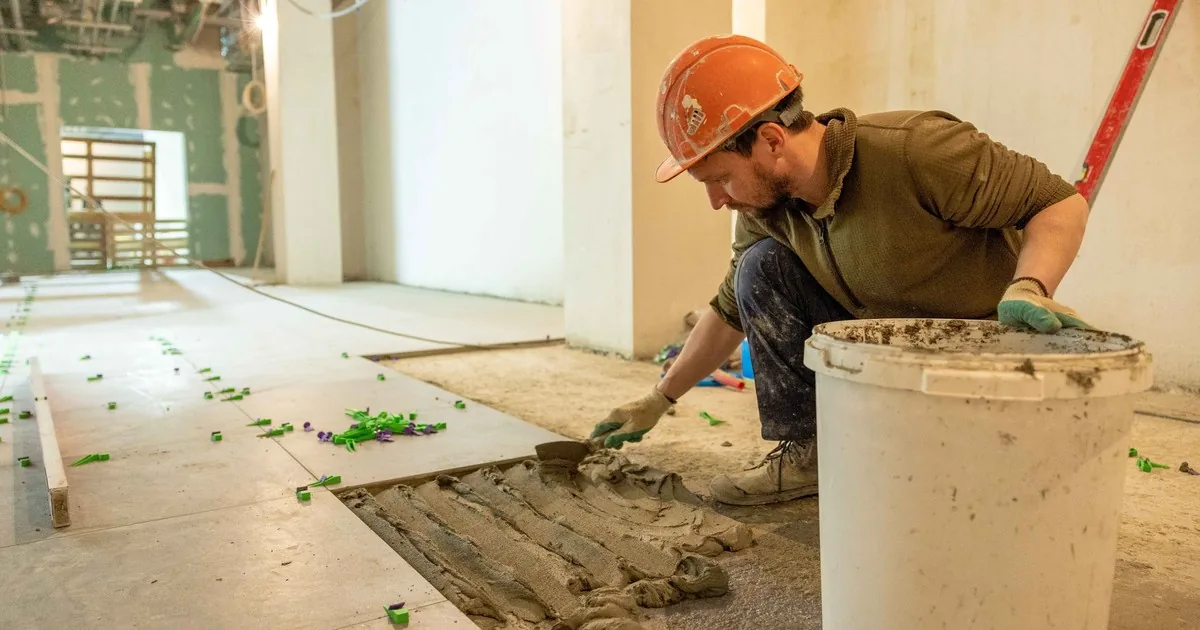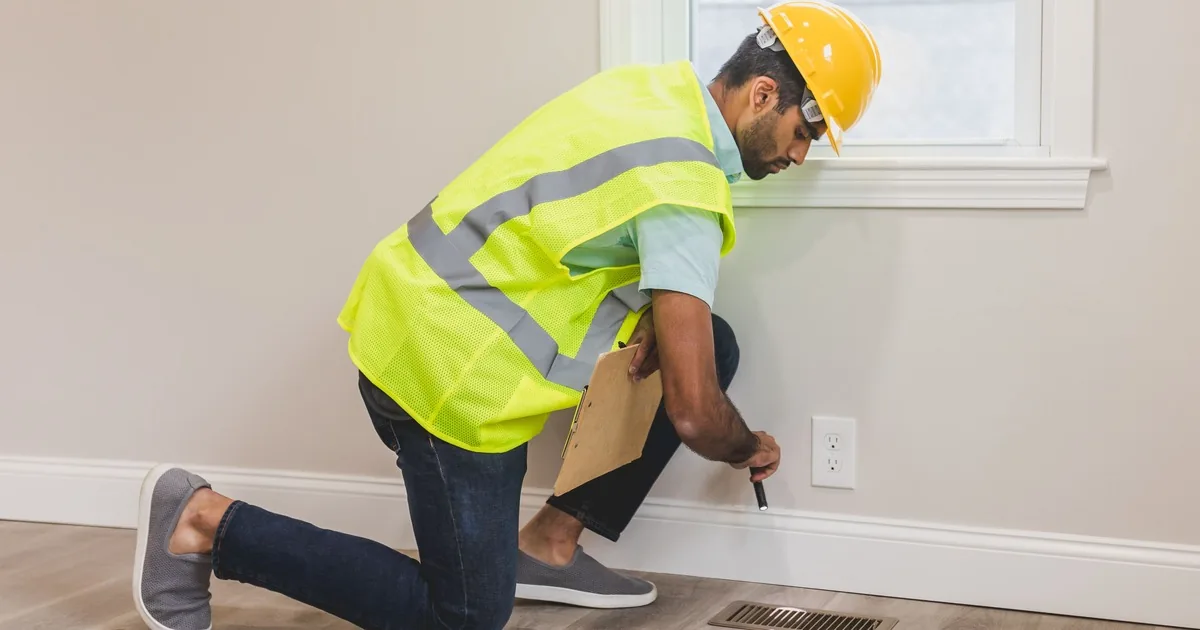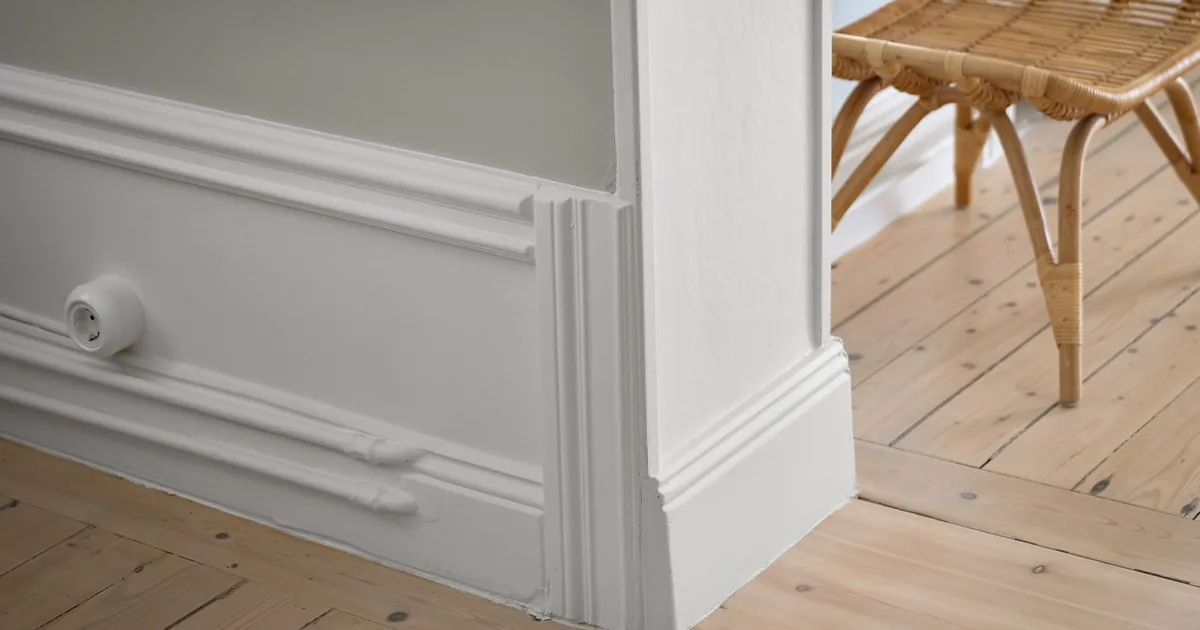
A homeowner wants new flooring in four rooms. The existing baseboard is tall, painted, and caulked to the wall. One room has quarter-round. Another has bare baseboard over carpet. The caller asks a simple question: “Do you take the baseboards off and put them back?”
The honest answer depends on the flooring, the trim, and the finish the customer expects. Some jobs leave the baseboard in place and add shoe molding. Some remove and reinstall usable pieces. Others need new baseboard because the old trim is damaged, too short after the floor height changes, or part of a larger room update.
The office should settle the intended approach before anyone assumes trim work is included. Ask what is on the wall now, what flooring is going in, whether the customer wants shoe molding, who will paint, and who owns damage or wall touch-up. Keep the final method open until the estimator sees the room and checks the selected flooring instructions.
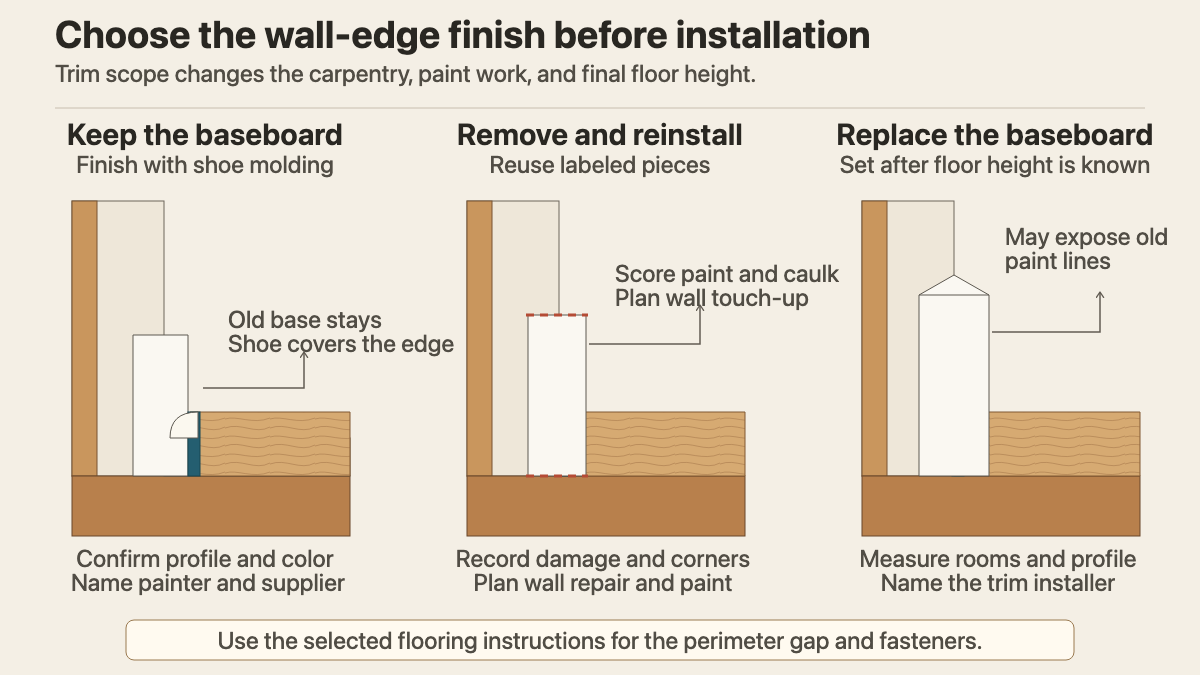
Choose the wall-edge finish before quoting trim work
Start with the finished look. Ask the caller to choose among three broad outcomes for discussion with the estimator:
- Keep the existing baseboard and cover the floor edge with shoe molding or quarter-round.
- Remove the baseboard carefully, install the floor, and reinstall pieces that remain usable.
- Remove the old baseboard and install new trim after the finished floor height is established.
Those options can look similar in a phone note, but they create different work. Keeping baseboard avoids pulling caulked trim from the wall, yet it adds a new visible molding. Reusing trim adds labeling, removal, storage, nail-hole filling, caulk, and likely paint touch-up. Replacement adds material selection, room measurements, corner details, cutting, fastening, finishing, and disposal.
Do not turn the customer's preference into a promise. A field check may uncover brittle trim, glued joints, hidden fasteners, damaged drywall, irregular walls, or a floor-height change that makes reuse unattractive. The call should record the desired finish and the conditions the estimator must verify.
Record the trim that is there now
“White baseboard” is too vague for a work order. Ask for photos of a long straight wall, an inside corner, an outside corner, a doorway, and any place where trim already looks loose or damaged. A tape measure held against the face helps the estimator understand height and thickness. A close photo of the top edge shows whether the trim is caulked to the wall.
Record the baseboard material if the caller knows it. Solid wood, finger-jointed wood, medium-density fiberboard, vinyl base, and tile base do not behave alike during removal. If the material is unknown, say so. Do not identify it from a blurry phone photo.
Look for shoe molding or quarter-round at the bottom. People often use the names interchangeably, though the profiles differ. The intake note can describe what is visible: “small painted molding attached in front of the baseboard” is better than a confident but wrong profile name.
Corners and endings matter. Ask about rounded drywall corners, decorative blocks, stair skirts, fireplace surrounds, cabinets, built-ins, sliding doors, and exposed ends called returns. Door casing may also meet the floor differently after the installation. These details affect cutting and finish work even when the room perimeter is unchanged.
Then ask about condition. Note split pieces, swollen fiberboard, pet damage, heavy paint buildup, open joints, missing sections, and past patches. Removal can reveal old paint lines or torn drywall paper. Reinstallation may leave a former caulk line visible if the trim sits at a different height.
Tie the edge detail to the selected flooring
The flooring product controls the technical perimeter requirement. The trim only covers and finishes that edge.
Shaw's laminate installation overview tells installers to remove shoe molding before installation, leave the specified space around the room perimeter and fixed objects, then fasten quarter-round to the wall rather than the floating floor. Its separate laminate molding guidance also warns against driving wall-base or quarter-round fasteners into the flooring or its movement zone.
That guidance supports a useful office rule: never quote a universal edge gap or fastening detail from memory. Record the manufacturer, collection, product number, flooring thickness, underlayment, and installation method when known. The estimator should use the current instructions for that exact product.
Floor height deserves its own note. Carpet and pad may be thicker or thinner than the replacement. A floating floor over underlayment builds up differently from a glued product. Removing old tile can lower the surface, while installing over an approved existing floor can raise it. That change affects the visible portion of the baseboard, door casing, thresholds, floor vents, and nearby room-to-room transitions.
If the customer has not selected a product, keep the edge decision provisional. The office can still schedule a measure, document the preferred appearance, and flag trim samples for the appointment.
Separate careful removal from guaranteed reuse
A crew can use careful methods without guaranteeing that every piece survives. Long baseboards may be nailed at several points, joined at corners, caulked along the top, and painted into the wall finish. Older fiberboard can break near fasteners. A coped inside corner may not return to the same joint after floor height changes.
Set the expectation in plain language: the estimate will state whether removal is included, whether reusable pieces will be labeled and stored, how damaged sections are handled, and whether replacement material must be approved before work begins.
Ask where removed pieces can be stored. A dry room near the work area is easier than carrying long trim through an elevator or leaving it outside. Record whether the home will remain occupied and whether children or pets need separation from loose trim, nails, tools, and debris.
Painting must have an owner. Some flooring crews reinstall prepainted trim but do not fill nail holes, caulk the top edge, repair drywall paper, or repaint the wall. Other contractors offer a finished carpentry package. The business's real scope belongs in writing. Avoid “we put it back like it was” unless the estimate defines what that means.
Screen older painted trim before removal
The age of the property changes the intake. Ask when the home or child-occupied building was built and whether there is documentation about the paint on the trim and adjacent wall.
The US Environmental Protection Agency's contractor guidance says its Renovation, Repair and Painting Rule applies to paid work that disturbs painted surfaces in covered pre-1978 housing and child-occupied facilities. The federal rule includes certification, education, and lead-safe work-practice requirements. EPA also describes a minor-repair exception that generally covers interior work disturbing six square feet or less of paint per room, but the page lists exceptions and qualifications.
A receptionist should not decide whether a project is exempt. Record the building year, the planned paint disturbance, any testing documentation, and the contractor's compliance route. State, tribal, or local requirements may add to the federal rule. Route uncertain cases to the person responsible for the company's lead-safe work program before promising trim removal.
Do not tell a caller that intact-looking paint is lead-free. Appearance cannot establish that.
Put every responsibility in the estimate
A useful trim scope names the party responsible for each task. It should cover removal, labeling, storage, replacement allowance, new material supply, disposal, nail-hole filling, caulk, wall repair, primer, trim paint, wall paint, shoe molding, door-casing adjustments, furniture movement, and final cleanup.
The appointment note might read:
“Customer requests flooring estimate for living room, dining room, hall, and two bedrooms. Existing carpet and pad; selected replacement is a floating laminate, exact product number pending. Painted 5-inch baseboard remains in all rooms. Shoe molding is present only in dining room. Customer prefers baseboard removal and reuse without added shoe molding. Photos show caulked top edge, two outside corners, rounded corner near hall, three door openings, and one split piece behind sofa. Home reported built in 1966; no paint-testing document available. Estimator must review RRP handling, trim condition, product perimeter requirements, finished floor height, door casing, replacement allowance, storage location, caulk, wall repair, and painting responsibility. Customer wants one written option for reuse and another for new baseboard.”
This level of detail keeps a flooring installation quote honest. It also gives the customer a real choice. They can compare a simple shoe-molding finish with a fuller trim package without discovering halfway through the job that painting, damaged pieces, or wall repair belonged to somebody else.
An AI receptionist can collect the photos, property age, trim condition, preferred finish, and responsibility questions after hours. The field estimator still decides what can be reused and how the selected floor should meet the wall.