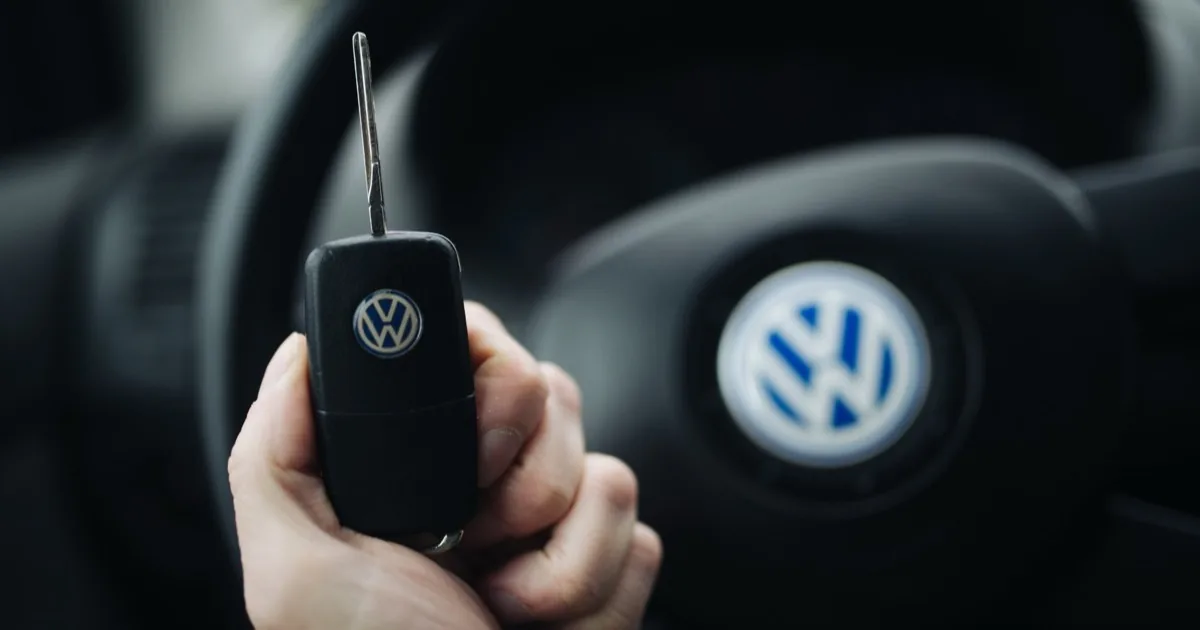
The caller says, “I bought a fob online. Can you program it today?” That sounds like a quick booking until the dispatcher learns that the customer has no working key, the car is in an underground garage, and the fob arrived in an unmarked plastic bag.
A useful intake call has to establish the job before anyone quotes a price or sends a van. Ask for the vehicle year, make, model, VIN, the number of working keys, the exact symptom, where the vehicle is parked, who supplied the replacement fob, and what ownership documents will be available. Then let the technician confirm compatibility and procedure.
That last boundary matters. “We can inspect it and confirm what your vehicle needs” is honest. “Yes, that fob will work” can put the wrong part, the wrong programmer, and an irritated customer in the same parking lot.
First identify the job the caller actually has
Customers use “program my fob” for several different problems. One caller wants a spare remote while an original key still starts the car. Another has lost every key. A third has a blade that turns the ignition, but the engine will not start. Someone else has working buttons and a dead emergency key tucked inside the case.
Start with a plain question: “What does the vehicle do when you use the key or fob now?” Follow the answer far enough to place the request into a useful category:
- A working key exists and the caller wants a duplicate
- All keys are lost
- The remote buttons do not work, but the vehicle starts
- The key unlocks the door, but the vehicle does not start
- A replacement fob was purchased and has never worked with this vehicle
- The key or fob is damaged, wet, cracked, or missing a blade
- The vehicle recognizes the fob intermittently
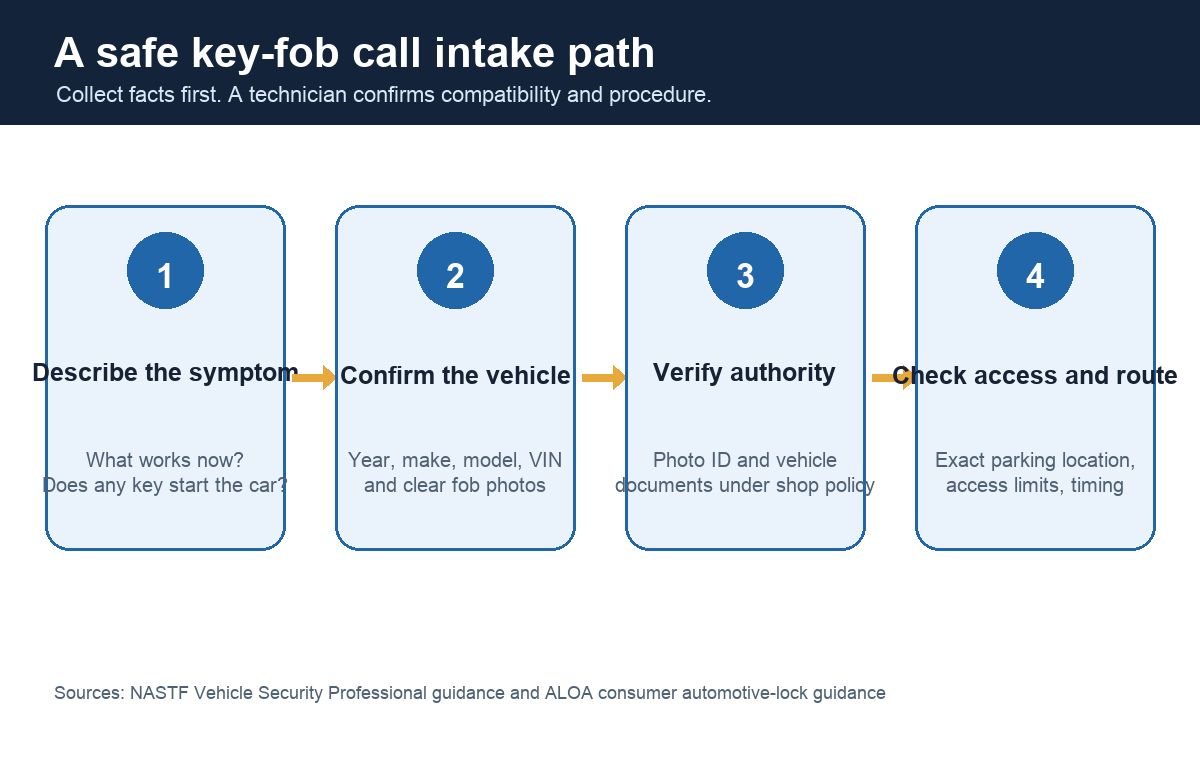
Do not diagnose the failure on the call. A weak battery, damaged remote, incorrect replacement part, vehicle battery problem, or security-system fault may produce descriptions that sound similar. ALOA’s consumer guidance on automotive locks and fobs directs drivers with key-recognition problems to a locksmith and warns against attempting some repairs themselves. The office should capture what happened, not turn the receptionist into a remote technician.
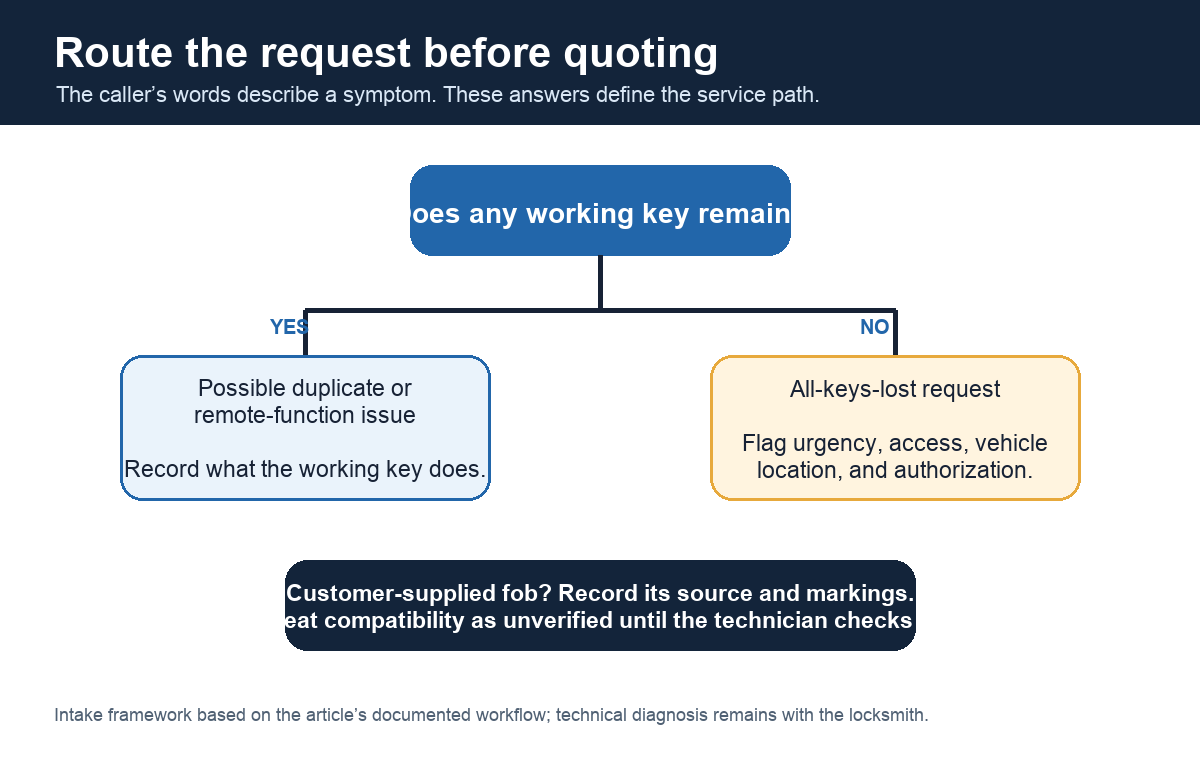
Ask whether any working key remains. That answer can change the equipment, access, and service path required for the job. It also changes the customer’s immediate situation. A spare-key appointment at a house can usually wait for a normal route. An all-keys-lost call with a car blocking a loading bay needs a faster decision.
Get the vehicle identity from documents, not memory
“2018 Honda SUV” does not identify a key system. Record the full year, make, model, and VIN exactly as shown on the registration or vehicle. Ask the caller to read it slowly, then repeat it back in groups. If your office accepts text messages, request a clear photo of the VIN and registration under your normal privacy and retention policy.
The VIN gives the technician a better starting point for parts and service research. Locksmith Ledger’s automotive remote programming guide recommends beginning with the VIN when identifying a remote. Vehicle configuration can matter even when two cars share a model name and model year.
Also ask for the body style and any badge or trim wording the caller can see. Keep those details separate from the VIN. A caller may misread a badge, while a photo can settle the question before dispatch.
If the customer still has an original fob, ask for photos of its front, back, button layout, and any readable part markings. Do not ask an untrained caller to pry open a damaged fob or handle a broken key in a way that could cut a hand. A picture of an intact case is enough for intake.
Treat a customer-supplied fob as unverified
Online listings often promise broad compatibility. The person answering the phone should never adopt that promise.
Ask where the fob came from, whether it is new, used, refurbished, or aftermarket, and whether the packaging lists a part number. Find out if another shop has already tried to program it. Ask whether the physical key blade has been cut. Record the answers without declaring the part good or bad.
A used fob may need a different process than a new one, and some parts cannot be reused for every application. Similar-looking cases can contain different electronics. The technician needs to check the exact vehicle and part before accepting the job. This is why “bring the fob and we will verify it” is safer than promising a programming-only price.
Set the shop’s customer-supplied-parts policy during the call. If programming labor is chargeable even when the supplied part proves incompatible, say that before booking. If the company will program only parts it sells, say that too. The rule should be written in the intake workflow so every caller hears the same terms.
Verify identity and legal possession before security work
Key programming touches a vehicle’s theft-deterrent system. Ownership verification belongs near the start of the call, not after a technician arrives.
Tell the caller which current photo identification and vehicle documents your company requires. The names, addresses, and VIN should meet your written policy. Fleet vehicles, rentals, dealership inventory, estates, recently purchased cars, and company cars may need authorization from someone other than the person standing beside the vehicle. Route those cases to a manager before dispatch.
The National Automotive Service Task Force explains that its Vehicle Security Professional credentials support security-related work such as programming keys and retrieving immobilizer information. Its process captures owner identification and vehicle documentation to verify authorization. A receptionist should never promise that one document will satisfy every job. Company policy, credential requirements, automaker procedures, and local law may differ.
Keep sensitive information out of loose call notes. Record that documents are available, then use the company’s approved system for any images or identifying data. A callback number scribbled beside a VIN on a paper pad is a poor security process.
The parking location can decide whether the job is serviceable
A correct fob and a qualified technician still need physical access to the vehicle. Ask for the full service address and where the car sits on the property. “At my apartment” is incomplete. The useful answer is “level three of a garage with a six-foot-eight clearance, behind a resident gate.”
Ask whether the vehicle can be moved, whether it is locked, and whether the wheels or steering are positioned in a way that affects access. Find out if the technician needs a gate code, parking validation, loading-dock clearance, or permission from building security. For roadside locations, capture the direction of travel, nearest cross street, and whether the vehicle is in a traffic lane. Unsafe roadside conditions should follow the company’s towing or emergency policy.
Indoor garages deserve special attention. Confirm height limits and whether mobile equipment can reach the space. If the vehicle is on a lift, in a stacked parking system, or behind another disabled car, the technician needs to know before accepting the dispatch.
Ask about the vehicle battery too, but stick to observable facts: “Do the dash lights come on?” and “Has anyone connected a charger or jump pack?” Do not coach the caller through electrical work. The technician can decide what support equipment is appropriate.
Quote the known scope and reserve the rest for confirmation
The office can explain its service-call structure without claiming that every key will follow the same procedure. State the dispatch fee, diagnostic or attempt policy, travel-zone charge, and customer-supplied-part rule exactly as the company has approved them. Then identify which parts of the price require technician confirmation.
A clean phrase is: “I can book the visit and explain our service charge. The technician will verify the fob, vehicle system, and required procedure before any additional work.” That sentence gives the caller a real next step without pretending the intake call settled compatibility.
Avoid a single flat quote built only from year, make, and model. The caller may have described the vehicle incorrectly, omitted an all-keys-lost condition, or purchased an unusable part. If your shop provides a range, name the assumptions behind it and record them in the work order.
Scheduling should reflect the customer’s actual constraint. Ask when the vehicle must be operable, whether a working key exists, and whether the customer can meet the technician with identification and documents. “I need it today” carries different weight when a car is stranded at a hospital than when the owner wants a spare before a vacation next month.
Build a dispatch note a technician can trust
Before ending the call, read back the details that can ruin the visit if they are wrong. A strong handoff includes:
- Caller name, callback number, service address, and exact vehicle location
- Vehicle year, make, model, VIN, body style, and visible trim details
- Whether any working key remains and what each existing key currently does
- Whether the request is duplication, all-keys-lost service, repair, or programming of a supplied fob
- Replacement fob source, condition, markings, button layout, and prior programming attempts
- Photo status for the VIN, registration, original fob, and supplied fob
- Identity and ownership documents the caller says will be available
- Access limits, garage clearance, gate instructions, roadside concerns, and whether the vehicle can move
- Pricing terms explained and any compatibility questions reserved for the technician
- Requested timing and the practical reason for urgency
Read back the VIN, appointment window, and service address. Those are expensive details to discover were wrong after the van leaves.
An AI receptionist can collect this intake after hours and apply the same ownership and compatibility boundaries on each call. It should route exceptions to a person, especially disputed ownership, fleet authorization, unsafe locations, and questions about whether a particular fob can be programmed.
The best key-fob call ends with a modest promise: the right technician will arrive with a clear picture of the vehicle, the part, the access, and the customer’s authority to request the work. That is enough to turn “Can you program this?” into a service call worth putting on the route.