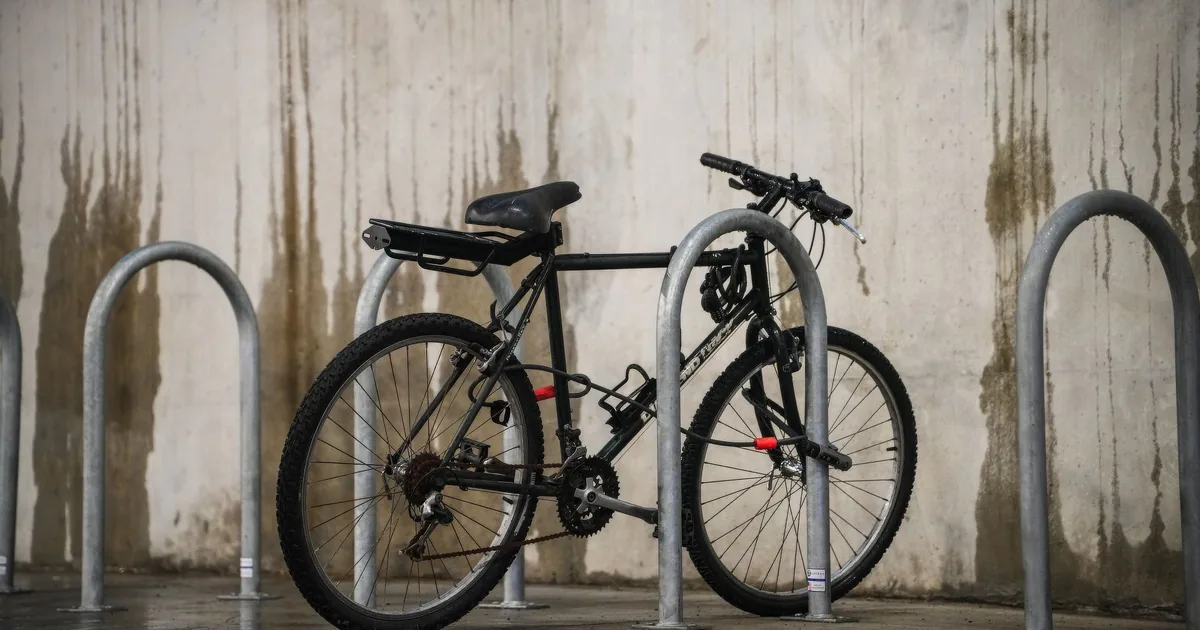
A caller says, “I lost the key to my U-lock. The bike is outside the train station. Can you cut it off?” The bicycle might be theirs. The rack might belong to the city, a transit agency, or the building next door. A service van may not be able to reach it. Reception has four separate questions to settle before anyone promises a visit.
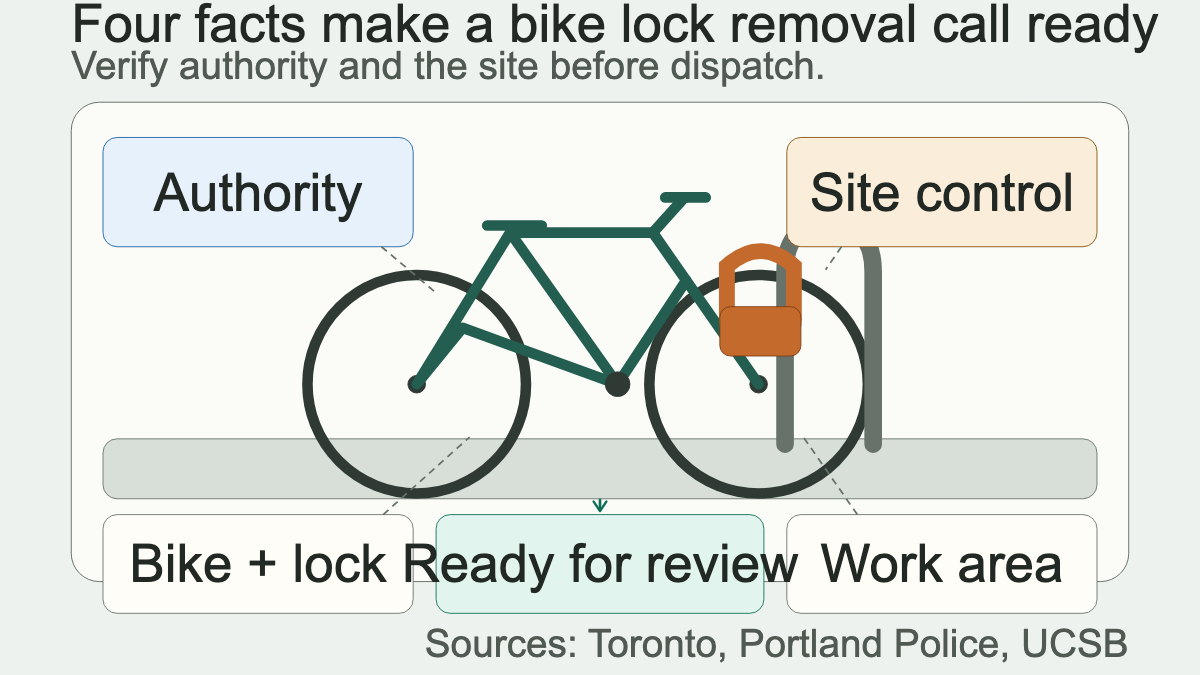
A useful bike lock removal call intake records the shop’s accepted ownership evidence, the exact bicycle and location, the lock and attachment, and the person who controls the site. The technician can then review the removal method, clearance, and risk to nearby property. The office should confirm a review path, not guarantee that the lock will be removed.
Make authority the first checkpoint
Ask who owns the bicycle and who will be present. Then explain the company’s identification and authorization policy in its own words. Do this near the start of the call. If the requester cannot meet the policy, a discussion about arrival time or price gets ahead of the actual gate.
The caller may have a purchase receipt, registration record, bicycle serial number, clear photographs, insurance record, bill of sale, or the key to a second lock on the same bike. The Portland Police Bureau’s bicycle guidance recommends keeping the serial number, manufacturer and model, distinctive features, purchase receipt or other proof of ownership, and clear photos. Those records can support review. Reception should not declare that any one item proves authority in every case.
Ask whether the name on the available record matches the caller’s identification. A recently purchased used bicycle, gift, estate, employer-owned delivery bike, rental, or bike borrowed from a family member may need another authorization route. Record the relationship and escalate it according to policy. Do not invent an exception because the caller sounds convincing.
Campus programs show how specific the rules can become. The UCSB Police Department bicycle program limits its courtesy lock cuts to registered bicycles on university property and requires valid photo identification and proof of ownership. A private locksmith is not operating under that campus procedure, but the example makes the intake lesson clear: authority and place are linked.
Keep sensitive documents in an approved channel. Do not ask someone to send an ID, receipt, registration, or other personal record to an employee’s personal number. Tell the caller what can be checked onsite and what the company accepts before dispatch.
Identify the bicycle and lock without discussing bypass methods
“Blue bike with a black lock” will not survive a handoff at a crowded rack. Record the bicycle’s make, model, color, frame style, and distinctive features. Ask whether the caller has the serial number or registration record. If the serial number is visible, use the company’s approved process for receiving it. Its presence helps identify the bike; it does not prove that the caller may order work.
Get the exact lock type in ordinary language. Is it a rigid U-lock, heavy chain, cable, folding lock, wheel lock, or another device? Is the key lost, broken, or present but unable to turn? Did a combination stop working? Is there visible collision damage, corrosion, or evidence that another person placed a second lock on the bicycle?
Stay on observable facts. The office does not need to tell a caller where to cut, which tool to use, how to defeat a cylinder, or how long a particular lock should resist. Those details are unnecessary for scheduling and risky on an open phone call.
Ask what the lock captures. It may pass through the frame, front wheel, rear wheel, rack, railing, pole, fence, or more than one bicycle. A lock through a removable wheel presents a different scene than a U-lock around the frame and a municipal ring. Photos can help when company policy allows them. Request one wide image showing the bicycle and site, then a closer image of the lock and attachment. Avoid asking for a staged close-up that hides the surrounding property.
Treat the rack and property as part of the job
Capture an address that leads to the bicycle, not the nearest building. Useful details include the property name, entrance, rack number or landmark, parking level, gate, station platform area, courtyard, loading route, and callback number for the person waiting there. “Outside the library” can describe four racks on different sides of one block.
Now ask who owns or manages the object holding the lock. A bike rack may sit on city property, a university campus, an apartment site, an office plaza, a transit facility, or a private storefront. The caller may own the bicycle but lack permission to alter the rack, enter a gated area, or perform noisy work at that location.
The City of Toronto’s abandoned-bike guidance says the city will not cut locks from bicycles at public rings because ownership cannot be verified. It directs a person with lost keys to a locksmith or bicycle shop and asks them to notify the local police division after removal. That is a Toronto process, not a universal rule. It still shows why a dispatcher should ask whether the bicycle is attached to public property and whether the caller has checked the local process.
For a campus, apartment building, employer, transit site, or managed garage, capture the security desk, property manager, facilities contact, or other onsite authority. Ask whether that person has approved access and whether they must be present. If approval is pending, mark the ticket that way. “Caller says security is fine with it” is not a useful authorization record.
Keep abandoned-bike removal separate from owner lockout service. A landlord, property manager, or facilities employee asking to clear several bicycles may need notices, records, an impound process, or another local procedure. Route that request through the company’s property-manager work-order intake and written policy.
Capture the work area before scheduling
A technician needs enough room to inspect the lock without contacting the bicycle frame, rack, another bike, a storefront window, parked car, pedestrian path, or landscaping. Ask the caller to describe the surrounding area. Is the bike packed into a full rack? Is it beside moving traffic? Does the site have stairs, a narrow gate, restricted parking, low garage clearance, or set operating hours?
Note lighting and weather as scheduling facts. A dark station corner, active rain, ice, or a crowded event exit may affect whether the site can be assessed safely. Reception should record the condition and let the technician or supervisor make the call.
Ask whether an electric-bike battery is attached and whether cables, brake lines, wheels, fenders, bags, child seats, or electronics sit close to the lock. Do not tell the caller to remove, disconnect, or reposition parts unless that instruction comes from an approved company procedure. A clear description is enough for review.
If the bicycle is obstructing an entrance, accessible route, fire access, or traffic, follow the site owner’s and local authority’s process. A locksmith office should not decide over the phone that private removal is the correct emergency response. When a theft is occurring or someone is in immediate danger, direct the caller to emergency services under company policy.
Quote only what the shop can support
A dispatcher can explain a service-call charge or assessment fee when the written pricing policy allows it. A final quote may depend on the lock, attachment, access, authorization check, nearby property, time, and technician assessment. Say which part is confirmed.
Avoid “We can cut any bike lock” and “The bike will not be scratched.” The second promise depends on a scene nobody in the office has inspected. A better handoff sounds like this: “I have a black commuter bicycle at the east rack outside Building C. You report a lost U-lock key, and the lock captures the frame and rack. You have the registration record and photo ID. Building security still needs to confirm access. Our technician will review the photos and authorization before we confirm the visit.”
The completed ticket should include:
- caller name, callback number, relationship to the owner, and who will meet the technician
- accepted ownership and identification records available under company policy
- bicycle make, model, color, frame style, serial or registration status, and distinctive features
- lock type, key or combination state, visible damage, and whether another lock is involved
- bike parts and property captured by the lock
- exact address, rack or landmark, access route, site hours, parking limits, and onsite authority
- nearby bicycles, vehicles, glass, pedestrian traffic, weather, lighting, and working clearance
- approval still pending, photos received, quoted fee, and next action promised
Read back the bicycle, location, rack, caller, and callback number. Then label the next step: technician review, property approval, document check, scheduled assessment, or decline. Keep this page distinct from lost car key intake, where VIN, ignition type, programming capability, and vehicle documents control the route.
An AI receptionist can collect these bounded facts after hours and apply the locksmith’s routing rules. It should never approve ownership evidence, provide removal instructions, or promise that work may proceed on public or managed property. A good ticket lets the technician picture one specific bicycle at one specific rack, with the right person waiting and the authorization path already visible.
Sources
- City of Toronto, Abandoned Bike Removal
- Portland Police Bureau, Bike Theft Prevention Tips
- UCSB Police Department, Bicycle Program
- Locksmith Plus, Bike Lock Removal and Bicycle Lockout Service