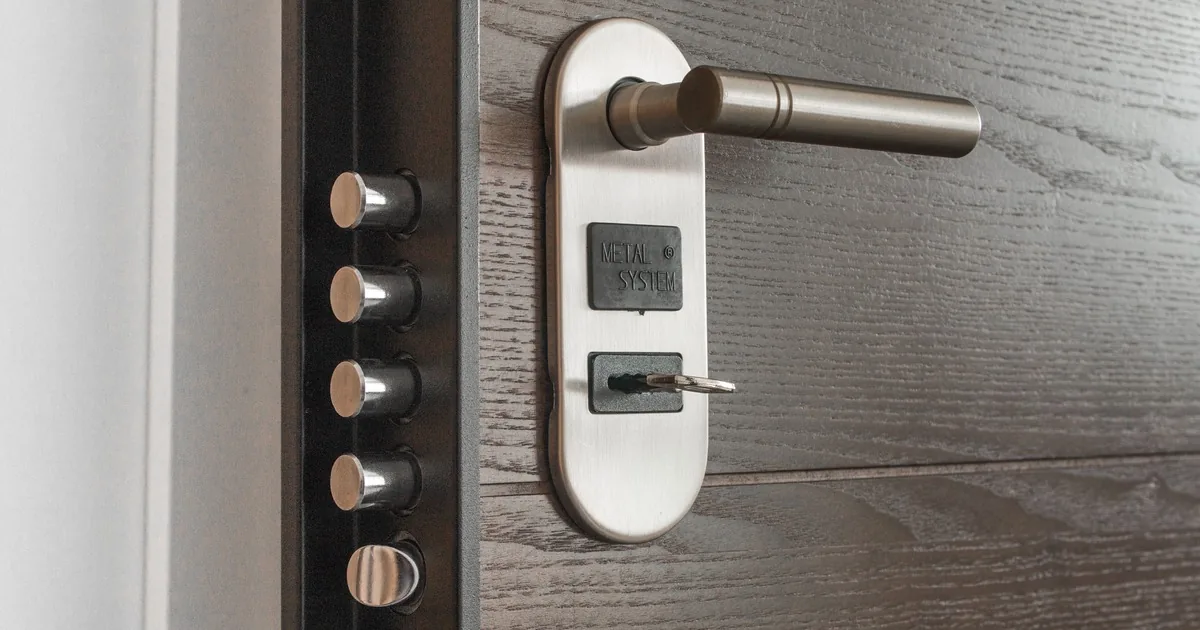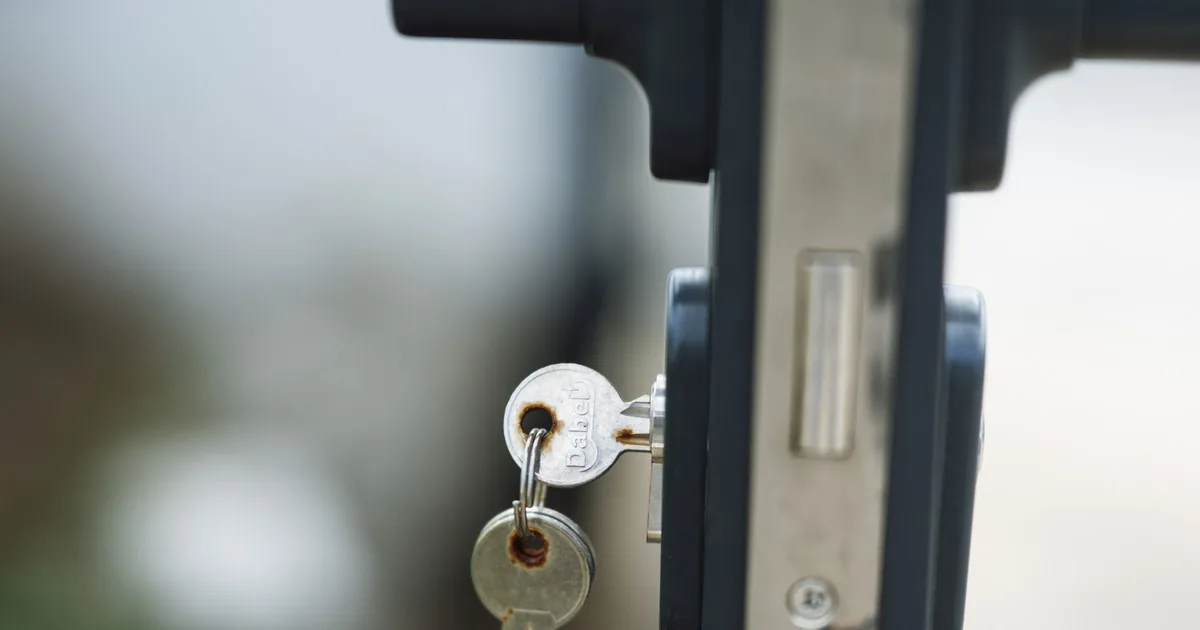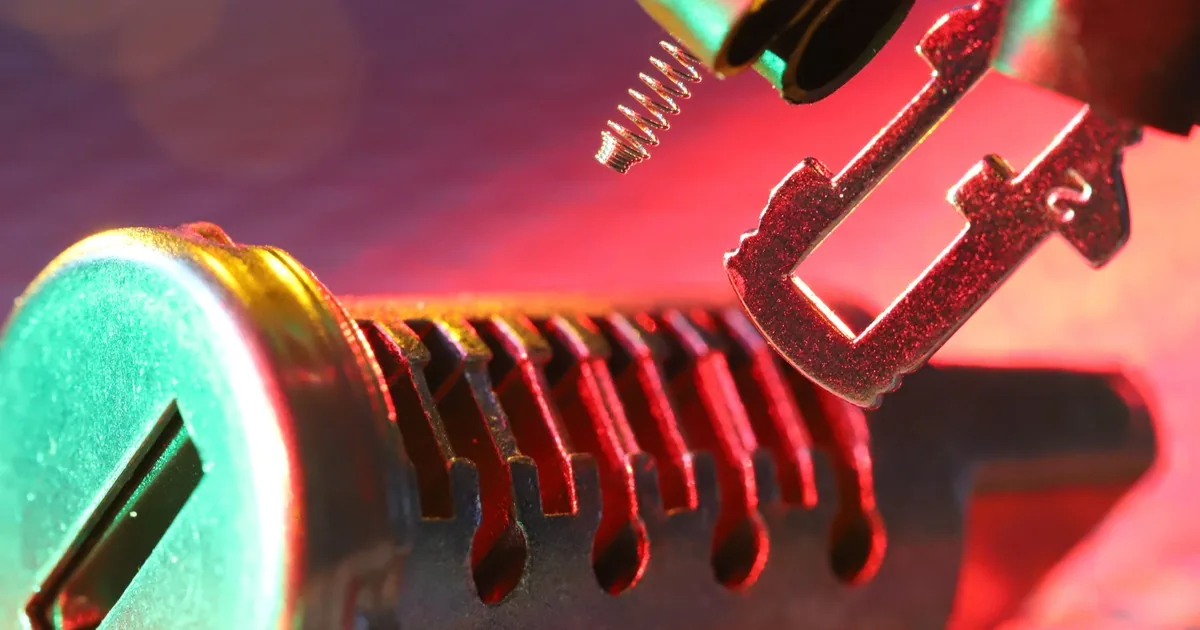
A caller says, “The key snapped in the front door,” but that leaves most of the job unknown. The door may be open with a small fragment visible at the cylinder face. It may be locked, with the plug turned and the broken blade buried inside. The caller may also have pushed in glue, tweezers, a paper clip, or another key before reaching the shop.
A useful broken-key service ticket records the access condition first, then the opening, lock, fragment, door position, prior attempts, spare-key status, and authorization. Reception should not promise that the piece can be extracted, that the cylinder will survive, or that a new key will solve the original problem. The locksmith decides after inspecting the lock and door.
Establish whether the caller has safe access
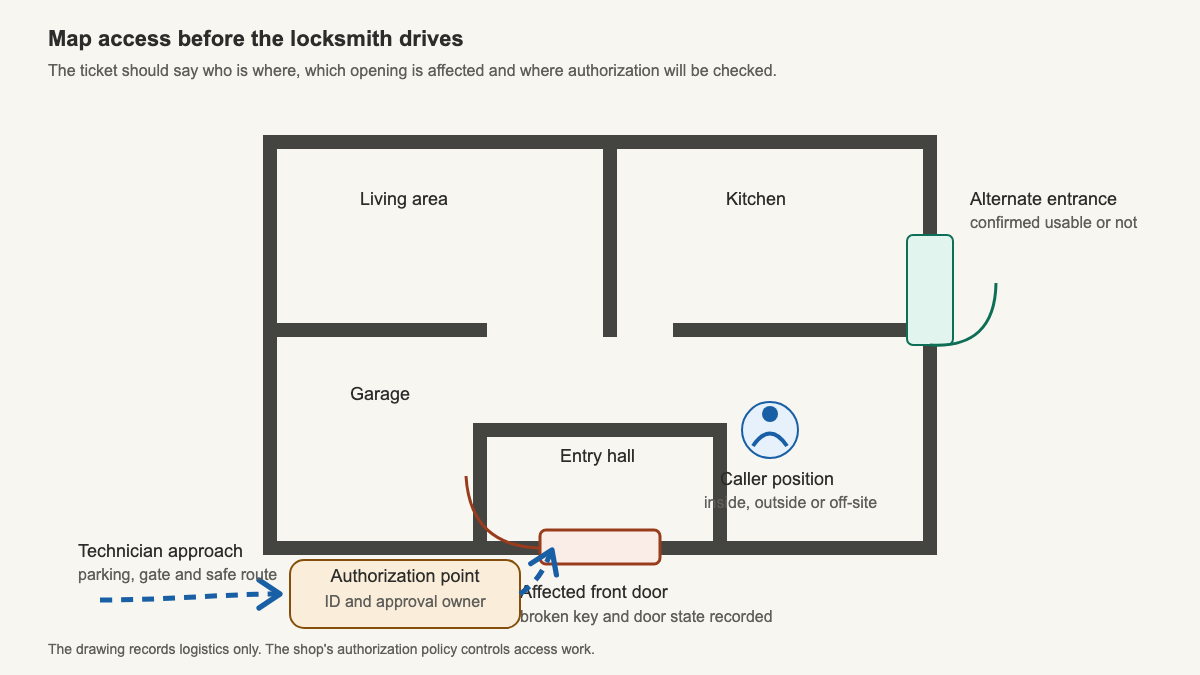
Ask where the caller is standing and whether another usable entrance exists. A broken key can leave someone outside, secured inside, or able to use another door while the affected opening remains locked. Those situations have different urgency and access plans.
Find out whether a child, dependent adult, pet, stove, medical need, or immediate personal danger is involved. Follow the company’s emergency policy. If someone faces immediate danger, local emergency services take priority over routine dispatch. Do not ask the caller to climb through a window or force another entrance.
Record whether the affected door is open, closed, partly latched, or locked. Ask whether the property can still be secured. If this is a storefront, apartment common door, fire-rated opening, mailbox, vehicle, safe, or managed building, name it now. The technician may need a different authorization check, tool set, replacement path, or building contact.
The live emergency lockout intake guide covers calls where access is the main problem. Keep that workflow attached when the broken key has also produced a lockout.
Identify the lock without asking for disassembly
Ask the caller what the key operated: a knob, lever, deadbolt, mortise lock, rim cylinder, padlock, mailbox lock, gate, cabinet, vehicle door, or ignition. Ordinary callers may not know those names, so request one wide photo of the opening and close photos of the lock from each accessible side. Nobody should remove trim, take out screws, open a lock case, or reach into a vehicle steering column for intake.
Brand and model markings can help. They may appear on the key head, latch plate, cylinder face, interior trim, padlock body, or vehicle paperwork. Record the marking exactly. A logo on the key does not prove every lock on the property uses the same cylinder.
Ask whether this key worked the lock before it broke. Did it usually turn smoothly? Did the caller have to lift or pull the door, wiggle the key, push on the deadbolt, or try several times? That history matters because extraction only removes the fragment. It does not explain why the key bound or why the door resisted.
ALOA’s consumer guidance on common lock issues notes that a poorly duplicated key may be part of a key problem and that a locksmith may need to generate an original by code in some cases. The office should preserve the distinction between removing the broken piece and producing a reliable working key.
Map the fragment, plug, and door load
Three observations tell the technician more than “key stuck.” First, is any metal visible beyond the cylinder face? Second, does the keyway appear in its normal resting position or partly turned? Third, is the door pressing against the latch or bolt?
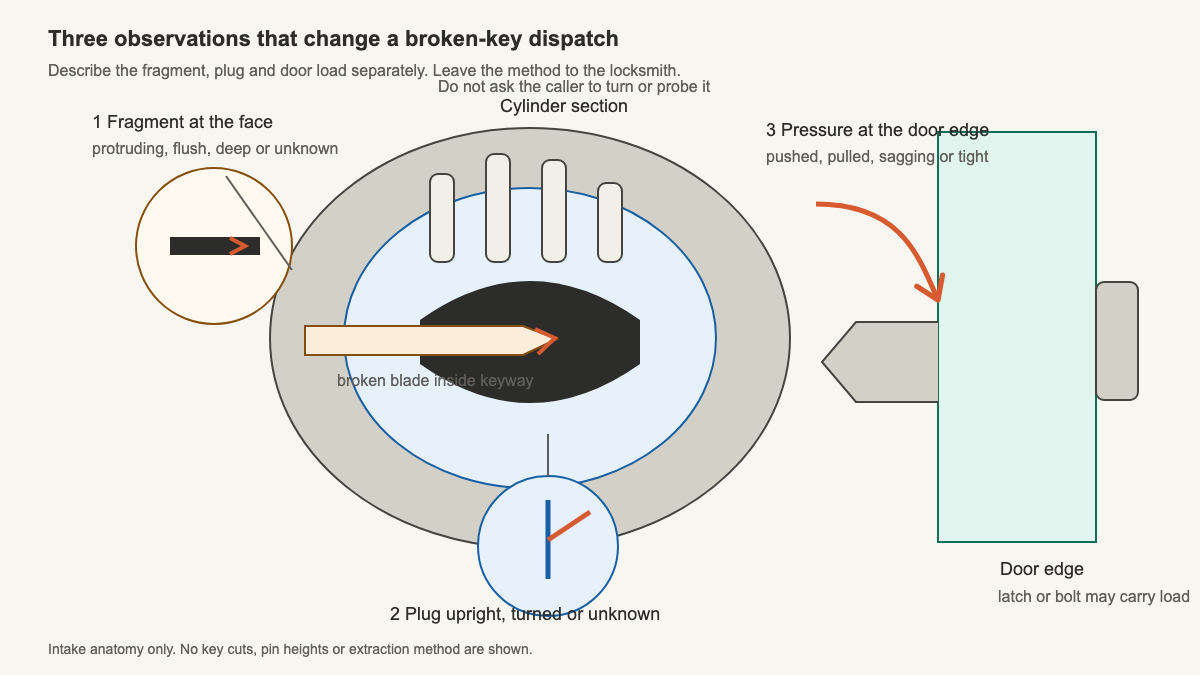
Ask the caller to look without inserting anything. “I can see about one eighth of an inch of metal” is useful. “It is deep inside” is useful too. If the caller cannot see safely, write that. Do not coach the person to grip, hook, glue, drill, lubricate, or rotate the fragment.
The plug position is the angle of the keyway within the round cylinder. Record whether it looks upright, horizontal, diagonal, or unknown. Avoid telling the caller to turn it back. A fragment in a rotated plug can be associated with a latch or bolt that has not completed its travel, and extra force may worsen damage.
Door load is easy to miss. Ask whether the door was being pushed, pulled, lifted, or held against weatherstripping when the key broke. Was the deadbolt halfway thrown? Is the latch tight against the strike? Is the door sagging or swollen? These are observations for the work order, not a remote diagnosis.
Preserve the pieces and document every prior attempt
Ask the caller to keep the broken key head and any loose piece in a small envelope or container. Do not tape the fractured edges together or file them. A technician may use the complete pieces, key markings, another working key, or a recorded key code when evaluating the next step.
Then ask a plain question: “Has anything else gone into the keyway since the key broke?” List the answer exactly. Common replies include tweezers, pliers, a paper clip, a saw blade, glue, spray lubricant, graphite, another key, or an extractor bought online. Also record whether anyone drilled, hammered, heated, or removed hardware.
This question is not a scolding. Prior attempts change the condition the technician will find. Adhesive can bond the fragment to the keyway. A tool can push the piece deeper or mark the cylinder. An unknown spray may affect cleanup. The shop needs the true sequence more than a tidy story.
Trade publications list purpose-built broken-key extractor tools for different locks. Their existence does not guarantee that every fragment can be removed cleanly. Fragment depth, plug position, keyway shape, prior damage, corrosion, and door load can change the work.
Separate extraction from the repair that follows
A successful extraction may leave a serviceable lock. It may also reveal a worn key, damaged cylinder, bent cam, failing latch, misaligned door, or incompatible duplicate. Do not sell the call as “just pulling the piece out.” Book the scope the shop can defend: inspect the opening, attempt appropriate service, test operation, and obtain approval before added repair or replacement.
Ask whether a spare key exists and whether it works another copy of the same lock. Tell the caller to keep it available, but do not ask them to force it into the affected cylinder after the fragment is removed. If all exterior locks are supposed to share one key, record that relationship. Replacement of one cylinder can affect the keyed-alike plan.
If the caller wants old keys disabled after the repair, that becomes a rekey decision. The rekey and lock-change quote guide covers cylinder counts, compatible hardware, keyed-alike goals, and replacement boundaries.
Manufacturer instructions vary. Master Lock’s maintenance and replacement support, for example, directs owners to product-specific care and locksmith help for some failures. Reception should never prescribe one lubricant or repair step for every lock brand.
Confirm authorization and price assumptions
Access work requires an authorization policy. Record the caller’s name, callback number, service address, relationship to the property, person meeting the technician, and documents the shop requires. A dispatcher can explain the policy. The technician or authorized staff member decides whether the evidence satisfies it.
Commercial and managed properties need extra names. Capture the tenant or unit, property manager, facilities contact, billing contact, after-hours approval owner, alarm procedure, parking or loading access, and any master-key or restricted-key notice. Keep access codes in the shop’s approved secure system, not a loose text thread.
State what the quoted amount covers. A service call, inspection, extraction attempt, replacement cylinder, new key, after-hours dispatch, and door adjustment are separate scope items unless the shop explicitly combines them. The FTC’s contractor guidance recommends checking credentials and getting an estimate that describes the work, materials, timing, and price. A locksmith office can apply the same clarity before the truck rolls.
Read back the unresolved condition: “The estimate assumes a residential deadbolt, one visible fragment, no glue or drilling, and normal authorization. The technician will inspect the rotated cylinder and tight door before confirming extraction, repair, or replacement.” That sentence is honest and operational.
Hand the technician a complete field note
The final ticket should include the caller and site, access status, opening type, lock and key markings, door position, fragment visibility, keyway angle, latch or bolt position, pressure on the door, normal operation before the break, every prior attempt, all retained key pieces, spare-key status, photos, authorization plan, estimate assumptions, and the person who can approve more work.
A clean note might read: “Owner is inside and can use the rear door. Front deadbolt is locked. Key broke while the caller pulled the weather-tight door toward the frame. Fragment is flush with the cylinder face, and the keyway appears partly turned. Broken head is saved. Caller tried tweezers once; nothing else entered the keyway. No drilling, glue, spray, or visible damage. Wide door photo and both lock faces are attached. Owner has ID and a second key that works the back door only. Technician will inspect before confirming extraction or replacement.”
An AI receptionist can collect that record after hours and route it under the locksmith’s urgency and authorization rules. It should never teach extraction, approve access, or promise that the existing cylinder can be saved.
The phone call has done its job when the technician knows where the metal stopped, how the door was loaded, who controls the opening, and what remains uncertain.