A church administrator calls on Thursday afternoon. A volunteer’s key ring disappeared after choir practice, a preschool uses the east wing every weekday, and 300 people are expected through the main doors on Sunday morning. The request is short: “We need the building rekeyed.”
Start with the person authorized to approve the work and the event that triggered the call. Then connect the missing or disputed credential to every opening it may operate. Record occupied programs, key-system ownership, remaining holders, hardware condition, service access, and the final handoff. Do not ask for key cuts, alarm codes, or a complete master-key chart in ordinary call notes.
Start with authority and the trigger
Ask who is calling and who can authorize changes to the facility’s locks. A pastor, executive director, office administrator, facilities chair, property owner, board officer, or contracted manager may have different authority. “I have a key” does not answer the approval question.
Get the approver’s name, role, direct contact information, and availability during the visit. If the organization leases the building, ask whether the landlord or management company must approve changes. If a school, tenant ministry, counseling practice, food pantry, or outside group occupies part of the property, note its space and contact without assuming it can authorize work on shared doors.
Next, capture the trigger in plain language. Was a key lost, stolen, copied without permission, retained by a former employee, or found with an identifying tag? Did leadership discover an incomplete holder list? Is the organization changing access after staff turnover, a break-in, or a move into a new building?
The trigger matters because “rekey everything” may be too broad or too narrow. A qualified locksmith still needs to identify the affected key group, cylinders, and system records. Reception’s job is to preserve what the caller knows and mark uncertainty honestly.
Map doors by program zone
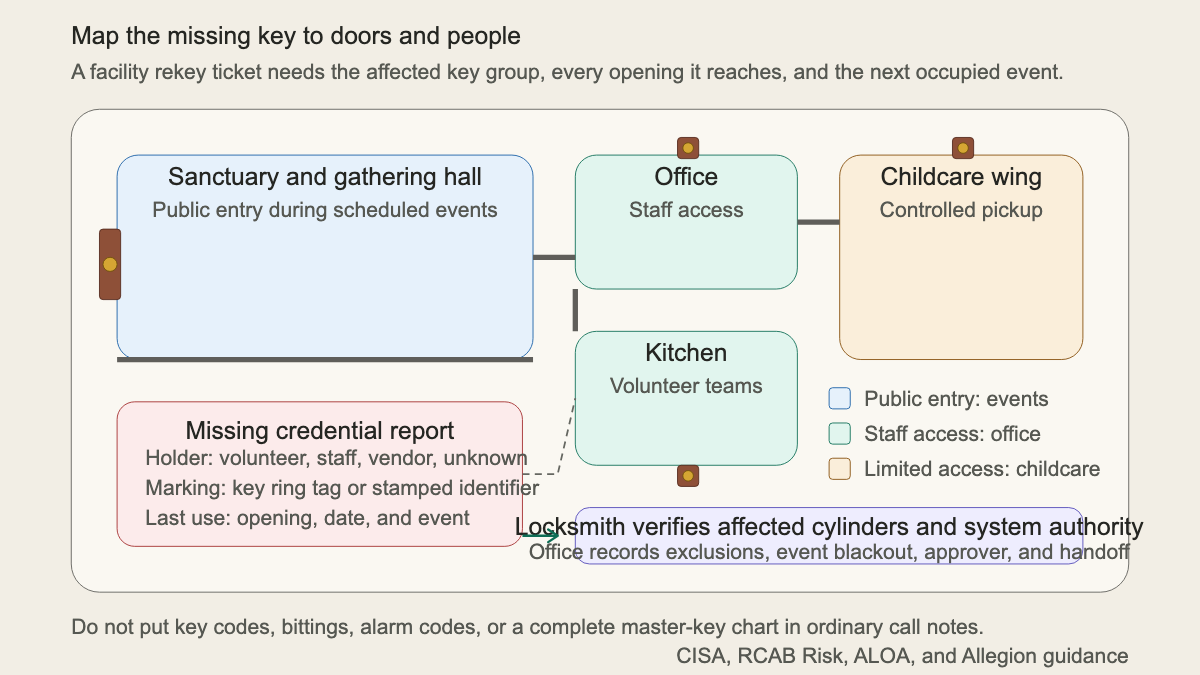
Churches and community nonprofits rarely operate as one undivided room. The public may enter a sanctuary, fellowship hall, lobby, or reception area while offices, counseling rooms, cash storage, food storage, mechanical rooms, and children’s spaces use tighter controls.
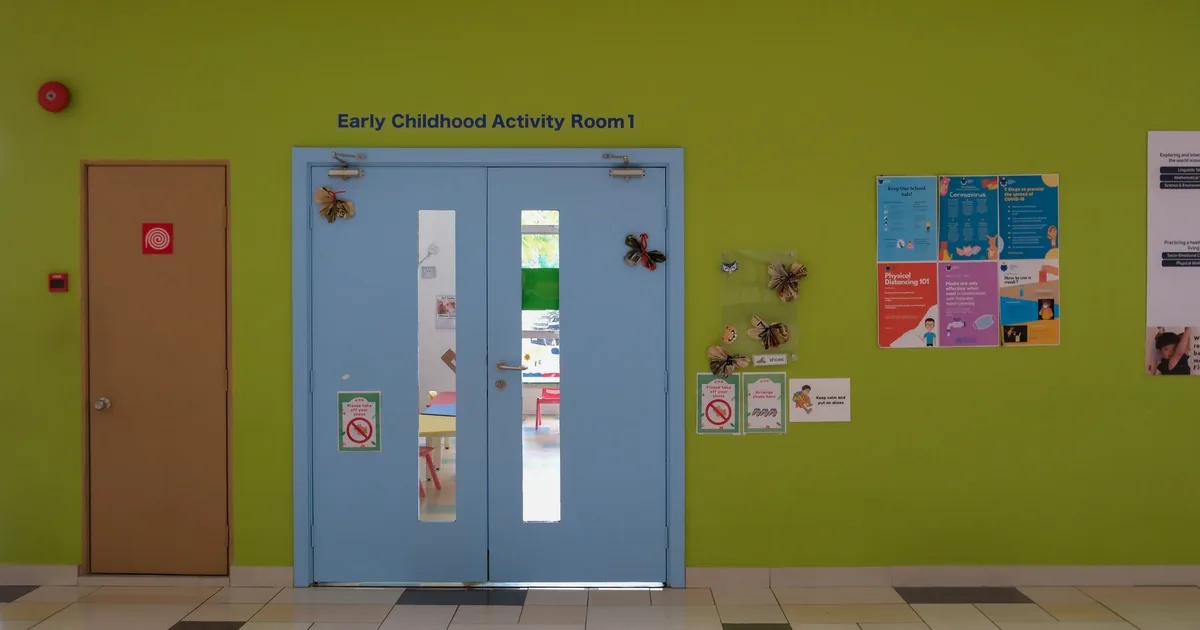
Walk the caller through the property by zone. Start at the site address and building name. Record detached buildings, shared entrances, gates, and any suite boundaries. Then list exterior openings by a name a technician can find: “north parking-lot double doors,” “preschool entrance beside the playground,” or “rear kitchen delivery door” beats “side door.”
For interior doors, ask which areas the reported key is believed to reach. Useful categories include offices, classrooms, childcare check-in, worship or event space, kitchen, storage, maintenance, records, and tenant suites. Mark each answer as confirmed, believed, or unknown. That one distinction keeps a half-remembered volunteer key ring from becoming a false scope document.
CISA’s houses of worship security guidance notes the tension between an open, welcoming environment and the security needs of congregants, visitors, facilities, and rituals. That context should shape the ticket. A public entrance used for Sunday services may have a different schedule and access group than a weekday childcare door ten yards away.
Identify the key system without copying sensitive data
Ask what the organization calls the key or key ring. Labels such as “staff key,” “building master,” “kitchen key,” and “preschool key” are useful as caller language, but they are not verified system levels. Put quotation marks around the label in the work order and let the locksmith compare it with authorized records.
Ask who maintains the system. The answer might be a local locksmith, hardware distributor, facilities employee, landlord, denominational office, or nobody the caller can name. Find out whether the organization has an authorization letter, key cabinet log, original system record, or approved purchaser. Record where that material is held. Do not copy the sensitive content into the intake note.
ALOA’s lock-change guidance explains that unknown prior copies can support rekeying, while the condition and suitability of existing locks determine whether they can be reused. That is the right boundary for reception. Capture the lost-copy concern and visible hardware symptoms. Leave cylinder compatibility and replacement decisions to the locksmith.
Protect the event calendar
A locksmith can work around an empty office more easily than a building hosting a funeral, support group, meal service, preschool pickup, choir rehearsal, or election activity. Ask for the next occupied event in every affected zone, not merely the organization’s published office hours.
The ticket should name hard blackout windows and the person who controls each one. A useful note might say: “Childcare wing occupied 7:30 a.m. to 5:30 p.m. Friday; kitchen open to meal volunteers 3 to 7 p.m.; main hall empty after 8 p.m.; facilities chair can meet at 8:15.” These are caller-supplied operating details, not a promise that the work will fit the window.
If exterior hardware connects to a fire-rated opening, panic hardware, access control, or an alarm, record that fact without diagnosing it. The technician may need another vendor or a facility representative present. Reception should never promise that a mechanical rekey will update cards, fobs, mobile credentials, keypad users, or alarm permissions.
Count holders and temporary access
Ask how many keys were issued in the affected group and how many are accounted for now. Then name holder classes: employees, clergy, board members, volunteers, teachers, custodians, tenants, contractors, musicians, group leaders, and emergency contacts. Exact names belong in the facility’s controlled record when policy requires them. The dispatch ticket usually needs the responsible contact, holder category, count, and status.
RCAB Risk’s church and school key-control guidance recommends a designated key-control manager, a holder log, selective issuance, limited master-key distribution, controls on loans and duplication, and immediate reports for missing keys. Those categories make good intake questions. They also reveal gaps the locksmith cannot fix with pins alone.
Cover temporary access. A caterer may have a kitchen key. A cleaning company may use a lockbox. A tenant group may borrow a key every Tuesday. A construction crew may still hold a copy from a renovation. Record who owns each handoff, when access must continue, and when the credential should stop working.
Electronic credentials get their own line. Ask whether cards, fobs, smart locks, mobile access, keypads, garage remotes, or intercom permissions touch the affected doors. Identify the system administrator and note whether the missing person had electronic access too. Mechanical and electronic records should not be blended into one vague phrase such as “access removed.”
Separate rekey work from door repair
A rekey changes which mechanical key operates a serviceable cylinder. It does not correct a dragging door, loose closer, damaged frame, failed latch, broken exit device, or weather-swollen opening.
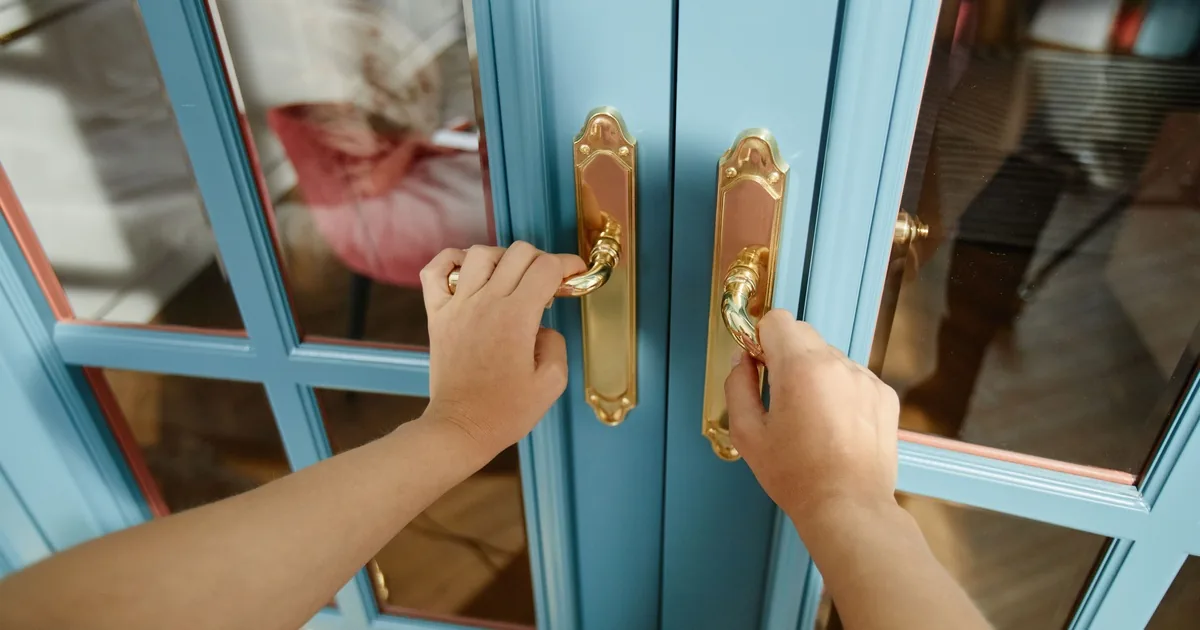
Photos of the whole opening and visible hardware can support preparation. Ask the caller to cover key cuts and codes, and never ask anyone to dismantle a lock or disrupt egress for intake.
For each affected door, ask what happens during normal operation. Does the key turn? Does the latch retract? Does the door close and latch on its own? Must someone pull, push, or lift it? Is hardware loose, damaged, or missing? Has there been a break-in attempt or recent construction work?
Close with testing and a signed handoff
Read the ticket back before scheduling. A strong summary sounds like this:
“Grace Community Center, 48 Oak Street. Facilities director Nina Patel authorizes the work and will meet the technician. A volunteer kitchen key was reported missing Wednesday after choir practice; the ring had no address tag. The facility believes it opens the rear kitchen door and pantry, but the scope is unverified. It is not believed to open the childcare wing. Main hall event ends Thursday at 8 p.m.; preschool occupies the east wing Friday from 7:30 a.m. to 5:30 p.m. The organization has a key log and names Hartwell Lock as the system locksmith. Four kitchen keys are listed, three are accounted for, and one is missing. Rear door drags at the threshold and sometimes needs a pull to latch. Nina will approve exclusions, receive replacement keys, test affected doors, and sign the final count.”
That note gives the technician a trigger, authority, physical scope, uncertainty, schedule, holder count, system contact, hardware symptom, and handoff owner. It does not pretend the office knows which cylinders belong to the key group.
At completion, the facility should receive a record of openings serviced, old credentials retired, new keys issued, test results, unresolved hardware, and named recipients. Allegion’s key-control guidance emphasizes issuance, duplication control, retrieval, and holder records. Keep detailed system data in the approved key-control record, not the general dispatch note.
For uncertain hardware scope, use the rekey and lock-change quote guide. The commercial master-key consultation guide covers the questions to collect when leadership wants a new access structure.
An AI receptionist can capture the authorizing contact, trigger, affected zones, event windows, holder classes, and service access after hours. A human should review sensitive records, system changes, occupied-program conflicts, and any security promise. The finished handoff should leave Nina with tested keys, an exact count, and a list of doors that still need attention before the next group arrives.
Sources
- CISA: Protecting Houses of Worship
- RCAB Risk: Key Control Policy
- ALOA: Should I Change My Locks?
- Allegion: Understanding Key Control
- Church Mutual: Church security management systems are maturing