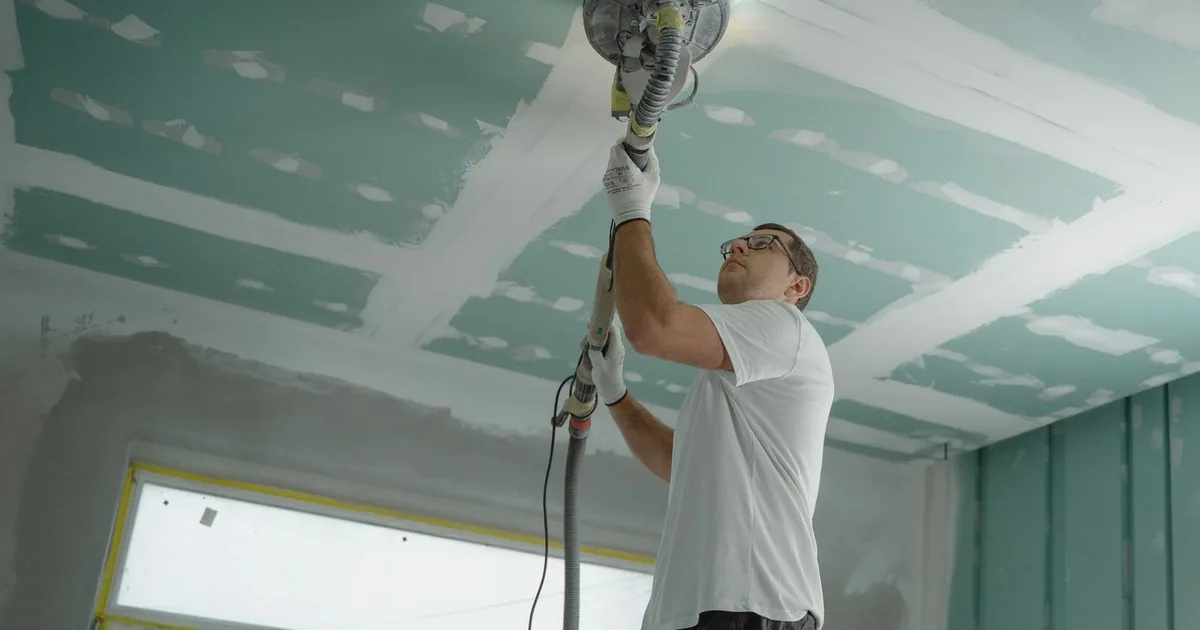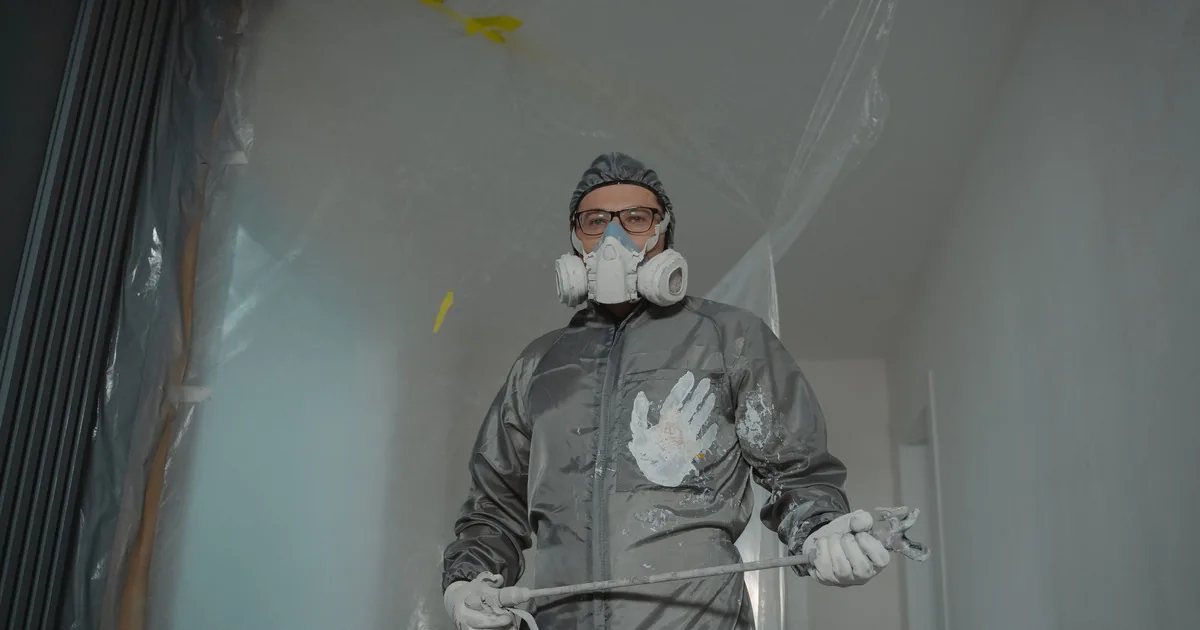
“My house was built in 1964, and the trim is peeling. Can you sand it and repaint it next week?”
That sentence should change the call. The office needs the address, construction year, building use, exact painted components, coating condition, planned preparation, any lead inspection or testing records, occupants, and the person authorized to approve the work. Then the request goes to whoever owns the company’s lead-safe process.
The receptionist should not decide whether the job is exempt, tell the caller that old paint is safe, or prescribe a containment method. The useful handoff is factual: a 1964 owner-occupied house, two peeling bedroom windows, sanding requested, no testing documents, and a child under six living in the home.
Start with the property, not the paint color
Ask for the full job address and the year the building was constructed. Record the source of that year when the caller knows it, such as a purchase document, assessor record, or property manager file. “Around 1980” belongs in the notes as an estimate, not a settled fact.
Next, establish how the building is used. Is it an owner-occupied house, rental house, apartment, condominium, school, child-care center, studio unit, senior housing, or a mixed-use building? Ask whether tenants occupy any part of the property and whether children under six regularly use the space. For managed property, capture the owner or manager who can authorize the work and provide records.
These details matter because the EPA Renovation, Repair and Painting contractor guidance applies to covered work in houses, apartments, and child-occupied facilities built before 1978. EPA also lists specific housing and activity exclusions. A call handler does not have enough information to settle those questions from a construction year alone.
State and tribal programs add another routing detail. EPA administers the federal program in many places, while authorized states and tribes may run their own programs. Record the address before anyone quotes a rule, certification, or required process.
Name every painted component that may be disturbed
“Paint the bedroom” is too broad. Ask which walls, ceilings, doors, windows, baseboards, crown molding, cabinets, built-ins, stairs, porch parts, siding, fascia, railings, or other painted surfaces are included. Record the room or exterior elevation for each one.
Condition belongs beside location. Ask whether the coating is intact, chalking, peeling, cracking, blistering, flaking, or already partly removed. Note water stains, soft drywall, rotten wood, recurring condensation, or a leak that has not been repaired. Those conditions may require another inspection or trade before finish painting can be scoped.
Then ask what preparation the customer expects. Common answers include hand scraping, power sanding, drilling, cutting, removing trim, replacing windows, opening a wall, pressure washing, or stripping several coatings. EPA’s contractor page includes painting preparation among the activities that can disturb paint. The method and amount of disturbance affect the qualified review, so “prep as needed” is a poor intake note.
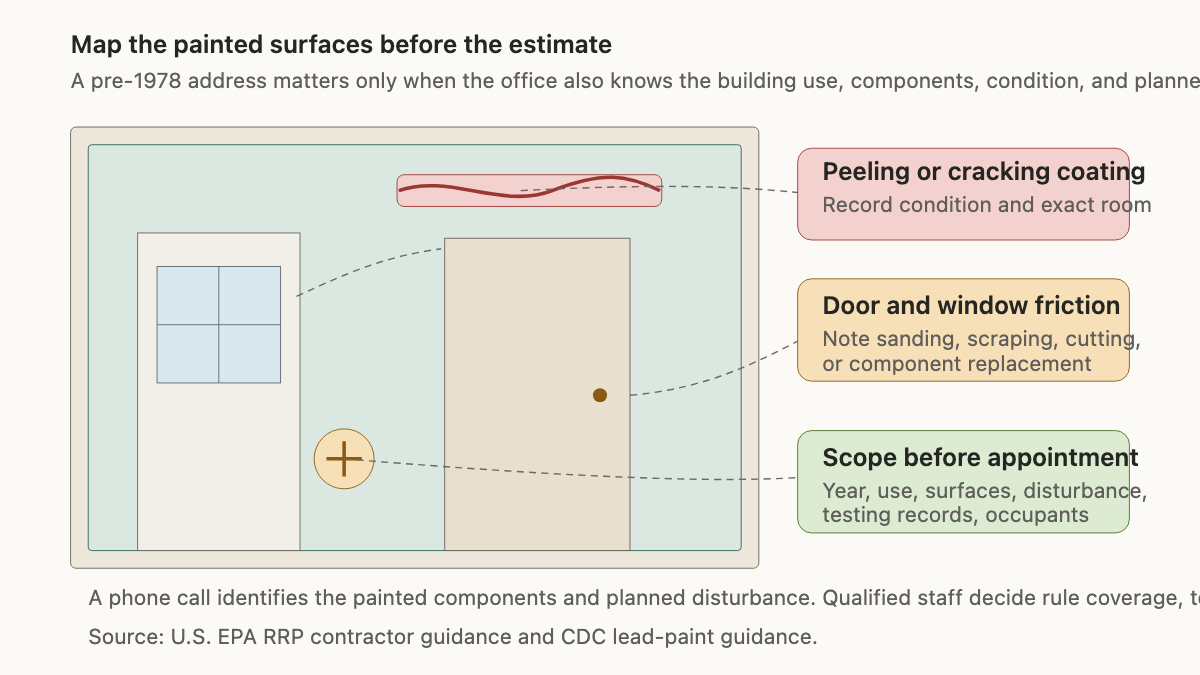
Photos help with scope. Request a wide image of each room or elevation, then closer images of peeling areas and the components the customer wants prepared. A photograph cannot identify lead content. It can show the estimator that the request involves two double-hung windows, a door frame with friction wear, and a cracked band above the baseboard.
Ask for documents without interpreting them
The caller may say, “The house passed a lead test,” but that phrase can refer to different documents and different areas. Ask for the report itself. Record the date, the professional or firm named on it, the type of document, and the surfaces or rooms it covers. Do not tell the caller that a kitchen result clears bedroom trim that was not included.
EPA says paint testing is not required by the federal RRP Rule, but the rule’s requirements apply unless the firm has documentation that affected paint is not lead-based. EPA also identifies who may use recognized test kits, X-ray fluorescence instruments, or paint-chip sampling for renovation decisions. Those are qualified-person tasks.
A lead inspection and a risk assessment answer different questions. The CDC lead-paint guidance explains that an inspection reports lead content on painted structural parts, while a risk assessment looks for serious lead hazards and recommends next actions. The office can label the document accurately after receiving it. It should not turn a customer’s summary into a technical conclusion.
If no records exist, write that plainly. “No inspection, risk assessment, or testing report available” is far more useful than leaving the field blank.
Record occupants and access before offering a date
Ask who lives or works in the affected area. Record children under six, pregnant residents, tenants, pets, home-based workers, and anyone who needs continuous access to a bedroom, bathroom, kitchen, entrance, or stairway. Medical details do not belong in ordinary estimate notes. The scheduling question is whether the space can be accessed and how the company’s approved process will protect occupants.
CDC advises keeping children and pregnant women away from housing undergoing renovation and away from activities that disturb old paint or clean up paint debris. A receptionist can state that qualified staff will review occupancy and access. It should not promise when a room can be reoccupied or tell a family how to manage a suspected exposure. Health questions go to a healthcare provider or public health agency.
For rentals, confirm who will notify residents and who can provide entry. For a child-care property, ask for operating hours, rooms used by children, age groups served, and dates when the building is empty. In a mixed-use building, identify whether the work touches housing or a child-occupied area, not merely the storefront name.
Route the call through the company’s lead-safe process
A complete record still needs a qualified decision. EPA says firms paid to disturb paint in covered pre-1978 housing and child-occupied facilities generally must be certified. Its work-practice guidance covers pre-renovation education, training, certification, containment, prohibited practices, cleanup, verification, and records.
The call handler should know exactly who receives a flagged request. That person may be the certified renovator, estimator, owner, or compliance lead. The escalation should carry the source facts, not a verdict.
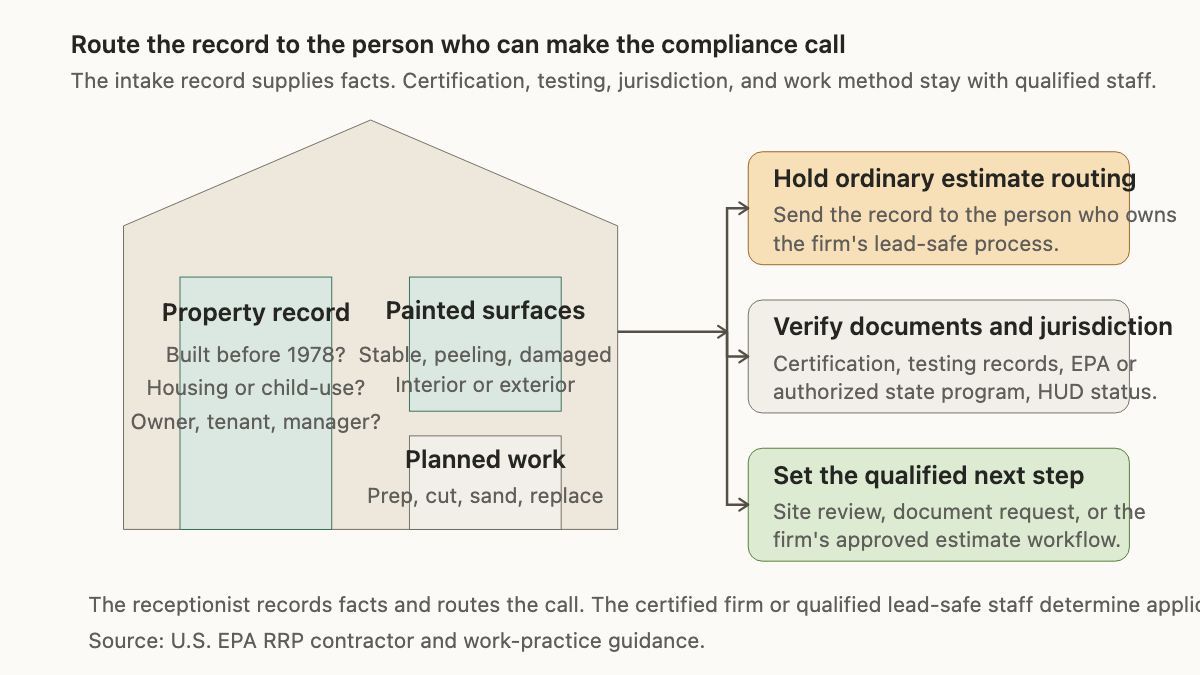
Use a read-back before ending the call:
- “I have a rental duplex built in 1958. The request covers peeling exterior paint on six first-floor windows and two doors. The customer expects scraping and sanding. No inspection or testing documents are available yet. One unit is occupied, and the property manager approves the work. Our lead-safe reviewer will check the surfaces, records, jurisdiction, site conditions, and estimate process before we confirm the work scope.”
Avoid promising that a small job is excluded. EPA describes a minor repair and maintenance exception with area limits, but window replacement, demolition of painted surfaces, and prohibited practices receive different treatment. Measurement and applicability belong with qualified staff who can review the actual project.
HUD-assisted housing may carry additional requirements. EPA’s work-practice page points contractors to HUD’s Lead Safe Housing Rule for covered housing receiving HUD assistance. Ask whether the property receives HUD assistance and route that fact with the rest of the record.
Keep the estimate separate from the final work plan
Once the compliance route is clear, the estimator still needs ordinary painting information: surface dimensions, access, desired finish, color changes, repair expectations, furniture, landscaping, parking, work hours, and schedule constraints. The painting estimate scheduling guide covers that broader appointment record. The interior and exterior painting intake guide helps separate room and elevation scope.
Do not let an ordinary estimate script erase the lead-safe flag. “Two bedrooms and six windows” should remain attached to “built in 1958, sanding expected, no records, occupied rental.” That combination determines who reviews the call and what can be promised next.
An AI receptionist can collect the same fields after hours if the contractor defines the escalation rules. The handoff should sound like a site record, not a compliance opinion: 1958 duplex, six peeling windows, sanding requested, occupied rental, no documents, manager callback requested Tuesday morning.