A property manager wants the living room and hallway repainted next Tuesday. The tenant works from home, a cat hides under the sofa, and the only route to the bathroom runs through the hallway. The walls also have a water stain beneath an upstairs window. “The unit is occupied” is not enough for the calendar.
A useful scheduling call identifies the exact rooms and surfaces, why they need paint, who authorizes the work, how entry will be provided, what the resident must move, where people and pets will be during prep and painting, how the crew can ventilate and protect the space, and who confirms that a room can return to use. Product labels and the field lead determine drying, ventilation, and reentry timing.
Confirm why the work is happening now
Start with the request. Is this a lease-renewal refresh, a repair follow-up, a reasonable maintenance request, a color change approved by management, or work connected to a larger project? Record who owns the unit, who manages it, who lives there, and who can approve added repairs.
Then name the scope room by room. “Interior repaint” can mean one marked wall or every wall, ceiling, closet, door, frame, and baseboard. Ask for the unit number and the exact affected rooms. Separate walls, ceilings, trim, doors, cabinets, and closets. Note whether the existing and requested colors are known.
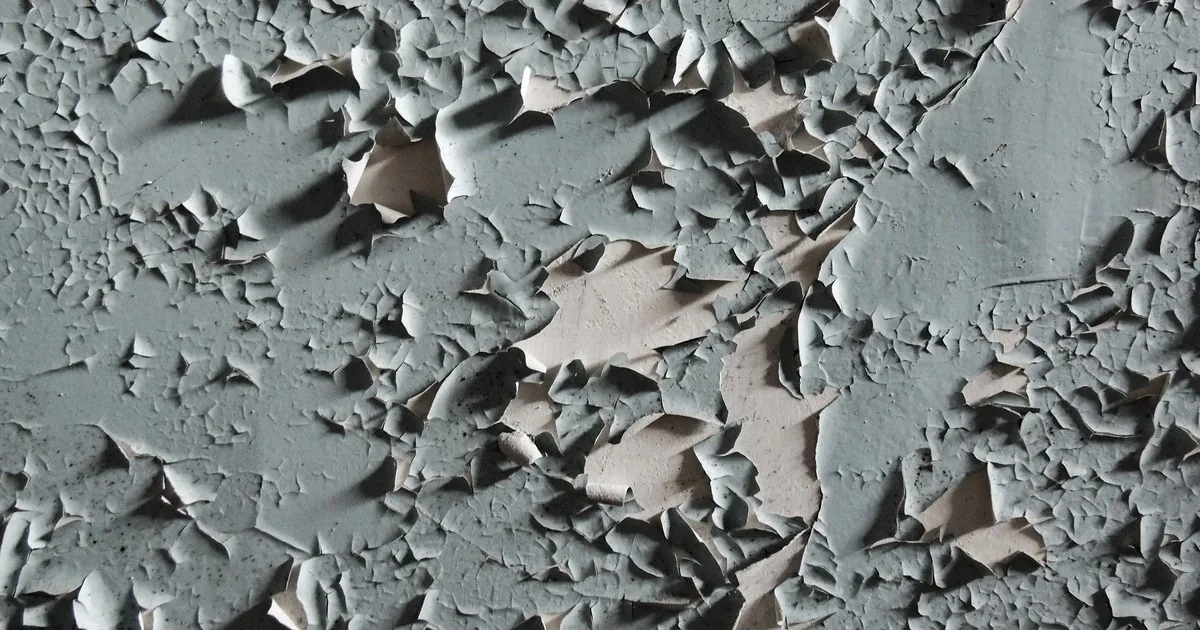
Do not promise that a stain, peeling area, or crack can be covered. Ask what the resident sees, when it appeared, and whether plumbing, roof, window, or drywall repairs have been completed. The field evaluator decides whether the surface is ready. A repaint appointment should not conceal an unresolved leak or arrive before a patch has dried.
Occupied work is its own intent. A vacant rental turnover repaint can give the crew broad access to empty rooms. In a lived-in unit, the schedule has to preserve a usable home around the active work area.
Put the resident in the scheduling loop
Ask whether the resident already knows about the request and who will coordinate with them. Capture the resident's preferred contact channel if the property manager is authorized to provide it. The office should follow the owner's lease, company policy, and applicable state or local entry rules. Notice periods vary, so a painter should not invent one on the call.
A specific appointment names the date, arrival window, expected work area, anticipated number of visits, and the person who can admit the crew. Ask whether the resident must be present or whether management will provide a key, lockbox, concierge release, or escort. Record who can authorize entry if the first plan fails.
Do not accept “maintenance will let you in” as the full answer. Get the maintenance contact's name and direct number. Confirm where the crew checks in, where a vehicle can park, how materials reach the unit, and whether an elevator needs to be reserved. For a building with controlled access, ask about badges, keys, fobs, and sign-out rules.
The resident's daily routine matters. Ask whether anyone works from home, sleeps during the day, uses medical equipment, or must keep a kitchen, bathroom, bedroom, or exit route available. Route disability, health, odor-sensitivity, or accommodation requests to the property manager and painting supervisor. Reception records the request and avoids giving medical advice or promising that a product is safe for a specific person.
Define what the resident moves and what the crew protects
The office needs a written preparation boundary. Ask what the company expects residents to remove: wall art, loose objects, valuables, medication, electronics, pet supplies, clothing, or items on shelves. Identify heavy furniture the resident cannot move and confirm whether the crew will shift it, work around it, or require management to arrange help.
Manufacturer room-preparation guidance from Benjamin Moore and Sherwin-Williams calls for furniture to be removed or moved away from the work, remaining pieces to be covered, floors protected, wall decor taken down, and switch or outlet covers handled as appropriate. The contractor should turn that general guidance into its own job-specific resident instructions.
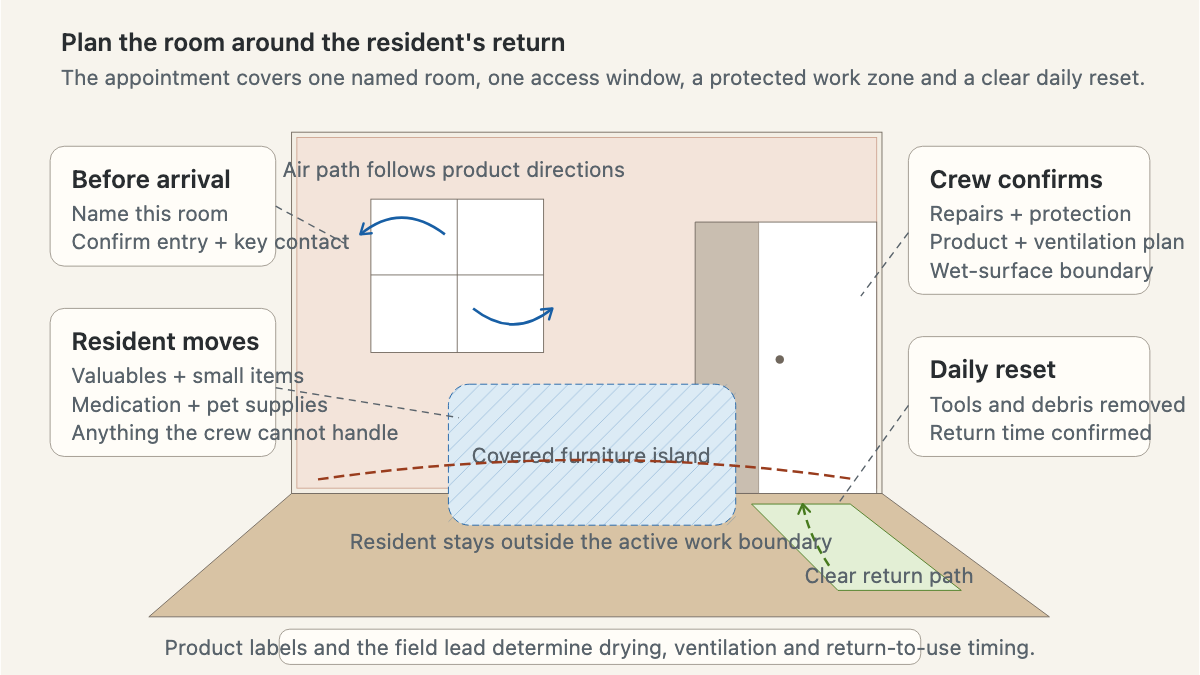
Ask for current photos of each room. One wide view should show the floor, furniture, windows, doors, and route through the space. Closer views can document wall damage, peeling, stains, cracks, crowded shelves, or fragile items. Photos help the crew plan. They do not replace an on-site assessment.
Read the preparation instructions back to the property manager and resident. Make clear who handles each item before arrival. If the room cannot be made ready, reschedule it before a crew is standing at the door with drop cloths.
Plan around people, pets, and essential rooms
Ask how many people and pets live in the unit and where they will be during active work. Get practical details: species, number of animals, whether a pet can be secured behind a closed door, and whether opening a window creates an escape risk. Painters should never be expected to manage or chase an animal.
Children and other residents need a clear boundary from tools, surface-preparation dust, open containers, wet coatings, and blocked pathways. The field lead decides the work-zone controls. The office confirms that the resident understands which room or route will be unavailable and who to call if the plan changes.
Whole-unit scheduling often creates avoidable conflict. Room-by-room sequencing can preserve a bedroom, bathroom, or work area while another space is active. But each extra phase adds setup, protection, cleanup, and access. The estimator should price the agreed sequence, not discover it after the proposal is accepted.
Ask which room must return to service first. A household may need the bedroom usable that evening, the kitchen kept open for meals, or the hallway cleared before children return from school. Record that need without promising a completion time. Repairs, primer, coat count, temperature, humidity, airflow, and the selected product can change the day's sequence.
Keep drying time and ventilation product-specific
Avoid a standard script that says every room is usable after a fixed number of hours. Benjamin Moore explains that temperature, humidity, and airflow affect drying, and it distinguishes dry time from cure time. Sherwin-Williams product data likewise states that drying and recoat times depend on temperature, humidity, and film thickness.
The office should capture the facts the field team needs: which windows open, whether they have secure screens, whether bathroom or kitchen exhaust works, whether building management controls HVAC, and whether weather limits open-window ventilation. Ask about pilot lights, ignition sources, or building restrictions if the planned product or work method makes them relevant. The product label, safety data sheet, contractor policy, and site conditions control the plan.
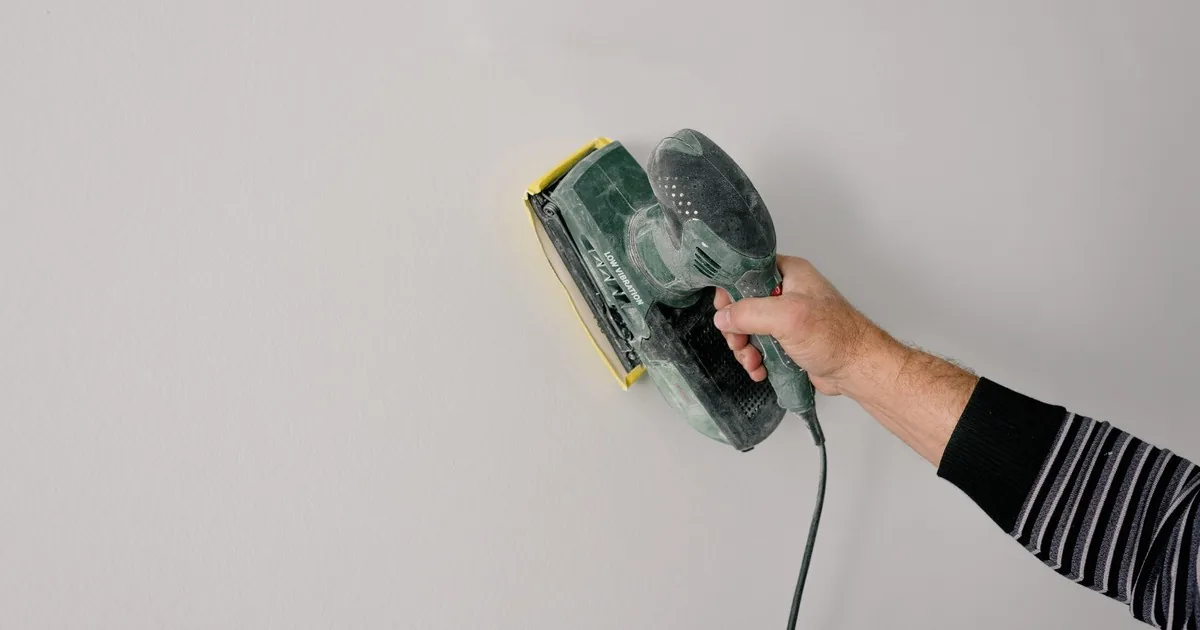
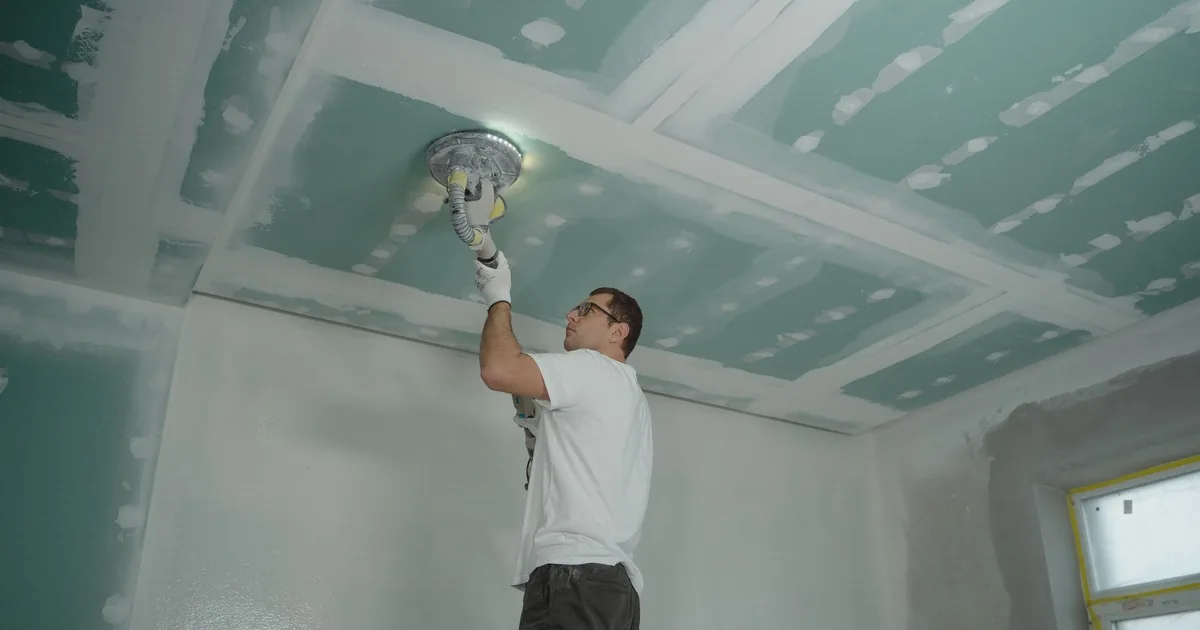
Older housing needs a separate flag. Ask the building year and whether preparation will disturb existing paint through sanding, scraping, cutting, or repair. EPA's Renovation, Repair and Painting work-practice guidance explains that covered work disturbing lead-based paint requires containment, cleaning, and other protective practices. HUD's resident-protection guidance emphasizes keeping residents out of active lead-hazard-control work areas until the required work and clearance steps are complete.
Reception should flag the property and planned disturbance for qualified review. Do not announce that a job is covered, exempt, or safe based only on the construction year. Federal, state, tribal, local, funding, and project-specific requirements can differ.
Finish with the daily reset
An occupied repaint needs a definition of “done for today.” Ask whether the company removes tools and waste after each shift, where covered furniture remains, which doors or windows stay open, and who tells the resident that a room can be used again. Keep exits, stairs, and the route to essential rooms out of the storage plan.
A strong handoff might read:
“Unit 4B, occupied by two adults and one indoor cat. Approved scope is living-room and hallway walls, with trim excluded. The owner requested repainting after a window repair. A brown stain remains below the east window, so the field lead must confirm the leak repair, surface condition, and primer plan before coating.
“Management will give written notice under its policy and provide access Tuesday between 8:30 and 9:00 a.m. The tenant works from the bedroom and needs the bathroom route open. The cat will be secured in the bedroom, which is outside scope. The tenant will remove art, valuables, medication, and small items. The crew will confirm handling of the sofa and bookcase during the site review.
“The living-room windows open but have no screens. Building management controls the HVAC. Reception made no drying, ventilation, lead-rule, or return-to-use promise. The field lead will set the work boundary, product instructions, daily cleanup, and room-release time. Management is the contact for scope changes; the tenant is the day-of access contact.”
The painting estimate scheduling guide can handle the first site visit when scope or surface condition is still uncertain. An AI receptionist can collect the approved occupied-unit fields after hours, but the property manager and field lead still own entry authority, resident accommodations, work controls, and room release.
Before the crew is dispatched, the office should be able to name the room, the resident contact, the entry plan, the pet plan, the furniture boundary, and the daily reset. If any one of those is missing, Tuesday is not ready for paint.