A homeowner calls about painting a tan stucco house white. The front looks clean in the listing photo, but the caller mentions a stair-step crack above one window, dark staining near a downspout, and a patch that never matched after last year's plumbing repair. “Can you price it from the address?” sounds like a color request. The useful estimate ticket needs a wall map.
A strong stucco painting intake records the exact elevations, wall system if known, texture, prior coatings, cracks, moisture clues, attached features, access, building age, timing, and who will approve the color. Reception should leave crack diagnosis, repair scope, drying, preparation, primer, and coating selection to the field evaluator.
Define the wall before measuring paint
Start with the boundaries. Ask whether the request covers every exterior wall or only the street-facing elevation. List parapets, courtyard walls, chimneys, porch columns, balcony walls, garage returns, foundation bands, detached structures, and interior stucco separately. Trim, soffits, fascia, doors, shutters, metal railings, and wood accents need their own scope lines.
Then ask what the caller means by stucco. They may know the wall is traditional cement plaster, synthetic stucco, or EIFS from construction documents. If they do not know, record “wall system unknown” and request any builder records or prior repair invoices. Do not identify EIFS from a phone description or tell the caller to probe the wall. Benjamin Moore's stucco painting guide distinguishes traditional stucco from EIFS and notes that the systems differ. The estimator needs the actual assembly.
Texture matters too. Record smooth, sand, lace, dash, or another term the customer uses, but attach photos because local names vary. Ask whether the owner wants to preserve that relief or accepts a softer-looking surface. The Stucco Manufacturers Association's painting guidance notes that each additional paint layer can mute the original texture.
Map every condition the caller can see
A call taker can describe symptoms without naming their cause. Ask the customer to walk around the building and report each crack by elevation and nearby feature. “West wall, starts at the upper-right corner of the dining-room window and runs about halfway toward the roof” is useful. “There are cracks everywhere” is not.
Capture the pattern in plain words. Does the line follow a window corner, run diagonally, trace a patch edge, cross the open wall, or form a fine web? Is the edge flat, raised, loose, or missing material? Has it changed since the customer first noticed it? The office should avoid classifying a crack as cosmetic or structural.
The Wall and Ceiling Bureau's repair bulletin explains that minor cracking is common in cementitious stucco and is not automatic proof of improper application. It also says the cause should be understood before a repair approach is chosen. That is the right boundary for reception: record the location, appearance, history, and photographs, then route the judgment.
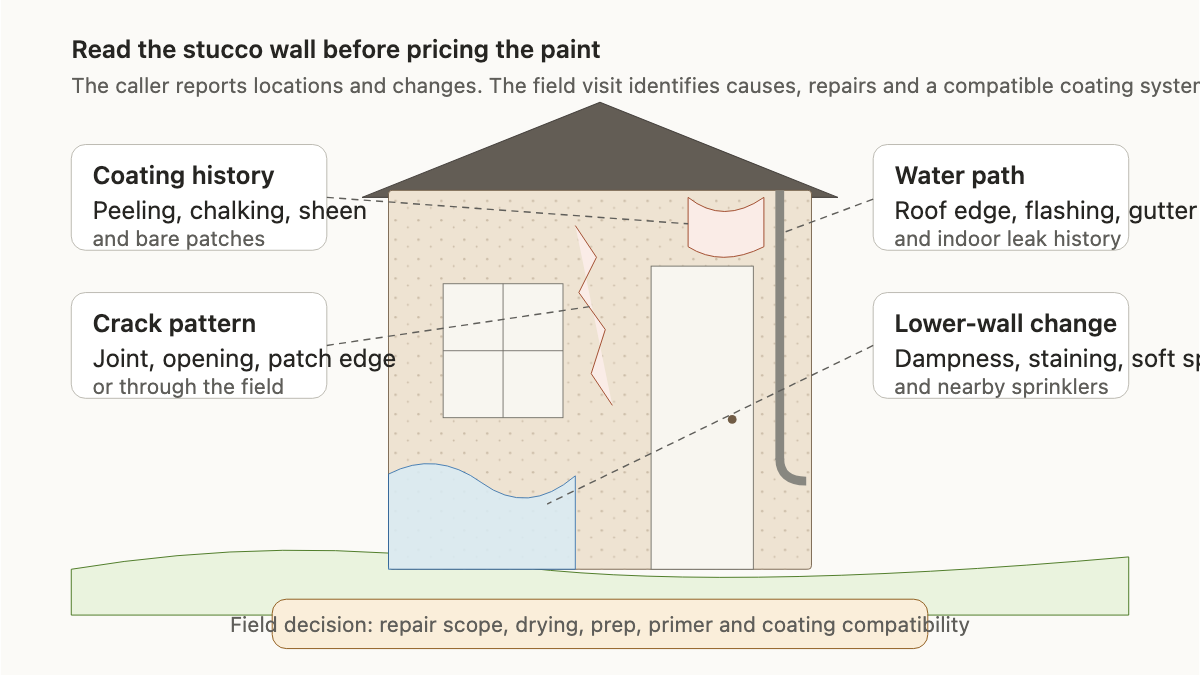
Stains need the same treatment. Note white powder, dark streaks, green growth, rust marks, tide lines, or clean-looking tracks through a dirty wall. Ask what sits above or beside the mark: a gutter joint, roof edge, window, hose bib, sprinkler, balcony, air conditioner drain, planter, or grade. Record any indoor water marks and any roof, flashing, plumbing, gutter, or drainage work already completed.
Paint is a poor answer to active water entry. The field evaluator may need the wall dry and the source addressed before proposing a coating system. Reception does not have to solve the moisture path. It does need to keep that history from disappearing inside “exterior repaint.”
Build the coating history
Ask whether the wall is bare integral-color stucco, fog-coated, painted, sealed, or covered with an acrylic finish. The caller may not know the terms, so request invoices, product cans, color records, or close photographs. Record approximate application dates and every visible difference between elevations.
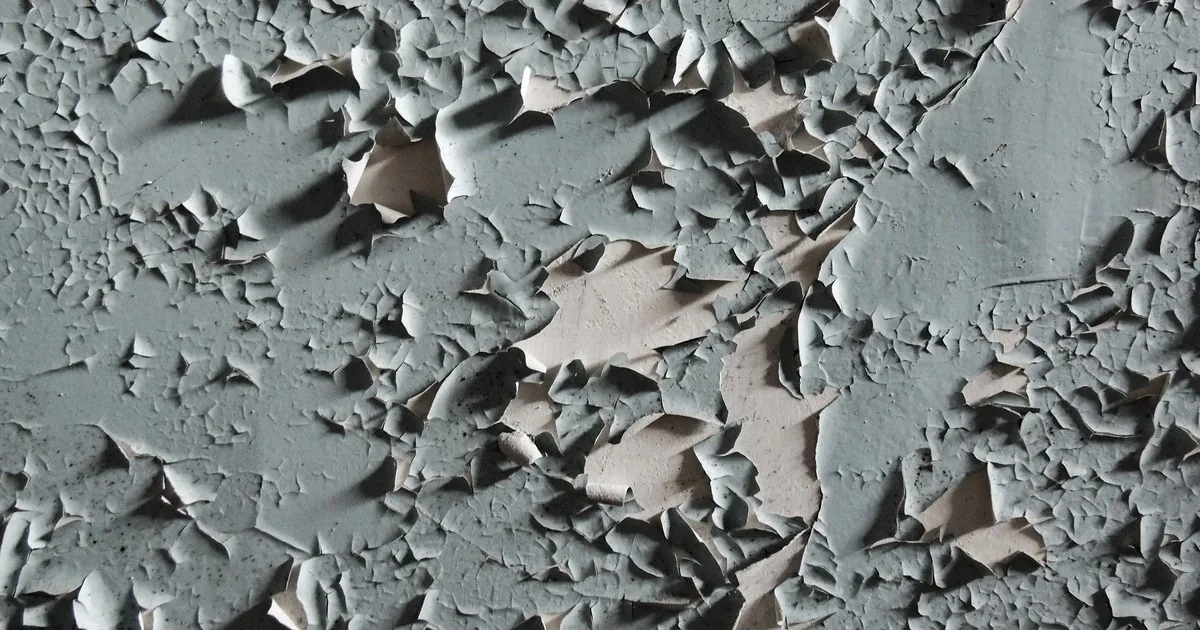
Existing paint should be described by condition. Is it peeling to a bare mineral surface, chalking onto a hand, glossy in protected areas, faded, blistered, or tightly bonded? Are there several colors under a loose edge? Did a previous owner coat only the front? Were patches painted with another product?
SMA says old paint should be soundly bonded and compatible with the new product. Its guidance also says fog coat cannot be used over painted stucco or acrylic finish. Those facts make coating history a field-check issue, not a reason for reception to recommend “regular exterior paint” or an elastomeric coating.
Elastomeric requests deserve a neutral note. A caller may have heard that the coating hides cracks or seals the house. SMA treats elastomeric as one option that needs review of vapor drive, texture muting, and long-term maintenance. Record why the customer asked for it and leave suitability to the evaluator and product requirements.
Request photos at three distances
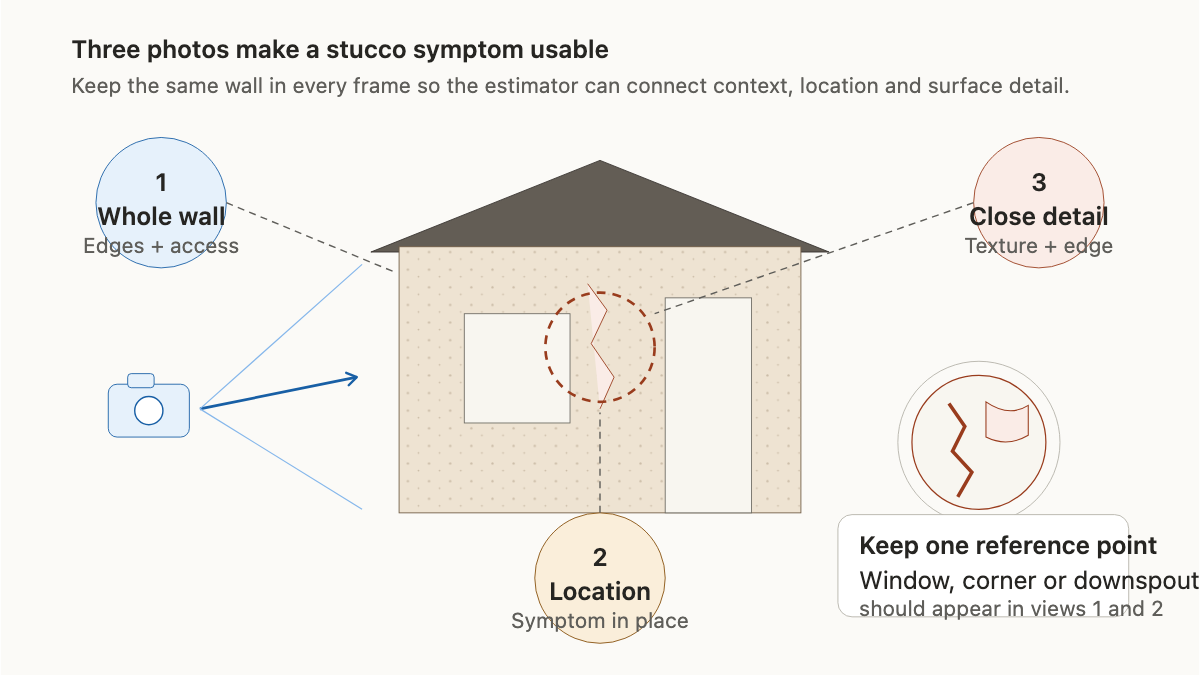
Random close-ups are hard to place. Ask for a short set that preserves context:
- One whole-elevation photo showing roof edges, grade, windows, doors, downspouts, and access.
- One mid-range photo showing the crack, stain, patch, or peeling area beside a fixed reference point.
- One sharp close view showing surface texture and the edge of the condition, without a filter or digital zoom.
- Extra views of tight side yards, slopes, balconies, overhead lines, locked gates, dense planting, and areas above a roof.
Ask the customer to name files by elevation and location if the intake system supports attachments. “South-wall-window-crack-wide” beats a camera roll full of nearly identical beige texture. For a multi-building property, include the building number or unit range in each label.
Photos help with routing. They do not establish wall composition, moisture content, adhesion, pH, crack cause, or coating compatibility. Those checks remain part of the contractor's process.
Flag older painted stucco carefully
Construction year belongs in the ticket because preparation may disturb an older painted surface. Ask when the building was built, whether the stucco is already painted, whether sanding, scraping, cutting, or patch removal is expected, and whether the owner has testing or renovation records.
The EPA's stucco-specific RRP answer says the federal rule applies to work that disturbs painted surfaces, so stucco disturbance is subject to that rule only when the stucco has been painted. The agency's contractor guidance explains the covered-property and work conditions in more detail.
Reception should flag the facts under company policy and avoid declaring the job covered or exempt. State-authorized programs and local rules may add requirements. The pre-1978 painting intake guide provides a fuller handoff.
Finish the ticket with access and approval
Stucco walls often extend over roof sections, pools, retaining walls, narrow side yards, steep grades, or landscaping. Record stories, parapet height if known, gated access, pets, tenant notice, parking, lift or scaffold constraints, overhead service, and any surface that cannot be reached during the estimate. Do not promise a specific access method from the call.
Confirm timing and authority. Ask whether the work is tied to a closing, association review, tenant turnover, repair completion, or another trade. Identify who can approve scope and color. If the owner expects samples, record whether an association, designer, property manager, spouse, or board must see them.
A useful readback could sound like this:
“Estimate for all four stucco elevations and two courtyard walls at 814 Cypress Way. Trim and metal railings are excluded. The wall system is unknown; a 2019 repaint invoice and photos are attached. The owner wants a lighter flat appearance and wants the current sand texture to remain visible.
“Conditions reported: diagonal crack above the west dining-room window, dark staining below the northwest downspout, peeling around the south hose bib, and a smooth patch on the east wall after plumbing work. The gutter was repaired in June, but the owner has not confirmed whether the wall is dry. Photos include whole elevations, location views, and close details.
“The home was built in 1972 and the stucco is painted. Reception made no RRP, repair, moisture, or coating determination. The owner will attend, association color approval is required, and the east side yard is about one person wide behind a locked gate.”
That ticket gives the estimator a building, not a color chip. The broader painting estimate scheduling guide can handle appointment ownership and confirmation. For mixed projects, the interior and exterior scope guide keeps the surfaces separate. An AI receptionist can capture the approved fields after hours, while every wall decision stays with the person who can stand in front of the stucco.