A homeowner calls about stripping wallpaper in a dining room and painting the walls. The paper looks intact in the phone photos, except for one loose seam behind a china cabinet. Then the caller adds two details: another contractor painted over part of the wallpaper years ago, and a small corner peeled away with brown paper stuck to the back.
The office now has an estimate request with a hidden second scope. The visible job is wallcovering removal. The concealed job may include adhesive cleanup, torn drywall face paper, plaster repair, skim coating, sealing, and preparation for the specified paint finish.
Ask about the rooms, included walls, wallcovering, visible condition, prior removal attempts, wall type, moisture, building age, furniture, access, and desired endpoint. Keep the repair allowance provisional until the estimator can inspect the surfaces or authorize a controlled test area. That distinction matters more than any price range offered over the phone.
Define the endpoint before discussing removal
“Remove the wallpaper” can mean several finished products. One caller wants bare walls for another contractor. Another expects patched and primed walls. A third expects a complete repaint, including trim and ceiling work. Record the endpoint in plain language before scheduling the estimate.
Start room by room. Capture the dining room, stair hall, powder room, closet, alcove, or single accent wall. Note which walls are included and which stay untouched. Ask whether the scope includes borders, wallpaper inside closets, paper behind radiators, and material above cabinets or built-ins. Record doors, windows, arches, chair rail, crown molding, baseboards, and other interruptions that divide the wall into smaller work areas.
Then ask what the final proposal should include: removal only; removal plus wall repair; a paint-ready primed surface; or finished paint on walls, trim, ceilings, doors, and related surfaces. Do not assume that “paint the room” includes every painted surface. The broader interior and exterior painting intake guide helps separate those surfaces.
The Painting Contractors Association wallcovering removal standard provides a useful scope boundary. Unless the agreement says otherwise, its removal specification addresses the wallcovering, adhesive, disposal, contamination found after removal, repairs needed to support the next finish, and readiness for that finish. A proposal should state which of those items the contractor owns.
Record the covering without diagnosing it
Ask the caller what they can see and what they know from purchase records or prior work. Useful descriptions include vinyl, grass cloth, fabric-backed material, paper, foil, textured material, border, painted wallpaper, or unknown. “Unknown” is honest. Request a wide photo of each wall plus close photos of loose seams, corners, bubbles, tears, and exposed edges.
Ask whether the caller sees one layer or more than one at an outlet cover, seam, or existing tear. They should not remove electrical plates or pull material loose for the call. A safe existing edge may still reveal whether a decorative face separates from a backing. Record the observation without naming the removal method.
Benjamin Moore’s removal guide distinguishes the visible surface layer from the adhesive beneath it and notes that wallcoverings vary in how they release. Vinyl, grass cloth, bamboo, paper, and painted material do not give the estimator the same starting condition. Prior preparation matters too.
Ask these intake questions in the company’s normal order:
- Which rooms and walls are included, and what remains in the rooms?
- Is the covering smooth, textured, fabric-like, metallic, vinyl-like, painted, or unknown?
- Are seams lifting, bubbles visible, corners loose, stains present, or areas already missing?
- Has anyone tried water, steam, a remover, scoring, scraping, sanding, or painting over it?
- Does the caller know whether the wall beneath is drywall, plaster, paneling, masonry, or unknown?
- Is there an active leak, damp area, mildew concern, soft wall, crumbling plaster, or recent repair?
- What should the wall look like when the contractor is finished?
These questions prepare an inspection. They do not select chemicals, tools, primers, or work practices from a distance.
Put hidden substrate work in its own estimate lane
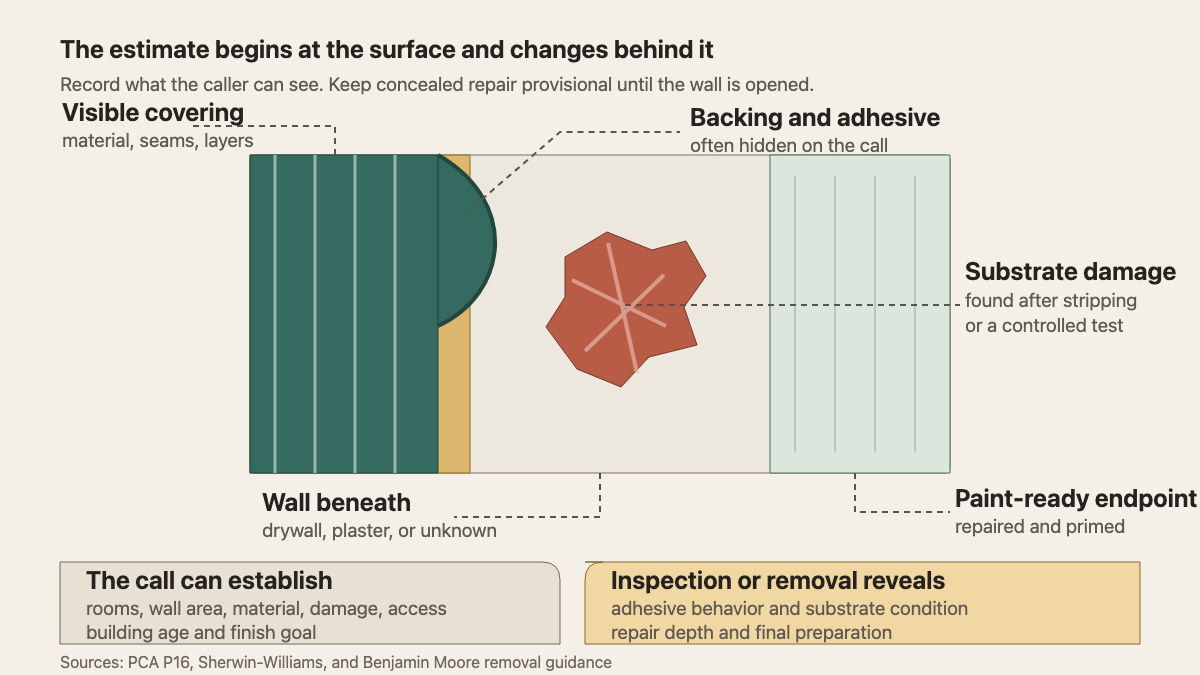
Wallpaper can look uniform while the wall beneath varies around patches, seams, windows, and older repairs. The adhesive may release cleanly in one area and hold tightly in another. The paper may have been installed over sound primer, bare drywall, weak paint, patched plaster, or another wallcovering.
PCA P16 states that the extent of patching, filling, floating, or substrate replacement is often unforeseeable until the covering has been removed. That is the central estimating fact. The call record should separate known removal scope from concealed repair scope, then identify how the company handles that uncertainty.
Some contractors use an on-site test area before final pricing. Others write a base removal scope with defined assumptions and a documented change process for concealed damage. The office should follow the company’s approved method and avoid inventing one during the call. Record who can approve added repair, how approval must be documented, and whether work pauses while the customer reviews photos.
A photo policy helps here. Ask for one wide image that identifies the wall, one close view of the covering, and close views of existing damage. Keep each image tied to a room name. A loose corner photographed without the rest of the wall can make a broad problem look local.
Treat adhesive cleanup and paint preparation as real scope
Removal ends only when the surface reaches the condition promised in the proposal. A wall dotted with backing, paste, torn face paper, and gouges is stripped, but it is not ready for finish paint.
Sherwin-Williams’ guidance for painting after wallpaper removal calls for removing residual glue, allowing the wall to dry, repairing imperfections, and priming before painting. It also warns that leftover glue can interfere with paint adhesion and appearance. The estimator needs to see enough of the wall to choose the project-specific preparation and coating system.
Reception can help by asking what happened during any previous attempt. Did sheets release cleanly? Did a brown or fuzzy layer appear? Did the wall soften, powder, peel, or show a different color beneath? Was the room allowed to dry? Record the caller’s words. Do not tell them to keep scraping or sanding so the estimator can see more.
Finish expectations belong beside preparation. Smooth walls under strong window light can reveal repairs that a textured wall hides. Ask about the current texture, the desired texture, paint color, sheen, and whether an adjacent wall must match. The estimator may decide that a broader repair or repaint is needed for a consistent result, but that decision should follow inspection.
Route age, moisture, occupancy, and access
Construction age matters when removal or preparation could disturb older painted surfaces beneath the wallpaper. The EPA Renovation, Repair and Painting program covers paid work that disturbs painted surfaces in certain pre-1978 homes and child-occupied facilities. EPA-authorized state programs can administer their own requirements.
Ask when the building was constructed, whether the caller has paint or lead records, and whether the property is a home, rental, childcare facility, school, or another occupancy. Route those facts under company policy. Reception should not declare the project exempt, tell the caller how to test, or promise a work practice. The pre-1978 painting call guide covers that handoff in more detail.
Moisture gets a separate stop. Ask where the stain, dampness, mildew-like growth, soft material, or crumbling surface appears and whether the source has been identified and repaired. Do not promise that removal and paint will correct an active leak. Record the responsible trade and the condition that must be cleared before wall preparation begins.
Occupied rooms change access. Ask who moves furniture, removes art and window treatments, handles fragile items, and provides access to closets or high walls. Record pets, children, home offices, medical needs, building hours, elevators, parking, and alarm instructions where relevant. For general appointment ownership and arrival details, use the painting estimate scheduling guide.
Read back the estimate ticket before booking
A useful readback sounds like this:
“Estimate for the dining room and stair hall at 84 Lakeview Drive. All dining-room walls are included; the ceiling, trim, and built-in cabinet are excluded pending discussion. The stair hall includes the wall above the landing. Finished scope requested is wallpaper removal, wall preparation, primer, and painted walls.
“The dining room has a textured vinyl-like covering with one painted section and a loose seam behind the cabinet. The stair hall material is unknown. The customer reports one prior scraping attempt that exposed brown paper. No further removal was requested. Wide and close photos are attached by room.
“The home was built before 1978, and the customer has no testing records on hand. Reception made no compliance determination. A former roof leak above the stair landing was repaired, according to the customer, but the estimator should inspect the stained area. The owner approves any added repair in writing after receiving photos.
“The rooms are occupied. The owner will move small objects, while the estimator should confirm furniture and wall-hanging responsibilities. The appointment is Thursday at 10:30 a.m., with the owner present.”
That record tells the estimator where to look, what the customer wants, and which promises have not been made. An AI receptionist can collect the same approved fields after hours. The estimator still owns the wall, the method, and the final scope once the loose seam gives way.