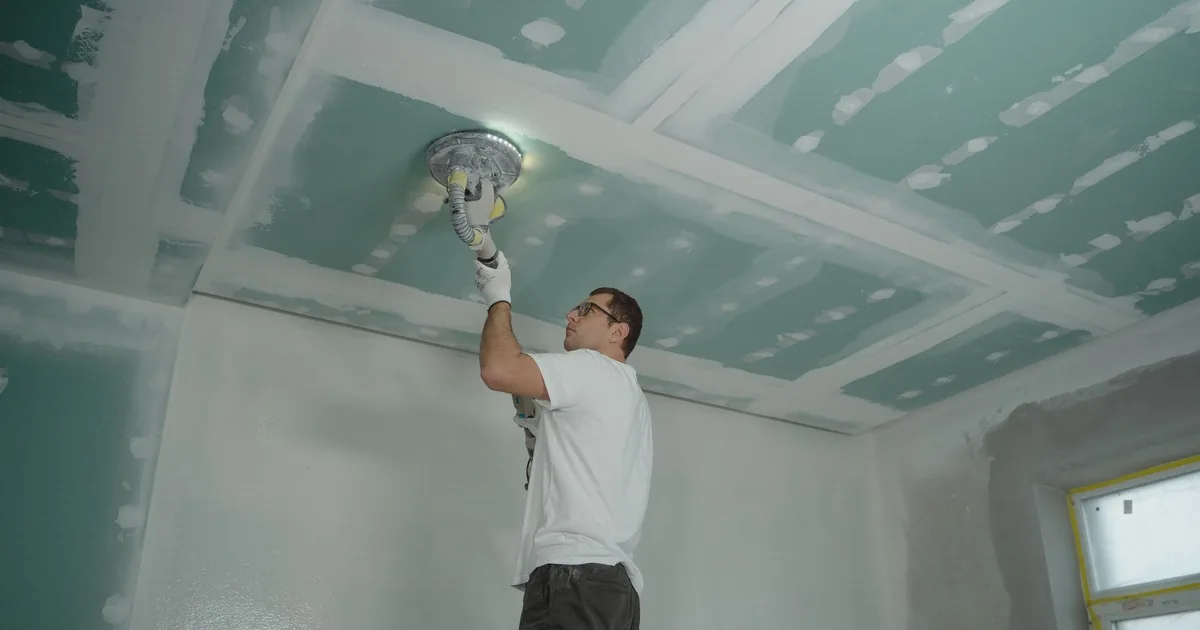
A caller wants “one brown spot painted before Friday.” The spot sits below an upstairs bathroom. A plumber visited last month, but the caller does not know what was repaired, whether the ceiling cavity was dried, or why the ring darkened after yesterday’s shower. That is not a quote-ready painting job yet.
A water-stained ceiling painting call should establish four facts early: the water source has been identified and controlled, wet or damaged material has been addressed, the remaining ceiling is ready for coating, and the estimator knows the finish scope. Active dripping, a growing stain, sagging, softness, loose material, a musty odor, or visible growth sends the call to repair or remediation review before cosmetic work.
Confirm that the water problem belongs in the past tense
Ask what caused the stain and who made that determination. Common answers include a roof leak, supply line, drain connection, overflowing fixture, HVAC condensate, or an unknown source. Record the caller’s answer as a report. Do not turn “probably the shower” into a diagnosis.
The next question matters more: “What was repaired, by whom, and on what date?” Request an invoice, work order, or written summary when one exists. If the source was rain-related, ask whether the area has remained unchanged through later rain. If it appeared after fixture use, ask whether that fixture has been used since the repair and whether the mark changed.
Drying needs its own record. Ask whether insulation, drywall, plaster, or other material was opened, removed, dried, or measured by a restoration contractor. A surface that feels dry to the caller does not prove that the cavity or insulation above it is dry.
The EPA’s residential mold and moisture guide puts moisture control first and says water-damaged areas and items should be dried within 24 to 48 hours. CDC/NIOSH remediation guidance likewise calls for drying wet material or removing it and making repairs that prevent more water entry. These sources set a firm intake boundary. A painter should not be asked to hide an unresolved building problem.
A caller who cannot confirm the source or drying status may need a moisture inspection after a small leak. Book that dependency first under the company’s normal referral policy.
Describe the ceiling without diagnosing it
Ask the caller to look from a safe standing position. Nobody needs to climb, press on a sagging area, puncture a bubble, remove a light, or open the ceiling for the phone call.
Capture the current condition in the caller’s words:
- Is water dripping now, or is the mark growing after rain or fixture use?
- Does the ceiling appear flat, or is there a sag, bulge, blister, crack, open seam, or loose patch?
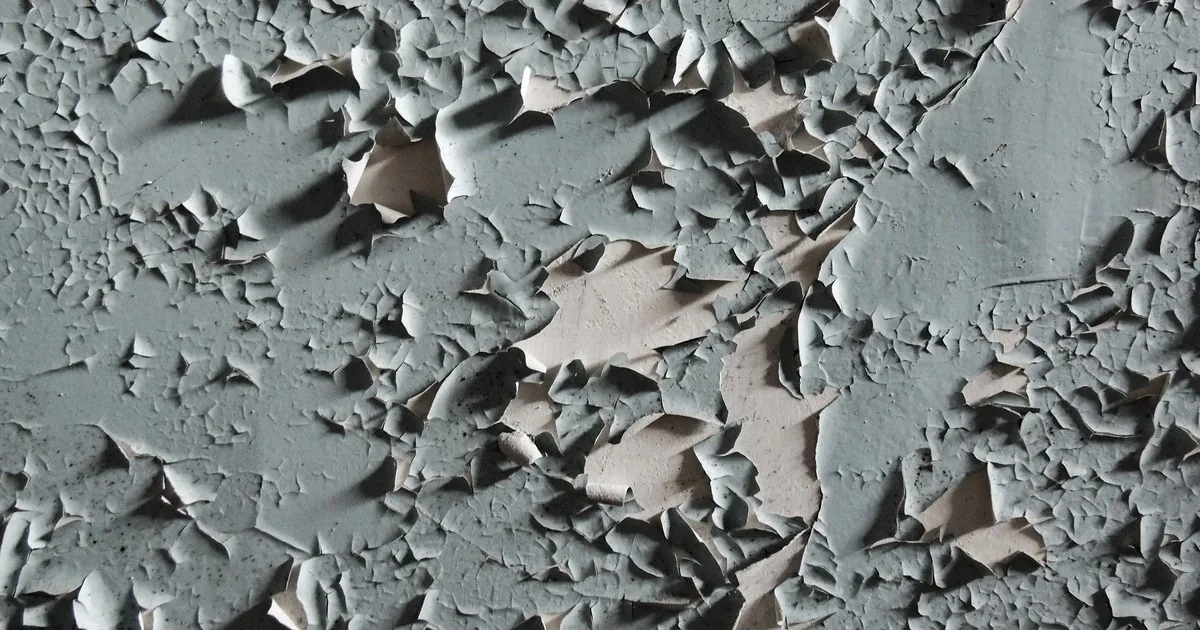
- Is paint peeling, flaking, or separating around the ring?
- Does the caller report dampness, softness, a musty odor, or visible spotting or growth?
- Is a light fixture, smoke alarm, fan, or electrical box inside the affected area?
- Has any drywall, plaster, texture, insulation, or trim already been removed or replaced?
A wide photo should show the whole ceiling and nearby walls. A closer photo can show the stain edge, peeling, crack, texture, or patch. Ask for the room above or roof area only as location context. Stain shape alone cannot identify the source.
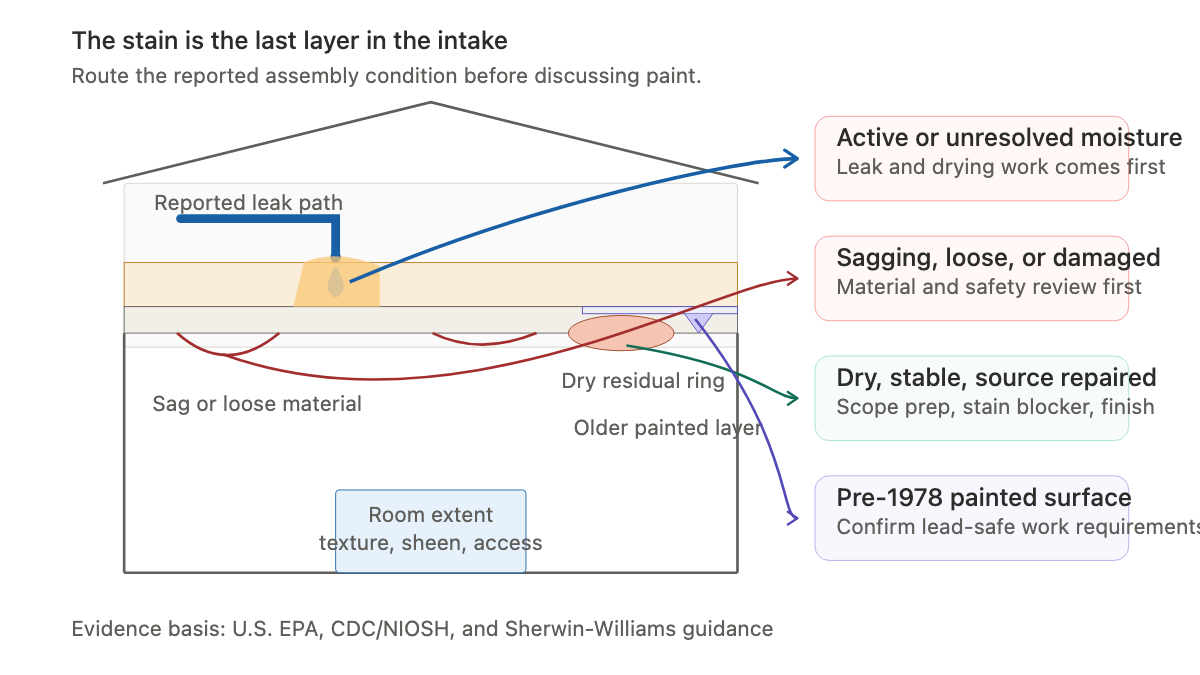
EPA says not to paint or caulk moldy surfaces. NIOSH warns that painting over water-damaged materials or moldy surfaces can create more problems. That means visible growth, odor with dampness, and damaged porous material deserve qualified review. Reception should avoid labeling discoloration as mold, prescribing cleanup, or promising that primer will contain it.
Sagging or loose ceiling material also stops ordinary estimate scheduling. Keep people away from the affected area and follow the company’s urgent routing policy. The office can document what the caller sees without telling them to test the ceiling.
Scope the painting work after the assembly is ready
Once the source is repaired and the ceiling is dry and stable, the call becomes a painting estimate. Start with the substrate: drywall, plaster, acoustic tile, wood, or an uncertain material. Then record the finish. Is the surface smooth, orange peel, knockdown, popcorn, a decorative plaster pattern, or something the caller cannot name?
Measure the visible stain only as one part of the scope. Ask for the room dimensions, ceiling height, number of connected ceiling planes, and whether the customer expects a spot repair or a full-ceiling repaint. Natural light from large windows and long sightlines can make sheen or color differences obvious. The estimator decides how far the finish coat should extend.
Record prior work. Was the ceiling patched? Did anyone apply bleach, household cleaner, primer, spray texture, or finish paint? Ask for product labels or receipts if available. A failed cover attempt is useful evidence, but it does not prove which primer belongs on the final job.
Sherwin-Williams’ water-stain repair guidance gives the sequence: repair the water source, repair excessively damaged wood, plaster, or drywall, remove peeling paint, and seal the remaining stained area with a primer designed to hold out water stains. Product selection still depends on the substrate, existing coating, stain, ventilation, and label directions.
If material needs replacement, route the patch scope through the drywall repair quote guide. Keep the painter’s finish scope attached so the handoff includes texture matching, priming, and the intended repaint area.
Capture age, occupancy, access, and authorization
Ask when the building was constructed, especially if preparation may scrape, sand, cut, or replace a painted surface. EPA’s Renovation, Repair and Painting program covers paid work that disturbs painted surfaces in many homes and child-occupied facilities built before 1978. EPA or an authorized state or Tribal program may administer the applicable requirements.
The office does not need to settle that compliance question during the first call. It does need the construction year, property type, occupancy, proposed disturbance, any existing test or inspection record, and the company’s certification boundary. The related lead-safe painting intake guide covers those fields in detail.
Access affects the estimate too. Record ceiling height, stair or elevator access, furniture, built-ins, floor protection, pets, alarm devices, occupied work areas, parking, and any building work-hour rule. Ask who owns the property and who can approve substrate repair, color, sheen, schedule, and added work discovered during preparation.
For a rental or managed property, collect the tenant contact, owner or manager contact, work-order number, entry permission, photo rules, and invoice recipient. A Friday deadline does not replace authorization.
Read back a quote-ready ticket
A useful note sounds like this:
“Second-floor bathroom supply-line leak was repaired by North Street Plumbing on September 18. The customer sent the invoice. Drywall below was opened and replaced by a restoration contractor, and the drying report is attached. The current ceiling is flat and the caller reports no dripping, growth, odor, softness, or change after later fixture use. The repair is a smooth drywall patch in a 12-by-14-foot bedroom with an eight-foot ceiling. The customer wants the full ceiling repainted to the existing flat white. Home was built in 1996. Room photo, patch close-up, product can photo, and access notes are attached.”
An incomplete note should be equally clear: source unknown, stain changed after rain, ceiling bulging near a recessed light, no drying record, painter estimate paused. The caller then knows what must be resolved before the office discusses coating work.
The broad painting estimate scheduling guide can handle color, rooms, access, and appointment ownership once this ceiling-specific gate is clear. An AI receptionist can collect the same evidence after hours, but its script should preserve the stop conditions and avoid diagnosing moisture, mold, structure, or lead.
The estimator should open the ticket and see the whole job: where the water came from, what was repaired, how drying was verified, what material remains, which texture must be matched, how much ceiling is in scope, and who can approve a change. A brown ring is only the visible part.