A property manager calls at 4:20 on Monday. Unit 2B is vacant tomorrow, the cleaner arrives Friday, and a new resident gets the keys Saturday. “It is a two-bedroom. We need white walls and a few patches.” That sounds like a quote request. It is really a compressed handoff among maintenance, painting, cleaning, leasing, and whoever can approve a change.
The painting office should confirm the unit, vacancy window, access, and approval owner first. Then map the scope by room: walls, ceilings, trim, doors, closets, cabinets, repairs, colors, sheen, and exclusions. A bedroom count cannot tell an estimator whether the bathroom ceiling is stained, the kitchen has a dark accent wall, or maintenance still needs to open a damaged section of drywall.
Lock down the unit, vacancy window, and access
Start with the property name, street address, building, unit number, floor, and property-manager contact. Ask whether the caller manages the property, owns it, or is coordinating for someone else. Record who can approve the estimate and who can authorize added work after the unit is opened.
Get four schedule points in plain language: the current resident’s move-out, the first time the unit can be entered, any repair or flooring work already scheduled, and the make-ready deadline. “Ready Friday” may mean paint complete before Friday morning cleaning, available for a Friday afternoon inspection, or ready for the incoming resident that evening. Repeat the date, time, and next vendor.
Published rental turnover guidance puts the walk-through and vendor scheduling early in the move-out process. The call taker can use that lead time. Ask whether a move-out inspection has happened and whether the manager has a room-by-room condition report or current photos. If the resident still occupies the unit, note who will coordinate entry and what can be inspected before vacancy.
Access belongs in the estimate ticket. Capture the lockbox location, code-delivery method, key-release time, office hours, gate instructions, parking limits, elevator reservation, alarm procedure, and building contact. Do not put a door code in a general note that may be copied into emails. Follow the company’s secure-access policy.
Ask what remains inside. Furniture, window coverings, wall-mounted televisions, shelves, tenant belongings, appliances, and stored maintenance materials can change preparation and access. Record who removes them and when. “Vacant” should mean the office knows what will still be in each room.
The broader painting estimate scheduling guide covers contact details and appointment ownership. A turnover call adds a hard dependency: the estimate, approval, repair work, paint work, and final clean have to fit the same unit calendar.
Build the paint scope room by room
Ask the caller to name every space, including halls, closets, laundry areas, pantries, utility rooms, and attached garages. Work through the same surface list for each one:
- walls, with color changes and known marks;
- ceiling, including stains, cracks, texture, and prior repairs;
- baseboards, crown, window trim, door casing, and other painted trim;
- doors, door faces, frames, shelves, and closet interiors;
- cabinets, built-ins, radiators, railings, or other separately priced items;
- excluded surfaces and items the property team will handle.
Keep counts attached to room names. “Six doors” becomes useful when the ticket says two bedroom doors, two closet doors, one bath door, and one utility door, with frames included and door faces pending inspection. Ask whether both faces are in scope. A hall-side door face may belong to the unit standard while the closet side has never been painted.
The same discipline applies to touch-up requests. Ask which wall, where on the wall, what caused the mark, how large the affected area appears in the photo, and whether the property has the exact paint record. Color name alone is thin evidence. Product line, sheen, tint formula, prior coat age, stored paint condition, and wall exposure can affect whether a local repair blends. The estimator should set the final approach after seeing the surface.
Use photos to prepare the visit, not to erase uncertainty. Request one wide room view and close views of damage, labels, or color changes under the company’s photo policy. Keep the files tied to the unit and room. A close photograph of a patch without a wide view can hide a wall full of scuffs.
Link general interior surface questions to the company’s interior and exterior painting intake. The turnover record should stay narrower. Its job is to hand a specific vacant unit to an estimator with the calendar and decision path intact.
Separate paint preparation from other repairs
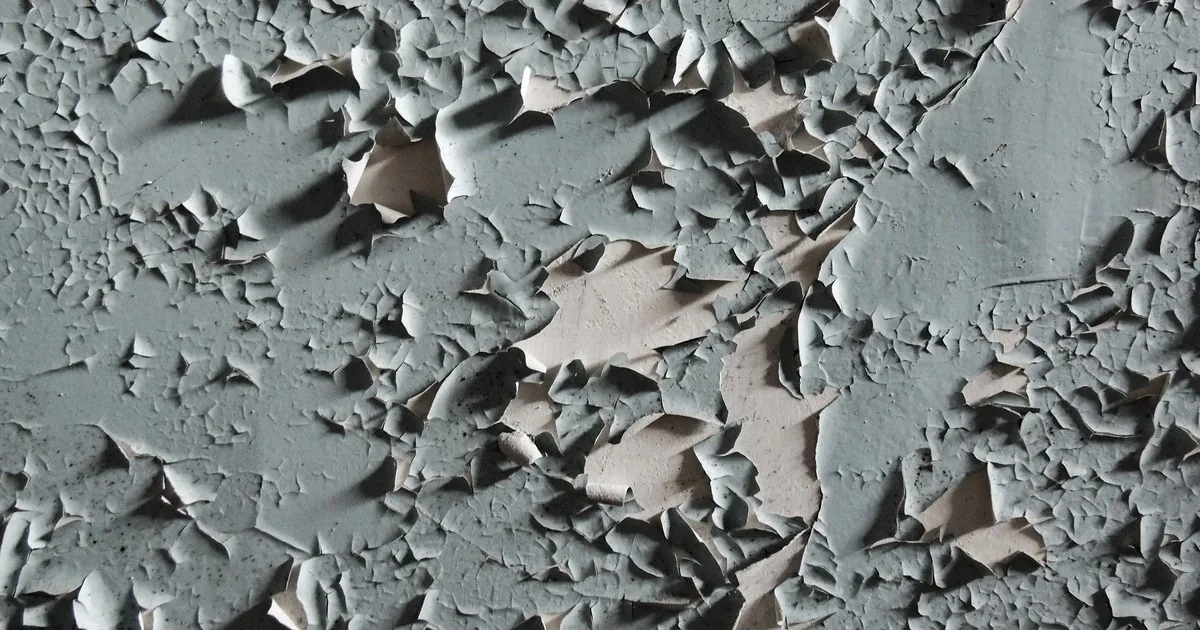
A dent, nail hole, torn drywall face, ceiling stain, soft baseboard, peeling coating, and active leak are different conditions. Ask what the manager sees and what is already known, but do not diagnose the cause on the phone. Record the location, visible condition, current photos, previous repair, and the trade assigned to investigate.
Property-management guidance commonly places repairs before fresh paint and cleaning after paint. Smartland’s apartment turnover checklist follows that order and recommends documenting condition during the move-out inspection. The estimate ticket should identify every repair that can block surface preparation or coating. It should also name the person who will tell the painter that the repair is complete.
Water stains need a clear hold point. Ask whether the moisture source was found, who repaired it, when the surface will be available, and whether the manager has completion photos or a work order. Painting over a stain is not proof that the underlying problem is resolved. The estimator can assess the coating work after the property team addresses the source and substrate.
Building age matters when preparation may disturb old coatings. EPA states that simple painting during rental turnover does not trigger the federal Renovation, Repair and Painting Rule when there is no preparation that disturbs existing paint. Scraping or sanding that disturbs paint changes the analysis. See the EPA’s turnover-painting answer and its property-manager guidance.
Reception should ask when the building was constructed, which painted surfaces may be disturbed, and whether the manager has testing or lead-related records. Route the facts under company policy. The call taker should never declare a component lead-free, choose a work practice, or promise that federal, state, or local requirements do not apply. For a fuller script, use the pre-1978 painting intake guide.
Record the finish standard and approval path
Property managers often maintain a standard wall color, ceiling color, trim color, product, and sheen. Ask for the written specification or a photograph of the paint record. Confirm who supplies materials and whether stored paint is assigned to this unit. Do not promise that an old can is usable before someone inspects it.
Define the desired result in observable terms. Is the request limited to tenant-caused patches, a full coat on selected walls, a color reset throughout, or preparation for another inspection? Does the manager expect closets, utility spaces, inside cabinet faces, or balcony walls? Which surfaces must remain untouched?
Then establish the change path. If the estimator finds more wall damage, a second color under a picture rail, or trim excluded from the original request, who receives the photo and who can approve the revision? Record whether approval must be written and whether there is a time after which the crew should stop and secure the unit.
Closeout deserves its own fields. Ask whether the property team wants completion photos by room, leftover paint labeled and stored, keys returned to the office, the lockbox scrambled, lights switched off, thermostat left at a set point, or the unit handed directly to cleaning. These are operational instructions, not painting scope, but losing one can disrupt the turnover.
Read back a ticket the estimator can use
A strong readback sounds like this:
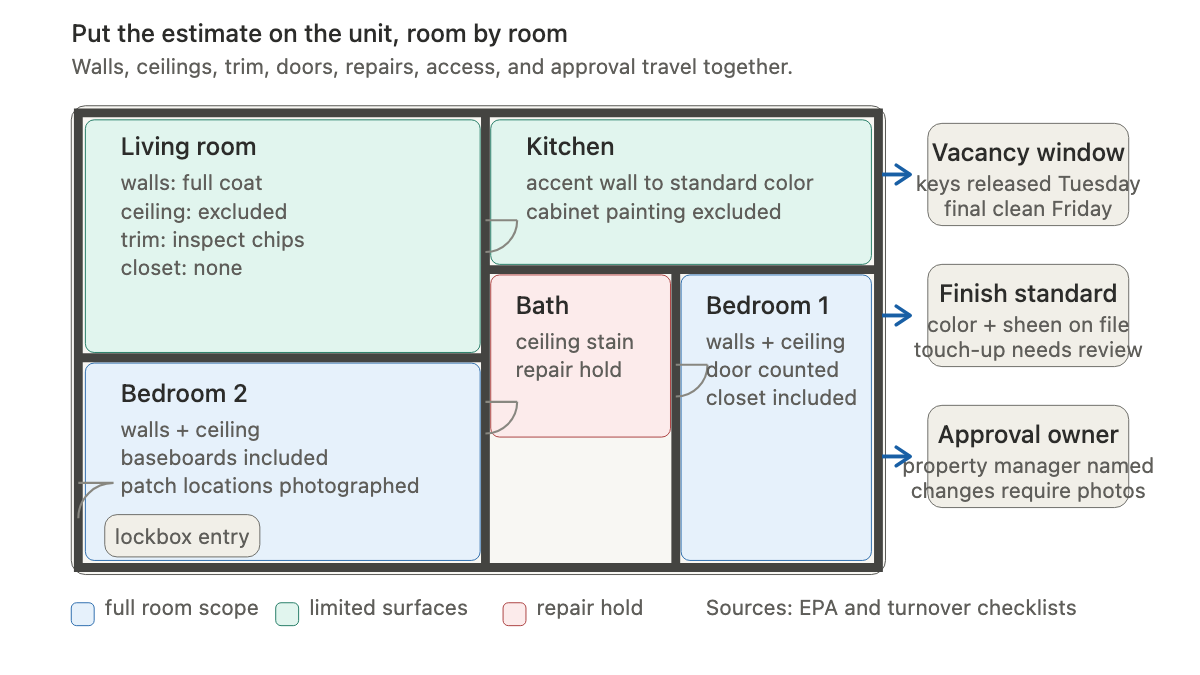
“Maple Court, Building C, Unit 2B is a vacant two-bedroom on the second floor. The lockbox becomes available Tuesday at 9:00 a.m. Painting must be complete before the cleaner enters Friday at 8:00 a.m. The property manager, Elena Ruiz, approves the estimate and any photographed additions by email.
“Living-room walls are included; the ceiling is excluded; trim needs inspection for chips. The kitchen accent wall returns to the property’s standard color, and cabinets are excluded. Both bedrooms include walls and ceilings. Bedroom 2 baseboards and patch locations need inspection. Doors and closets will be counted separately on site.
“The bathroom ceiling has a stain and is on hold. Maintenance is investigating the leak and will release that surface in writing. The building was constructed before 1978, and the manager will send available paint and lead records. Reception has made no compliance determination.
“The property will send the color, product, and sheen schedule plus current room photos. Completion photos are required by room. Keys return to the lockbox, and the cleaner is the next vendor.”
That ticket gives the estimator a unit, a map, a deadline, and a person who can decide. An AI receptionist can collect the same fields after hours if its script follows the painting company’s policies. The useful outcome is simple: when the estimator opens Unit 2B, the call record already matches the rooms in front of them.