A homeowner calls about three bubbles above a living-room window. The paint was applied last spring. One bubble appeared after a week of hard rain, but the wall feels dry now. The caller wants a price to scrape the spots and repaint before guests arrive.
That sounds like a small paint repair. It may involve the coating, the surface beneath it, or moisture moving through another part of the building. The office cannot sort those possibilities from a phone photo. It can give the estimator a precise map.
Record the exact room, surface, height, pattern, spread, timeline, moisture clues, coating history, building age, access, and requested finish. Ask whether an active leak, soft material, electrical concern, or falling debris needs faster attention. Then book the right inspection without promising a cause or a repaint price.
Map the failure before discussing a repaint
“Paint is peeling” leaves most of the inspection undefined. Ask the caller to stand back and describe the whole surface first. Is the problem on a ceiling, wall, door, window trim, siding, masonry, cabinet, or porch? Is it confined to one corner, repeated around several windows, running along a ceiling edge, or scattered across a broad wall?
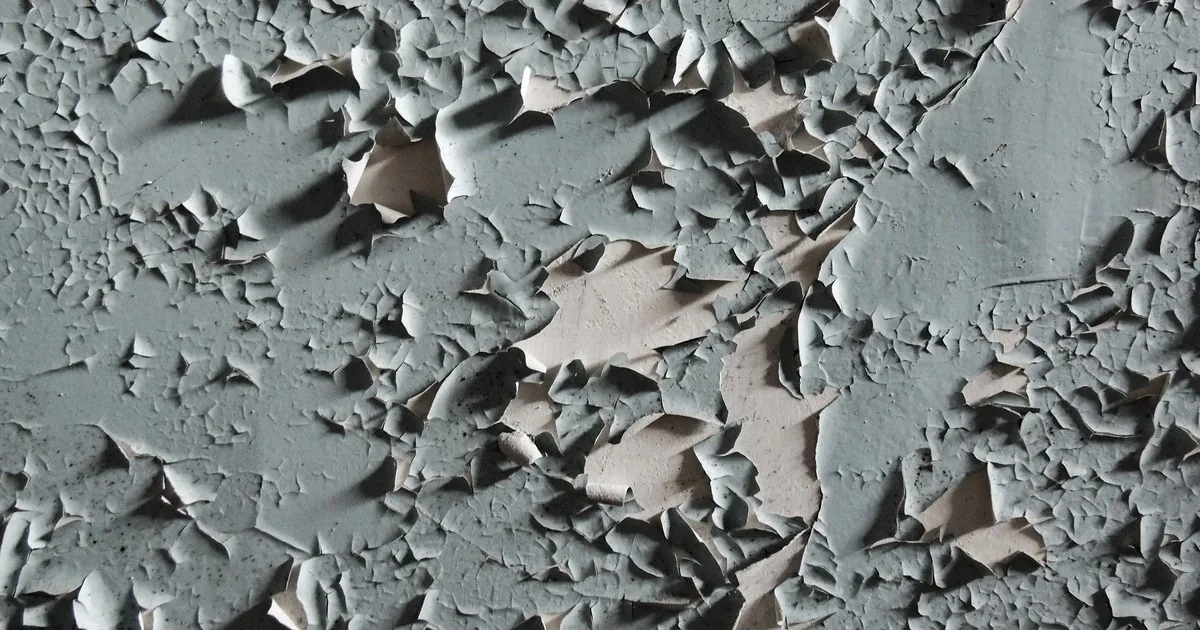
Next, capture the shape in the caller’s own words. Useful descriptions include round bubbles, raised blisters, curled edges, flakes, long cracks, sheets pulling away, a powdery surface, or paint that comes off when wiped. Record the color beneath the failed coating if it is already visible. Do not ask the caller to open a bubble, scrape an edge, remove an outlet cover, or press on a questionable ceiling.
Sherwin-Williams defines blistering as bubbles caused by loss of adhesion and lifting of the paint film from the underlying surface. That definition helps the office describe the symptom. It does not identify why adhesion failed on this property.
Photos should preserve context. Request one wide image that shows the full wall or ceiling, one medium image that ties the damage to a window, vent, fixture, roofline, or baseboard, and a close view of the coating edge. Give each file a room name. A close-up of one curled chip can hide whether the failure is the size of a hand or runs across the building.
Ask for moisture clues without naming the source
Moisture deserves an early branch because repainting over an unresolved water condition can lead to another failure. Still, a bubble does not prove an active leak. Manufacturer guidance also lists heat, damp surfaces, weather exposure soon after painting, contamination, coating sequence, and insufficient preparation among possible contributors.
Ask what the caller has observed:
- Does the area feel damp, smell musty, show a water ring, or change color after rain, bathing, cooking, or air-conditioning use?
- Is the failure near a roof edge, plumbing fixture, supply line, drain, window, exterior door, vent, chimney, baseboard, or below-grade wall?
- Has there been a roof leak, plumbing repair, overflow, storm, flood, condensation problem, HVAC service, or exterior caulking work?
- Does the area grow, flatten, darken, or reappear under certain conditions?
- Has a roofer, plumber, HVAC contractor, restoration company, or building manager already inspected the source?
The EPA moisture-control guide covers drainage, foundations, walls, roof and ceiling assemblies, plumbing, and HVAC. That range is why the office should preserve location and timing instead of naming a source. A ceiling stain beneath an upstairs bathroom and peeling exterior trim below a failed gutter may both involve water, but they require different people and access.
If the caller reports active water near electrical equipment, a sagging ceiling, material falling overhead, or a rapidly spreading condition, follow the company’s urgent-property protocol. A painting appointment should not delay emergency help or the trade responsible for stopping the source.
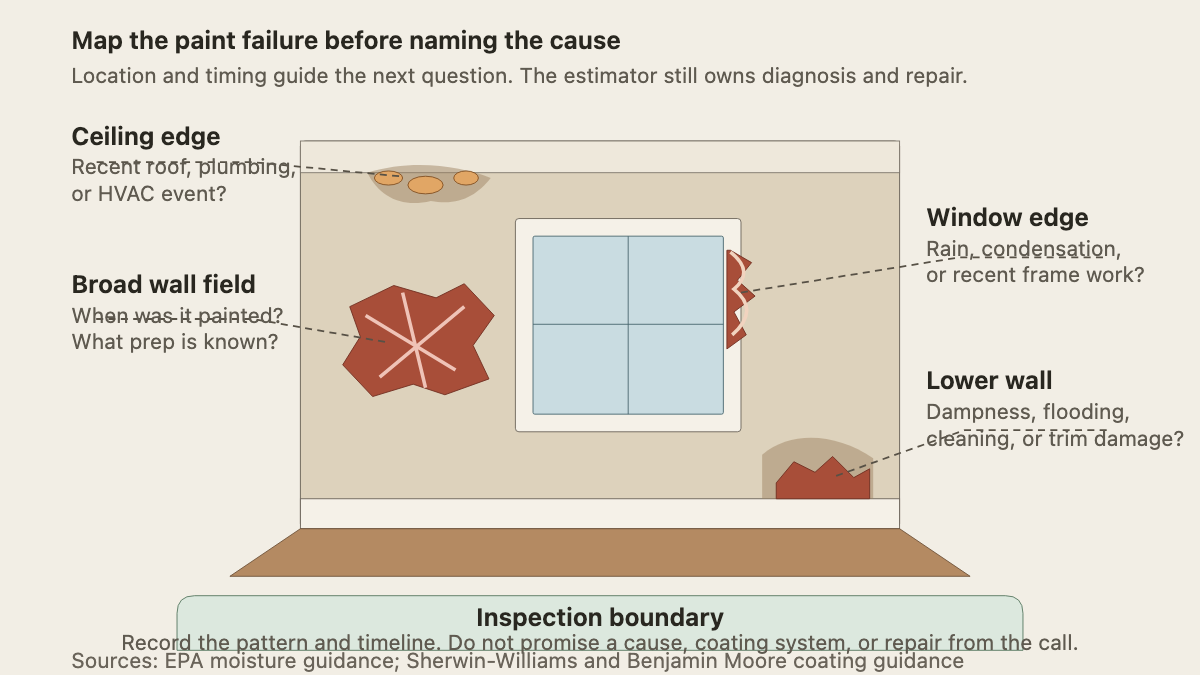
The location map is a questioning tool. Ceiling-edge bubbles prompt questions about recent roof, plumbing, or HVAC events. Window-edge peeling prompts questions about rain, condensation, and frame work. Broad wall failure puts the last paint job and preparation history in focus. Lower-wall damage calls for facts about dampness, cleaning, flooding, and baseboard condition. None of those locations proves the cause.
Build a coating and event timeline
Timing can separate a fresh callback from a long-standing maintenance condition. Ask when the caller first noticed the failure and whether it existed before the last paint job. Record when the surface was painted, who performed the work, and how soon the bubbles or peeling appeared. If the caller has the proposal, product label, leftover can, invoice, or preparation notes, ask them to have those records ready for the estimator.
Find out what changed before the damage appeared. A new roof, repaired pipe, replaced window, power washing, wallpaper removal, patched drywall, new insulation, heavy cleaning, or a period without ventilation can matter. So can the weather around an exterior paint job. Record facts and dates. Avoid converting a sequence into a verdict.
Benjamin Moore’s blistering guidance describes loss of adhesion between the paint film and the surface and lists heat, moisture, surface condition, and coating compatibility among possible factors. It also says the underlying condition must be addressed to avoid recurrence. The estimator needs the substrate and coating layers to make that judgment.
Ask whether the visible surface is drywall, plaster, wood, metal, masonry, stucco, siding, or unknown. Note glossy paint, chalking, stains, mildew-like growth, rust, rotten wood, crumbling masonry, torn drywall paper, failed caulk, or movement at a joint. These observations shape the inspection. Reception should not select a primer, tell the caller to sand, or promise that spot work will blend.
Separate a callback from a new failure inspection
When the company completed the prior work, capture the original job number, completion date, rooms or elevations painted, and the person who authorized the work. Ask when the customer first reported the problem and whether anyone has altered the area since completion. That includes cleaning, patching, leak repairs, new caulk, scraping, or touch-up paint.
Do not accept or deny warranty coverage during intake. The person answering the phone usually cannot see whether the failure is in the new coating, an older layer, the substrate, or a condition excluded by the written agreement. Use neutral language: “I’ll attach the original job and your photos so the project manager can inspect the failure and review the agreement.”
For a new customer, identify the requested outcome. Some callers want the cause investigated before any paint proposal. Others want damaged coating removed and the room repainted after another trade clears the moisture source. A property manager may need a written condition report for an owner. Label that goal so the estimator arrives prepared.
The broader painting quote intake guide can help with rooms, surfaces, access, and finish scope. Use the painting estimate scheduling guide for site contact, parking, keys, pets, and arrival instructions.
Route older paint without making a compliance decision
Peeling paint creates a special boundary in older buildings because inspection or repair may disturb existing coating layers. Ask the year built, the property type, and whether the caller has lead inspection, risk assessment, or renovation records. Note whether the site is owner-occupied housing, a rental, a childcare facility, a school, or another type of property.
The EPA Renovation, Repair and Painting program applies to paid work that disturbs painted surfaces in covered pre-1978 homes and child-occupied facilities. EPA-authorized state programs may administer their own requirements. Reception should route the property facts under company policy and avoid declaring an exemption or suggesting a disturbance method.
Do not tell a caller to scrape a sample for the appointment. Keep children and pets away from loose chips according to the company’s approved safety response, and send the record to a qualified person. The Answara pre-1978 painting intake guide gives the office a fuller set of routing questions.
Read back a neutral inspection ticket
A useful handoff sounds like this:
“Inspection at 18 Oak Street for bubbling paint on the living-room wall above the east window. The affected area appears in three clusters along the ceiling edge and right side of the window trim. The customer first noticed it after heavy rain last week. The wall feels dry today, and no active dripping or sagging was reported. Wide, location, and close photos are attached.
“The room was painted by another contractor about one year ago. The customer has a leftover can but no preparation notes. The surface is believed to be plaster. A roofer repaired flashing above this wall six months ago. Reception made no statement about the source, coating compatibility, repair method, or price.
“The house was built in 1948, and no lead records are available during the call. Route under the company’s pre-1978 policy. The owner will be present Tuesday at 9:00 a.m. and wants an inspection before deciding whether to repair one wall or repaint the room.”
That ticket gives the estimator a location, pattern, timeline, building history, prior work, safety flag, and customer goal. An AI receptionist can collect the same approved fields after hours. The final diagnosis begins on site, where the estimator can see which layer lifted and what sits on the other side of the wall.