A homeowner calls because two laminate seams beside the dishwasher have risen overnight. The leak appears to be off. Towels dried the surface, but the caller cannot tell whether water reached the underlayment or traveled under the cabinets.
That call needs a location, source, timeline, affected footprint, safety screen, and product record. The office can then route the job for flooring inspection, water mitigation, plumbing, appliance service, or a combination. Avoid promising that the boards will flatten, that one plank can be replaced, or that the subfloor is dry. Those decisions require the installed floor instructions and an on-site assessment.
Find the water source before discussing the floor repair
Start with what released the water. Ask whether it came from a dishwasher, refrigerator line, sink, toilet, exterior door, roof leak, aquarium, overflowing container, storm water, or an unknown source. Record whether the flow has stopped and who stopped it. “The floor is dry now” describes the visible surface. It does not confirm that the source is fixed.
Route an active plumbing or appliance leak under company policy before treating the call as a routine flooring repair. Standing water near outlets, powered appliances, or exposed wiring needs an electrical safety screen too. The receptionist should not tell a caller to pull an appliance forward, remove wet boards, or operate electrical equipment in a wet area.
Water category matters. A small amount of clean water from a known supply line is a different situation from sewage, storm flooding, or water that has crossed a contaminated area. For floodwater, the EPA warns that water may contain bacteria, chemicals, and other hazards. Flag contamination plainly and route it to a qualified restoration provider. A flooring estimate can wait until the immediate hazard and drying work are addressed.
Ask whether the caller has photos or a plumber’s note showing the source. Capture the make and model of the leaking appliance when relevant. That detail helps separate appliance service from flooring work and gives the field team a better picture of access around toe kicks, cabinets, and fixed equipment.
Describe the visible change without diagnosing it
“Swollen” can mean several things on the phone. Ask the caller to describe what changed:
- Are plank edges raised at a joint, or is a larger area crowned or buckled?
- Does the surface feel soft, rough, separated, hollow, or unusually springy?
- Are gaps opening elsewhere, and do nearby baseboards or door casings look damp?
- Does the floor move or make a new sound under light foot traffic?
- Is there staining, odor, visible mold, or water squeezing from a seam?
- Which room, wall, doorway, cabinet, or appliance is closest to the first visible change?
Keep the caller’s words in the work order. “Three raised end joints extending about six feet from the dishwasher” is more useful than “water-damaged floor.” Ask for a wide room photo, a close view of the raised joint, and a picture that shows the likely source. Do not ask the homeowner to step on a soft or sharply buckled section to demonstrate movement.
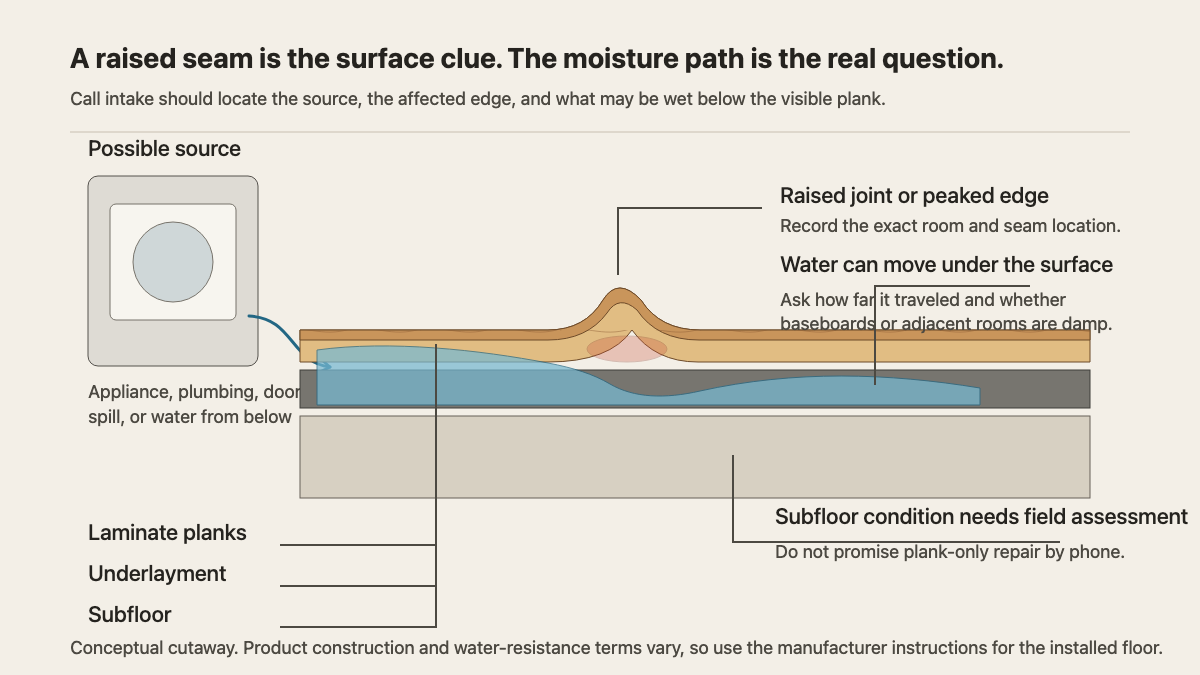
The location can suggest the inspection path, but it does not prove the cause. Water may enter at one edge and move beneath a floating floor before the first visible symptom appears. A high seam can also have causes unrelated to a recent spill. The technician needs the event history and the physical floor.
Map the wet footprint and the time line
Ask when the water release began, when it was discovered, and when the source was stopped. If the start time is unknown, say so. Record whether water stood on the floor and whether it reached a wall, closet, hallway, adjacent room, floor vent, cabinet base, or stair opening. On an upper floor, ask whether the ceiling below shows a stain or drip.
The affected footprint should include more than the visibly raised boards. Note where towels, a wet vacuum, fans, or a dehumidifier were used. Ask whether a restoration company measured the area and whether any readings, drying logs, or removal notes are available. Do not translate “the meter beeped” into a dry-floor conclusion. The device, material, comparison area, and operator method all matter.
For a major flood, the timing has a health reason. The EPA says mold can grow on wet wood, drywall, carpet, and furniture when those materials remain wet for more than 24 hours. The CDC advises drying or removing wet items within 24 to 48 hours when possible. Those figures support prompt routing. They do not create a phone rule that declares a particular laminate assembly safe or ruined at hour 24.
If visible mold or a persistent musty odor is reported, capture its location and keep the caller from disturbing the area under casual flooring-repair advice. People with asthma, immune suppression, or underlying lung disease should not take part in mold cleanup, according to CDC cleanup guidance. The office can route the call without offering a health diagnosis.
Identify the installed laminate and what sits below it
Ask for the manufacturer, collection, color, plank dimensions, purchase date, installer, and any leftover cartons or boards. A photo of a carton label or invoice is better than a guess based on color. Record whether the product was sold as water-resistant or waterproof, but do not convert that label into a coverage promise.
NALFA advises checking manufacturer specifications for rooms with excessive moisture because product limits vary. Product care varies too. Shaw’s laminate guidance tells owners to blot spills promptly and avoid standing liquid, while Pergo publishes product-specific care and repair information. The installed product’s instructions and warranty control the real job.
Capture the installation context:
- Is the floor floating, glued, or unknown?
- Is it over concrete, plywood, oriented strand board, old flooring, or an unknown base?
- Is there attached pad, separate underlayment, or a moisture barrier?
- Does the affected run continue under cabinets, an island, appliances, or a wall transition?
- Are matching replacement boards available from the same product and color lot?
- Has anyone already removed trim, transitions, or planks?
The answers shape the visit. A small visible area may still require access from a wall edge to unlock a floating floor. A discontinued pattern may change the customer’s options. Wet underlayment or a damp subfloor may put drying ahead of finish-floor replacement. None of those outcomes should be promised from the desk.
The EPA recommends confirming that flooring and related materials are completely dry before refinishing or replacement after a flood. Its broader flood guidance also warns that finish flooring can conceal wet material below. That is why “the top feels dry” is an observation, not a completion test.
Route the call by the work that has to happen first
A flooring contractor can inspect visible damage, product identity, layout, replacement access, transitions, and matching material. A restoration company may be needed when water traveled under a broad area, affected walls or cabinets, came from a contaminated source, or still requires professional drying. A plumber, roofer, or appliance technician may own the original leak. Some jobs need all of them in sequence.
Use a clear routing note. For example:
“Kitchen laminate installed about four years ago; brand and style pending carton photo. Dishwasher supply leak discovered at 7 a.m. and shut off by plumber at 8:10 a.m. No standing water now. Three raised end joints visible beside dishwasher, with damp baseboard reported along the adjacent cabinet run. Water did not enter the hallway according to caller. No sewage, storm water, odor, or visible mold reported. Towels used; no professional moisture assessment yet. Matching planks may be in garage. Customer has wide and close photos. Flooring inspection requested after source repair is confirmed. Underlayment, subfloor, cabinet-edge moisture, replacement access, and material match remain unverified.”
That note protects the field visit from false certainty. It also tells the customer what the next appointment is meant to determine.
Set expectations without writing the repair plan by phone
A caller often asks whether the floor will settle after it dries. Say that the field team needs to identify the product, inspect the affected joints, check the area below or around the floor as access allows, and confirm that the water source has been handled. Some projects involve selected boards. Others involve a larger connected run, drying work, trim, transitions, or subfloor repair.
Do not promise warranty coverage. Water source, product line, installation details, maintenance, timing, and documented damage can all affect a manufacturer or insurer’s decision. The office should collect documents and let the responsible company interpret its own terms.
Finish by reading back the source status, contamination screen, room, visible changes, affected footprint, event times, product information, substrate clues, photos, prior work, and requested next step. An AI receptionist can collect those fields after hours, but the useful boundary stays the same: document the event carefully and leave the floor diagnosis to the people who can see what happened beneath the surface.