A homeowner calls about “pet damage in the family room.” That could mean pale claw lines across a polyurethane finish, a dark patch between hardwood boards, carpet that smells only on damp days, or a section already pulled up by another contractor. Those are different site visits.
A flooring office should capture six things before discussing the appointment: the observed symptom, finish-floor material, affected footprint, odor pattern, prior treatment, and who can approve the work. Do not diagnose the depth by phone. The best intake gives the estimator enough evidence to arrive prepared and keeps an uncertain condition out of a fixed repair promise.
Separate scratches, stains, and odor at the start
Ask the caller to describe what they can see or smell without naming the cause for them. “I see three dark spots beside the patio door” belongs in the record. “Urine ruined the subfloor” is a conclusion that requires inspection.
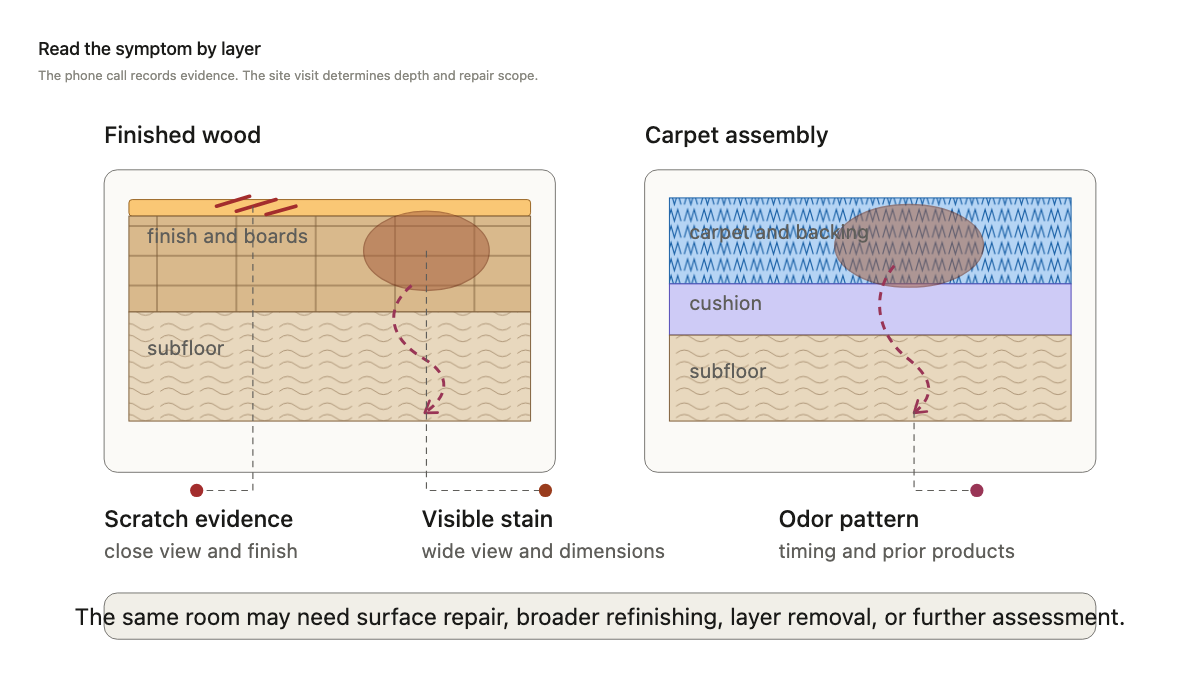
Start with the main complaint. Is it a visible stain, a color change, surface scratching, gouges, lifted edges, open seams, loose boards, swelling, soft material, or odor? Several conditions may share one room, so record each one. A caller with scratches by the back door and odor in a carpeted closet has two locations and possibly two scopes.
Timing helps. Ask when the condition was first noticed, whether there was one known incident or repeated accidents, and whether the area was hidden by a rug, furniture, or a pet bed. Find out whether anyone discovered it during a move-out, carpet removal, refinishing estimate, or renovation. The call note should preserve what changed and when.
The Carpet and Rug Institute's pet urine bulletin explains why this separation matters. Urine can change carpet dyes, weaken the bond between carpet layers, damage seams, and create persistent odor. Some color reactions appear later. A clean-looking surface therefore does not settle what an inspection may find underneath.
Identify the finish floor and every layer already exposed
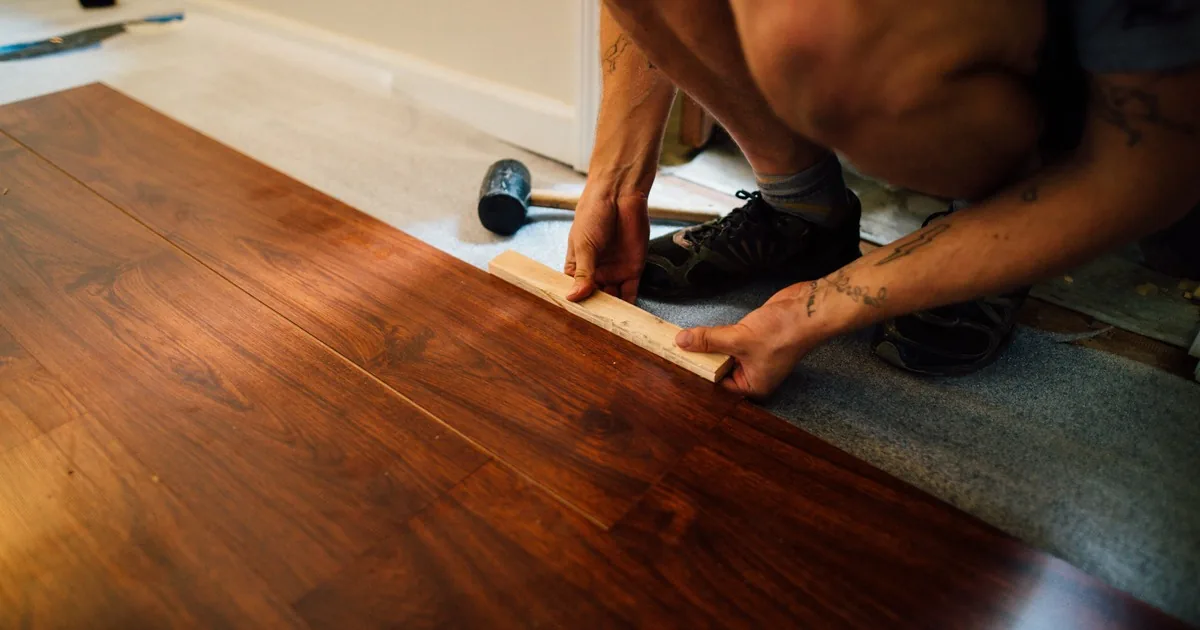
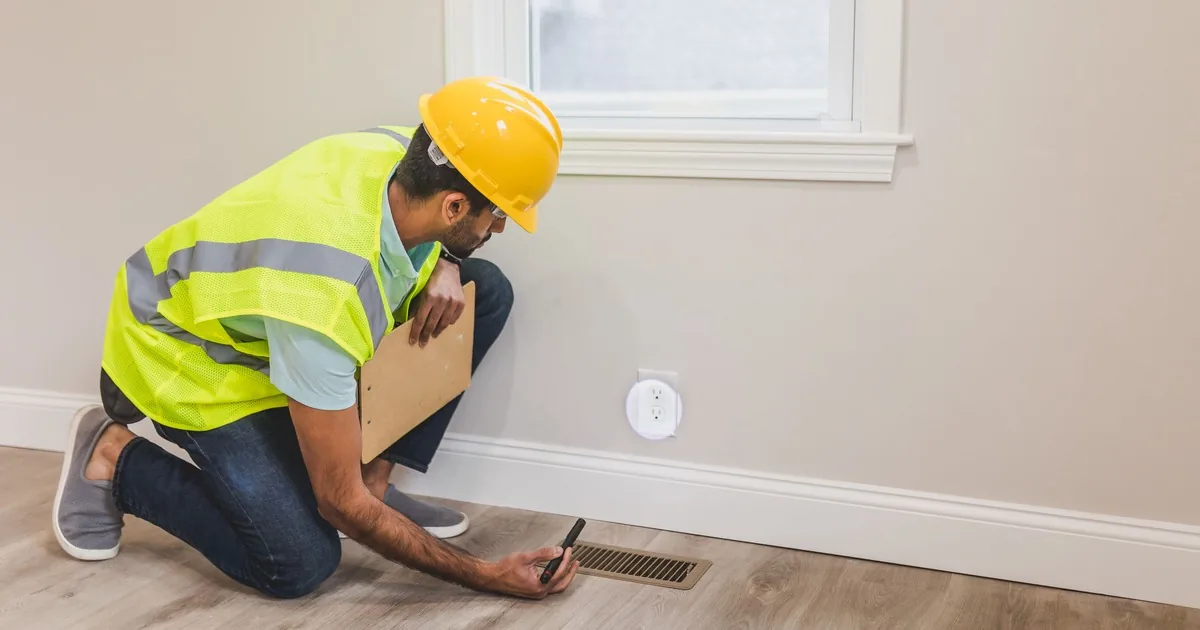
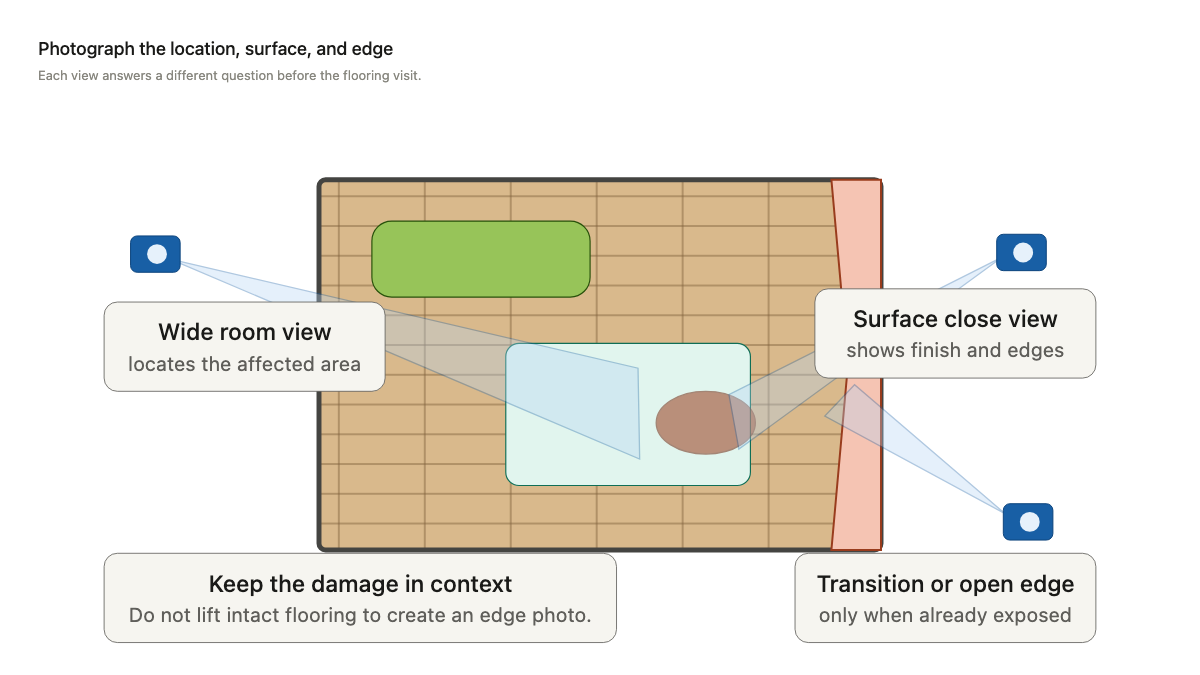
Ask what is on top now: solid hardwood, engineered wood, laminate, luxury vinyl plank, sheet vinyl, tile, carpet, or another material. If the caller is unsure, request a wide room photo and a close view at a floor vent, doorway transition, loose edge, or exposed piece. Do not have anyone pry up intact flooring for a photo.
For wood, record the board width, visible finish condition, and whether marks cross the grain or follow board edges. Ask whether boards are darkened, cupped, loose, split, or missing. If the floor has been sanded before, note that the caller believes it has, but leave remaining wear-layer assessment to the contractor.
The National Wood Flooring Association's wood flooring guidelines note that scratches may call for isolated repairs, recoating, or resanding. That range is useful for the office because it blocks a premature promise. A photo of claw lines cannot tell the receptionist which option will blend, whether the finish will accept a recoat, or how much wood remains available for sanding.
For carpet, ask whether the carpet is still installed and whether cushion or subfloor is exposed anywhere. Record seam separation, backing damage, discoloration, stiffness, and the size of any removed section. CRI notes that moisture can weaken carpet backing bonds and that material designed to resist spills may limit penetration. The actual assembly has to be identified at the property.
Map the footprint room by room
“One spot” needs an address inside the room. Ask for the room name and the location relative to a doorway, wall, cabinet, vent, stair, or plumbing fixture. Record whether the same condition appears along a pet route, beside exterior doors, under windows, around litter boxes, near food bowls, or in several separate rooms.
Use plain measurements supplied by the caller. Length and width of the visible area are better than “small” or “large.” If there are scattered spots, ask for a count and the approximate spread across the room. Mark which measurements are customer estimates.
Photos should include context. Request one wide image that locates the area, one close image that shows the surface, and one low-angle view when scratches, lifted edges, or swelling are hard to see from above. Add a transition or exposed-edge photo only when it can be taken safely. Images help prepare the visit. They do not prove how far liquid traveled or whether an odor source remains.
Keep pet-related moisture distinct from an active leak. If the caller reports wet material, a plumbing failure, exterior water, or a recent overflow, use the water-damaged flooring intake guide to record the source and current conditions. A receptionist should not fold active water into a pet-damage note.
Record odor as a pattern, not a diagnosis
Odor calls need timing and conditions. Ask whether the smell is constant or intermittent. Does it become noticeable when the room is humid, warm, closed for several hours, or disturbed during cleaning? Is it strongest at one spot, along a wall, near a floor vent, or across the room? Has carpet, cushion, baseboard, or flooring already been removed?
CRI warns that a product may mask odor and that odor can reappear during humid conditions when urine has not been completely removed. The office can record that pattern without promising that cleaning, sealing, board replacement, cushion removal, or subfloor work will solve the property. That decision comes after inspection and depends on the materials actually affected.
Avoid health conclusions. If a caller reports symptoms or asks whether the room is safe, explain that the flooring company can assess flooring scope but does not diagnose a medical condition by phone. Urgent health concerns belong with a medical professional or local emergency service.
List every product and repair already tried
Ask what has been applied, who applied it, and when. Useful details include the product name, label photo, dilution if known, number of applications, dwell time, rinsing, extraction, sanding, bleaching, staining, sealing, painting, deodorizing, ozone treatment, or replacement of any layer. Record the facts without criticizing the caller.
This history can affect what the contractor is willing to test or coat. It also helps prevent a technician from walking into a room where the surface is still wet or where an unknown product was recently used. Ask whether the area is dry now and whether containers or labels are available for review.
Do not invent a universal cleaning recipe during intake. Floor finishes, carpet fibers, adhesives, and manufacturer instructions differ. The EPA's Safer Choice program helps purchasers identify products whose ingredients meet its human-health and environmental criteria, but that label does not make every product suitable for every floor. The selected product and flooring instructions still govern use.
Clarify occupancy, access, and estimate authority
Pets need a plan for the visit. Ask how many animals live at the property, whether they can be secured away from the work area, and whether a gate, crate, closed room, or off-site arrangement will be used. Record any access note without making promises about animal handling. Flooring crews should not arrive expecting to move an unfamiliar dog out of the room.
Ask whether the home is occupied, vacant, tenant occupied, or between residents. For rentals, identify the owner or property manager, the person granting entry, the tenant contact, and the person authorized to approve additional investigation or scope. Note move-in, move-out, sale, or insurance deadlines as reported dates. Do not promise that a field finding or written estimate will meet a third party's deadline.
For hardwood that may need broader finish work, the hardwood refinishing call guide covers species clues, connected areas, occupancy, and finish questions. Use it when a spot-repair request begins to involve an entire continuous floor.
Finish with a neutral dispatch note
Read the record back in the same order a technician will use it: room, floor type, visible condition, footprint, odor pattern, exposed layers, prior products or work, photos, access, pets, and decision-maker.
A field-ready note might read:
“Occupied single-family home. Family room has site-finished wood flooring; species and prior sanding history unknown. Caller reports four dark areas beside patio door across an estimated six-by-four-foot section, plus light scratches along the door path. Odor reported after the room is closed overnight and on humid days. No active wetness reported. Customer used a labeled pet-odor product twice last month; product photo requested. No boards or subfloor exposed. Wide, close, and doorway-transition photos received. One dog will be secured upstairs. Homeowner will attend and can approve assessment scope. Office made no repair, color-match, odor-removal, or price promise.”
That note gives the field team observations instead of a remote diagnosis. A receptionist or AI receptionist can collect the same fields after hours, attach the photos, and flag missing product details. The flooring professional still decides what to test, open, repair, refinish, clean, or replace after seeing the floor.