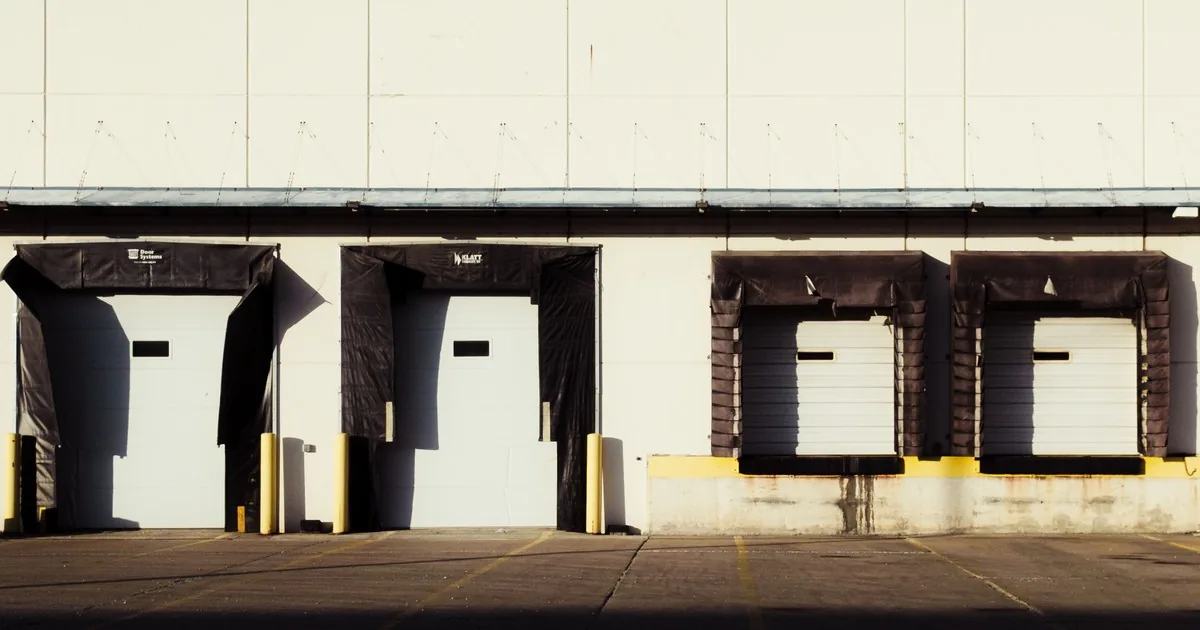
A warehouse manager calls at 6:10 a.m. Bay 12 stopped halfway down, a trailer is due at seven, and the night supervisor has already tried the wall button twice. “It’s our big roll-up door” is all the office has so far.
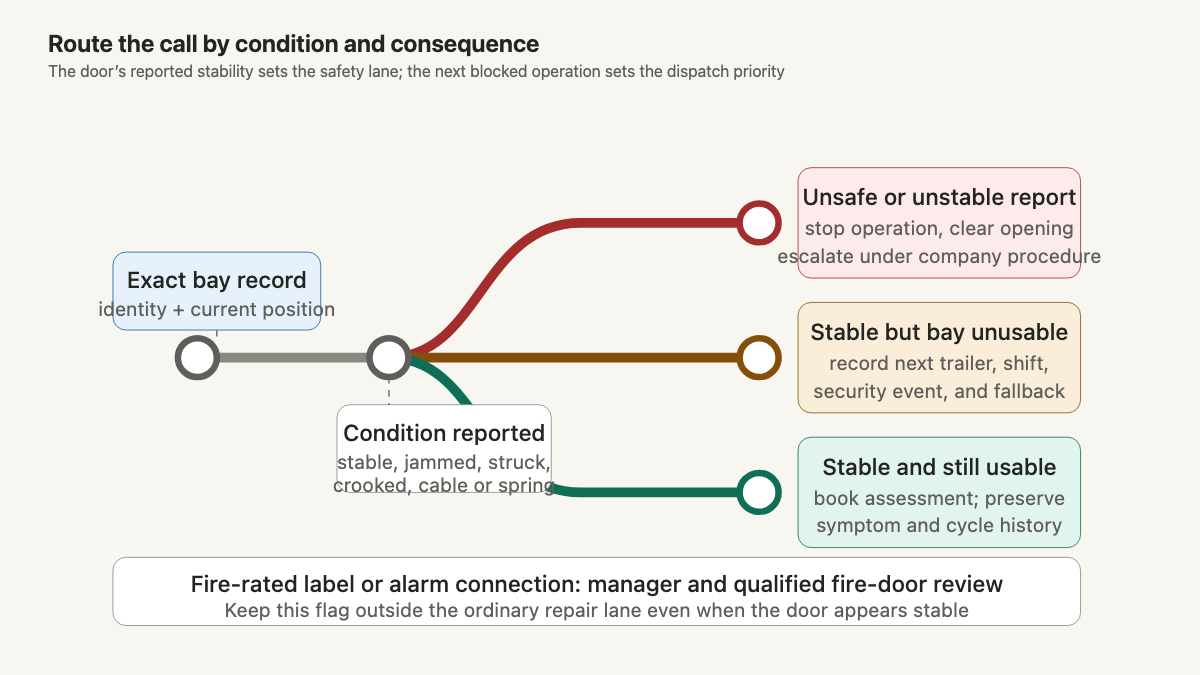
That description is too thin for dispatch. A useful commercial overhead door repair intake identifies the exact opening, door construction, clear opening size, operating method, current position, reported damage, site access, and the next operation the failed bay will block. Start with safety. If the door is jammed, crooked, struck, hanging, or near a loose cable or spring, ask the facility to keep people and equipment clear and stop operating it under the company’s emergency procedure.
Then capture the business clock. “Urgent” could mean a truck is waiting now, the only ambulance bay is closed, or production starts on the other side of the door tomorrow. The deadline helps dispatch choose a response without pretending that the office can diagnose the repair.
Identify one opening, not the whole building
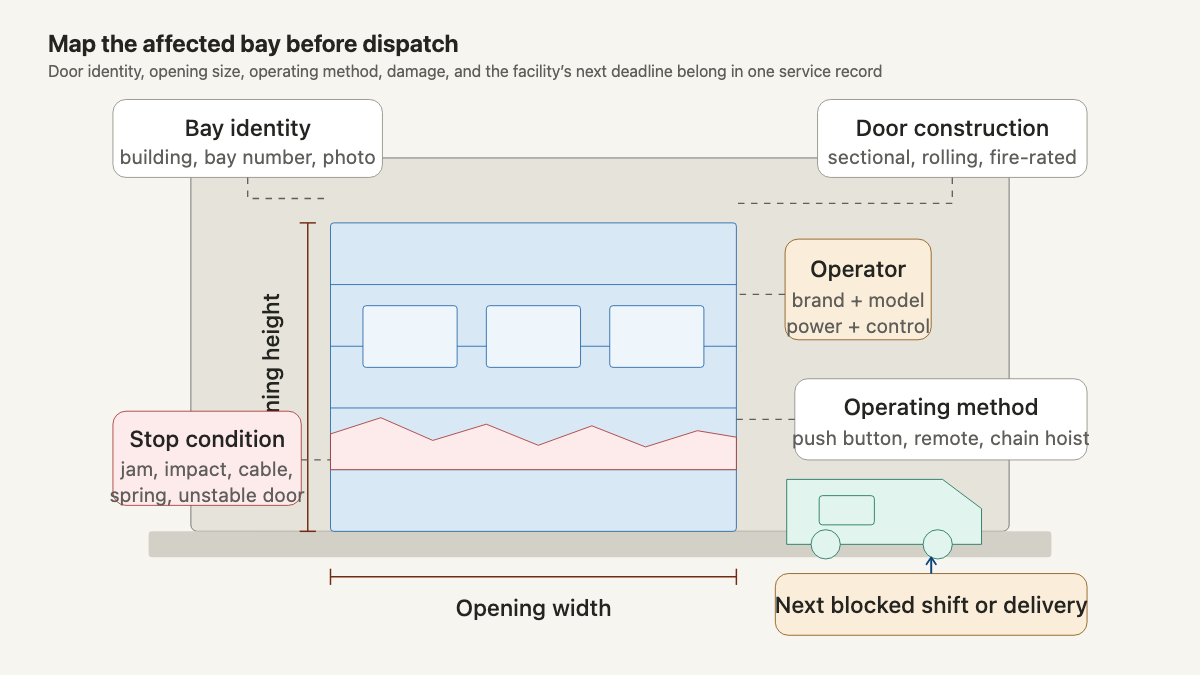
Commercial sites often have several doors that look alike. “The second dock door” can send a technician to the wrong side of a large building. Record the property name, street address, building or unit, bay number, and the side of the building. Ask for the name and mobile number of the person who will meet the technician.
A wide photo taken from a safe standing position can confirm the opening and its surroundings. Ask the caller to include the bay number, door face, tracks or guides if visible, operator area if it can be photographed from the floor, and nearby obstructions. Do not ask anyone to climb a ladder, remove an operator cover, touch a cable, or stand beneath a suspended door.
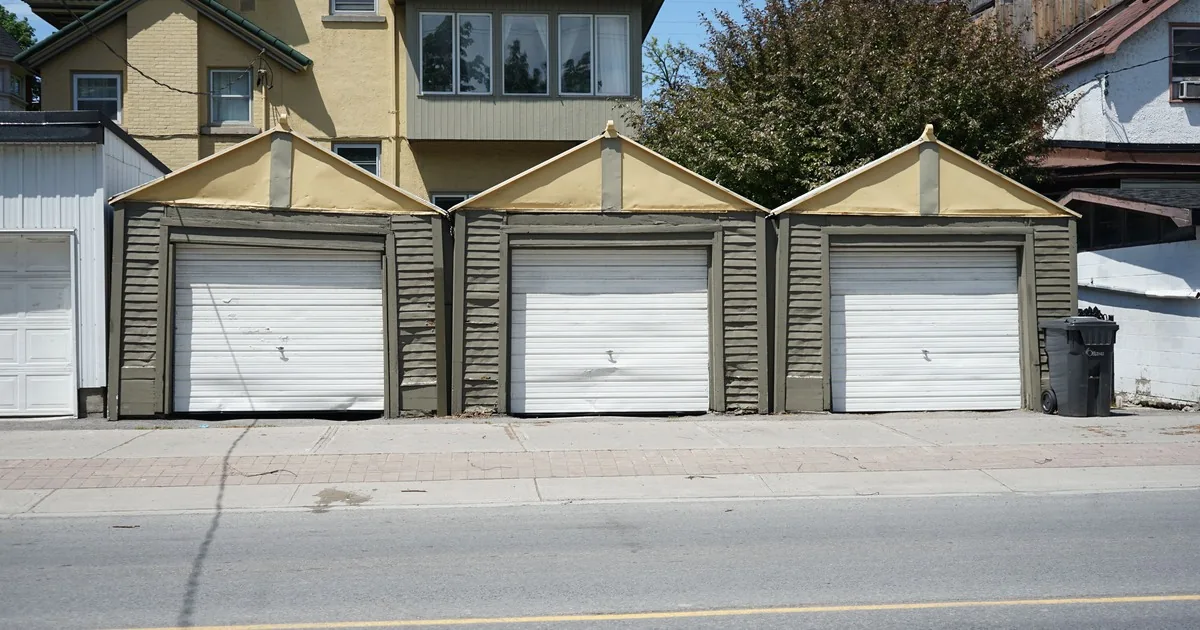
Next, establish the door type in the caller’s own words. Does the door have hinged sections that travel on tracks and turn overhead? Does a metal curtain coil into a hood above the opening? Is it a fabric high-speed door, a counter shutter, or a labeled fire door? The office can record the description without forcing a model choice. A technician can confirm it onsite.
Keep fire-door reports out of the routine repair script. A door tied to a fire-protection system can carry inspection, testing, and resetting requirements beyond ordinary service. Mark any label, alarm connection, automatic-closing function, or “fire door” description for manager review.
Capture size, identity, and operating method
The opening’s approximate width and height help the service company understand access, equipment, and likely door class. Ask for dimensions only when the caller can measure safely from the floor while staying clear of the door. Existing plans, a door schedule, a prior invoice, or a facility asset record may be better than a tape measure beside damaged equipment.
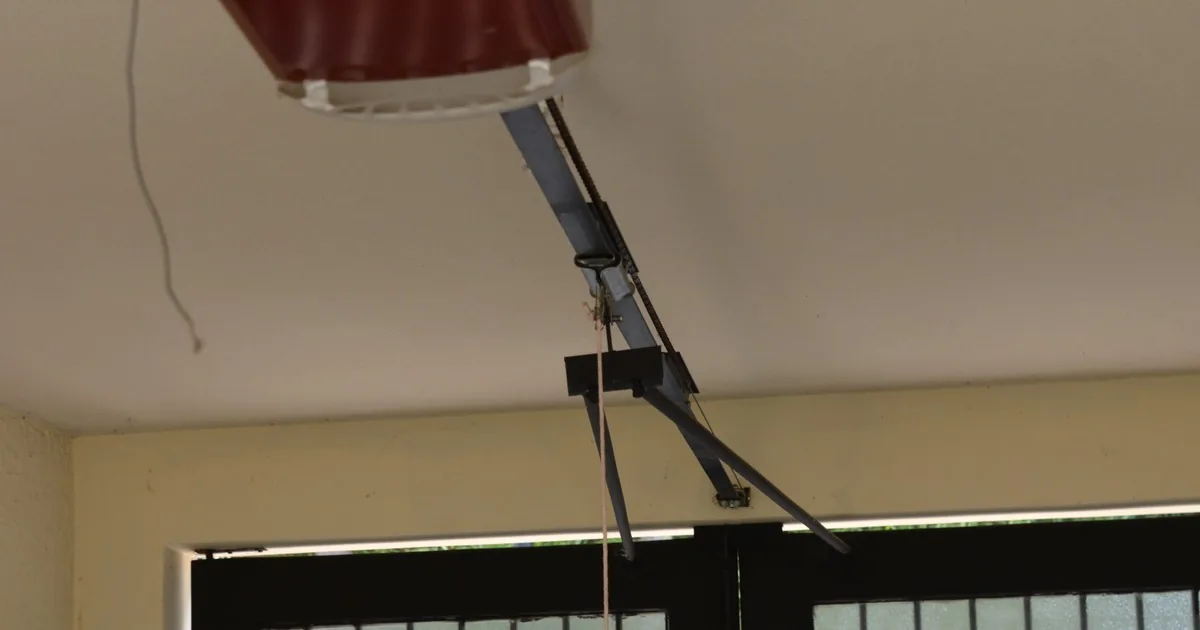
Manufacturer and model information matter too. Request a photo of the door label and operator nameplate when either is visible from a safe location. Record the operator brand, model, voltage shown on the nameplate, and any displayed fault code exactly as reported. Never translate an error code from memory. The installed manual and technician’s test control that call.
The operating method changes the dispatch record. Ask whether the opening normally uses a three-button wall station, key switch, remote, pull cord, loop detector, photoelectric control, chain hoist, building access system, or an automatic command from other equipment. Overhead Door’s RHX commercial operator manual lists door type, opening size, power, mounting conditions, activation controls, interlocks, and reversing devices among the job-site considerations for an operator. Those fields make good intake prompts because they describe the installed system without assigning a cause.
Ask whether the door is the only vehicle opening of that size. A warehouse may have another dock door but no other opening tall enough for a box truck. A fleet shop may be able to move passenger vehicles through another bay while its largest service truck remains trapped. Record the constraint, not an estimate of the business loss.
Describe what happened without running another cycle
The safest call note preserves observations. Ask what the door did immediately before it stopped: moving up, moving down, starting and reversing, stopping at the same point, moving unevenly, or making a new sound. Record the current position and whether anyone or anything is inside the affected area.
Then ask about the event around the failure. Was there a vehicle, forklift, pallet, or wind impact? Did power fail? Was maintenance performed? Did the problem appear after a lock, control, sensor, or access system changed? Has anyone used the manual chain hoist or release? Write down what the caller reports and who tried each action.
Do not coach another test when the door jams, binds, hangs unevenly, has a broken spring, shows a displaced track or guide, or has a loose or frayed cable. The RHX manual warns against operating a jammed door or one with a broken spring. It assigns repairs and adjustments involving springs, cables, and related hardware to a trained service representative. Clopay gives a similar boundary for commercial overhead doors: springs, cables, brackets, and attached hardware are under high tension and should be adjusted by a qualified professional following manufacturer instructions.
A facility may say the opening is “OSHA noncompliant.” Record the concern, but do not confirm that conclusion over the phone. OSHA’s interpretation letter states that there is no single federal OSHA standard specific to overhead doors, while general-industry or construction standards may apply to the work and circumstances. State plans, building rules, fire requirements, manufacturer instructions, and site policies may add obligations. The service company should review the actual installation and jurisdiction.
For a residential-size door at a business, the same safety line still applies. Use the garage door emergency intake guide when the report centers on immediate door instability. If the damage is limited to a door section and the opening is safely out of service, the panel replacement intake guide can help collect model and section details.
Put downtime in operational terms
“ASAP” does not tell dispatch what changes in thirty minutes. Ask what the bay serves and what happens next. Is a carrier waiting at the dock? Is a waste compactor behind the opening? Does the door secure inventory at closing? Is a fire apparatus, bus, delivery van, or production vehicle trapped? Can the facility reroute safely through another opening?
Collect the next fixed event and its local time: inbound trailer, outgoing route, shift start, customer appointment, security lockup, or weather exposure. Include the facility’s stated fallback. For example: “Bay 12 serves refrigerated inbound loads. One trailer due at 7:00 a.m. Facility manager says Bay 11 can take a standard trailer but its dock leveler is already assigned. No reroute approved.” That gives dispatch a real sequence without attaching a dollar figure.
Site rules can consume more time than the repair. Ask about gate access, guard check-in, badge or escort requirements, loading-lane restrictions, roof or mezzanine access, lift availability, electrical lockout procedure, and the site contact authorized to approve work. Record whether the door is indoors, outdoors, exposed to weather, near food handling, or in a dusty or corrosive area. The RHX manual treats dampness, dust, corrosive conditions, power, and mounting obstructions as relevant job-site information.
Hand the technician a serviceable record
A strong handoff sounds like this:
“North warehouse, Bay 12, sectional overhead door, approximately 10 feet wide by 12 feet high per facility door schedule. Door stopped about halfway down at 5:55 a.m. after the wall station was pressed. Supervisor reports the left side appears lower than the right and heard one sharp bang. No vehicle impact reported. Staff have stopped operating the door and blocked the bay under the facility’s procedure. Operator label photo and wide bay photo attached. Three-button wall station; no remote reported. One inbound refrigerated trailer is due at 7:00 a.m. Reroute has not been approved. Guard check-in at east entrance; Elena Ruiz is onsite contact and work approver. Technician to assess before any promise on repair, reopening time, or parts.”
That note gives the technician identity, condition, controls, access, and timing. It also protects the office from a bad promise. Door weight, spring condition, operator faults, hidden impact damage, parts availability, and site controls remain unknown until a qualified person inspects them.
An AI receptionist can collect the same fields after hours and trigger a human escalation when the script reaches a stop condition. The script should quote the caller’s observations, preserve the facility deadline, and leave the door exactly where the site has secured it. At 6:10 a.m., Bay 12 needs a clean dispatch record more than it needs a confident guess.