A driver backs into a closed garage door, hears metal fold, and calls while the vehicle is still touching the bottom section. The caller wants to know whether to pull forward, try the opener, or force the door down. Reception should not diagnose the door from that description. The first job is to stabilize the scene and find out whether anyone is hurt, trapped, or exposed to an unstable door.
A useful vehicle-damage call record answers five questions early: Is everyone clear of the opening? Where are the vehicle and door now? Is the door level, crooked, off its tracks, or partly open? Are cables, rollers, hinges, glass, or sections visibly displaced? Can the property be secured without moving the door? Those answers determine whether the call needs an urgent technician, a standard damage inspection, or a later panel and replacement estimate.
Secure the scene before discussing the dent
Ask whether anyone was struck, pinned, cut, or otherwise injured. If the caller reports an immediate medical danger, fire, fuel leak, structural collapse, or another emergency, follow the company’s emergency protocol. Garage door reception is not the right place to manage an active rescue.
For a stable scene, ask the caller to keep people, children, and pets away from the opening. They should not stand beneath a partly open door, touch a loose cable, reach around a bent track, or pull on a damaged section. DASMA’s garage-door safety guidance says cables connected to the spring system can create an injury risk and should be replaced only by a trained technician. It also warns that bottom brackets are under extreme tension.
Do not tell the caller to press the wall button “just once” to see what happens. An impact can change the panel shape, track alignment, roller position, cable tension, and opener connection in one event. Clopay’s emergency service guidance describes an off-track door as unstable and says forcing it can worsen the condition. Leave the door where it is until the company’s trained technician decides how it should be moved.
If the vehicle is still against the door, record that fact. Avoid directing the driver to pull away. The vehicle may be supporting a bent section, or movement may change the door’s position. The dispatcher can pass the exact scene to a technician and, where company policy requires it, advise the caller to contact emergency services or another qualified responder.
Record the door and vehicle positions exactly
“Car hit door” is too thin for dispatch. Ask whether the impact happened from inside or outside the garage. Record whether the vehicle was moving forward or backward and which part touched the door: bumper, hitch, roof rack, open hatch, mirror, or another attachment. A trailer hitch concentrated into one lower section creates a different scene from a roof rack catching the bottom edge of a rising door.
Next, locate the contact point on the door. Use plain positions such as lower left, lower center, lower right, middle section, track side, or door frame. Ask whether the damage crosses a section joint or reaches an end stile, hinge, roller bracket, window, handle, or bottom seal. Do not ask the caller to touch parts to identify them.
Capture the current position without operating anything:
- Door fully closed, partly open, fully open, crooked, sagging, or visibly off a track
- Vehicle clear of the opening, touching the door, partly through the opening, or trapped inside
- Daylight or a gap visible around a section, track, jamb, or floor edge
- Loose glass, sharp metal, displaced roller, slack cable, hanging hardware, or a bent track visible from a safe distance
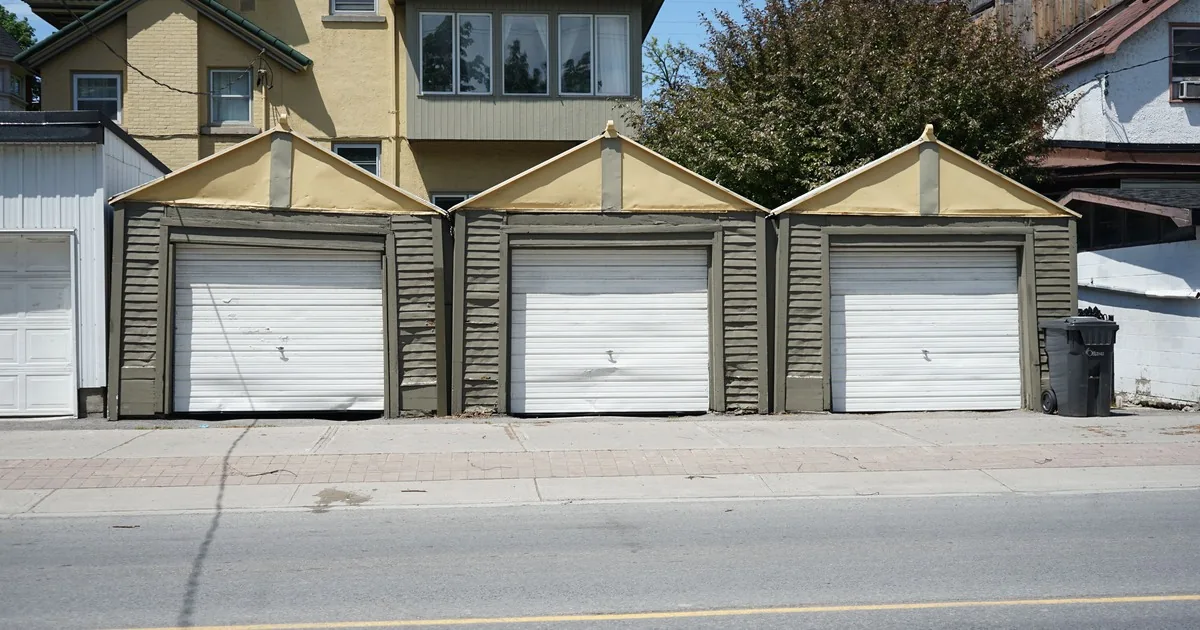
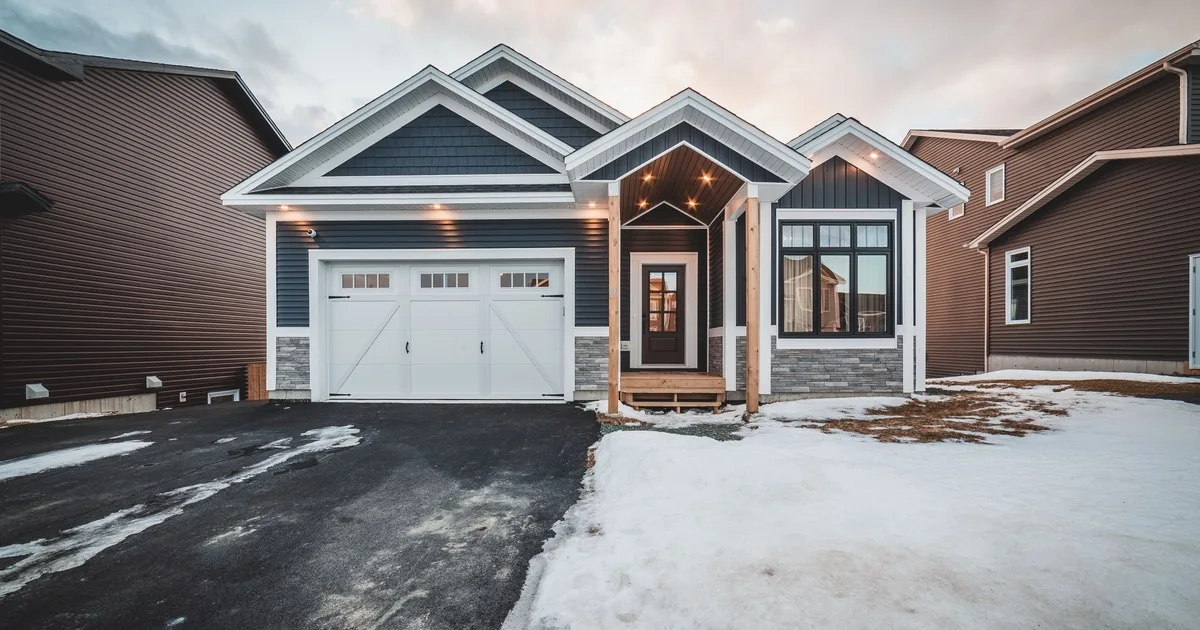
- Garage attached to the home, detached, commercial, or a shared building entrance
- People, pets, vehicles, equipment, or stored property still inside
The receptionist should preserve the caller’s wording. “Left side is about six inches lower” is useful. “Track failure” is a remote diagnosis and does not belong in the ticket.
Treat the whole moving system as the inspection scope
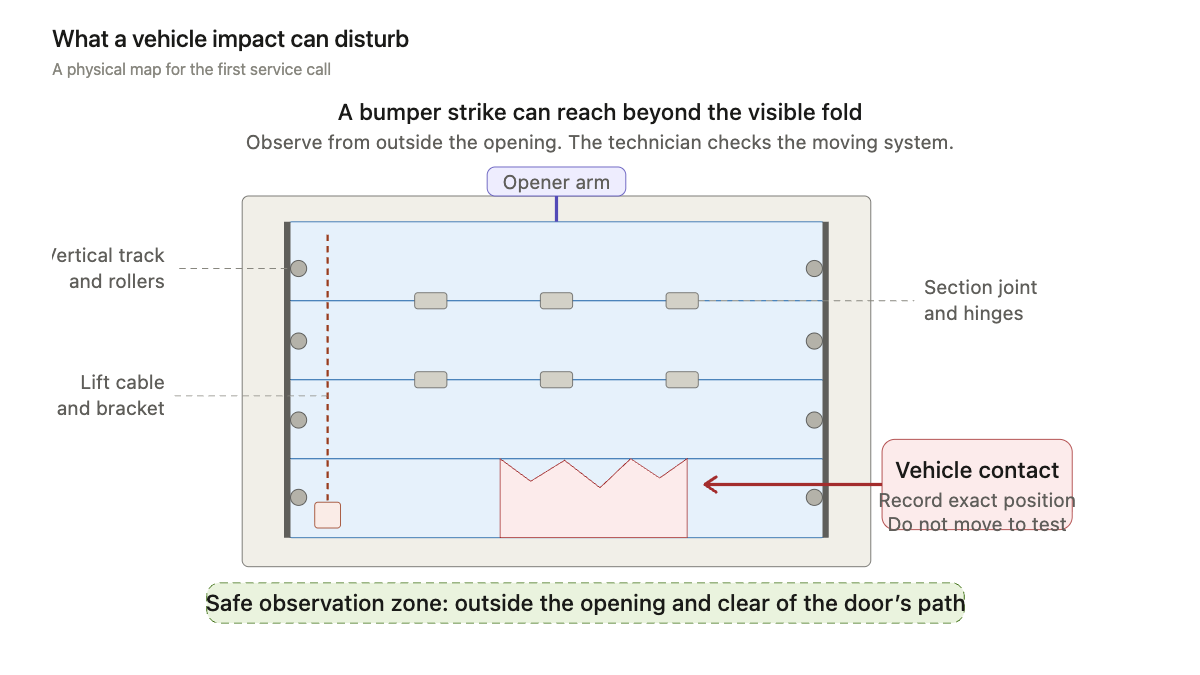
A sectional garage door moves as one assembly. Sections are joined by hinges. Rollers travel through tracks. Cables and springs manage the door’s weight, while the opener guides an otherwise balanced door through a cycle. A vehicle can damage one visible section and still disturb parts beside or behind it.
This is why the first call should not promise a panel swap. Amarr’s panel guidance uses a vehicle impact that prevents the door from closing as an example that may require repair or complete replacement. Amarr also advises inspection for damage beyond the section before parts are selected. Clopay’s panel guide says panel work involves heavy sections and spring tension, and it identifies the model, section size, color, and section position as ordering details.
That evidence sets a clean boundary for reception. Record what the caller can safely observe. The technician determines whether the door needs stabilization, track or roller work, section replacement, opener evaluation, or a complete-door estimate.
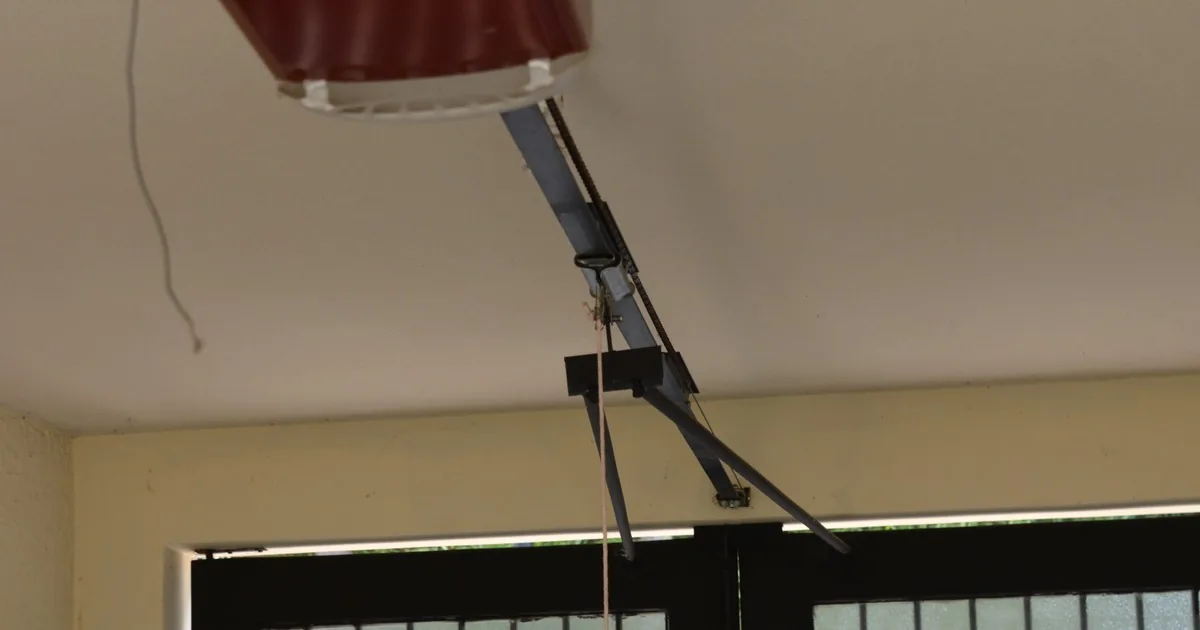
Ask whether the opener rail, arm, or ceiling mount appears bent or pulled. Record whether the wall control or remote was used after impact and what happened, but do not ask for another test. If the opener is still humming, straining, or holding the door in an unusual position, escalate under company policy.
Use photos to preserve the scene, not to clear the door
Photos help the technician prepare, but only when the caller can take them from a safe location. Ask for one wide image of the full opening and nearby vehicle. A second image can show the point of impact. A third can show the opposite side of the door only if the garage is safely accessible without walking beneath or beside an unstable assembly.
Useful images may include the full exterior, both vertical tracks from a distance, the gap at the floor, the impacted section, the vehicle contact point, and a readable manufacturer label that is already visible. Skip any requested angle that requires moving the vehicle, lifting the door, climbing, reaching behind a track, or standing in the opening.
Do not tell the caller that a photo proves the door is safe. A flat-looking exterior image cannot confirm cable tension, roller engagement, spring condition, track attachment, or balance. Photos support triage and parts preparation. They do not replace the onsite inspection.
For insurance questions, stay factual and narrow. Record whether the caller plans to file a claim and whether a claim number or adjuster contact already exists. The office can explain what its estimate includes and whether it provides photographs or written findings. It should not promise coverage, choose between auto and homeowners insurance, interpret a deductible, or tell the customer whether to file.
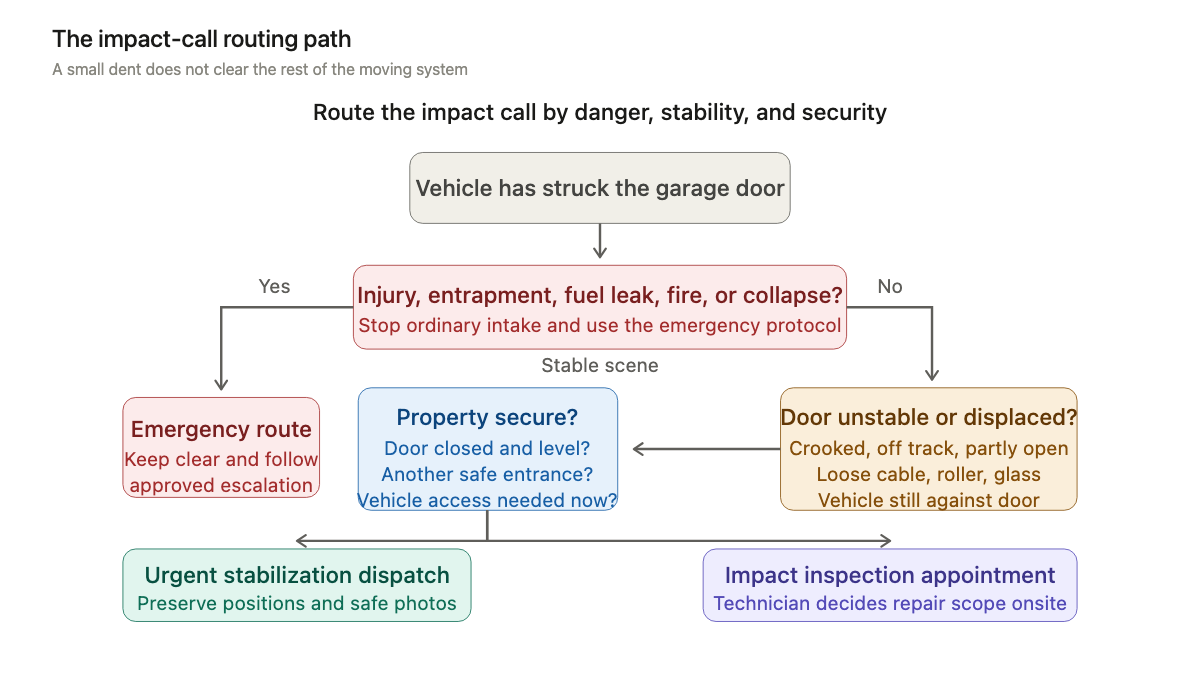
Route by instability, access, and security
Urgent review fits a door that is hanging, crooked, partly open, off track, held against a vehicle, unable to secure the building, or showing a loose cable, roller, bracket, glass, or section. It also fits a trapped vehicle when the customer has an immediate access need, though the technician still controls what movement is safe.
A standard damage inspection may fit a fully closed, level door with a limited dent, no displaced hardware visible, no attempted operation after impact, and another secure entrance available. Even then, the appointment note should say “impact inspection,” not “panel replacement.” The technician needs authority to inspect the system before quoting a repair.
A later estimate route can follow once the scene is stable and the door has been inspected. If one section is the only damaged part and the door remains compatible with a replacement, use the separate garage door panel replacement guide to collect model, section, finish, and availability details. A crooked or derailed door belongs in the off-track call workflow. For any opening that leaves the property unsecured, follow the company’s garage door emergency intake.
Build a dispatch note that preserves the incident
A strong handoff reads like a scene report, not a parts guess:
“Residential double sectional door. Driver backed into lower center from outside at low speed. Vehicle is now clear and parked. Door remains fully closed but the lower section is folded inward near the center joint. Left and right sides appear level from the driveway. No loose cable, displaced roller, broken glass, hanging bracket, or track separation reported. Opener has not been used since impact. Garage is attached; occupants can enter through the house. Full-opening and impact photos attached. Customer requests inspection and may contact insurer after receiving findings.”
That note gives dispatch the event, current position, visible conditions, access, security, and evidence. It does not promise that the damage is cosmetic.
An AI receptionist can collect the same scene details after hours and stop the conversation when an emergency boundary is reached. The best close is concrete: keep clear of the opening, leave the door and vehicle where they are unless emergency personnel direct otherwise, and wait for the technician’s next step. The dent can wait. An unstable door cannot.