A homeowner calls with the garage door hanging six inches lower on the right. A loose steel cable is visible beside the track, the car is trapped, and the caller wants to know whether one more push of the wall button will close the gap. The safest answer is simple: stop operating the door and keep people away from it until a trained door systems technician assesses the assembly.
The office still has work to do. A cable call needs a careful description of the door position, the visible cable condition, any crooked or unsupported section, vehicle access, and anything that happened just before the fault appeared. Those details help dispatch choose urgency and equipment without turning the receptionist into a remote repair coach.
Start with the door position and who can reach it
Ask where the door is now: fully closed, fully open, partly open, or crooked. Then ask whether a vehicle, person, pet, or stored item is beneath or near the opening. If any part of the door looks unsupported, tell the caller to clear the area and keep others out. Do not ask anyone to stand under the door for a better photograph.
The Door & Access Systems Manufacturers Association, or DASMA, advises that worn or frayed lifting cables are in danger of breaking and should be replaced only by a trained technician because the system involves high spring tension. Its inspection guidance also warns people to look at parts under spring tension without touching them. That boundary should shape the call from the first minute.
Record the position in plain language. “Bottom edge is on the floor at the left jamb and about six inches above the floor on the right” tells dispatch more than “door is off.” If the caller can take photographs while standing clear, request one wide view from inside the garage and one view from a safe angle that shows the cable, track, and lower corner. Never request a close-up that requires reaching beside a bracket, drum, spring, or suspended door.
Clarify what “the cable came off” means
Callers may use “cable” for a lifting cable, an opener release cord, an electrical wire, or an extension-spring safety cable. Ask them to describe what they see rather than naming the part for them. Useful prompts include: “Is it a braided steel cable or an electrical wire?” and “Where is it hanging: beside the vertical track, near the ceiling, or from the opener rail?”
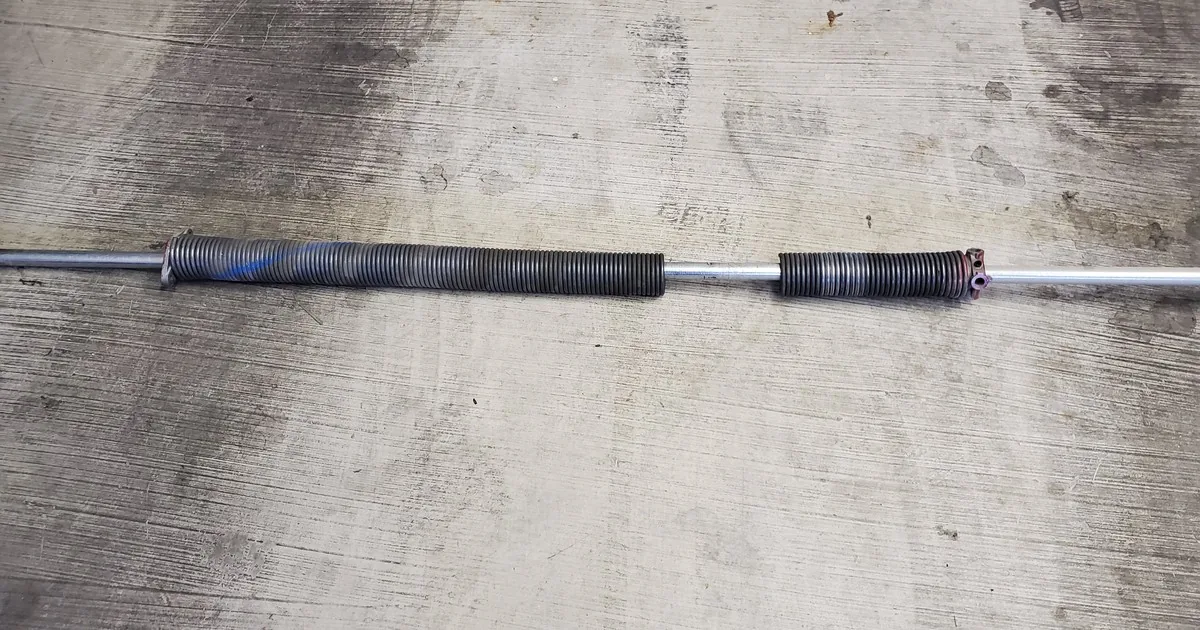
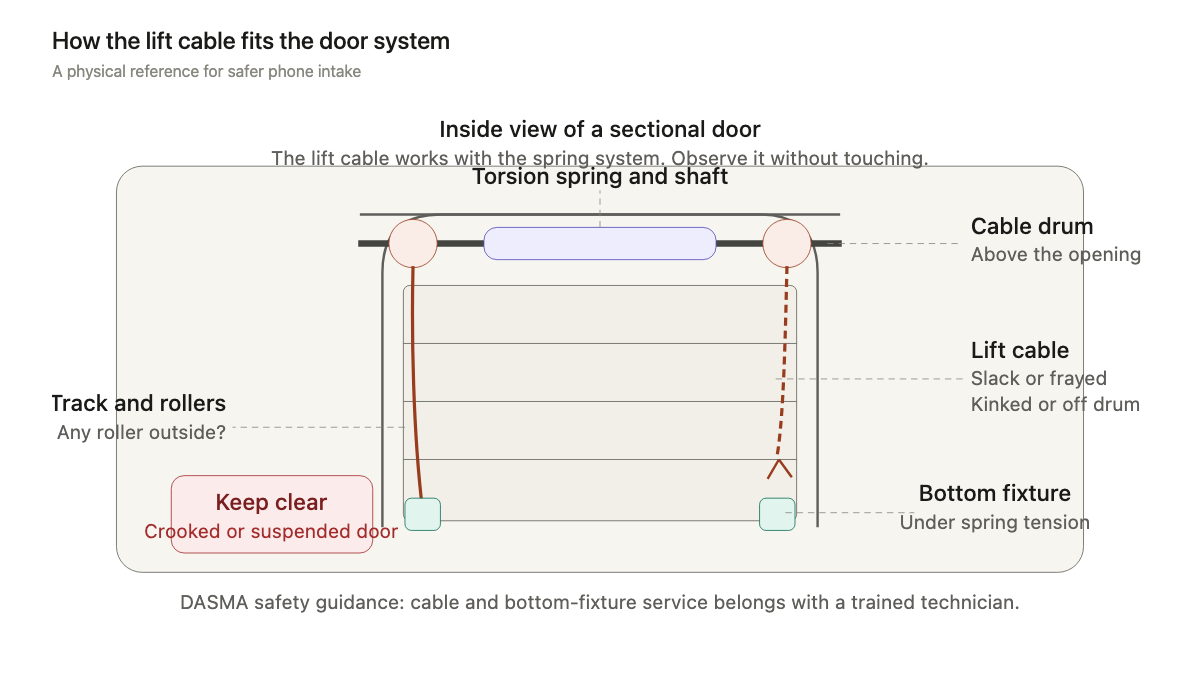
For a sectional door with a torsion system, lifting cables commonly run from bottom fixtures at the lower corners to drums on a shaft above the opening. Extension-spring systems use a different arrangement and should have containment safety cables through the springs, according to DASMA. A receptionist does not need to identify the system with certainty. The technician does need the caller's description, photographs, and any model information available without approaching the damaged area.
Capture whether the cable looks slack, looped, frayed, rusty, kinked, snapped, or absent from one side. Ask whether the door sits level. Note any roller outside the track, bent track, separated panel, loose bracket, loud bang, scraping sound, or cable rubbing that the caller already observed. Do not tell the caller to pull the cable, put it back on a drum, loosen a bottom bracket, clamp the track, or release spring tension.
Clopay's repair guidance describes frayed or snapped cables as a cause of uneven hanging or an inoperable door. It also places cable replacement with trained garage door repair specialists because the cables work with the spring system under tension. That supports a firm phone policy: collect visible facts, then route the repair.
Ask what happened before the cable changed
The event immediately before the fault can help a technician prepare. Ask whether the door struck a vehicle, trash bin, ladder, frozen floor seal, or another obstruction. Did someone pull the emergency release? Was there a power outage? Did a spring break with a bang? Did the door reverse, bind, or stop crooked? Was anyone already working on the opener, track, spring, drum, or bottom fixture?
Preserve uncertainty in the note. “Caller heard a bang and then found the right cable slack” is better than “spring caused cable failure” because the second statement makes a diagnosis nobody has confirmed. A cable can be the visible symptom while another part of the assembly needs attention.
Also ask whether the door had warned them earlier. Frayed strands, rust, rubbing, uneven travel, intermittent binding, or a recurring cable loop may matter. Record what the caller noticed and when. Avoid promising that replacing one cable will be the entire repair. The technician may need to inspect the paired cable, drums, springs, bearings, bottom fixtures, tracks, rollers, fasteners, and door balance as one system.
Route urgency by exposure, not by the caller's frustration
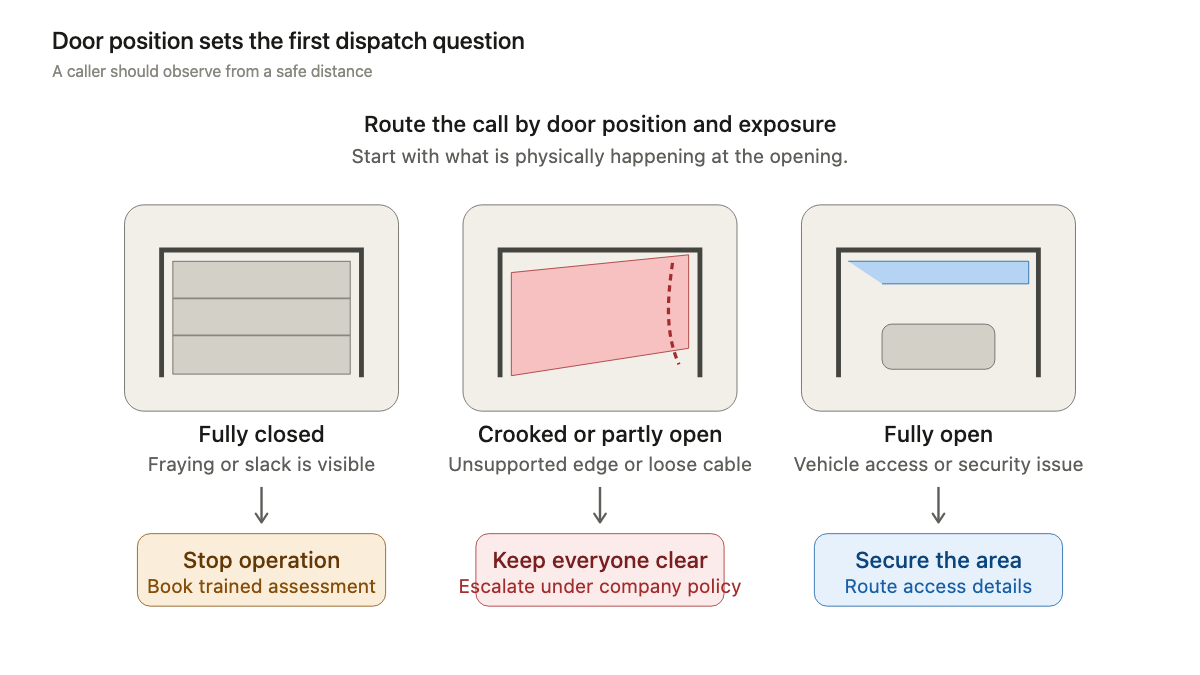
A trapped car is inconvenient. A crooked door above a walkway presents a different problem. Dispatch priority should follow the company's safety protocol and the scene, with attention to door position, instability, public access, broken components, and whether the opening can be secured.
Use the following routing logic as a starting point, then adapt it to the company's service area and technician rules. A partly open, crooked, unsupported, or moving door should be treated as a keep-clear condition and escalated promptly. A fully open door that cannot be safely secured adds property-access concerns. A fully closed door with visible fraying still needs professional service, but the office can schedule it under the company's approved response window as long as nobody operates or handles the system.
Do not coach a caller to disconnect an opener, lift the door manually, wedge a panel, cut a cable, or move a trapped vehicle beneath an unstable door. Owner manuals contain model-specific instructions, but a damaged cable or crooked door changes the scene. The office should use its approved emergency language and leave physical steps to the technician.
If someone is injured or trapped, direct the caller to emergency services under company policy. The repair appointment comes after immediate life safety. If the damaged door exposes a business, shared garage, or occupied building, note who controls access and whether onsite management has been informed.
Build a work order the technician can use
After the keep-clear instruction and urgency screen, collect the service facts. One structured pass is enough:
- Service address, caller name, callback number, and whether the caller is onsite
- Residential or commercial door, approximate opening width and height, and number of door sections
- Current door position, which side is lower, and whether the opening is secure
- Caller’s exact cable description and where the loose or damaged section appears
- Visible track, roller, panel, bracket, drum, spring, or opener damage
- Event before the fault, any bang or impact, and the last normal operation
- Vehicles or property trapped inside, public or tenant access, pets, and clear workspace
- Door and opener brand, model, serial label, prior repair history, and safely obtained photographs
Only request labels that can be read without entering the danger area. A door sticker on an accessible side edge may be useful. A label above the opening beside the torsion shaft is not worth asking the caller to approach. “Model unavailable due to door position” is a valid work-order entry.
Access details can change the truck plan. Ask whether the technician can enter through a side door, whether the garage is attached, whether a gate code is needed, and whether parked vehicles block the work area. For a commercial bay, record ceiling height, traffic controls, onsite contact, operating hours, and whether the opening serves customers or loading equipment.
A useful note reads like this:
Homeowner reports double-width sectional door stopped crooked while closing. Left lower corner rests on floor; right corner is about six inches high. Braided steel cable appears loose beside right vertical track. Caller heard scraping but no bang. No known impact. SUV remains inside and nobody is beneath the door. Caller was told to stop operating the door and keep people and pets clear. Interior side entry is available. Wide photos attached. Door label was not requested because it is near the raised corner.
That note gives the technician a position, a visible condition, an event, an exposure check, and safe access. It does not guess which component failed.
Set the appointment without promising a one-part fix
Tell the caller what the visit covers. The technician will assess the door system, identify why the cable is loose, off, or damaged, and explain the repair scope after inspection. If the company has a diagnostic or service-call fee, state the approved amount and what it includes. Do not quote a cable size, spring, drum, repair time, or final price from a phone description unless the company has a documented rule for that exact door and the technician has approved it.
The arrival instructions should be short: stop using the door, keep the opening clear, secure children and pets away from the garage, and leave loose parts where they are. Ask the caller not to move vehicles beneath a crooked or suspended door. Confirm the technician's access route and who can authorize work.
A general garage door emergency intake guide can cover crushed panels, impact damage, or a door that will not secure when no cable problem is visible. Calls centered on replacing the motor or rail belong in the opener replacement workflow. Keeping those intents separate makes the dispatch note easier to trust.
An AI receptionist can ask these approved questions after hours and pass the complete record to dispatch. The script needs the same limits as a trained office employee: no diagnosis, no hands-on instructions, and immediate escalation when a door is unstable or someone is at risk.
The best cable-call record is factual and compact. It tells the technician where the door stopped, what the caller can see, who is exposed, what happened before the fault, and how to enter the garage. The steel cable stays untouched until qualified help arrives.