“My garage door is bending in the middle. Can you add one of those metal bars?”
A useful reinforcement call starts by identifying the bar. The caller may mean a horizontal strut across a section, a vertical opener reinforcement bracket, a brace used in a wind-rated assembly, or a repair for a cracked panel. Those are different jobs. Before anyone quotes a part, capture the door label, exact size, affected section, opener connection, existing reinforcement, visible damage, wind-load markings, operating behavior, and safe access.
The best next step may be a reinforcement quote. It may also be a panel inspection, opener service, balance check, or wind-load review. The call record should make that distinction possible without asking the homeowner to diagnose the door.
Name the metal part the caller sees
Ask where the metal runs. A garage door reinforcement strut usually spans horizontally across the inside face of one section. An opener reinforcement bracket runs vertically near the center of the top section and gives the opener arm a suitable attachment area. A wind-load assembly can involve horizontal struts plus other specified door, track, spring, roller, bracket, fastener, or removable-bracing components.
That vocabulary matters because a request for “a top brace” can describe any of them. Ask whether the caller sees a full-width channel, a shorter vertical piece behind the opener arm, loose punched angle, or an empty area where a part used to sit. If a piece fell off, ask the caller to leave it on the floor for the technician. Do not ask them to hold it against the moving door.
The Door & Access Systems Manufacturers Association says in its drawbar operator guidance that the top section should be reinforced according to the door manufacturer’s instructions. It also says the bracket connecting the operator to the door must be structurally adequate for the force needed to lift the door. The manufacturer’s door and opener instructions control the arrangement.
Identify the exact door before discussing fit
Nominal opening width is a poor parts record. Two doors that cover the same opening can use different section construction, stile spacing, strut profiles, fasteners, opener brackets, and wind-load schedules.
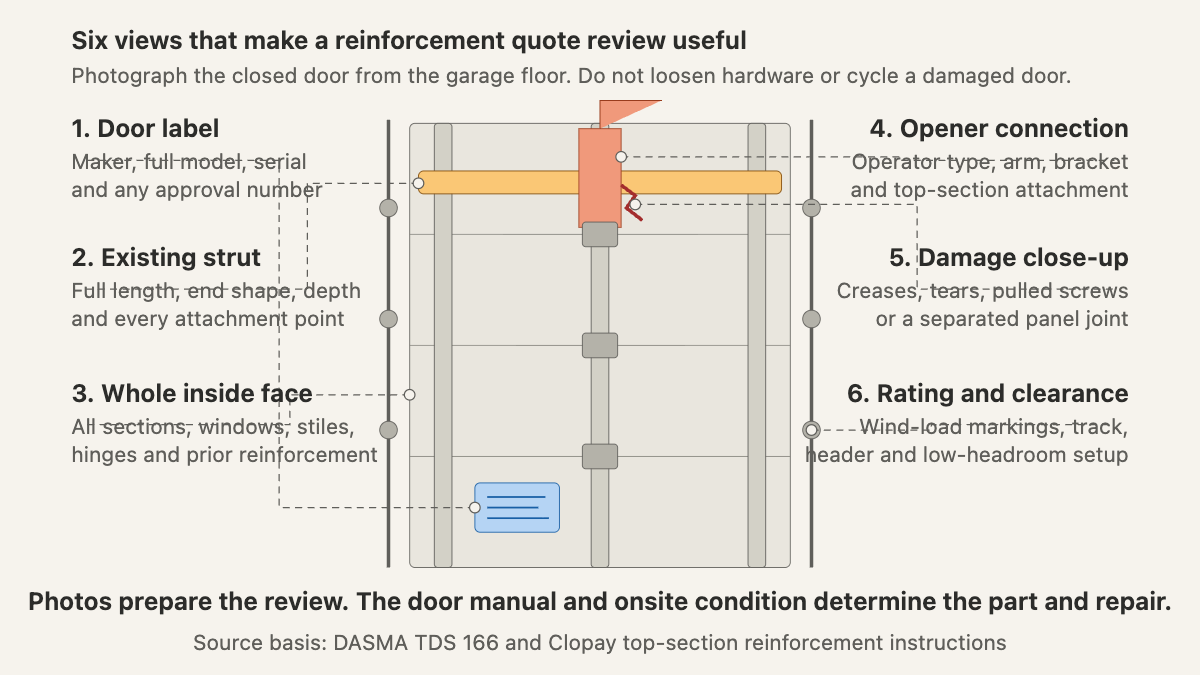
Start with the identification label. Ask for a clear photo and have the caller read back the manufacturer, full model, serial number, door size, and any approval or wind-load number. Labels can sit on an end stile, bottom section, track, hardware packet, or another manufacturer-specific location. If the label is missing, record that plainly.
Then gather the physical facts:
- actual door width and height, plus the height of the affected section;
- steel, aluminum, wood, fiberglass, full-view, or unknown construction;
- number of sections and whether any section contains windows;
- number and location of existing horizontal struts;
- strut length, channel depth, hole pattern, and any stamped marking the caller can photograph safely;
- opener type and the way its arm connects to the top section;
- inside headroom, track arrangement, and nearby obstruction;
- any wind-load label, approval drawing, removable post, or storm brace stored nearby.
Clopay’s garage door FAQ says opener reinforcement differs by model and size. Its separate top-section reinforcement instructions show different arrangements based on door width and center-stile layout. That is why “a strut for a sixteen-foot door” is not enough to promise fit.
Screen panel failure before quoting reinforcement
A strut can stiffen a section that the manufacturer allows to be reinforced. It does not restore torn sheet metal, a separated panel joint, or an attachment point that can no longer hold hardware.
Ask what prompted the call. Did the top section flex when the opener pulled? Is the full door sagging while open? Did a vehicle, mower, basketball goal, or stored object strike one section? Are screws pulling through the skin? Is there a sharp crease, crack, torn stile, loose hinge, widening seam, or bent strut? Did another technician remove a part or recommend a panel?
Route the call for prompt technical review when the door is crooked in the opening, rubbing a track, dropping, rising by itself, hanging on one side, showing loose cable, or carrying detached hardware. Follow the company’s emergency policy if the opening cannot be secured or someone is trapped. The caller should not cycle a visibly damaged door merely to produce a video.
The sourced garage door strut guide draws a useful boundary: visible bowing may justify inspection, but it does not prove that adding a bar will repair the section. A sharp crease, torn metal, failed joint, or crooked travel can move the job into panel or complete-system evaluation.
If the damage itself is the main issue, use the garage door panel replacement intake guide. That ticket needs section location, maker and model, damage pattern, door stability, panel availability, and color expectations. Keep the reinforcement request in the notes so the technician knows what the caller was told elsewhere.
Capture the opener connection and door behavior
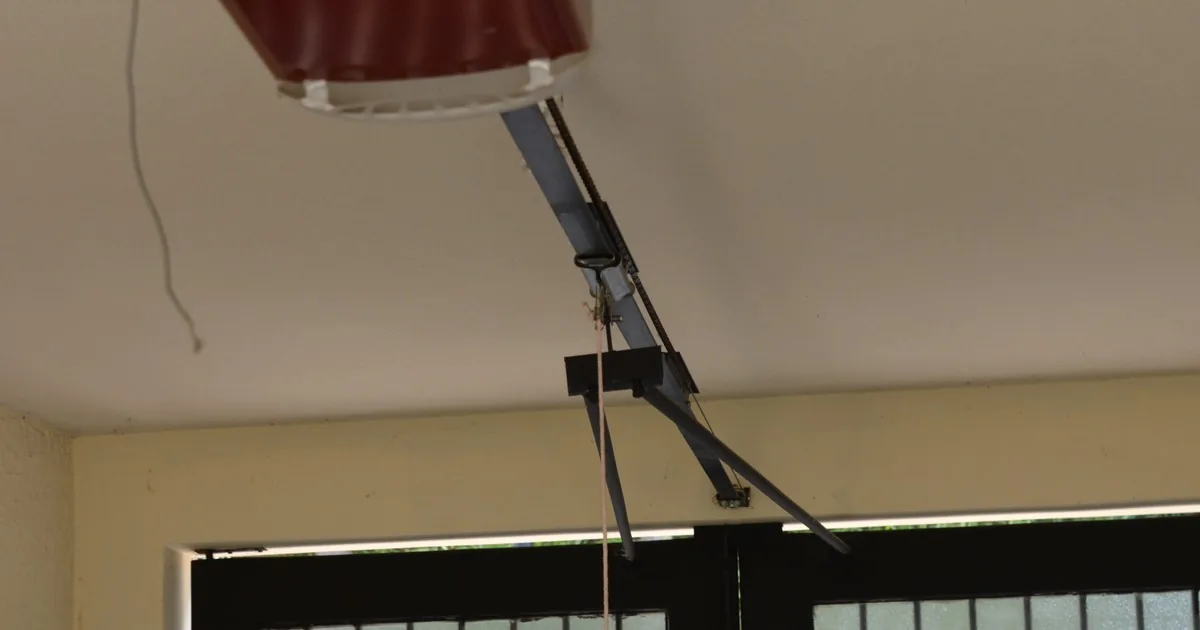
A ceiling-mounted trolley opener pushes and pulls at the top section through its door arm and bracket. Ask for one photo that shows the entire top section from inside the garage, then a closer photo of the connection. The wide view reveals the relationship among the strut, vertical stiles, opener bracket, hinges, and top fixtures. The close view can show pulled fasteners, elongated holes, cracks, or an attachment made through thin skin.
Record whether the caller has a ceiling-mounted trolley opener, a wall-mounted jackshaft opener, or no automatic opener. Ask whether the opener arm is still connected, whether the problem began after a new opener was installed, and whether the door moves differently when the opener starts. Do not coach the caller through disconnecting an unstable door.
The opener may be the separate service intent. Grinding, force reversals, an unresponsive motor, remote trouble, or a request for quieter or connected equipment belongs in the opener replacement quote guide. A reinforcement ticket should still mention those symptoms because operator force and door condition have to be considered together.
Steel added to a moving door adds weight. The finished setup therefore needs a qualified balance and operation check under the door and opener manufacturers’ procedures. The office should never answer added weight by advising a caller to turn a torsion spring, move an extension-spring connection, or increase opener force.
Keep wind-load work in its own lane
A horizontal bar may appear in a wind-rated door, but one aftermarket strut does not create an approved wind-load assembly. Clopay describes its reinforced high-wind doors as systems that can include steel struts, upgraded springing, heavier track, and rollers. The required configuration comes from the product approval, building requirements at the address, and manufacturer documentation.
Ask whether the request came from an insurer, building official, home inspector, storm-hardening contractor, or opener installer. Record the property address and any required design or approval documents. Photograph every existing rating label and the complete inside face of the door. If removable posts or braces are present, note their condition and storage location without promising that they are complete.
Keep the language precise: “Customer requests wind-load review and supplied approval label photo” is useful. “Add two struts to bring door to code” promises a result the office cannot establish by phone.
Build a ticket the technician can use
A clean read-back might sound like this: “We have a sixteen-foot sectional steel door with four sections and a ceiling-mounted trolley opener. The model label photo is attached. One horizontal strut crosses the top section, and the opener arm connects through a vertical center bracket. The caller reports a crease beside that connection and has stopped using the door. We also have a full inside photo, two damage close-ups, the wind-load label, and headroom measurements. The technician will inspect the section and complete assembly before recommending reinforcement, panel work, or another repair.”
For a rental, condominium, warehouse, or managed property, add the person who can authorize work, the occupant contact, gate or loading access, parking limits, and any required site induction. Note who owns the door if a common association controls exterior components.
An AI receptionist can collect the same model, photo, condition, opener, rating, and access fields after hours. It should use the garage door company’s approved safety and scheduling rules. It should not select a strut from a parts catalog or turn a photograph into a structural decision.
The technician should arrive knowing which door is involved, what metal the caller means, where the damage sits, and which records are attached. That is enough to make the first visit productive without pretending the quote was settled on the phone.
Sources
- DASMA: Guidelines for Connecting a Drawbar Operator to a Sectional Garage Door
- Clopay: Reinforcing the Top Section for Opener
- Clopay: Garage Door FAQ
- Garage Reference: Garage Door Strut Purpose, Sizing, and Safe Replacement