“Cold air is coming under the garage door, and I need the rubber replaced.” That sounds like a simple parts call. Then the customer mentions daylight at the left corner, water after hard rain, and a door that lands crooked unless someone holds the wall button.
The office now has more than a weather-seal request. A useful garage door weather seal replacement call identifies the affected edge, confirms that the door sits and travels normally, records the existing attachment, and captures the floor or frame condition. The company can then schedule the right visit without promising that a strip of rubber will correct a door, slab, grading, or drainage problem.
Start with location. Ask whether the caller sees the problem under the moving door, along a side jamb, across the top, or at a floor-mounted threshold. Then ask what enters: light, moving air, rainwater, snow, leaves, insects, or something else. Those answers describe the service scope far better than “the seal is bad.”
Find the exact edge where the problem appears
A garage opening can contain several seals that do different jobs. The bottom seal attaches to the lower edge of the door and compresses when the door closes. Perimeter weatherstripping follows the frame across the head and down the jambs. A threshold seal is mounted on the garage floor.
Clopay’s garage door seal guide separates these parts by location. That distinction belongs in the first minute of the call because a torn bottom astragal, curled side vinyl, and loose floor threshold require different materials and site preparation.
Ask the caller to point to the opening from a safe standing position and describe where the symptom begins and ends. “Daylight under the lower left corner for about two feet” is useful. “Weatherstripping around the whole thing” is not yet enough. Find out whether the issue spans the full width or stays near one corner, and whether it appears every day or only with wind or rain from a certain direction.
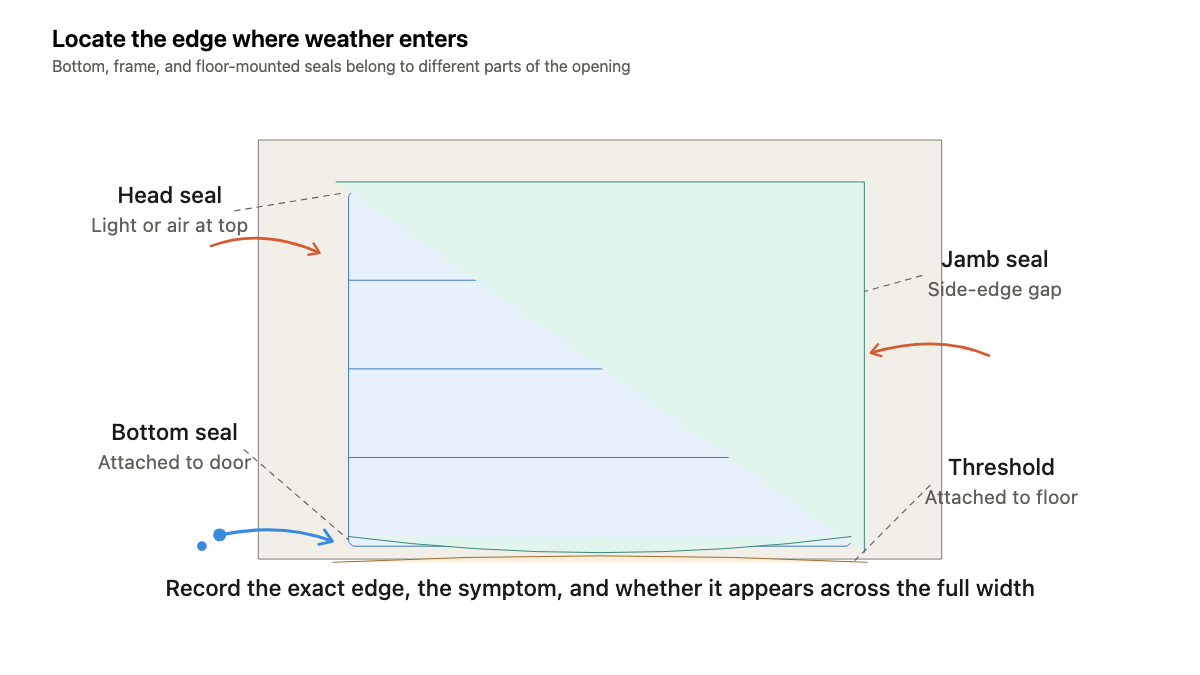
Water needs careful wording. A caller may see a wet line inside the door and assume the bottom seal failed. The office should record the location, weather conditions, driveway slope, visible standing water, and whether the water crosses the threshold at one point or across most of the opening. A new seal may be part of the repair, but intake cannot establish the source or promise a dry floor.
Check how the door sits before discussing material
Ask whether the door is fully closed now and whether its bottom edge looks level. Does one corner stop higher than the other? Has the door started rubbing, shaking, reversing, or struggling? Did the gap appear after an impact, track problem, cable event, or floor work?
A rough-moving or crooked door should leave the routine seal-replacement path. DASMA’s garage door safety guidance says a door that does not move smoothly may have an unsafe condition. It also warns that cables and bottom brackets are connected to high spring tension and belong in trained hands. Route those calls through the company’s garage door emergency intake procedure, especially when a cable is loose, the door is off track, or the opening cannot be secured.
Do not ask the caller to lift a heavy door, reach beneath it, pull the old seal out, or remove a retainer screw for identification. Photos should be taken from the floor with the door left in its current safe position. If the required view is blocked, mark it for the technician.
A stable, normally operating door can continue through seal intake. Record whether it closes automatically through the opener, whether the floor contact looks even, and whether the customer has changed the close limit or added material under the door. Those details are observations, not a phone diagnosis.
Identify the existing seal and attachment
“Black rubber strip” does not identify a replacement part. Bottom seals come in different profiles and fit different retainers. Clopay describes T-style seals that slide into channels, U-style or bulb seals that compress at the floor, and bead-style seals with rounded attachment edges. The installed retainer may have one channel, two channels, a different slot size, or no reusable channel at all.
The best identification image is often an end view of the bottom edge. Ask for one close photo at the end of the door where the seal enters the retainer, provided the customer can take it without touching cables, rollers, or the bottom bracket. Add a straight-on photo across several feet of the closed bottom edge and a full exterior photo showing the entire opening.
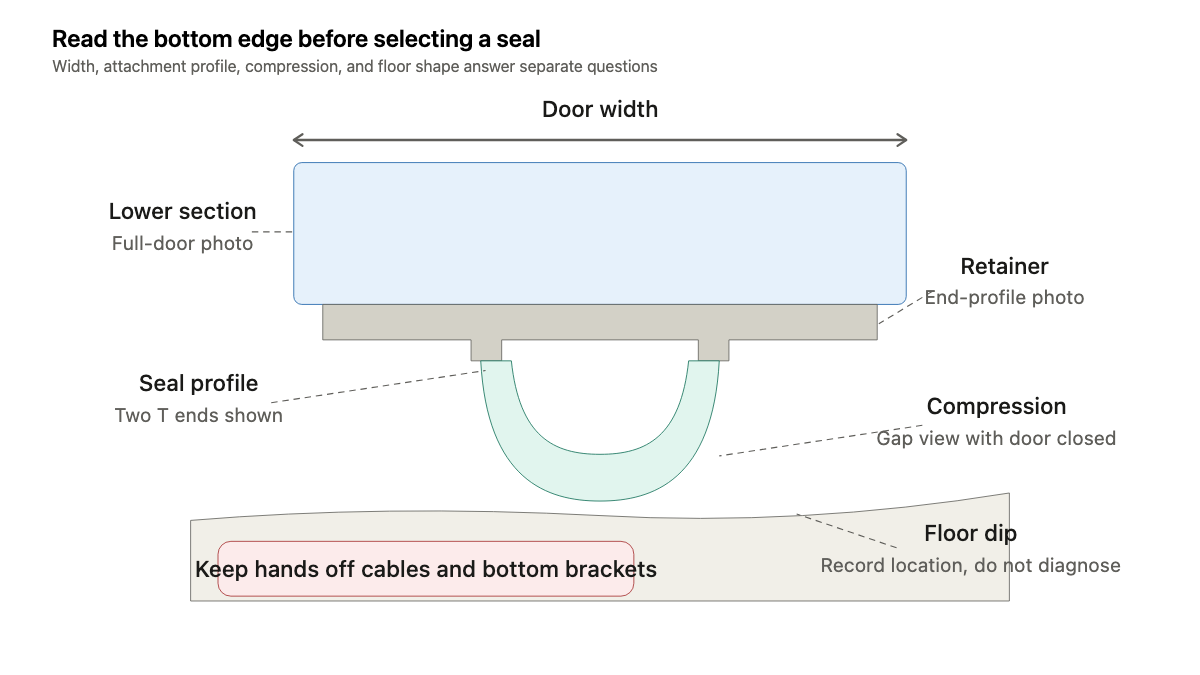
Request the manufacturer, model, and serial label when safely visible. A previous invoice can be even better because it may identify the exact door family without asking the customer to hunt around the hardware. If the lower section is damaged or folded, keep the seal request attached to the damage record and use the panel replacement intake guide to collect the section details.
Never promise compatibility from a color, a rough description, or a door width. Tell the customer what will happen next: “We will use the door information and photos to identify the installed retainer, then confirm the replacement options.”
Collect measurements that help without turning the call into installation
The full opening width is useful, and Clopay’s weather-stripping guide also recommends considering the gap between the door and floor when choosing material. Ask for measurements only when the door is fully closed, stable, and reachable from the floor.
A clean intake record includes:
- Door width and height when known from an invoice or safe floor-level measurement
- Bottom, left jamb, right jamb, head, or floor-threshold location
- Full-width problem or a localized gap, with the corner identified from outside
- Existing seal material and visible profile, with photos of the opening and safe end view
- Cracks, flattened areas, tears, missing sections, curling, looseness, or brittleness
- Concrete condition beneath the door, including a dip, ridge, crack, old adhesive, or floor coating
- What enters and under which conditions
- Current door position, level appearance, and any change in movement
- Manufacturer, model, serial, installation year, and prior invoice when available
- Vehicle clearance, stored items, pets, gate instructions, and who can provide access
Avoid asking for a measurement at every few inches. That turns the customer into a field technician and still does not establish the correct repair. One width, a description of the gap location, and clear photos give the service company enough to decide whether it can identify a part remotely or needs an assessment visit.
Floor-mounted thresholds deserve their own note. Ask whether one is already present, whether it is loose, and whether adhesive residue or floor coating is visible. The technician may need a clean bonding surface and a curing plan, but the office should follow its own product instructions before discussing when vehicles can cross a newly installed threshold.
Schedule around access, weather, and the real scope
A seal visit requires access to the inside and outside of the opening. Confirm that the customer can move vehicles far enough back, clear stored items near the jambs, contain pets, and provide access to any wall controls. If a threshold may be involved, record the driveway and floor condition because surface preparation can change the visit.
Weather matters when the complaint involves active water or an exterior adhesive, but avoid inventing a universal temperature or cure time. Products differ. Record the forecast concern and let the company’s approved material instructions control scheduling.
Set the appointment type from the evidence. A known compatible bottom insert on a stable door may fit a routine service slot. An unidentified retainer, damaged lower section, uneven closing edge, recurring water entry, loose threshold, or frame deterioration may need an assessment with broader parts and time.
A handoff note could read:
“Sixteen-foot residential sectional door. Customer reports daylight and cold air under the left three feet, plus leaves after windy days. Door is closed, appears level, and travels normally by opener. No cable, track, or bottom-bracket concern reported. Existing black bottom seal is cracked and flattened near left corner. Full opening and safe end-profile photos attached; two-channel retainer visible, exact slot and door model unconfirmed. Concrete has a shallow dip near left jamb. No floor threshold present. Vehicle can be moved outside before arrival. Schedule assessment and seal identification; do not promise that seal replacement will remove the localized floor gap.”
An AI receptionist can collect the same edge, symptom, door-condition, photo, and access details after hours. Its script should stop routine booking when the caller reports rough movement, a crooked door, cable trouble, or an unsafe position.
The best promise is modest and useful: the technician will inspect the opening, identify the attachment, and explain which repair fits the door and floor that are actually there.