A homeowner calls and asks, “What do you actually do on a garage door maintenance visit?” The weak answer is “We inspect and lubricate everything.” It sounds vague because it is. The caller still cannot tell whether you will test the opener, look at the springs, address the squeal they hear each morning, or charge separately for a worn roller.
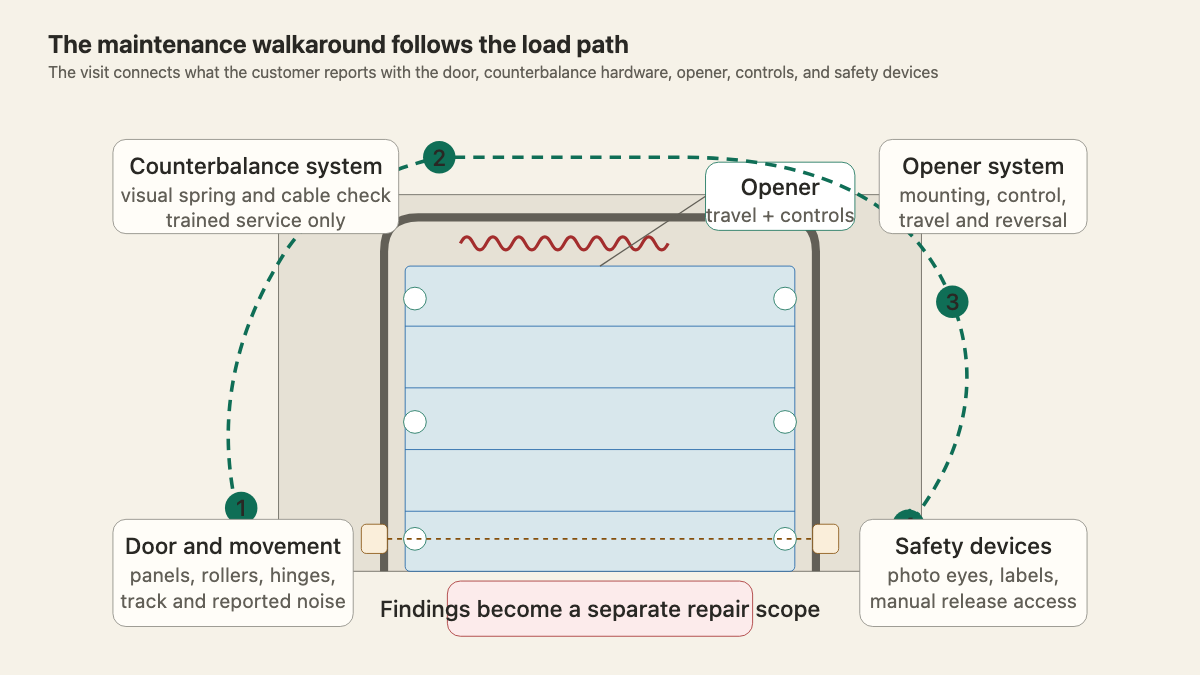
A better answer explains the visit in four parts: the moving door, the counterbalance system, the opener and controls, and the safety devices. It also separates inspection and routine service from repairs that require parts or added labor. That distinction gives the customer a clear appointment without promising a repair before a technician sees the system.
Start with the reason for the call
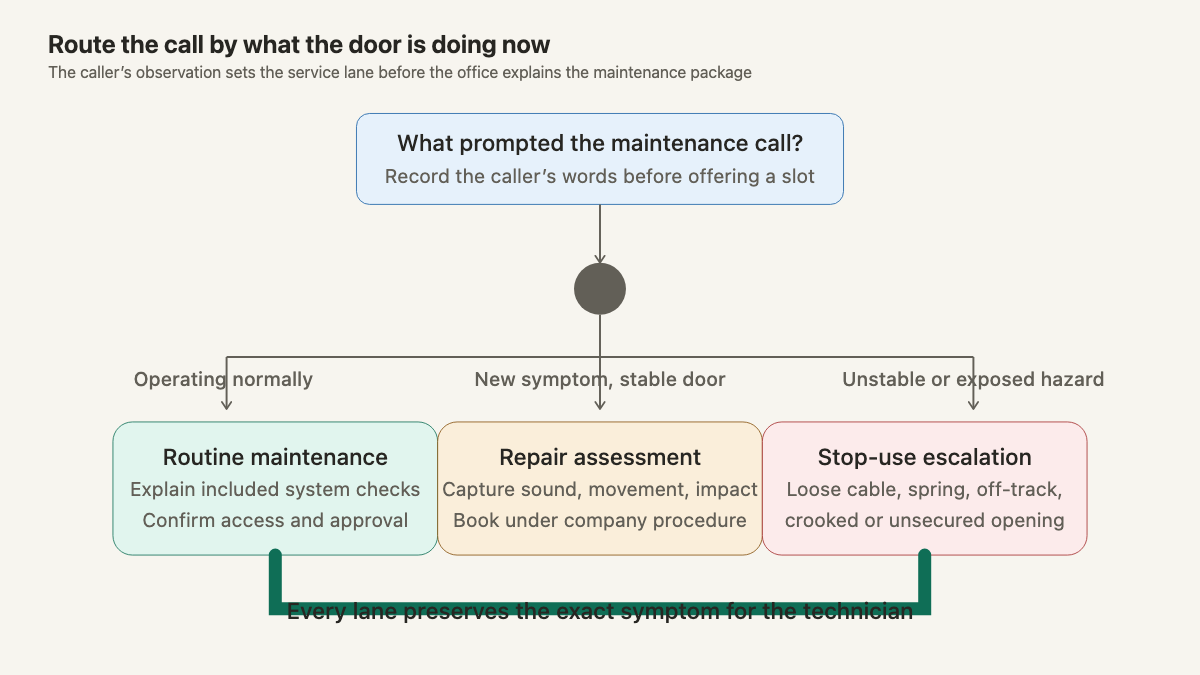
“Preventive maintenance” covers two different calls. One homeowner wants a routine visit because the door has not been serviced in years. Another uses the same phrase to describe a door that jerks, slams, hangs crooked, or has a loose cable. The second call may need repair routing, not a standard maintenance slot.
Ask what prompted the call before describing your plan. Useful intake questions include:
- Is the door operating now, and can it close fully?
- What changed: noise, speed, smoothness, balance, remote response, or sensor behavior?
- Does the door look crooked, feel unusually heavy, or have a cable hanging loose?
- Did a vehicle or other object strike the door, track, or bottom section?
- Is this a single door or a double door, and is it connected to an automatic opener?
- Do you know the door or opener brand, approximate age, or last service date?
- Can the technician reach both sides of the door, the wall control, and the ceiling opener?
These questions define the visit without inviting the office to diagnose by phone. A caller who reports a frayed cable, damaged spring, door off its track, or unstable movement should be told to stop operating the system and follow the company’s urgent service procedure. The Door & Access Systems Manufacturers Association, or DASMA, warns that cables and spring-connected brackets are under high tension and should be handled by trained technicians.
For a door that will not close or is sitting off track, use a dedicated garage door emergency intake process. Do not tuck an active failure into a routine plan visit because the calendar has an opening.
Explain the visit as a system check
A garage door and opener work together, but they are not one component. Customers often say “the motor is struggling” when the resistance could involve the door, and they may blame the door when the issue is limited to a remote or wall control. The maintenance visit should connect the pieces in a consistent order.
The technician first observes the door through normal operation when it is safe to do so. That gives context for rubbing, shaking, delayed movement, unusual sound, and the way the sections travel through the tracks. Visible hardware, panels, hinges, rollers, track condition, and fasteners can then be checked for wear or damage under the company’s procedure.
The counterbalance system deserves its own explanation. Springs and cables help manage the weight of the door. They are also the boundary where casual homeowner maintenance should stop. DASMA advises visual cable inspection and professional service for worn cables, springs, bottom brackets, and balance problems. Your office can say that the technician checks the condition and operation of this system. Avoid promising that “spring adjustment is included” unless that matches the exact plan and the technician has confirmed it is appropriate.
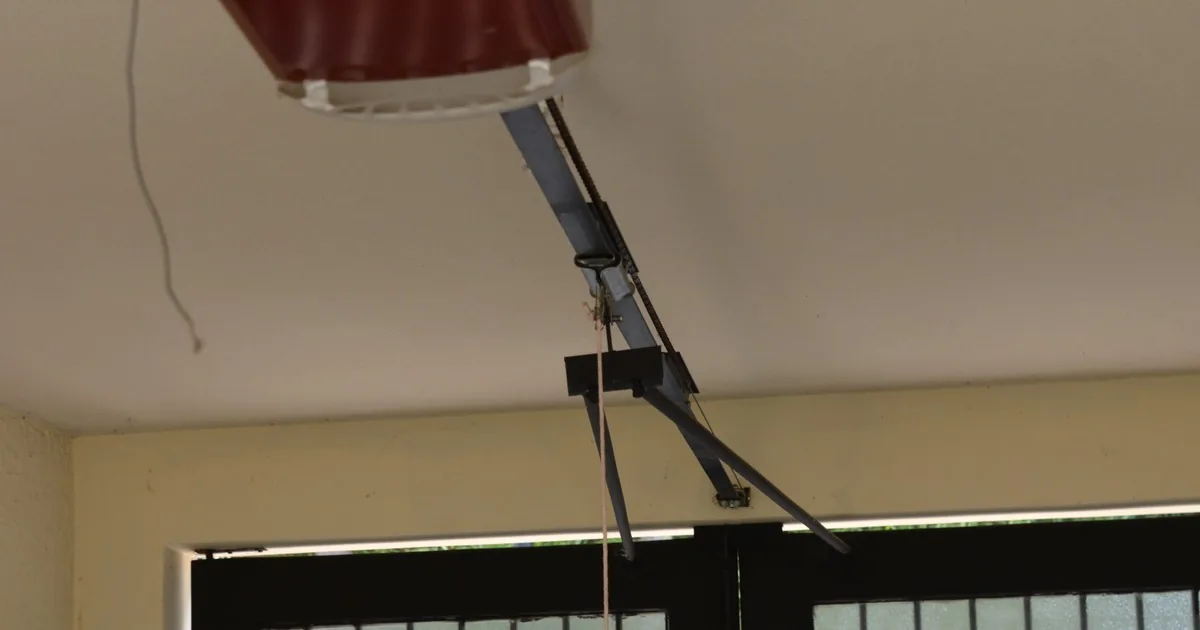
The opener portion covers the installed operator and its controls. Depending on the system and service plan, the technician may inspect mounting and connections, observe travel, check the manual release, and test control and reversal functions according to the manufacturer’s instructions. If the caller’s only complaint involves a keypad or handheld transmitter, collect the device and opener model details before booking. The remote and keypad intake guide covers that narrower call.
Finally, the technician checks safety devices and labels that apply to the installed system. The U.S. Consumer Product Safety Commission states that automatic residential garage door operators are covered by a federal safety standard. The model’s manual still controls the test method and adjustment procedure. The office should never coach a caller through repeated closing tests when a person, pet, vehicle, or object could enter the door’s path.
Be precise about lubrication and adjustment
Customers often expect a tune-up to mean “spray the tracks and tighten a few bolts.” That framing causes trouble. Lubrication points and products differ by door and opener, and the track itself may need cleaning or inspection without being coated. The manufacturer’s instructions and the technician’s procedure should decide what receives lubricant.
Use plain language on the phone: “The technician will inspect the moving hardware and lubricate the points covered by our maintenance procedure. If they find a damaged part or an adjustment outside the plan, they will explain it before additional work.” This answer says what happens and protects the boundary around repair work.
The same rule applies to adjustments. A normal service may include minor fastener or opener checks. Work on high-tension spring hardware, cables, brackets, or a door that is out of balance belongs with trained service and may change the scope. The office should know its own plan well enough to name included tasks, exclusions, and approval steps. “Everything is included” is almost never a safe or accurate promise.
Separate the maintenance fee from repair approval
The caller needs to know what the booked fee buys. Give the actual company policy, not a generic industry answer. If your plan covers inspection, specified lubrication, safety testing, and a written condition report, say exactly that. If members receive the visit as part of an annual agreement, explain whether parts, emergency dispatch, and corrective labor are billed separately.
A clean booking explanation sounds like this:
“Our maintenance visit covers the door, spring and cable system, opener operation, controls, and applicable safety checks. The technician will perform the routine service included in your plan and document anything worn or damaged. Repairs or replacement parts are quoted separately and need your approval.”
That script leaves room for what the technician finds. It also prevents a common dispute: the homeowner thought the maintenance fee included a new roller set or spring because the office used the word “tune-up” without defining it.
Record who can approve added work. A homeowner may be at work while a tenant, relative, or housekeeper provides access. A property manager may have a spending limit. Capture the decision-maker’s name, preferred contact method, authorization ceiling if one exists, and whether the technician may proceed only after sending photos or an estimate.
Prepare the garage before the technician arrives
Access can turn a straightforward visit into a wasted stop. Ask the customer to move vehicles far enough back for the technician to work around the closed door and reach the opener. Boxes, bicycles, ceiling storage, and workbenches can block tracks, sensors, springs, outlets, or the wall control. Pets and children should stay clear of the work area.
Have the customer keep remotes and keypads available, along with any owner’s manuals or previous service notes. Ask them not to operate a door that looks unstable or has a loose cable while they are clearing the garage. Safety beats preparation.
Send the appointment confirmation with the scope and access note in writing. Include the arrival window, booked service, reported symptom, number of doors, opener status, and repair-approval rule. The technician should see the caller’s exact words. “Metal scrape near the top right track on closing” is useful. “Needs tune-up” is not.
Turn every maintenance call into a usable service record
The value of structured intake appears on the next call. When the office has the door size and type, opener brand and model, prior findings, replaced parts, last service date, and the customer’s recurring complaint, the next dispatcher does not have to start from zero.
Keep maintenance reminders tied to the installed system and the company’s actual service interval. DASMA recommends monthly owner safety checks and an annual visit from a trained door systems technician as general guidance, while the door and opener manuals may call for model-specific care. Avoid turning that into a universal warranty promise.
An AI receptionist can collect the same intake after hours and explain the plan using your approved scope. The handoff should still flag unstable doors, high-tension hardware concerns, and active security problems for the right human response.
The best confirmation is short and concrete: one double residential door, ceiling opener installed, morning squeal during closing, no visible loose cable, annual maintenance scope, garage access cleared, and the homeowner must approve any repair before work begins. That is a visit a technician can walk into prepared.