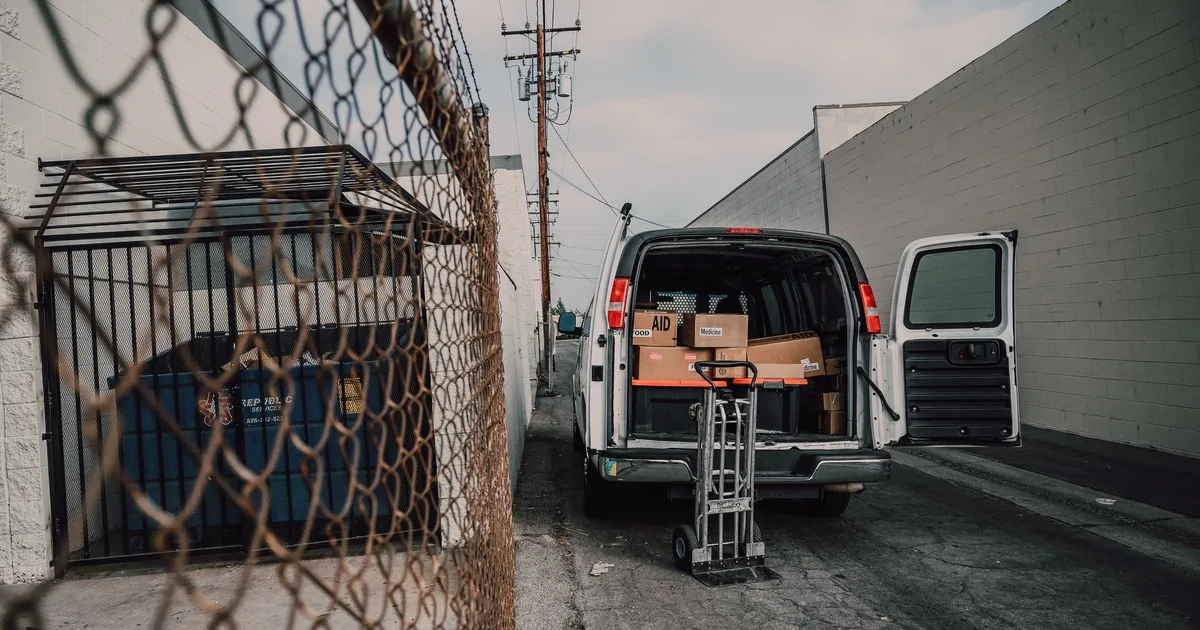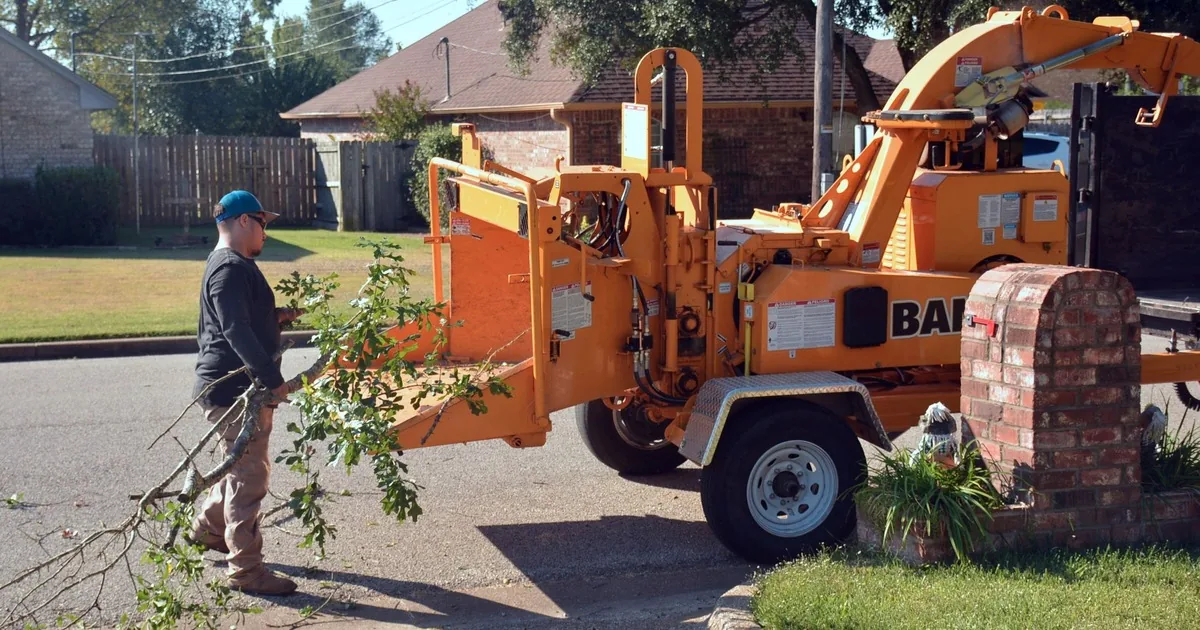
A caller says, “I have a pile of yard waste by the fence. Can you take it today?” The office still does not know whether the pile contains six bags of dry leaves, fresh-cut limbs, a section of tree trunk, wet grass, soil, plastic nursery pots, or all of them together. It also does not know whether the crew can back a truck to the pile.
A useful yard waste haul-away call captures six things before scheduling: the material, the pile’s size in a shared reference, how it is contained, the route between pile and truck, anything mixed into it, and the current receiving rule for the service address. Photos help. They do not replace those questions.
Start with the material, not the pile size
“Yard waste” is broad. The U.S. Environmental Protection Agency groups grass, leaves, and tree and brush trimmings under yard trimmings, but a local receiving facility may separate those materials once a truck arrives. Dry leaves can go one way. Logs, stumps, soil, and a load containing plastic trash can go somewhere else.
Ask the caller to name each material they can see. Useful answers sound like “mostly oak leaves in paper bags,” “fresh hedge clippings piled loose,” or “maple limbs with two trunk rounds.” “Branches” needs one more question: are they thin trimmings that one person can lift, or heavy sections cut from a trunk?
The condition matters too. Wet grass and rain-soaked leaves handle differently than dry material. Thorny brush can slow hand loading. A stump may still have soil and stones packed around its roots. None of those details should be used to diagnose the job from the desk. They tell the dispatcher what needs confirmation.
A clean intake record separates the main material from exceptions. For example: “Loose brush and branches are the main load. Caller also sees two black plastic bags and one broken planter.” That is much more useful than “one medium yard pile.”
Give volume a reference both people can see
Irregular piles are hard to describe over the phone. Asking for cubic yards usually produces a guess dressed as a measurement. Give the caller a familiar reference.
Ask whether the pile would fill one curbside cart, the bed of a pickup, or a particular fraction of the company’s trailer. If your office uses truck fractions, explain the reference in plain language. A caller may picture a compact pickup while the estimator pictures a long-bed work truck. State the dimensions or point to the same photo guide.
Then capture rough length, width, and height when the caller can provide them. “Eight feet along the fence, about four feet deep, and waist high at the middle” gives the crew a usable shape. It is still an estimate. Record the high point and whether the material is packed, stacked, or airy.
Loose branches create empty space. Bagged leaves may settle. A photograph from one angle can hide depth or a second pile. Ask for one wide photo that shows the surrounding yard and another from the side. If there are several piles, number them in the call notes.
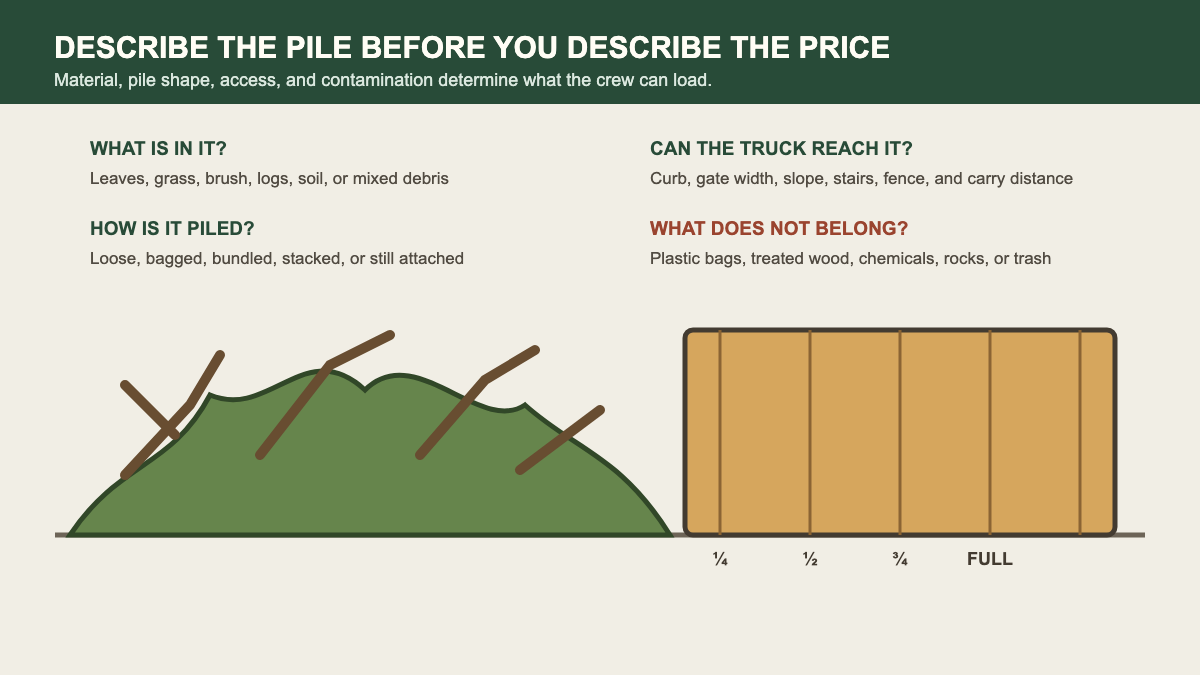
The estimate should keep its conditions attached: visible material, stated pile dimensions, expected loading route, and any exclusions that need inspection. That protects the caller from hearing a casual guess as a guaranteed price.
Record the work between pile and truck
Two piles with the same apparent size can create different jobs. One sits at the curb. The other is behind a six-foot gate, down a slope, across a soft lawn, and around a pool enclosure.
Walk the route in order. Where can the truck or trailer legally stop? How far is the pile from that point? Are there stairs, gates, narrow turns, retaining walls, low branches, septic components, or overhead wires? Can the caller open the gate before arrival? Is the ground firm enough for the equipment your crew would normally use?
Do not assume “driveway access” means the trailer can reach the pile. A parked car, basketball hoop, low eave, sharp turn, or steep grade may block the working position. Ask for a photo looking from the street toward the pile. That view often explains more than a close-up of leaves.
The office should also learn whether the material is ready to load. Branches still attached to a fallen limb create cutting work. A collapsed shed covered in vines is a demolition call with yard debris around it. Leaves spread across half an acre describe cleanup labor, while leaves already in accepted containers describe pickup.
If the company offers cutting, raking, bagging, or chipping, label that scope separately. If it does not, say what condition the material must be in when the crew arrives.
Screen mixed loads before dispatch
A green pile can hide items that change the destination or make the load unacceptable. Ask directly about soil, rocks, concrete, fencing, treated lumber, painted wood, plastic bags, plant pots, household trash, fuel containers, paint, pesticides, and other chemicals. The list should reflect the facilities your company actually uses.
Do not tell a caller that a questionable item is accepted because it is small. Check the current rule. A half-full herbicide bottle mixed into grass clippings is still a chemical container. A pressure-treated fence panel is still treated wood. Local definitions and receiving practices control the answer.
Grass clippings deserve a specific note. The University of Minnesota Extension says short clippings can usually remain on the lawn, while removed clippings can be composted or used as mulch. It also advises keeping clippings out of curbs, gutters, and storm drains. A caller asking for routine grass removal may need a lawn-care answer before a hauling quote.
That does not mean the office should talk people out of service. It means the receptionist can distinguish a true haul-away job from a question about what to do after mowing.
Verify the rule for the address
There is no useful nationwide answer to “Will the dump take this?” EPA tracks composting, combustion, and landfilling as separate management pathways, but receiving rules are local. Facilities may sort clean leaves and grass, brush, logs, stumps, soil, and mixed construction debris into different programs.
Boulder County’s yard-waste guidance offers a concrete example. It distinguishes yard waste from wood waste and describes different terms for residents, contractors, and material from job sites. Another county can draw those lines differently.
Build a receiving-rule lookup around the service address, current date, hauler type, and load description. Save the facility name and the rule checked. If staff call a facility, add the contact time and the answer to the job record.
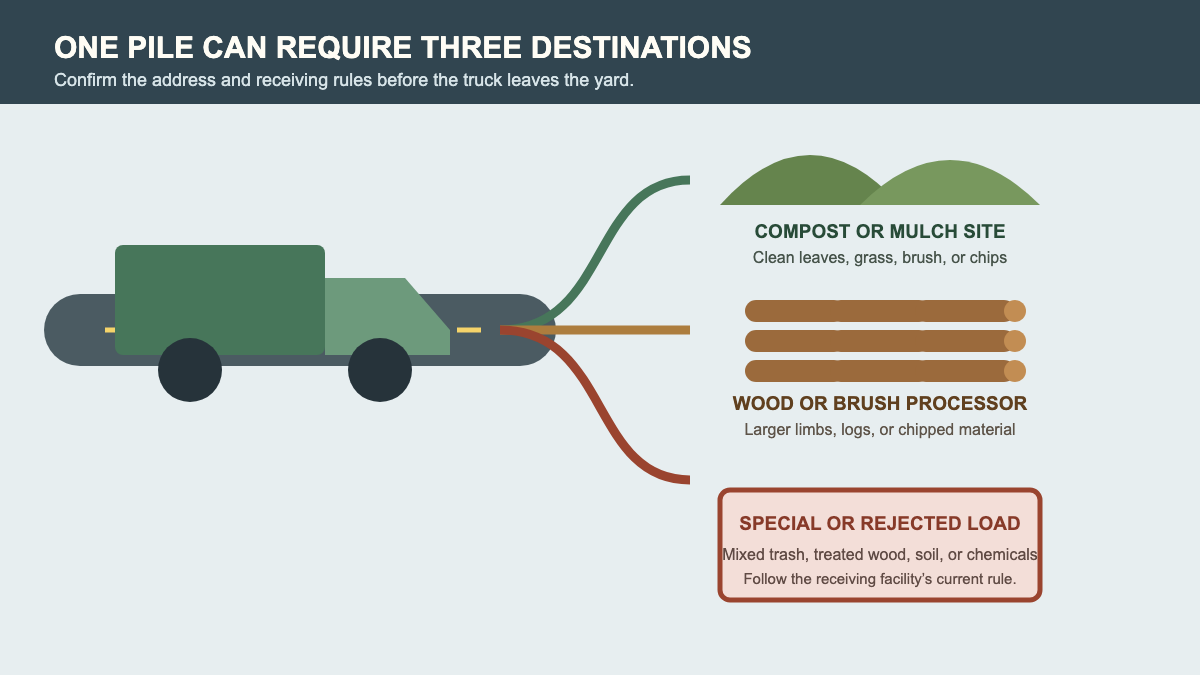
Season and storm conditions can change the answer. A city may open a temporary debris site after severe weather. A normal compost site may limit contractor loads or stop accepting a material. Static call scripts go stale, so the office needs a dated source.
Use a dispatch-ready readback
Before ending the call, read the job back in the same order the crew will encounter it. A solid readback might say:
“Pickup is at 1240 Cedar Lane. The load is one loose pile of leaves and hedge trimmings, about eight feet long, four feet deep, and waist high at the center. It is behind a four-foot gate, about 60 feet from the driveway. The caller reports no soil, lumber, chemicals, or household trash. Two side photos and one street-to-pile photo are attached. The office still needs to confirm the receiving site for a contractor load.”
That note gives the estimator something concrete to review. It also reveals the one unresolved item before anyone promises a slot.
Keep the intake fields in your scheduling system, not in a receptionist’s memory. The basic record should include:
- Service address and caller contact
- Material types, condition, and anything mixed into the load
- Number of piles, rough dimensions, containment, and photos
- Truck position, carry distance, gates, slopes, stairs, and surface conditions
- Cutting, raking, bagging, demolition, or equipment work requested
- Receiving facility, rule source, verification date, and unresolved exceptions
An AI receptionist can capture these fields after hours and route uncertain items for review. The same discipline works with a person answering the phone. The goal is a record that the crew can trust when it turns into the driveway and sees what “a pile by the fence” meant.