“We need a price to maintain three properties. Can someone send a bid by Friday?”
That sounds like a sales lead. It is also an incomplete work order with two deadlines hidden inside it: the site walk and the proposal. Before the call ends, the landscaping office should know who controls the decision, which addresses are included, what parts of each property are maintained, which services recur, what access and traffic limits apply, and whether the caller has written specifications.
A fixed price can wait. The useful outcome of the first call is a bid brief that lets an estimator walk the right ground with the right person.
Start with the buyer, deadline, and bid process
Ask what prompted the request. A property manager may be replacing a contractor, rebidding an annual agreement, opening a new location, adding sites to an existing portfolio, or trying to correct a persistent problem. Each situation changes what the estimator needs to inspect.
Get the legal or operating name of the property, every service address, and the property type. An office park, medical building, retail strip, apartment community, warehouse, school, and homeowners association can have similar turf but very different traffic, noise, access, and reporting rules.
Then identify the people around the decision. Who requested proposals? Who can authorize a site walk? Who knows the irrigation system and existing scope? Who approves the final agreement? One person may fill all four roles, but the call record should not assume it.
Capture the schedule in dates. Ask when questions are due, when the walk-through can happen, when the proposal is due, when a decision is expected, and when service should begin. If the customer sent a request for proposal, existing contract, site map, or service schedule, record where it will be delivered and who will confirm receipt.
Do not promise a proposal deadline until the estimator has checked the sites, documents, and travel time. A polite answer is direct: “I have Friday as your requested bid date. I will send the addresses and scope documents to our estimator so we can confirm whether we can meet it.”
Build a separate record for every site
Three addresses are three scopes, even when one manager controls them. Create a site record for each address and ask which properties can be walked together. Note the on-site contact, check-in point, gate code process, parking instructions, restricted areas, required identification, and whether a vendor escort is needed.
NC State Extension recommends that landscape specifications identify the work location, detailed services, starting dates, frequency, duration, equipment, responsibilities, exclusions, and terms that could otherwise be interpreted in different ways. That structure works well for intake too.
Divide each property into visible zones. Useful labels include road frontage, main turf, courtyards, parking islands, building entrances, loading areas, drainage features, fenced yards, slopes, natural areas, sports turf, playgrounds, pet stations, and stormwater ponds. Attach the service to the zone. “Mow weekly” means little when nobody has agreed whether it includes the rear retention basin or the narrow strip beyond the fence.
Ask for approximate acreage or plans if the caller has them, but treat those figures as customer-supplied until the estimator verifies them. Wide photos, aerial maps, irrigation drawings, and the current vendor scope can shorten the walk. They cannot show every broken head, soft shoulder, low branch, blind corner, or loading conflict.
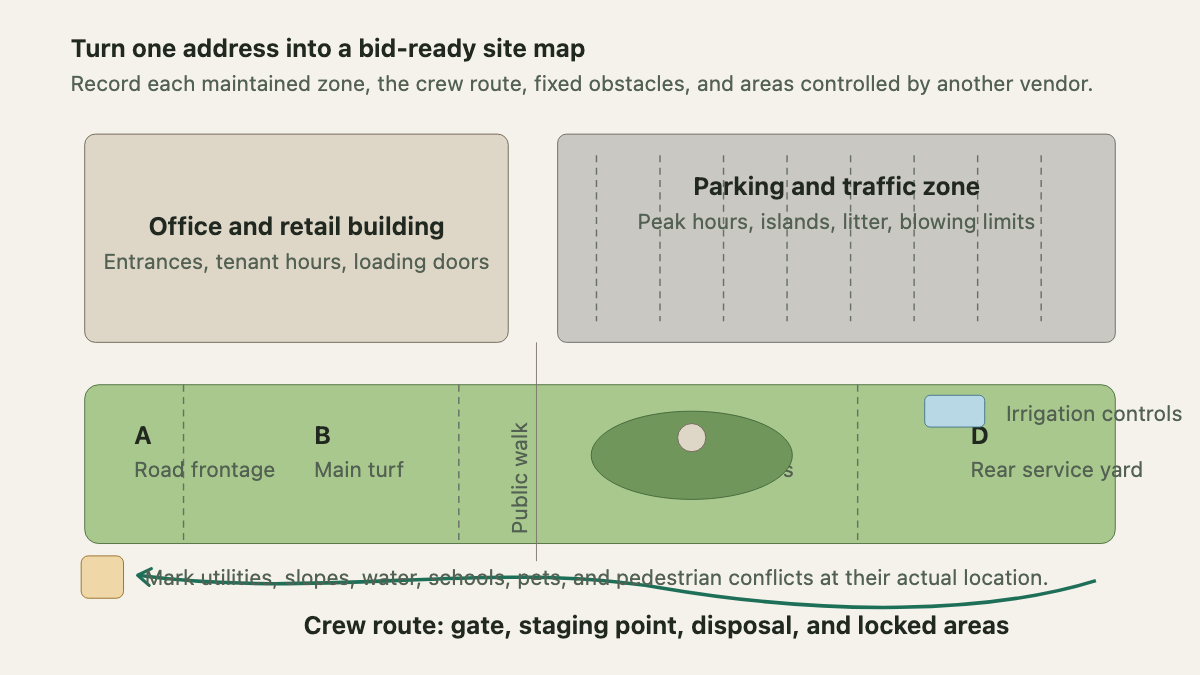
The map is a conversation aid. The estimator still decides how crews, equipment, and materials can move through the property.
Name the service, location, and standard
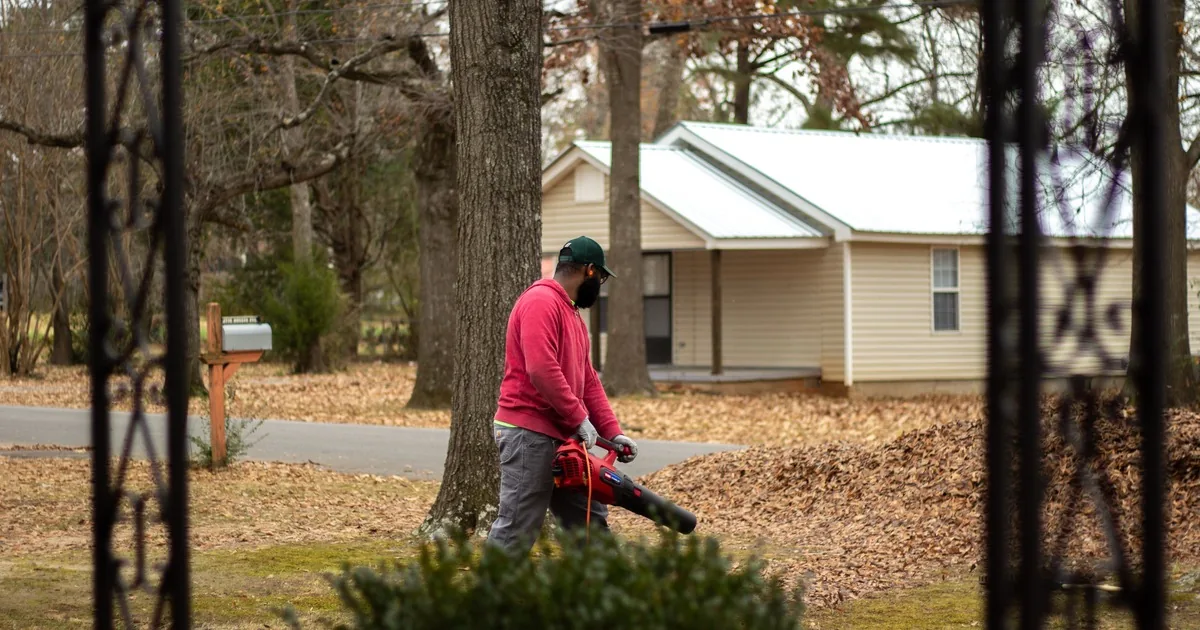
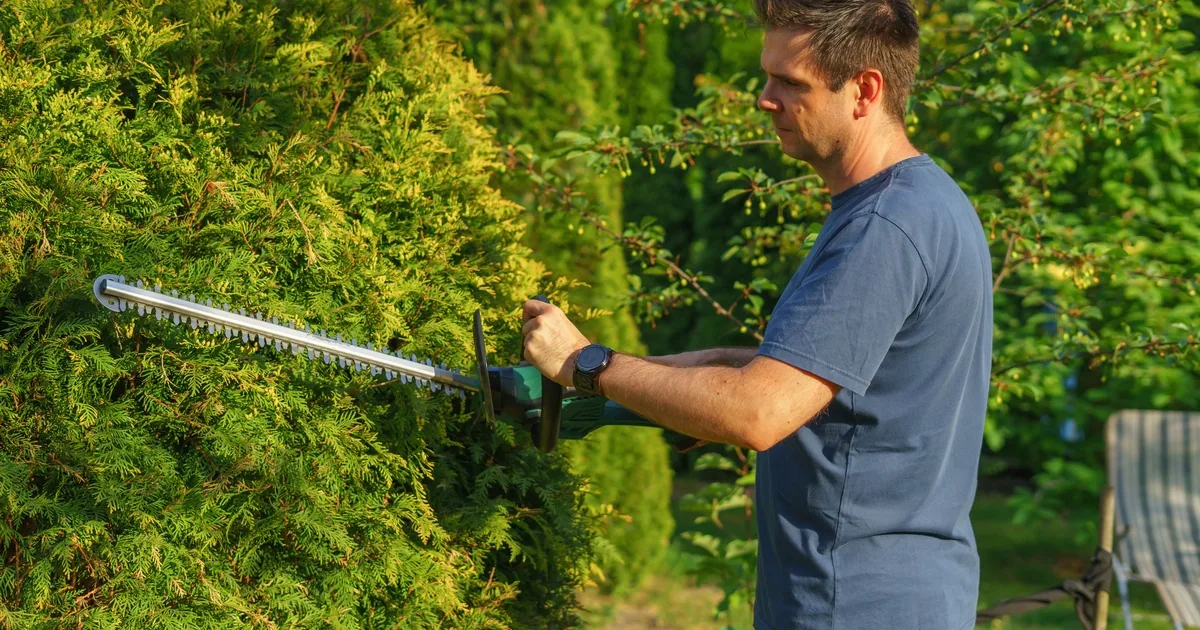
A commercial scope often mixes mowing, edging, string trimming, blowing, litter pickup, shrub pruning, bed maintenance, mulch, seasonal color, leaf removal, irrigation inspection, fertilization, weed control, pest management, and tree work. List each item separately.
For every item, ask four things: where it applies, how often it is expected, what visible result the manager uses to judge it, and what the current contract excludes. NC State's specification guidance makes the same point. Vague language such as “as needed” or “keep neat” invites disagreement because each party can picture a different level of service.
The office does not need to negotiate mowing height or pruning standards on the first call. It should preserve any number or standard the customer supplies. A useful note might read: “Caller requests weekly mowing during the growing season at Sites A and B, but biweekly service at the warehouse. Current specifications and turf heights are pending.”
Ask who handles generated debris and litter that was already on site. Grass clippings, pruning debris, dumped household items, tenant trash, storm limbs, and construction waste belong to different scopes. The proposal should not discover that distinction after the first cleanup.
Irrigation deserves its own line. Does the contract include visual checks, controller adjustments, seasonal start-up, winterization, emergency shutoff, head replacement, leak repair, or water-use reporting? Who owns the controller, and who approves repairs? Record the answer without diagnosing a system from the office.
Put frequency next to each service
Commercial maintenance changes through the year. The mowing interval may follow active growth. Leaf work follows tree cover and weather. Irrigation tasks follow local season and system design. Snow, storm cleanup, event preparation, and planting rotations may be separate work.
Build the schedule in layers. First capture recurring visits. Then list seasonal operations with likely windows. Add work that begins only after an observable trigger or written approval. Finally, record exclusions.
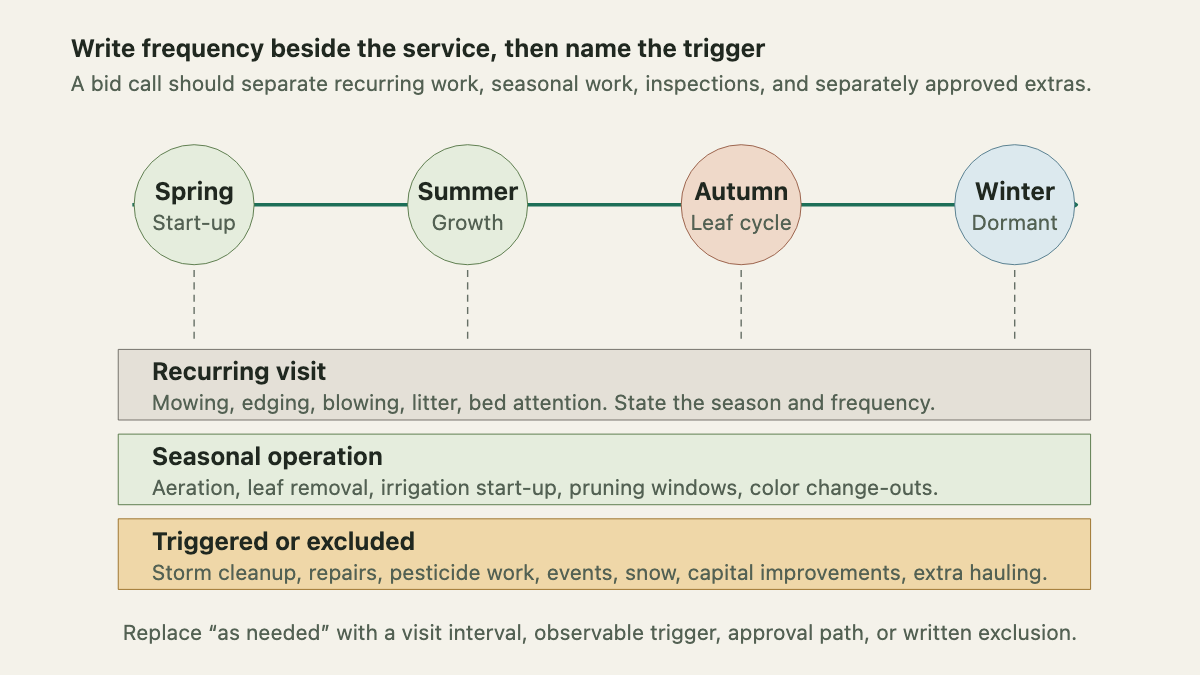
This avoids a common bid problem: one contractor includes twelve leaf visits while another assumes four, yet both proposals say “leaf cleanup included.” The office does not need to set the right number during intake. It needs to expose the unanswered question before pricing.
Ask whether the property has special dates. Retail promotions, resident events, school arrival, medical-office hours, deliveries, worship services, and board meetings may limit when noisy or disruptive work can happen. Add those windows to the site record, not to a general customer note where the crew may miss them.
Flag hazards and regulated work for review
A bid call is not a safety assessment, but it can prevent obvious surprises. Ask about steep slopes, roadside work, standing water, unstable ground, overhead lines, locked utility areas, heavy pedestrian traffic, playgrounds, pets, loading docks, blind vehicle exits, and areas where equipment or blowing is restricted.
OSHA's landscape and horticultural services guidance lists mowing and maintenance hazards that include cuts, hand injuries, chemical exposure, eye injury, noise, slips, trips, and lifting. The estimator and employer remain responsible for assessing the real site. The office's job is to put reported conditions in front of them before the walk.
Treat pesticide work as a separate qualification item. Ask whether the requested scope includes herbicide, insecticide, fungicide, or other pesticide applications, and which sites or zones are involved. EPA's federal certification standards for commercial applicators cover label comprehension, safety, environmental effects, equipment, application methods, and applicable laws. State and local requirements can add more. Do not promise that the company can perform a treatment until the responsible person confirms licensing, label, and site requirements.
Tree work, storm response, snow and ice service, irrigation repair, and capital improvements may also need a different estimator, subcontractor, insurance review, or proposal section. Route them according to company policy.
Prepare a site walk that answers open questions
Close by reading back the structure of the opportunity: “I have three sites under one property manager. The medical office needs escorted access before 8 a.m., the retail center has weekly turf service plus litter at the entrances, and the warehouse scope excludes the rear natural area. You will send the current specifications today. The requested walk is Tuesday, and the bid is due Friday.”
Then confirm who will attend, where to meet, how long access is available, which documents remain outstanding, and who can answer scope questions during the walk. If proposal format, insurance limits, vendor registration, references, background checks, or procurement forms are required, put each item in the bid brief with an owner and due date.
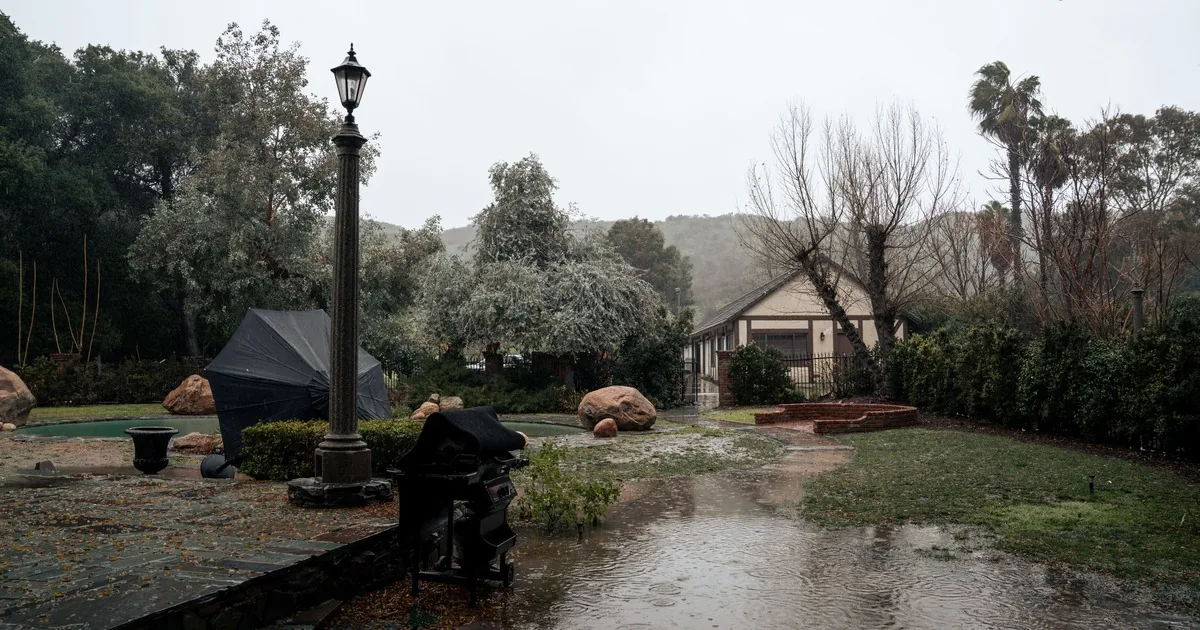
Link the new opportunity to the company's broader landscaping call-handling library. If standing water, eroded beds, or downspout discharge is a separate concern, create a distinct landscape drainage consultation rather than burying it inside routine maintenance.
An AI receptionist can collect addresses, contacts, deadlines, document locations, site zones, frequencies, and access notes after hours when it follows the contractor's bid rules. The estimator still owns the walk and the price. What reaches that estimator should look less like “call this property manager” and more like a map of the ground they are about to quote.