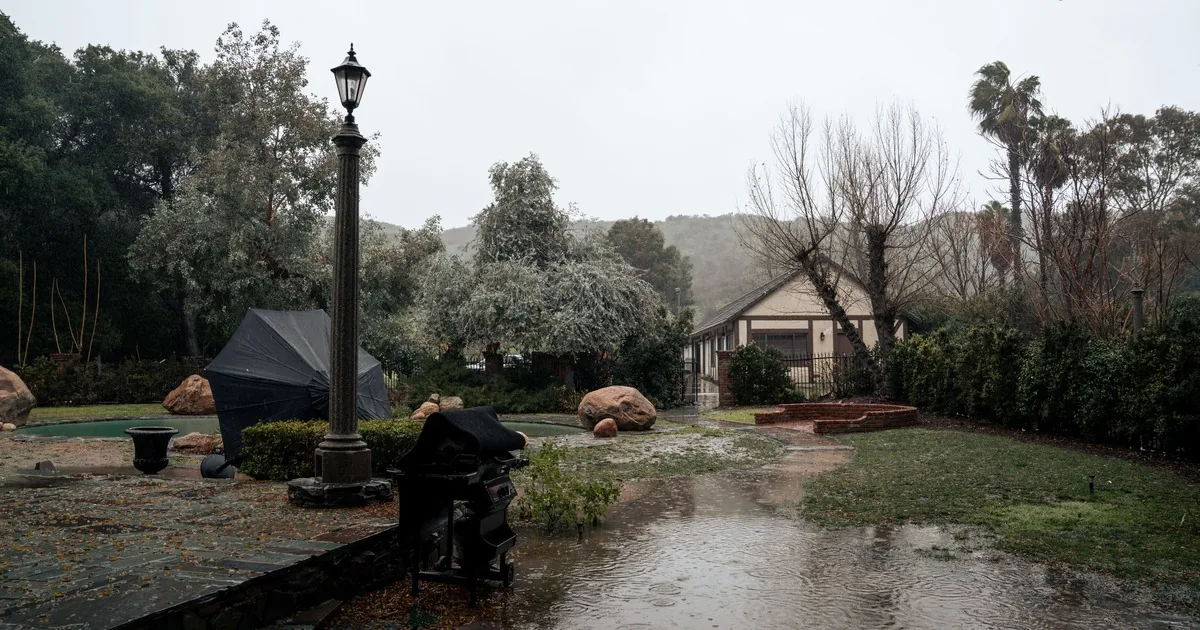
“The backyard turns into a pond every time it rains” sounds like a drainage diagnosis. It is only the start of an intake record.
The useful questions establish where the water begins, how it moves, where it collects, how long it stays, and what it reaches. Then the office can schedule the right kind of visit without promising a French drain, swale, grading job, or rain garden before anyone has seen the property.
That distinction matters. Standing water near a downspout may involve roof runoff, but the same wet patch can also receive water from a driveway, an uphill lot, an irrigation fault, or a low area that drains slowly. The person answering the call should build a clear picture of the rain event and leave the design decision to a qualified site reviewer.
Start with the rain event the caller actually saw
Ask when the problem happens. “After rain” is too broad for dispatch notes. A short cloudburst that creates a puddle for twenty minutes is a different observation from water that remains two days after steady rain.
Capture the caller's account in plain terms:
- When did the rain begin and stop?
- Was it light, steady, or intense?
- When did the caller first notice water collecting?
- Was the water still present the next morning?
- Does the same area get wet after irrigation runs?
- Has the pattern changed since a patio, fence, addition, driveway, or neighboring project was built?
- Has any drain, gutter, downspout, sump discharge, or irrigation line been changed recently?
Do not turn the caller's estimate of rainfall into a measured fact. A note such as “caller reports heavy rain for about an hour” is honest and useful. It preserves what the customer saw without pretending the office has weather-station data.
Ask for photos or a short video taken during the event if the company accepts media before an appointment. The best images include a fixed reference such as a step, foundation corner, fence post, drain grate, or patio edge. A close-up of muddy water proves very little. A wide view can show where the water came from and what it reached.
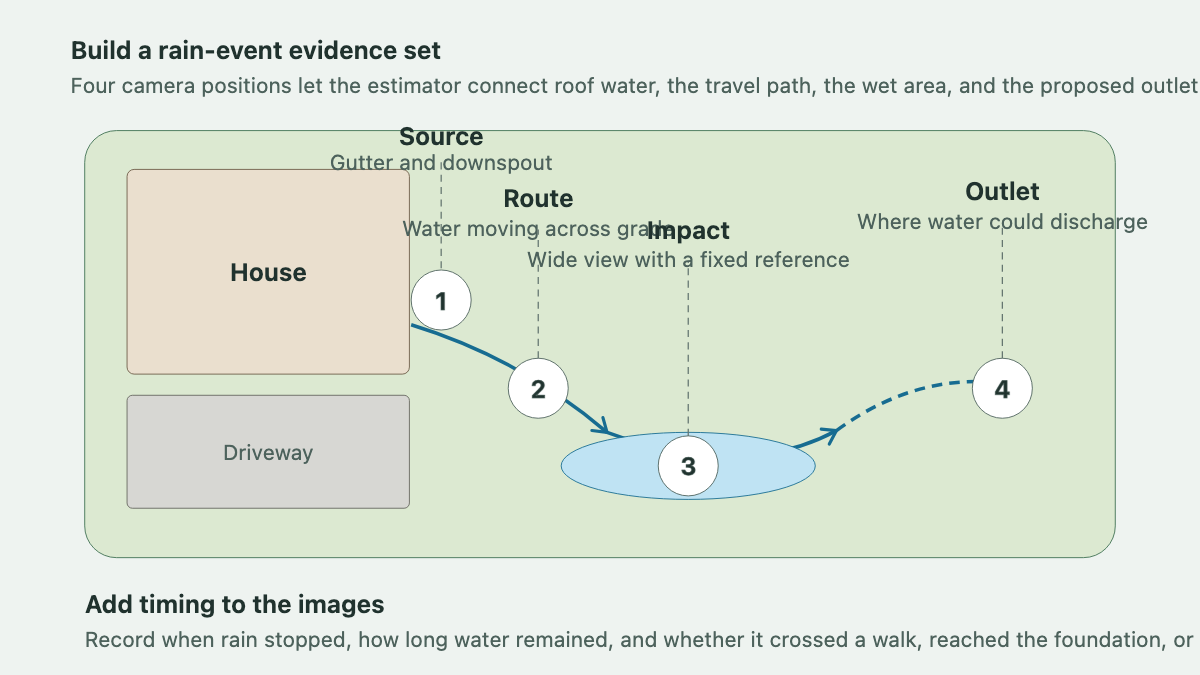
Photos taken after the yard dries still help, especially when they show sediment lines, flattened grass, mulch movement, erosion channels, algae, or soil deposited on a walk. Label every file with the area and approximate time: “north downspout during rain,” “patio edge thirty minutes after rain,” or “low spot next morning.”
Trace the source, route, low point, and outlet
The intake should follow water in physical order. Start high and work downhill.
First, ask about the source. How many downspouts discharge toward the wet area? Do they end above ground, connect to a buried pipe, empty onto a driveway, or disappear into landscaping? Is a sump-pump line visible nearby? Does runoff arrive from a roof valley, patio, walk, or neighboring grade?
The U.S. Environmental Protection Agency notes that downspouts may send water onto paving or into buried sanitary or storm systems. Its guidance also warns that redirection is not suitable everywhere. The receiving area, local rules, and risk of damage all matter. That is why “extend the downspout” is a poor promise during the first call.
Next, document the route. Ask the caller to stand where the water first appears and describe where it travels. Does it run across the lawn, along the foundation, through a gate, beside a retaining wall, or over a walkway? Water that crosses a hard surface creates a different access and safety issue than ponding in an unused lawn corner.
Then locate the low point and the impact. Estimate the area with references the caller can see: “about the width of the patio,” “from the downspout to the first fence post,” or “covering half the side walk.” Record whether water reaches the foundation, crawl-space opening, basement stair, shed, play area, pool deck, septic area, public sidewalk, or neighboring property.
Finally, ask where water could go. The caller may point to a ditch, curb, storm inlet, wooded area, rain garden, or lower part of the lot. Record it as a possible outlet, never an approved one. Property lines, easements, local stormwater rules, soil, elevation, and downstream effects still need review.
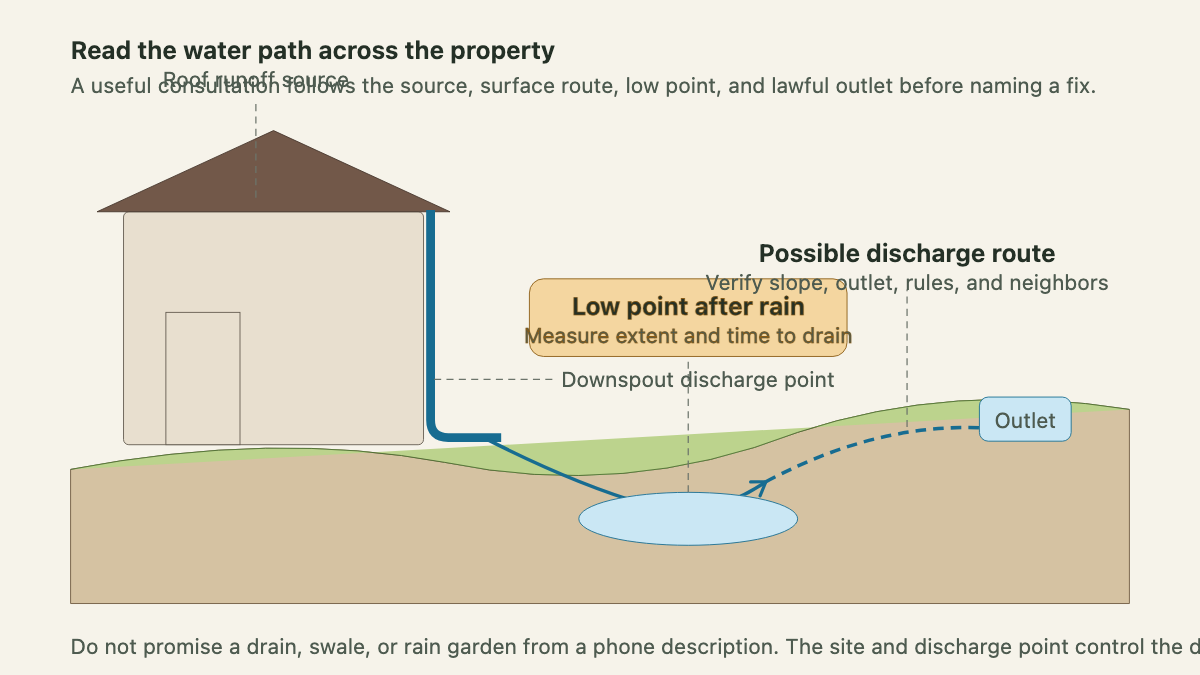
This source-to-outlet record gives the estimator something coherent to inspect. It also exposes gaps. If the caller knows where water collects but cannot see where it begins, the appointment needs investigative time.
Separate urgent damage from a routine estimate
Most standing-water calls can wait for a scheduled site visit. A few should leave the normal estimate queue.
Escalate according to company policy when water is actively entering the home, touching electrical equipment, undermining a wall or paved surface, carrying sewage, or creating a collapse or fall hazard. A landscape office should not diagnose structural movement, electrical danger, sewer failure, or a failed foundation drain over the phone. Route the caller to the appropriate emergency service or trade when the observation falls outside the company's scope.
Use direct intake language: “Is water entering any occupied space right now?” “Is it near an electrical panel, outdoor equipment, or an outlet?” “Does the water smell like sewage or contain waste?” “Has soil washed out beneath a wall, step, driveway, or patio?”
If the caller reports none of those conditions, mark the consultation as routine and keep collecting site details. If an urgent condition is present, stop trying to qualify a future landscaping project and follow the emergency handoff.
A suspected irrigation leak deserves its own lane too. Water that appears during dry weather or immediately after one zone runs may fit an irrigation repair call better than a general drainage consultation. Capture the controller schedule, affected zone, shutoff status, and whether the wet area changes when irrigation is off.
Record the constraints that shape the visit
A drainage estimator needs access to the problem area and enough context to understand the whole site. A narrow gate, locked side yard, steep slope, dog, tenant, or absent decision-maker can derail a visit before grade is ever discussed.
Confirm the service address and which side of the property is affected. Ask whether the estimator can reach every relevant downspout, low area, basement entrance, retaining wall, and possible outlet. Record gates, steps, soft ground, parking limits, pets, and any part of the yard that requires tenant or neighbor access.
Ask who owns the property and who can approve work. For a rental, the tenant may describe the water while the owner controls access and payment. For an HOA property, common areas, drainage easements, or exterior changes may need another party's review. The office can document that requirement without interpreting rules or promising approval.
Property changes belong in the note because they help establish the timeline. Ask about recent grading, sod, planting beds, patios, walkways, driveways, fences, retaining walls, additions, utility work, and neighboring construction. Do not declare that one caused the problem. Write “ponding began after patio installation, per caller,” then let the site reviewer inspect elevations and flow.
If the wet area will be replanted after drainage work, connect the future scope to the sod installation intake guide. Drainage review comes first. New turf will not correct an unresolved concentration of roof or surface water.
Close with a site visit, not a phone prescription
Penn State Extension describes several ways a property may manage stormwater, including downspout redirection, rain barrels, planted areas, rain gardens, and permeable paving. That range is exactly why the call handler should avoid naming a solution too early.
A clean close sounds like this: “I have the rain timing, the downspout locations, the route across the yard, the area that stays wet, and the access notes. The next step is a site consultation so the estimator can review grade, soil, boundaries, and a suitable outlet before discussing options.”
State what the customer should prepare. Ask them to keep the rain-event photos, provide any survey or drainage plan they already have, unlock gates, secure pets, and make sure the decision-maker can attend or be reached. If the company charges a consultation fee, explain the written policy and what the visit includes.
The office should also say what the appointment does not guarantee. The estimator may need elevations, utility location, soil review, municipal information, engineering, or another trade before offering a final scope. A rain garden, for example, is a shallow planted basin that receives runoff and supports infiltration, but its suitability depends on the site. A photograph cannot settle that.
The completed call record should let a crew member find the wet area without phoning the customer for directions. Better yet, it should preserve the water's path even if the sun is out and the lawn looks dry when the truck arrives.