A mowing customer calls on Thursday afternoon: “The mosquitoes are terrible. Can your crew spray when they come tomorrow?” That sounds like a simple add-on. It may involve a rain barrel beside the garage, a fish pond, flowering plants covered with bees, a locked side gate, two dogs in the backyard, and a company license that does not cover pesticide applications.
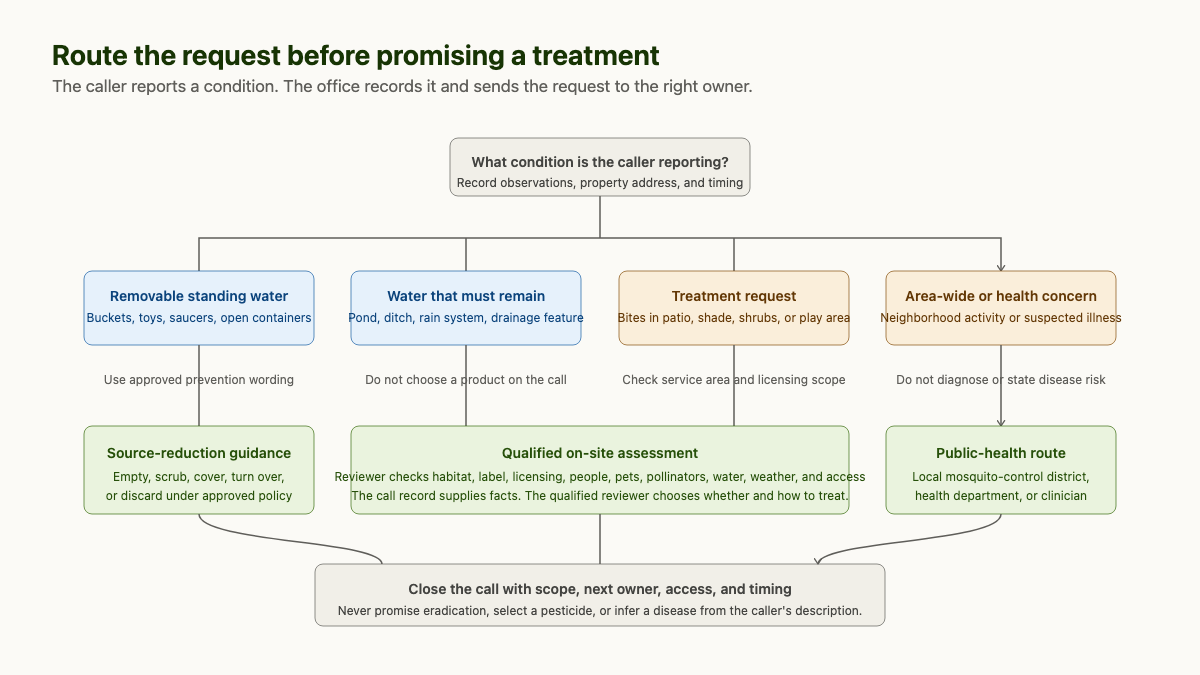
The office needs to settle the service boundary before it offers a date. A useful mosquito-control call records the address, affected parts of the property, when and where bites occur, standing water, shaded vegetation, outdoor activity areas, people and animals, pollinator plantings, water features, access, event timing, and the caller’s requested result. A qualified reviewer then decides whether the company can provide the service and what assessment is required.
Do not promise a mosquito-free yard. Do not choose a product on the phone.
Start with the company’s service boundary
First, confirm whether the company offers mosquito control at that address. A lawn-care business may mow and fertilize the property but use a separate licensed team for pest work. Another may sell the service while a partner performs it. Some offices should route the request elsewhere.
The call script needs a plain opening:
“Are you asking about standing water, mosquitoes in a particular part of the yard, or a professional treatment for the property?”
That answer gives the call a direction. Next, verify whether the caller is the owner, tenant, property manager, or event organizer. Record the service address and the exact outdoor areas involved. A person asking about one patio before a graduation party has a different scheduling need than a manager reporting activity across a twelve-building community.
Company policy should tell the office which property types, service areas, and account relationships qualify. It should also state who reviews pesticide work. Call handlers should never assume that an existing mowing agreement authorizes access to apply a separate treatment.
Ask about timing without turning the date into a guarantee. Is there an outdoor event? When is it? Does the property have restricted entry hours? The reviewer may need weather, label, notice, or reentry information that the office cannot settle during the first call.
Map the water, shade, and outdoor use
“Mosquitoes are everywhere” is common caller language. The work order needs locations.
Ask where people notice bites: the deck at dusk, a shaded play set in the afternoon, the side yard near shrubs, the front porch, or the entire property. Record when the problem began and whether it follows rain, irrigation, or a drainage issue. Do not identify a mosquito species from time of day or appearance. Those details describe the complaint; they do not prove the cause.
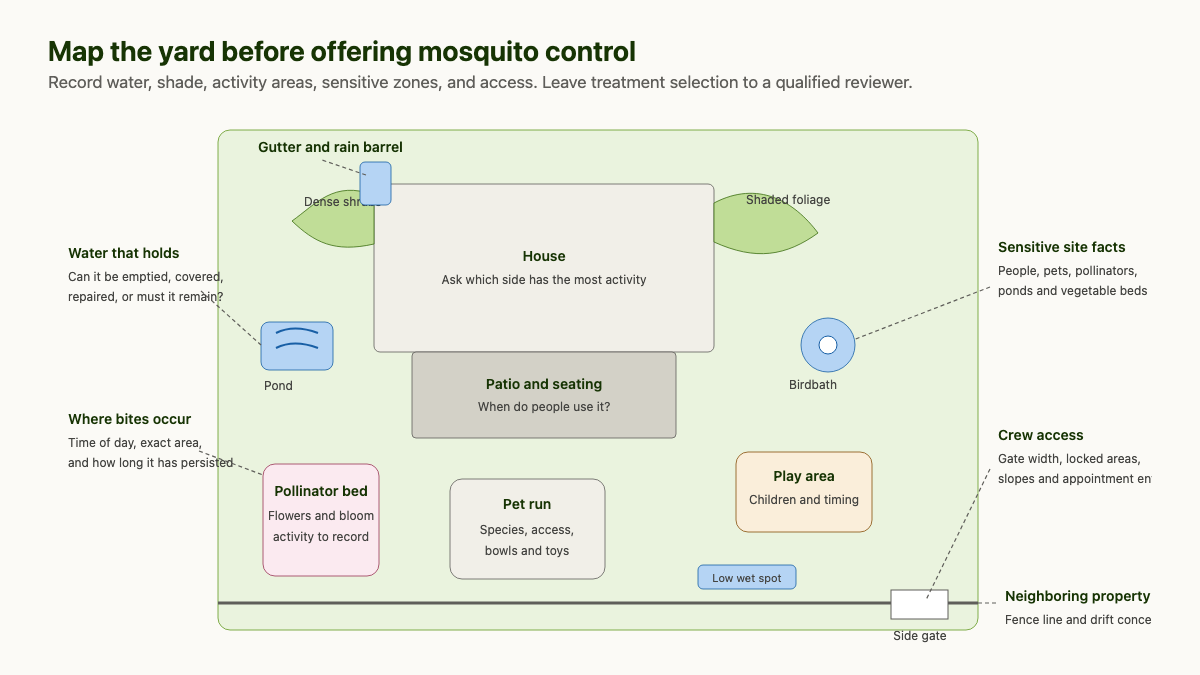
The CDC’s home mosquito-control guidance tells residents to check water-holding items weekly. Its examples include tires, buckets, planters, toys, pools, birdbaths, flowerpot saucers, trash containers, rain barrels, and tree holes. The office can turn that guidance into a location inventory:
- Are gutters holding water? Are there open buckets, tarps, toys, plant saucers, birdbaths, tires, pet bowls, or unused containers outside?
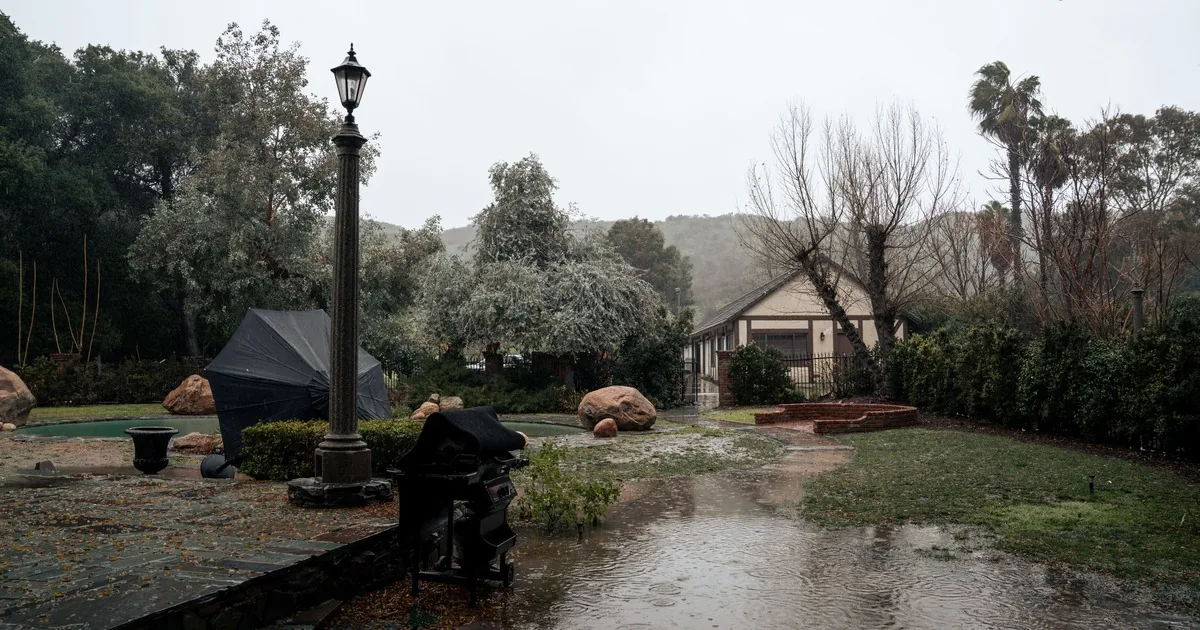
- Does the property have a pond, fountain, pool, drainage ditch, rain garden, cistern, septic feature, or low area that remains wet?
- Are sprinklers leaking, or does one irrigation zone leave water standing? Has recent rain exposed a drainage problem?
- Where are the dense shrubs, shaded ground cover, carport, deck, crawlspace entrance, or furniture where mosquitoes appear to rest?
This is not a homeowner inspection by phone. The caller should not be sent into deep brush, unstable drainage areas, equipment enclosures, or standing water. Ask for ordinary observations and approved photos if the company accepts them.
A standing-water report may also belong in a different workflow. A broken irrigation head goes to irrigation repair. Water against the foundation may require a drainage assessment. The landscape drainage call guide and irrigation repair intake guide help separate those scopes.
Record every sensitive site condition
The reviewer needs to know who and what uses the yard. Ask whether children, older adults, customers, tenants, or workers will be present. Record dogs, cats, poultry, livestock, beehives, fish ponds, bird enclosures, and other animals. Note vegetable beds, fruit trees, flowering borders, pollinator gardens, water used for irrigation, and any well or water-storage feature the caller mentions.
These facts do not tell the office which product is safe. They tell the qualified reviewer which labels, restrictions, and company procedures need attention.
That distinction matters around water. EPA’s Bti guidance explains that Bti products target mosquito larvae in standing water, but individual products can have different allowed uses. Some labels may permit uses that others do not. “We use a natural product” is not an adequate answer to a caller asking about a pond, pets, drinking water, or pollinators. The label and the company’s qualified reviewer control the answer.
Access belongs in the same record. Ask about gate width, locks, steep slopes, retaining walls, dense vegetation, waterlogged ground, aggressive animals, construction, and neighboring-property boundaries. Note where a vehicle can park and who must provide entry. If the service requires an adult contact, notice to tenants, or a cleared yard, say what company policy actually requires.
Separate the requested result from the treatment promise
Callers often ask for a specific method: “Can you fog the bushes?” “Do you put something in the pond?” “Can you spray before Saturday?” The office should capture the request verbatim and avoid confirming the method.
A sound response is simple: “I’ll record that request and the site details for our qualified reviewer. They will confirm whether the property fits our service and what the label allows.”
EPA describes mosquito control as an integrated approach. Habitat removal, monitoring, larval control, adult control, structural barriers, and resident action may each have a role. Scattered breeding locations can be hard to find or remove. That is why a single phone call cannot support a promise that one application will eliminate every mosquito.
The requested outcome still matters. Ask whether the caller wants an ongoing seasonal service, an assessment for persistent activity, or help before an outdoor event. Find out whether another provider has treated the property and whether the customer has an existing pest-control agreement. Do not ask for chemical mixing details. Product names and service dates may be useful for the reviewer if the caller has the paperwork.
Route health and area-wide concerns correctly
A lawn-care office can discuss its services. It should not tell a caller that a bite came from a mosquito, identify an illness, or estimate disease risk at the address.
If someone reports fever, rash, severe symptoms, an allergic reaction, or another medical concern, direct the person to a clinician or emergency service under company policy. If the caller reports unusual mosquito activity across a neighborhood, a large unmanaged water source, or a public-space concern, the appropriate contact may be the local mosquito-control district or health department.
Keep that handoff factual. Record what the caller said, the location, and the time. Avoid labels such as “outbreak” unless a public-health authority has used them.
Build a crew-ready add-on record
A complete intake should let the next person understand the site without replaying the call. The record should contain:
- Customer name, service address, authority to request work, account status, and best callback method.
- Affected yard zones, when activity occurs, when it began, and whether rain or irrigation changed it.
- Water-holding containers, permanent water, drainage features, leaks, shaded vegetation, and outdoor resting areas reported by the caller.
- Children, pets, livestock, beehives, pollinator beds, food gardens, ponds, pools, wells, and water-storage features.
- Gate, lock, slope, parking, boundary, tenant-notice, and animal-access details.
- Requested outcome, event date, prior service, existing pest provider, and any photos or documents received.
- The next owner: approved prevention guidance, irrigation or drainage team, qualified mosquito-service reviewer, partner provider, or public-health contact.
Read the high-risk details back before ending the call: address, event date, pond, beehive, dogs, locked gate, and promised next step. Say who will review the request and when the customer should expect a response under the company’s real policy.
An AI receptionist can collect the same fields after hours and route the record to the right owner. The script still needs the same boundaries. It should never improvise pesticide advice, health guidance, or treatment promises.
The best mosquito add-on record is a map of the property and a named handoff. When the reviewer opens it, the rain barrel, shaded patio, pollinator bed, dogs, Saturday event, and locked gate should already be there.