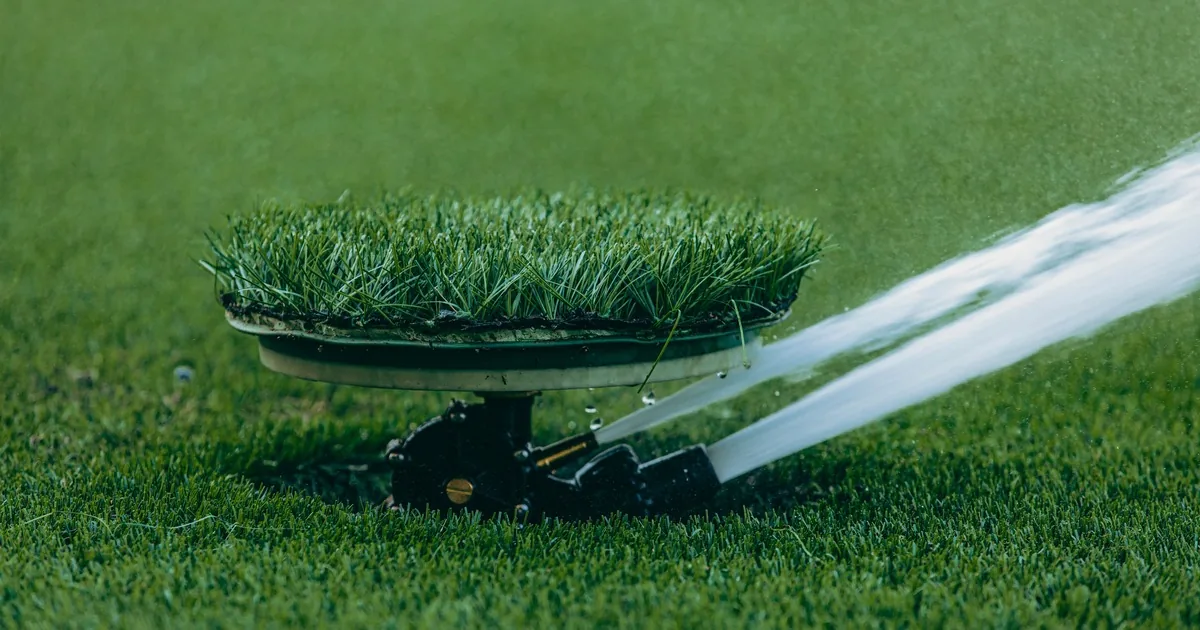
A homeowner calls at 7:10 a.m. and says, “The sprinklers are broken.” One zone may be dry. Every zone may be dead. A valve may still be feeding water into a low spot beside the driveway. Those calls need different responses, yet the opening sentence sounds the same.
The office should collect observations, not diagnose a failed part. Ask whether water is still running, whether the problem affects one zone or the whole system, what the controller shows, where water appears, and whether the flow stops after the zone is turned off. That short record gives the technician a useful starting point without sending a caller into an energized controller or pressurized valve box.
Control active water before routine intake
Begin with the condition on the property right now. Ask, “Is water running where it should not be, and is it causing flooding, erosion, or damage?”
If water is spraying against a building, crossing a sidewalk, flooding a valve box, or pooling rapidly, use the company’s urgent-water procedure. Ask the caller to move people away from slippery pavement and keep children and pets clear. Do not ask anyone to remove a controller cover, reach into standing water, open a valve box, turn exposed wiring, or dig for a buried line.
Your company may have an approved irrigation shutoff instruction for systems it services. Use the exact policy and location notes on the customer record. Irrigation layouts vary, and the front desk should not improvise a universal valve location. When the caller cannot safely identify the correct control, escalate the call to a technician or the property’s water provider under local procedure.
A damp patch can follow recent watering. Continuous bubbling, a growing pool while the system is idle, or water that continues after a zone should have stopped deserves faster routing. EPA WaterSense notes that pooling between irrigation cycles can signal an underground leak. It also advises checking whether valves close completely because an incomplete closure can allow slow seepage while the system is off.
Record the time the flow was noticed, whether it changes when the irrigation program stops, and whether the house has normal water service. Those three facts help separate an irrigation complaint from a broader property-water problem.
Run one safe zone test when conditions allow
A controlled zone test is the fastest way to turn “broken sprinklers” into a useful service note. Skip it when active water, electrical concerns, freezing conditions, unsafe footing, or the company’s policy makes testing inappropriate.
Ask the caller to use the ordinary manual-run control without opening the controller cabinet. Run one zone at a time for long enough to observe startup and spray. The caller can stay on a dry walkway and describe what is visible. No one needs to touch a head while it is operating.
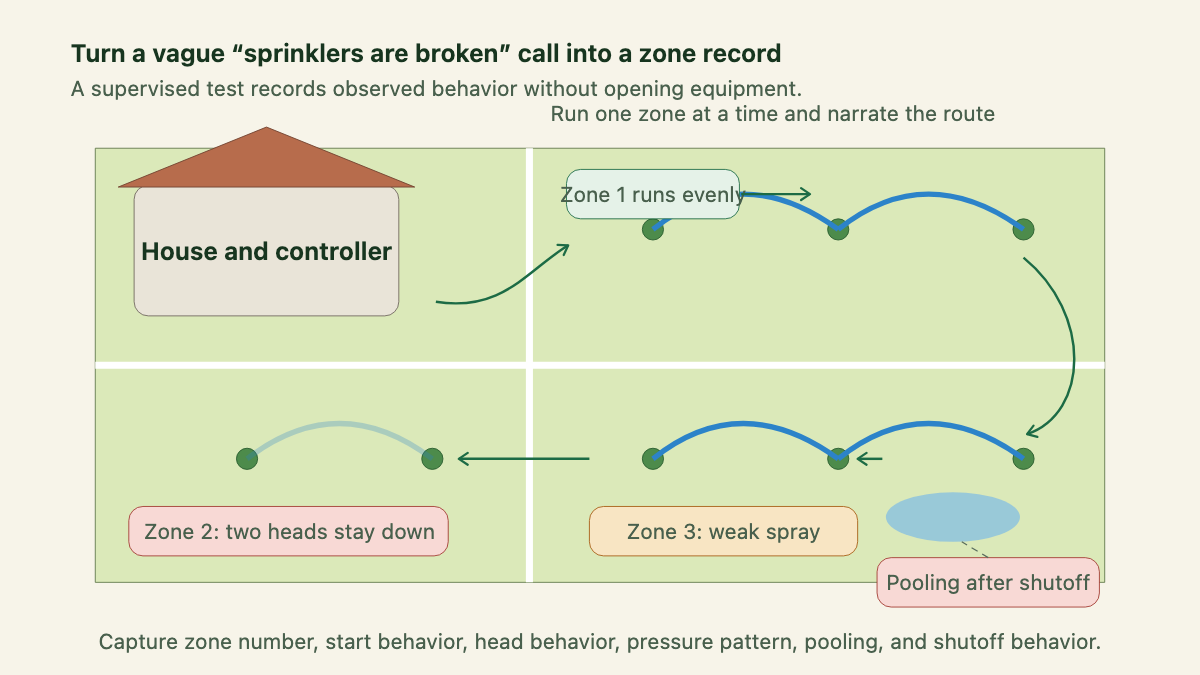
For each zone, capture:
- The zone number or label and the area it serves, such as front lawn, side beds, or backyard rotors.
- Whether the zone starts at all, starts late, runs briefly, or stays on after the stop command.
- Which heads rise, stay down, spray weakly, mist, leak at the base, or send water onto pavement and walls.
- Whether the whole zone looks weak or the problem is limited to one head or one section.
- Where water pools, bubbles from the soil, or drains after shutoff, plus a nearby fixed landmark.
- Any recent digging, fence work, planting, utility work, freeze event, power outage, controller replacement, or landscaping change.
University of Minnesota Extension uses the same basic observation pattern in its home irrigation audit guidance: run each zone and look for broken sprinklers, low pressure, and water landing where it is not intended. A repair intake does not need the audit’s catch-can measurements. It needs the zone-by-zone discipline.
Photos and a short video can help when the company has a secure submission method. Ask for a wide view that identifies the area and a closer view of the symptom. A close photo of wet soil without the house, walkway, or zone landmark is hard to match to a buried branch later.
Capture the controller record without troubleshooting it by phone
“Controller problem” may mean a blank display, a watering schedule that changed, one station that will not run, a fault message, a disconnected rain sensor, or an app that lost its connection. Write down what the caller sees before anyone resets the device.
Ask for the brand, model, power status, exact display text, station or zone number involved, and whether manual operation behaves differently from the normal schedule. Record any recent outage, electrical work, Wi-Fi change, battery replacement, seasonal startup, or programming change. If the system uses an app, note the app name and the message shown. Do not ask for passwords or account recovery codes.
Rain Bird publishes separate troubleshooting guides for controllers and valves, with controller documents divided by product family. That is a good reason to capture the model plate and exact error text. “Rain Bird box in the garage” is too broad. A clear photo of the closed controller and its display is better.
Preserve the original state. A factory reset can erase schedule and station information that helps the technician understand the complaint. The office should follow the manufacturer’s documented steps only when the company has made those steps part of its support policy. Otherwise, record the state and book the visit.
Follow the physical path of one zone
An irrigation zone is a chain: controller output, field wiring, valve, lateral pipe, and sprinkler or drip devices. The same symptom can arise at different points, so the call note should identify the part of the chain the caller can actually observe.
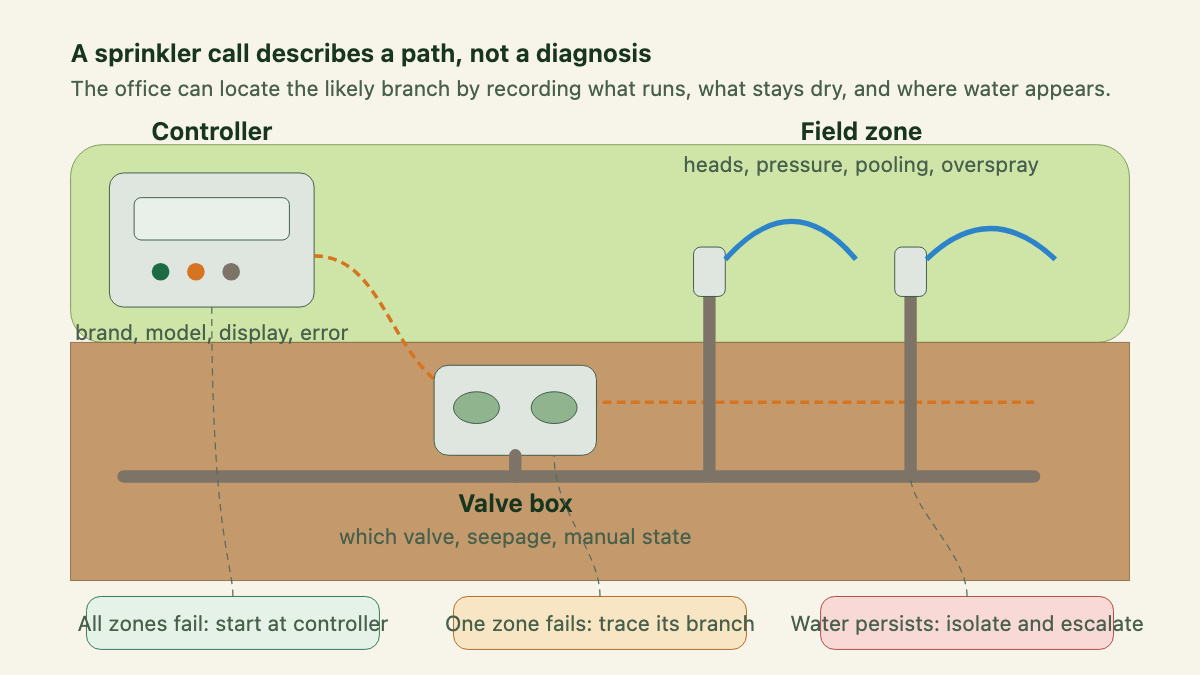
When every zone fails, collect controller power, display, schedule, sensor, water-supply, and recent-change information. When one zone fails but others run, identify that zone and its field symptoms. When one head misbehaves, mark its location and describe spray, rise, tilt, breakage, and nearby pooling. These are routing clues, not proof of a specific component failure.
EPA WaterSense separates several useful observations. Missing or broken heads can cause overflow. Heads that do not rise fully or sit tilted may spray the wrong area. Leaks can occur where sprinklers join piping. Pooling while the system is off can point toward an underground leak, and valves that do not close can allow water to seep. Misting may be associated with high pressure. Keep each observation separate in the record.
Avoid turning a symptom into a parts promise. “Zone 4 stays dry while Zones 3 and 5 run” is reliable. “Zone 4 needs a solenoid” is a diagnosis the caller cannot establish. The technician may find a programming issue, wiring fault, valve problem, closed flow control, supply restriction, damaged lateral, or another cause after testing.
Drip zones need their own language. Ask whether the caller sees a filter, pressure regulator, valve box, exposed tubing, disconnected emitter, or wet line. Record the planted area and the location of visible damage. Do not tell the caller to pull tubing apart or adjust a regulator during the intake.
Add access and site facts before offering a firm slot
The repair may sit behind a locked gate, under a parked vehicle, inside a tenant’s yard, or beside a dog that cannot remain outdoors. Ask where the controller and backflow equipment are located, how the technician reaches each affected zone, and whether an adult with access will be present.
Note gate codes under the company’s secure process, parking limits, steep or muddy ground, construction activity, and any known private lines or landscape lighting near recent digging. If the property belongs to an HOA, landlord, or commercial manager, identify who can authorize diagnosis and additional work. A tenant who can open the yard may not be able to approve a valve replacement.
Ask whether the system is municipal-water, well, reclaimed-water, or pump supplied if the caller knows. Record the answer as reported. The technician still confirms the actual supply and safe isolation method onsite.
The landscape design consultation guide covers surveys, grades, drainage, existing features, and access for larger projects. A repair call needs a narrower version of that site record, tied to the affected zone.
Read back a work order the technician can test
Finish with a note another person can follow:
“Residential irrigation repair at 18 Sample Oak Lane. Caller reports active pooling beside the east driveway edge after Zone 3 stops. Water is not entering the house or street. Zones 1, 2, and 4 start normally. Zone 3 starts from manual control, has weak spray across all four visible heads, and water continues bubbling near the second head for at least five minutes after shutoff. Controller is a Rain Bird ESP-TM2; display is on and shows no error. Symptom began after fence work along the east property line on Tuesday. Photos and a 20-second video are attached. Controller is in the garage, valve boxes are in the backyard, and access is through a locked side gate. Homeowner will be present. Do not diagnose the failed part from the call note.”
That readback makes open questions obvious. It also lets the caller correct the zone, landmark, timing, or access detail before a truck rolls.
An AI receptionist can collect the same fields after hours and route active-water conditions according to the company’s written policy. The script still needs the same restraint as a trained office coordinator: document what happened, preserve the equipment state, and leave the diagnosis to onsite testing.
The best repair note gives the technician a place to begin and the customer a clear next step. “Sprinklers broken” becomes Zone 3, east driveway, weak spray, persistent pooling, controller model recorded, safe access confirmed.
Sources
- U.S. EPA WaterSense: Sprinkler Spruce-Up
- University of Minnesota Extension: Auditing home lawn irrigation systems
- Rain Bird: Controller and Valve Troubleshooting Guides