A homeowner calls in late summer and asks for “the aeration and seed package.” The address fits the route, so the office offers Friday. Then the crew arrives to find a 36-inch gate, six unmarked sprinkler heads, a buried dog fence, dry clay soil, and a backyard full of toys. The machine stays on the trailer while somebody calls the customer.
A useful booking call confirms eight things before a slot is assigned: grass type and local timing, the condition the customer wants addressed, lawn area, machine access, shallow obstacles, soil moisture, recent lawn treatments, and who will manage watering after seed is applied. Those answers will not diagnose the lawn. They give the crew a workable property and give the customer a clear preparation plan.
Book the lawn, not a generic service
“Aeration and overseeding” can describe several different jobs. One caller has compacted turf beside a driveway. Another has scattered bare patches after summer stress. A third expects seed to replace a lawn dominated by weeds. The office should identify the request without promising that the service will solve every condition.
Start with the property and the turf. Ask which areas need service, whether they are front, side, or rear lawns, and whether narrow strips or fenced sections are included. Record an estimated lawn area under company policy, then note how the caller obtained it. A tax-lot number includes the house and hardscape. A customer’s guess may omit a side yard. Photos help, but final service area may still need company confirmation.
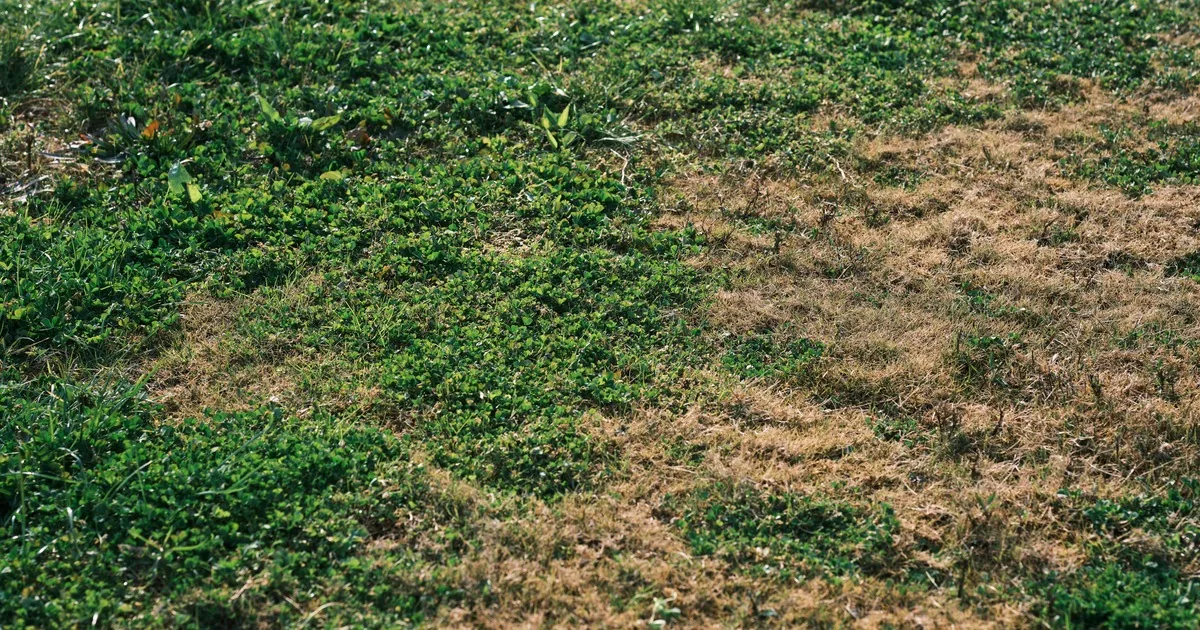
Ask what the customer sees: thin turf, bare spots, hard ground, pooling after rain, heavy foot traffic, pet paths, or a thick layer of dead material near the soil surface. Keep the wording observational. Brown turf may be dormant, diseased, drought-stressed, or dead, and a call handler cannot settle that from a sentence.
If the customer is asking to remove the existing lawn and start over, route the request toward a new sod or full lawn-establishment estimate. Aeration and overseeding usually assume that an established lawn remains.
Make timing local to the grass
The strongest scheduling rule is local: book the work while the turf can recover and the chosen seed can establish. Do not train the office on one national date range.
Iowa State University Extension identifies September and April as useful aeration periods for Kentucky bluegrass and other cool-season lawns in Iowa. Its overseeding guidance favors late summer into early fall for renovating thin cool-season turf. University of Illinois Extension also points to fall for aeration and overseeding in its region. These are regional examples, not a script for every service area.
Your office needs a company-approved calendar by grass type and market. Capture the address or ZIP code, known grass type, sun exposure, irrigation availability, and the customer’s requested timing. Flag uncertainty for review. Warm-season lawns, mixed lawns, shaded fescue, and a cool-season lawn under drought restrictions may belong on different schedules.
Also ask why the date matters. A wedding next weekend, a property closing, or a backyard party changes expectations because core aeration leaves plugs on the surface and new seed needs protection and moisture. The work can be done correctly while still being a poor fit for the customer’s event calendar.
Prepare the machine route before arrival
A core aerator is heavier and less forgiving than a mower. Hollow tines enter the ground and remove plugs. Iowa State and Illinois Extension distinguish core aeration from spike devices that punch holes without removing soil.
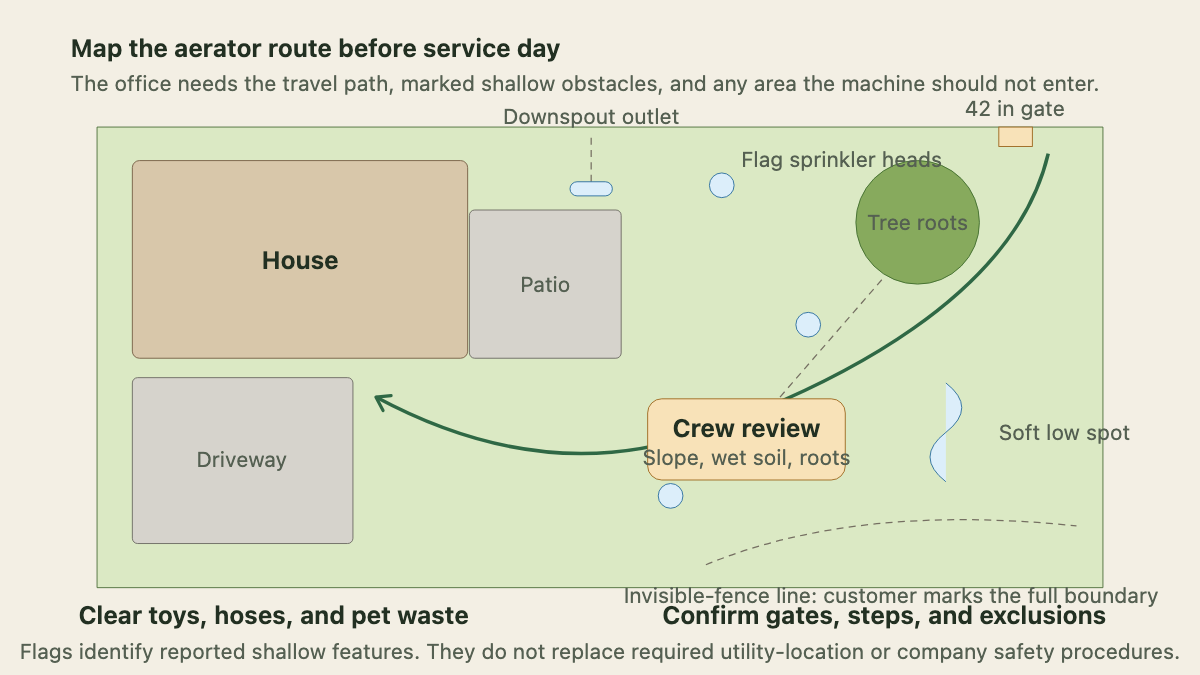
The office should document how the machine reaches every service area. Ask for the narrowest gate opening along the route. Record steps, retaining walls, steep banks, tight turns, soft ground, landscape edging, low branches, and any section separated by a fence. A wide front gate does not help when the backyard route passes through a narrower side gate.
Then name the shallow features that need to be marked under company policy:
- sprinkler heads, valve boxes, and drip components
- invisible-fence lines and landscape-lighting cable
- drain outlets, cleanouts, and shallow pipes reported by the customer
- septic lids or components within the lawn
- newly planted trees, exposed roots, and delicate edging
- temporary irrigation hoses and robotic-mower boundary wire
The customer’s markings do not replace required utility-location procedures or the company’s safety rules. They tell the crew where reported property features sit. If the caller cannot identify the irrigation heads or fence line, create a review step instead of assuming the crew can discover everything while operating the machine.
Set a clear soil-moisture plan
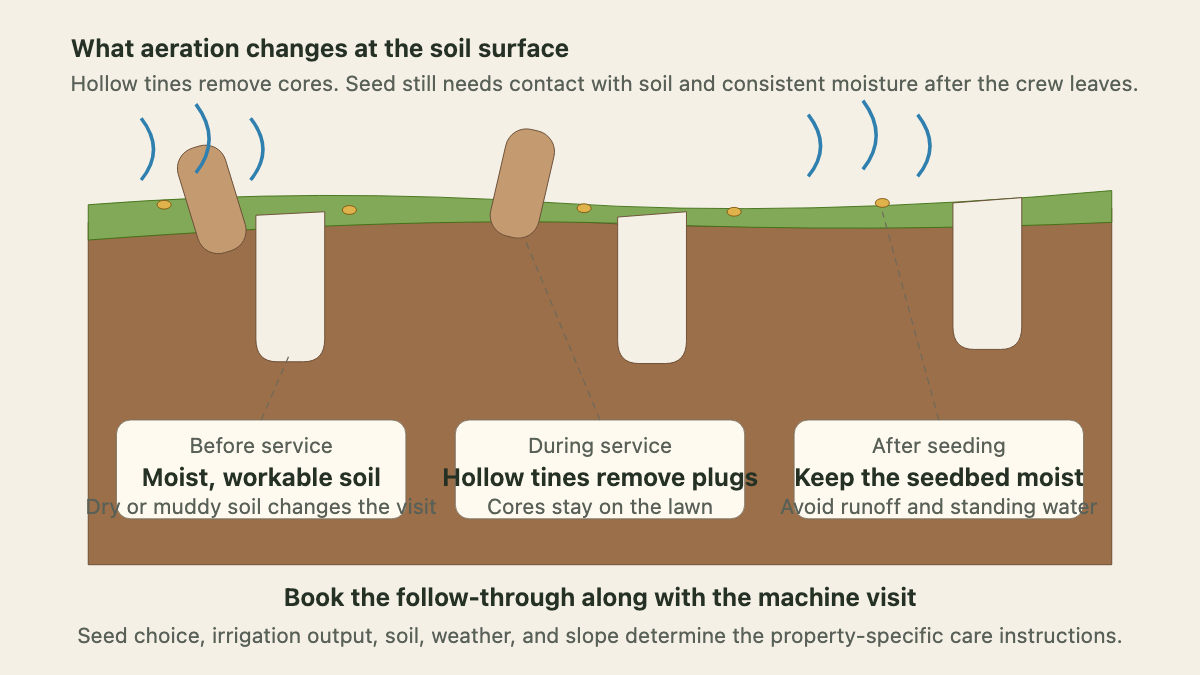
Core aeration needs workable soil. Illinois Extension says aeration is easiest when soil is moist from rainfall or irrigation, but overly wet soil creates problems. Iowa State explains the two failure modes plainly: tines struggle to penetrate dry soil and may plug when soil is wet.
That gives the office a useful question: “If you push a screwdriver into the lawn today, does the soil feel hard and dry, moist, or muddy?” This is a preparation observation, not a technical test result. Follow with recent rainfall, irrigation availability, drainage trouble, and whether the lawn stays soft in any low area.
Use the company’s local preparation policy for watering before service. Avoid inventing a runtime on the phone. Ten minutes on a high-output spray zone can deliver a different amount than ten minutes through a weak rotor system, and clay holds water differently from sandy soil. Weather matters too.
The confirmation should explain what happens after heavy rain or a missed preparation window. State who decides whether conditions are workable, how a weather delay is communicated, and whether the crew can complete part of a property while leaving a wet section untouched.
Mowing belongs in the same confirmation. Iowa State’s overseeding guidance recommends reducing competition from existing turf and creating seed-to-soil contact. Your company should provide its own mowing-height and clipping instructions for the local grass and equipment. Ask whether mowing is included, expected before arrival, or handled by another provider. Remove leaves, toys, hoses, pet waste, and loose debris from the service area.
Confirm the seed and treatment history
“Throw down seed” is not a complete scope. Ask whether overseeding is included with aeration, which areas receive seed, and whether the company supplies the seed. If the customer has already bought a bag, record the label and route it for review. Do not promise that customer-supplied seed suits the grass, shade, climate, or service method.
Recent lawn treatments can affect scheduling and aftercare. Capture the date and product name for herbicides, fertilizers, pre-emergents, fungicides, or other applications when known. The call handler should not interpret a label or give pesticide advice. A qualified reviewer can compare the treatment record with the seed and company policy.
Set expectations for bare areas as well. Overseeding an established lawn and establishing turf on exposed soil may require different seed rates, surface preparation, or follow-up. Large dead sections, erosion, standing water, severe thatch, or suspected disease deserve review before the office sells a standard package.
Book the aftercare with the visit
The machine visit may last hours. Establishment lasts longer. Before booking overseeding, identify the person responsible for watering and confirm that water can reach every seeded area.
Iowa State recommends frequent, light water applications to keep the seedbed moist after overseeding. Illinois Extension also stresses regular watering during germination. Neither source creates one universal schedule for every property. The company’s instructions should account for seed, soil, weather, shade, slope, irrigation output, and local restrictions.
Ask whether the property has an irrigation system, hose bibs, portable sprinklers, or a caretaker who can move equipment. Note broken zones and dry corners. For a rental or vacant property, write down the responsible person by name. “The tenant can probably water” is not enough to schedule seed confidently.
The confirmation should cover first watering, foot and pet traffic, when to resume mowing, what happens to the soil plugs, and how the customer receives care instructions. State when the customer should call back about washout, standing water, missed irrigation, or a service-area problem. Avoid promising a germination date or a perfect stand of grass.
Read back a crew-ready record
A strong note sounds like this:
“Front and fenced rear lawn, customer estimate 6,400 square feet. Cool-season turf with thin areas near driveway and dog path. Rear access through a 42-inch gate, no steps. Six irrigation heads and invisible-fence perimeter to be flagged before arrival. Downspout outlet at northwest corner. Soil currently dry; customer will follow the company’s pre-service moisture instructions and confirm after Wednesday’s forecast. Overseeding included with company-supplied seed. Lawn treatment applied five weeks ago; customer will send product photo for review. Owner will handle watering with irrigation plus one portable sprinkler for the side strip.”
Then read back the preparation deadline, arrival window, weather policy, included areas, seed scope, and review items. If the treatment label or gate width still needs approval, keep the appointment provisional according to company policy.
This same intake can be handled by trained office staff or an AI receptionist after hours. The tool matters less than the record. On service morning, the crew should know which gate opens, where the sprinkler flags begin, who owns the watering, and why one soft corner may need to be left alone.