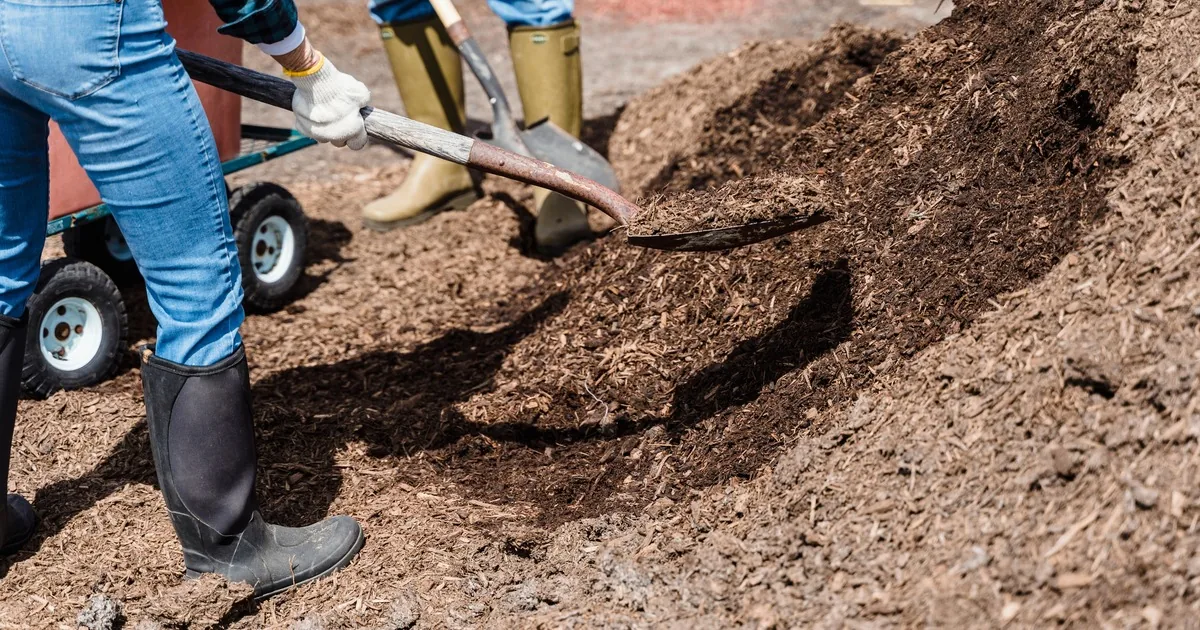
A homeowner calls and says, “I need six yards of brown mulch next Friday.” That sounds ready to book. Then the details arrive: the old mulch may already be four inches deep, the only backyard gate is narrow, the driveway slopes toward the garage, and the caller expects the crew to weed, edge, deliver, and spread everything before a weekend party.
The office needs to slow the booking down. Confirm whether the request is delivery-only or installed work, identify the material, document the beds and current conditions, then trace the load from the truck to every work area. A cubic-yard figure without that context is a lead, not a finished scope.
Separate delivery, preparation, and installation
Start by asking what the caller means by “mulch service.” The company might deliver bulk material and leave it in one approved location. It might supply and spread the material. Some jobs also include weeding, removing old mulch, redefining bed edges, moving ornaments, or pruning plants for access. Each task changes the visit.
Ask who supplies the mulch. If the customer already purchased bags or arranged a separate bulk delivery, record the product name, quantity, location, and delivery date. If your company supplies it, capture the requested material and color without treating a phone description as a final match. “Dark brown” can refer to dyed wood, hardwood bark, or another product carried by the local supplier.
The first intake should settle these scope questions:
- Is this delivery-only, installation-only, or material plus installation?
- Which beds, tree rings, paths, or play areas are included?
- Does the customer expect weeding, edging, old-material removal, or cleanup?
- Is mulch already on the beds, and roughly how deep is it now?
- Who can approve a material sample, quantity change, or added preparation?
- Are pets, gates, irrigation heads, low-voltage lights, or decorations in the work area?
That record gives the estimator something usable. It also keeps the driver from arriving with a bulk load while the homeowner expects a full bed renovation.
Build the quantity from area, depth, and existing material
A caller’s yard count may come from last year’s invoice, an online calculator, or a guess based on the size of the pile next door. Ask how it was calculated.
For a preliminary quantity, the office needs the area of each bed and the intended added depth. Rectangular beds are straightforward. Curved beds can be broken into smaller shapes or reviewed from a marked photo. Tree rings need an outside diameter and an allowance for the trunk opening. Long borders should be measured section by section when the width changes.
The arithmetic is simple once the inputs are sound. Multiply square feet by depth in feet to get cubic feet, then divide by 27 for cubic yards. Mississippi State University Extension uses that method and notes that bulk mulch is sold by cubic-yard volume. Its material table also shows why the requested product matters: bark, compost, wood chips, leaves, stone, and other coverings have different application ranges and behavior.
Existing depth is the input callers often miss. A bed with a thin, decomposed layer may need a top-up. A bed already holding a deep layer may need redistribution or removal before more material is added. Reception should record what the caller sees and request photos through the company’s normal channel. The estimator decides the treatment.
University of Minnesota Extension gives a general application range of 2 to 4 inches and advises keeping mulch clear of plant stems and tree trunks. That guidance supports two useful intake questions: “How deep is the material now?” and “Is it touching any trunks or stems?” It does not turn the office into a remote horticultural inspector. Planting type, material, drainage, and local conditions still matter.
Trace the load from the truck to every bed
The delivery point is part of the job. Ask the caller to identify a private, firm, approved surface that the driver can reach under the company’s rules. Record driveway width, slope, overhead branches, wires, soft shoulders, parked vehicles, drainage grates, and any surface the customer wants protected. Never promise that a truck can enter a backyard or cross a lawn based on a casual description.
Public space deserves a direct check. A caller may say, “Just put it by the curb,” while pointing to a sidewalk or street. Company policy and local rules decide what is allowed. The City of Long Beach mulch program offers a concrete example: its program allows several locations within property boundaries but bars placement on sidewalks, public walkways, and roads. It also requires the owner to be present for backyard access. Other cities and providers use different rules, so intake should confirm the exact address and approved placement.
Installation adds a second route. The crew may have to push wheelbarrows through a side gate, around air-conditioning equipment, over pavers, down steps, and across a sloped lawn. Ask for the narrowest gate opening, the number of steps, the approximate distance from the proposed pile to the farthest bed, and the surfaces along the way. Note locked gates and access codes according to company policy.
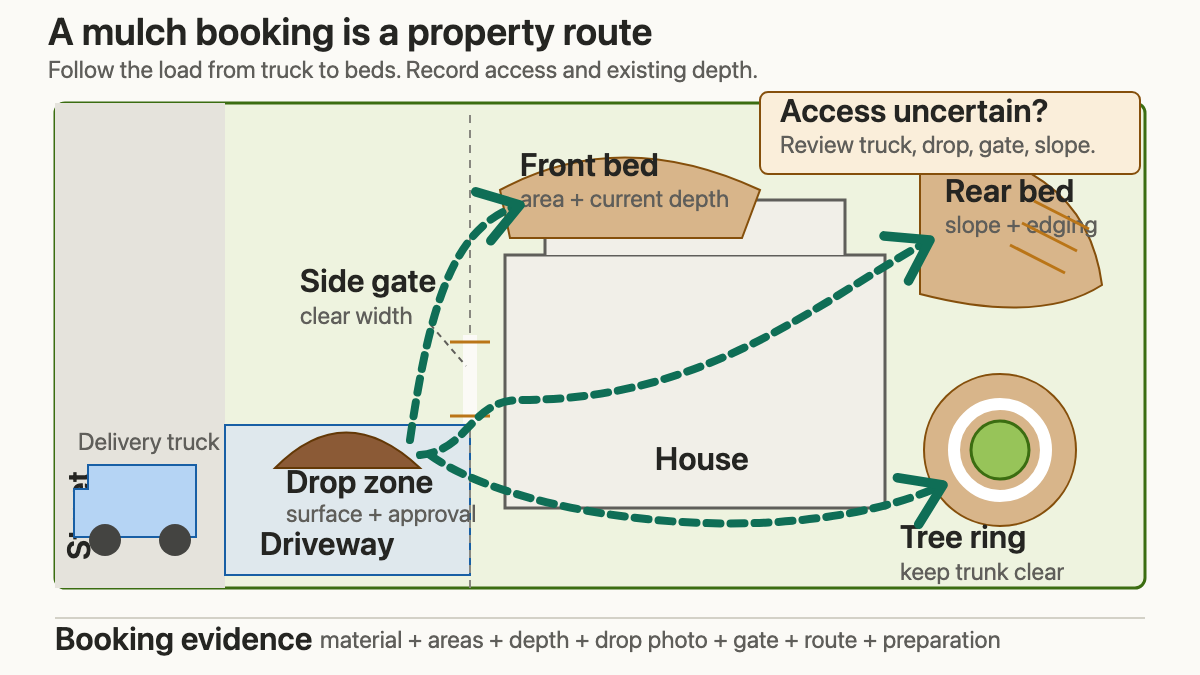
This route review belongs in the same record as the bed measurements. A small front bed ten feet from the driveway is a different installation from the same square footage behind a narrow gate and up a terrace.
Ask what must happen before the crew arrives
Preparation should have an owner. If the customer will move furniture, toys, hoses, planters, or vehicles, record that expectation in the confirmation. If your crew handles those items, put them in scope. Mark irrigation heads, shallow wires, landscape lighting, invisible-fence lines, drain outlets, and delicate plants when the caller knows their locations.
Ask whether weeds are present and whether the customer expects removal or treatment. Do not let “ready for mulch” hide a bed full of tall weeds, volunteer trees, construction debris, or landscape fabric that has surfaced. Photos can expose the mismatch before route planning is locked.
Drainage concerns need care. Mulch does not correct standing water, a downspout discharge problem, or runoff aimed at a foundation. Route those callers to a site review and, when useful, the guide to landscape drainage consultation calls. If the project includes new turf beside the beds, use a separate sod installation intake for the lawn portion.
Use clear outcomes at the end of the call
Every call should end in one of a few honest states. A simple repeat customer order with a verified product, known quantity, approved drop zone, and familiar access may be ready for scheduling. An installation with good measurements and current photos may be ready for estimator review. Unknown depth, uncertain truck access, a steep route, extensive preparation, or a material-selection question may require a site visit.
Say which one applies. “I have the front and rear beds, your existing mulch depth, the driveway drop location, and the 42-inch side gate in the request. Our estimator will review the photos and confirm the quantity and scope before we offer a date.” That sentence sets a real next step without pretending the intake record is the final field decision.
For broader projects, connect the mulch request to the existing landscape design consultation intake. Beds being reshaped, plants being moved, drainage being changed, or hardscape being added deserve one coordinated scope.
An AI receptionist can collect the same material, measurement, access, and preparation fields after hours, then send the record to the office for review. The standard should remain the same: the truck has an approved place to unload, the crew has a documented route, and the beds have enough evidence for someone qualified to make the call.