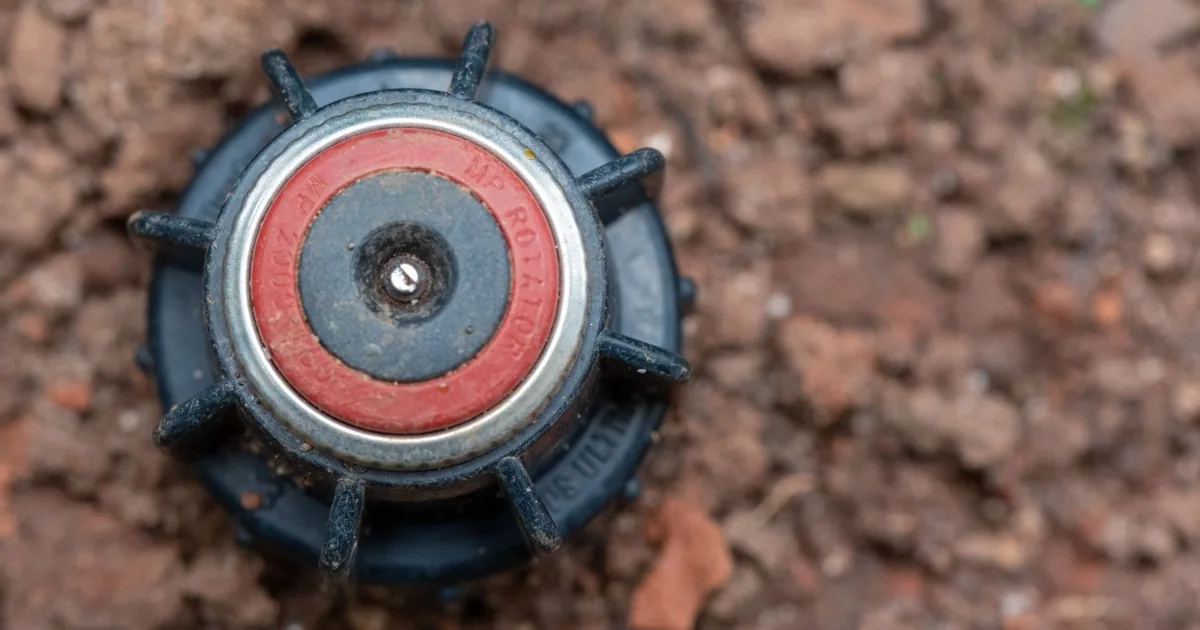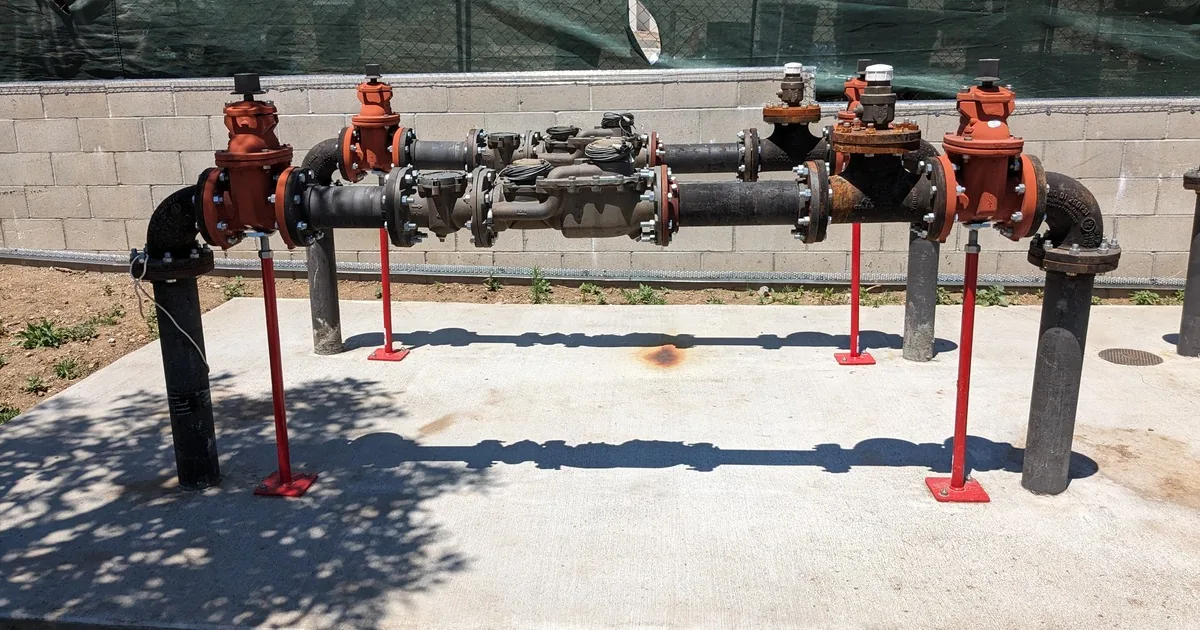
A homeowner calls with a city letter in one hand and a photo of a dripping valve in the other. She says the “sprinkler backflow thing” needs service by Friday. The office still does not know whether she needs an annual test, repair after a failed test, an urgent response to active water, or ordinary irrigation work somewhere downstream.
Start by classifying the request. Capture the water provider, notice language, due date, assembly record or tag, property address, visible symptom, irrigation status, recent freeze or impact, access, and the caller’s authority. Then route the job under the local tester, permit, and reporting rules. Reception should preserve what the caller sees without diagnosing the assembly or promising that a repair will produce a passing result.
Classify the call before discussing the calendar
Ask what prompted the call. A mailed testing notice belongs in one lane. A report that the assembly failed a field test belongs in another. Active discharge, a split body after a freeze, startup trouble, and a dry landscape zone are separate service events even when the caller uses the word “backflow” for all of them.
A clean first question is: “Are you calling about a test notice, a failed test, water coming from the assembly, visible damage, or an irrigation system that will not run?” Record the caller’s answer verbatim. Do not force the symptom into a parts diagnosis.
When water is actively spraying, flowing toward the building, crossing a walkway, or washing out soil, use the company’s urgent-water policy. Keep people away from slippery ground and damaged equipment. A call taker should not direct a customer to disassemble the unit, operate unfamiliar valves, open test cocks, or improvise a shutoff sequence. Assembly types and installations differ, and a wrong instruction can interrupt water service or create more damage.
If the complaint is a dead zone, controller fault, broken head, or buried-line leak with no assembly symptom, move it to the broader irrigation repair intake. That keeps a field tester from arriving for a controller problem and keeps a sprinkler technician from inheriting a compliance notice outside the assigned scope.
Capture the notice and the local authority
Ask the caller to read the water provider’s name, notice date, due date, assembly number, service address, and requested action. Request a clear image of every page through the company’s secure intake method. Keep the envelope or email sender when it helps establish who issued the request.
Local rules matter. The Connecticut Department of Public Health defines backflow and cross-connections and describes state certification requirements for certain testing work. The City of Durham’s annual testing program uses approved certified testers, tracks test status, and sets a local process after an assembly fails. Those are examples of two jurisdictions, not a national script.
Your intake should identify which authority owns the record. Ask whether the notice came from a city, county, utility, property manager, homeowners association, or testing company. Record any tester-list instruction, form number, portal, permit reference, prior report, and submission method. A customer may need a test, repair, retest, replacement permit, or record correction. The issuing authority and qualified field staff determine that sequence.
Never promise, “We will clear the notice today,” until the office confirms the scope, tester availability, filing process, and actual due date. A booked visit is not the same as an accepted compliance record.
Document the assembly without diagnosing it
The caller can often provide enough context for dispatch with six safe photographs. Ask for images only when the person can stand on stable ground and remain clear of active spray, traffic, electrical equipment, and damaged piping.
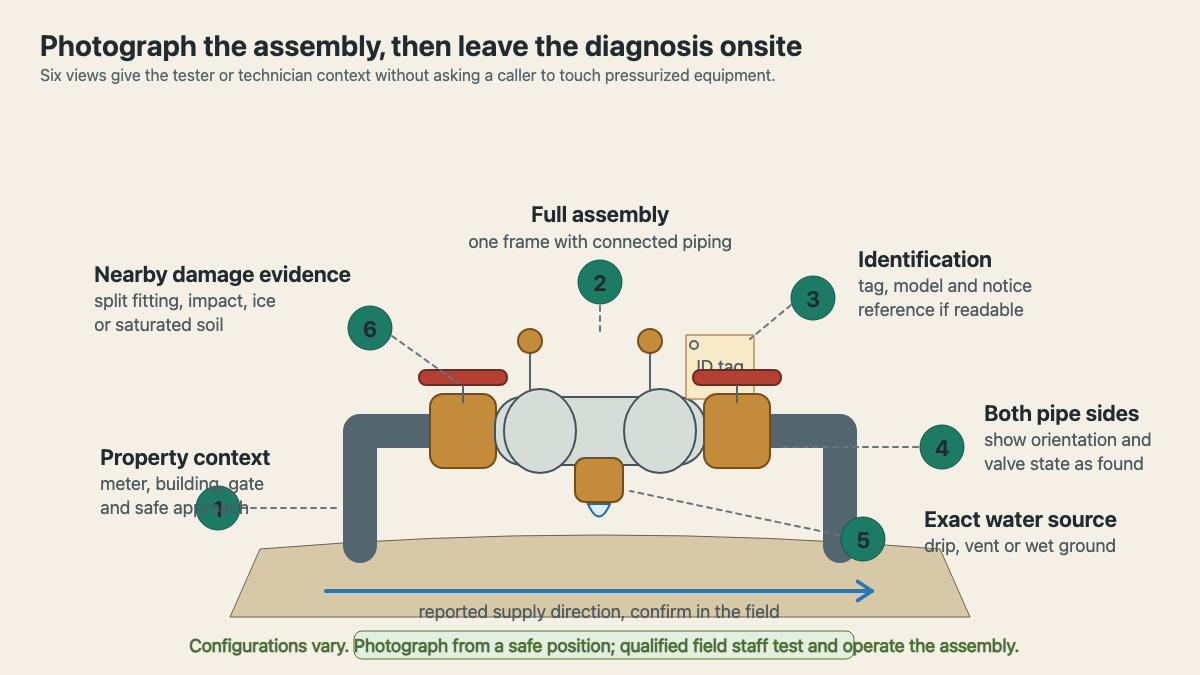
The photo set should include:
- a wide property view that shows the meter or supply area, building, fence, gate, and safe approach
- the complete assembly and its connected piping in one frame
- the identification tag, model plate, inspection tag, or notice reference if readable
- both pipe sides and the position of visible handles as found, without touching them
- the exact point where water appears, plus the ground below it
- nearby evidence such as a split fitting, impact mark, ice, disturbed soil, or saturated area
Ask the caller where the assembly sits: front yard, side yard, mechanical area, meter enclosure, fenced utility space, or another location. Note whether a dog, locked gate, tenant, parking restriction, landscaping, or standing water affects access. If the property is commercial or managed, identify the onsite contact and the person authorized to approve testing, diagnosis, and additional work.
Capture the water source and irrigation arrangement only as reported. Municipal supply, reclaimed water, well supply, separate irrigation meter, and shared domestic service can change the handoff. The technician confirms the installation onsite.
The Watts Series 009 manual illustrates why the office needs exact context. It discusses accessible installation, relief-valve discharge, drainage, periodic testing, and local-code requirements for a named family of reduced-pressure assemblies. Do not apply that manual to an unidentified device. Use it as evidence that configuration and service conditions matter.
Separate visible discharge from a remote diagnosis
“Leaking backflow” is a useful symptom label, but it does not establish the failed part. Ask when the water appears, whether it is a drip or sustained flow, where it exits, and what was happening when it began. Was the irrigation system running, starting, stopping, idle, or being brought back into service? Did the water stop on its own? Is the rest of the property’s water service normal?
Record weather and recent work. A pressure event, utility work, irrigation repair, landscape construction, vehicle impact, freezing night, or spring startup may belong in the field note. Keep the sequence factual: “Caller saw steady water below the center vent after Zone 2 stopped” is useful. “The first check valve failed” is a diagnosis the call did not establish.
Visible water also needs a location. A wet patch below the assembly differs from water at a threaded connection, test cock, valve stem, cracked body, connected pipe, or nearby irrigation fitting. Ask for a wide image and a close image. The technician needs to know whether the reported water is actually on the assembly.
Do not promise that a repair will pass the required test. Testing produces the result. A technician may also find that the notice references a different assembly, the tag is missing, the unit is inaccessible, or the local program requires paperwork the caller did not mention.
Treat freeze reports as field-verification work
A caller may report a crack after a cold night, water when temperatures rise, or a system that was “winterized” but now will not hold. Capture the lowest reported temperature only when the caller knows it, the date, whether the system had been shut down, who performed the prior service, and when water was first observed. Do not turn a weather recollection into proof of internal damage.
The manufacturer’s FEBCO freeze-protection manual states that water freezing inside an assembly can damage the assembly and connected system. It also gives procedures for specific models and configurations. That is a reason for caution. It is not a universal set of phone instructions.
Ask whether the caller sees a split body, displaced fitting, cracked enclosure, missing insulation, or water beneath the unit. Record whether anyone has already operated valves or attempted a repair. Leave the equipment as found unless a qualified person, company policy, or the water provider directs otherwise.
Seasonal shutdown belongs in the irrigation winterization guide. A freeze-damage call needs a narrower record focused on the assembly, prior service, current water, and safe access.
Build a dispatch note that survives handoff
End by reading the record back to the caller. A useful note sounds like this:
“Backflow service at 241 Sample Cedar Court. Caller received a Durham annual-test notice dated October 27 with a November 12 due date. Notice lists assembly BFP-1842 and requests an approved tester. Caller also reports intermittent dripping from the area beneath the center of the above-ground assembly when the irrigation system is idle. No active spray or water entering the building. Full assembly, tag, pipe-side, and ground photos are attached. Separate irrigation meter is reported; field staff must confirm. Assembly is inside a locked side yard. Owner will meet the tester and can approve diagnostic work. Prior test report is unavailable. Scope, filing path, and any repair remain subject to onsite identification, testing, and local requirements.”
That note separates the notice from the symptom, names the unknowns, and gives the field worker access details. It also protects the office from a casual promise made before the assembly is identified.
An AI receptionist can collect the same approved fields after hours and route active-water conditions under the company’s written policy. The tester or technician still owns equipment identification, valve operation, testing, diagnosis, repair, and the compliance result.
The best backflow call record is plain: who issued the notice, what the assembly tag says, where the water appears, what changed, who can open the gate, and what remains for the field visit. That is enough to book the right work without turning reception into the test bench.