A homeowner calls after a mower clipped the edge of a septic lid. One side looks higher than it did yesterday, and a crack now runs across the cover. The caller wants a price for a replacement. Before anyone discusses parts or cost, the office needs one answer: is the tank opening fully covered and secured right now?
A missing, shifted, or badly broken lid creates an access hazard. Keep the caller, children, pets, and vehicles away from the area, then route the call for prompt professional attention. If the cover remains in place, collect the details below without asking anyone to stand on it, lift it, or test whether it moves.
That order matters. Safety first. Scope comes later.
Route the opening before discussing the repair
Start with plain questions that a caller can answer from a safe position:
- Is the lid missing, or can you see any part of the tank opening?
- Is the lid sitting flat, or has one edge shifted, lifted, or dropped?
- Is there a crack through the lid, a chipped edge, or a loose fastener?
- Can anyone reach the area right now, including children, pets, tenants, guests, or delivery drivers?
- Has someone already placed a barrier around the area without walking over the lid?
The Washington State Department of Health warns that people can fall into septic tanks. Its guidance tells owners to repair or replace damaged and missing lid parts, secure covers against easy access, and never leave an open lid unattended.
An exposed opening belongs in the office's urgent safety route. Tell the caller to keep everyone back and prevent access from a safe distance. Do not ask the caller to slide the lid into place. A cracked cover may fail under a person's weight, and a shifted cover can move again.
If the caller cannot see the area safely, accept that answer. Book an assessment based on uncertainty. A receptionist does not need a perfect description to recognize that a lid problem deserves attention.
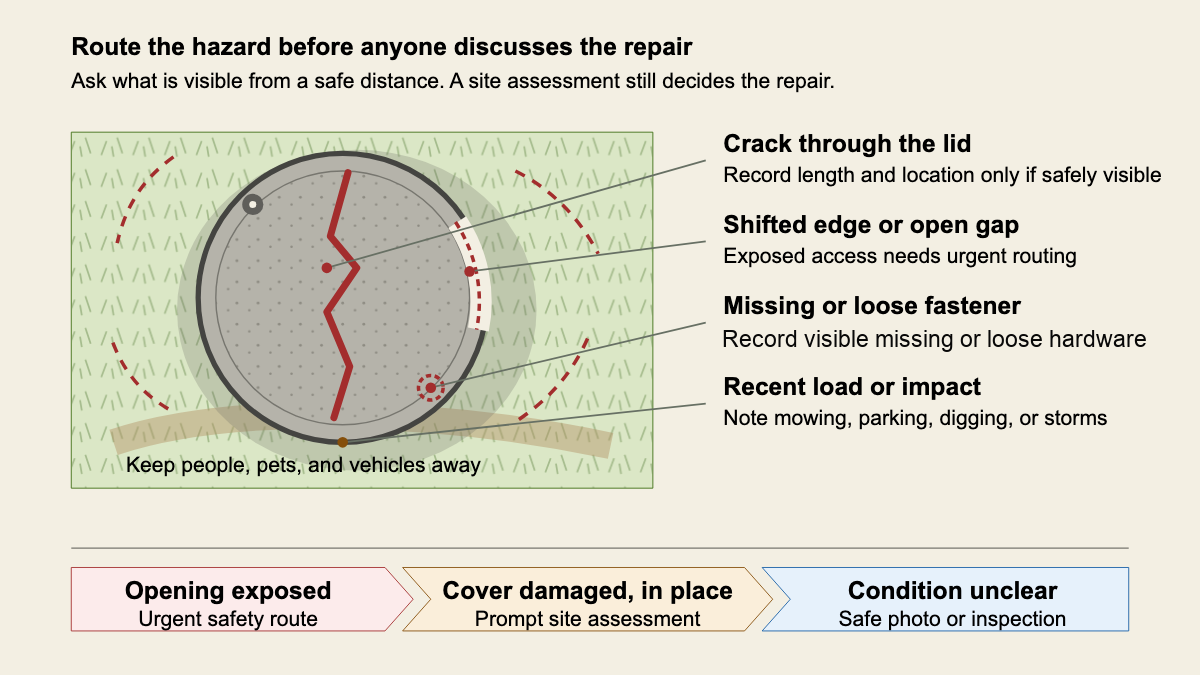
Capture what changed around the lid
The damage story helps the dispatcher prepare the visit. Ask when the caller last saw the lid in normal condition and what happened nearby since then.
A mower or tractor may have struck an exposed edge. A car, trailer, dumpster, or piece of excavation equipment may have crossed the area. Recent pumping, landscaping, fence work, utility work, flooding, frost movement, or a fallen limb may also explain why the caller noticed a change. Record what the caller knows without turning that history into a diagnosis.
Vehicle history deserves a direct question. Washington health officials advise people not to drive or park on septic systems because a vehicle can damage or dislodge a cover. The EPA's septic care guidance also warns that vehicles and heavy equipment can damage components and compact soil over a drainfield.
Ask whether the ground around the lid has sunk, softened, washed away, or recently been filled. Note standing water. If the caller reports sewage at the surface, slow drains, an alarm, or a backup inside the building, the job may extend beyond the lid. Route those symptoms through the company's system-trouble process. The septic alarm call guide gives the office a separate framework for alarm and pump-system details.
Request photos without creating a second hazard
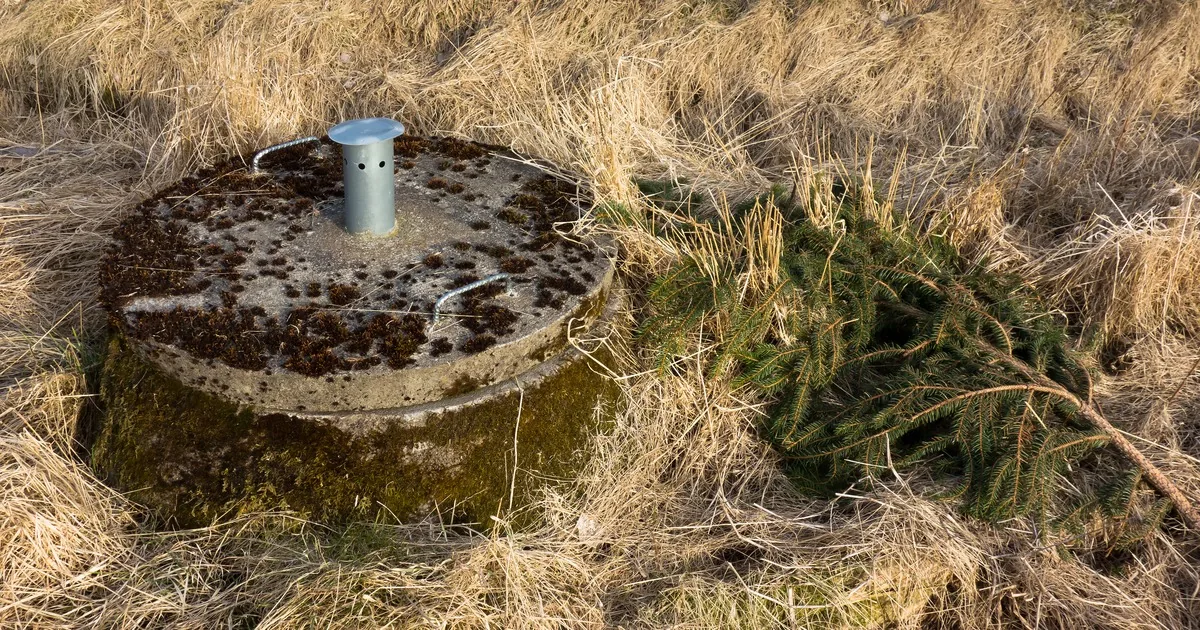
A photo can clarify whether the caller means a concrete lid, a plastic riser cover, a small inspection-port cap, or an unrelated utility cover. It can also show a crack, gap, missing screw, or damaged rim. But the request needs limits.
Ask for a photo only if the caller can take it from firm ground without stepping onto the tank area, leaning over an opening, moving the cover, or entering a barricaded space. A zoomed image from farther back is useful. So is an older photo from a pumping invoice or real-estate inspection.
Request two views when they can be taken safely: one showing the lid and surrounding ground, and another showing the damaged area. Tell the caller not to clean, pry, measure, or reposition anything for the camera. If safe footing is uncertain, skip the photo.
A picture supports scheduling. It does not prove the condition of the tank, the load rating of the cover, or the correct replacement part. Those questions stay with the person who inspects the site.
Collect records before promising a replacement
Many callers use “lid” for several different components. The office may hear about a heavy concrete cover over a buried tank opening, a removable riser lid at grade, a small inspection cap, or a cover associated with a pump chamber. Age, material, dimensions, fastening method, and the condition beneath the cover all affect the work.
Useful records include the latest pumping or inspection invoice, an as-built drawing, a permit record, a tank label, and any receipt from a prior riser or lid installation. If the tank location is uncertain, use the office's tank location and digging intake before assigning a simple lid-repair slot.
Ask the caller whether the system has one visible cover or several. Record any lettering or brand name that can be read from a safe distance. Note approximate dimensions only when the caller already has them. Never send someone back with a tape measure to approach a questionable cover.
The service history can reveal a useful handoff. The EPA says septic providers should note tank condition and repairs in the system's service report. A prior technician may already have documented a deteriorated lid, damaged riser, access problem, or recommended repair.
Separate lid damage from a wider service problem
A damaged lid can be the only issue the caller sees. It can also arrive with odor, sewage surfacing, an alarm, slow plumbing, or recent pumping trouble. The receptionist should capture each symptom, then let the field professional determine whether they share a cause.
Odor needs careful handling. Do not tell a caller that a weak smell means the area is safe. OSHA's hydrogen sulfide guidance says smell is not a reliable continuing warning because a person can lose the ability to detect the gas. Opening a tank or entering one is work for trained professionals with the right procedures and equipment.
The office should also ask whether the damaged area is near electrical controls, a pump chamber, or an alarm panel. Record what the caller reports. Do not tell them to touch controls, disconnect wiring, or open an enclosure unless the company's approved emergency procedure specifically covers that action.
Book the visit the facts support
A clean routing system can use three categories.
Exposed opening or missing lid: keep people and animals away, control access from a safe distance, and use the company's urgent safety dispatch path.
Damaged cover still in place: schedule a prompt assessment. Record cracks, chips, movement, fasteners, impact history, ground condition, related symptoms, and safe access.
Condition unclear: request a safe photo if one already exists or can be taken without approaching the cover. Otherwise, schedule a location and inspection visit. Uncertainty is a valid dispatch fact.
Do not promise that a crack can be patched or that the crew will carry the right lid. A field assessment may find damage to the cover, riser, adapter, tank opening, or surrounding support. A planned access upgrade belongs in a separate scope from the damaged-cover visit. When pumping is also due, collect that work through the septic pumping and backup call guide.
Rules also vary by location. For example, the Florida Department of Environmental Protection describes state requirements for septic contractors, repairs, permits, and inspections. Use the rule that applies at the service address. The phone agent should never make a universal licensing or permit promise.
Leave the technician a useful dispatch note
The final note should let the technician picture the call before arrival. Include the property address and contact, the caller's description of the cover, whether any opening is visible, who can access the area, barriers already in place, the time damage was noticed, recent vehicle or equipment activity, related septic symptoms, available records, photo status, gate width, parking, pets, and any known electrical equipment nearby.
A concise handoff might read: “Concrete lid near rear fence cracked after mower contact this afternoon. Caller reports one edge raised and cannot confirm whether the opening is exposed. Children and dog are indoors; cones placed from the patio without approaching the lid. No backup or alarm reported. Prior pumping invoice and two zoomed photos available. Crew access through left gate.”
That note does not diagnose the repair. It does something more useful for the next hour: it keeps the hazard visible and gives the field team a credible starting point.