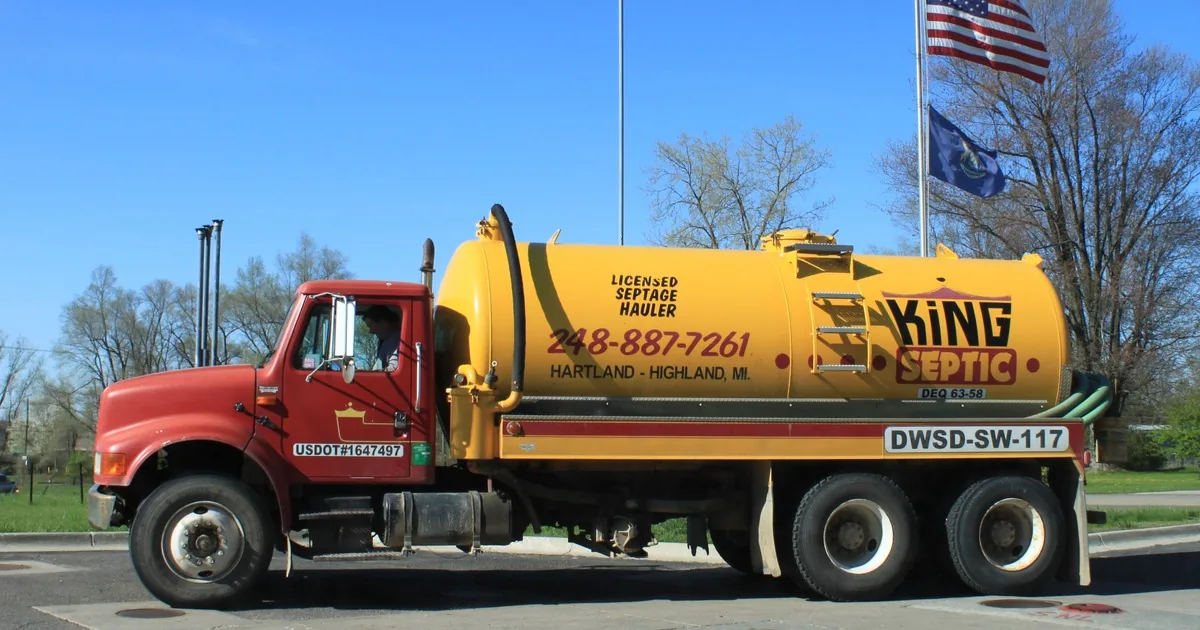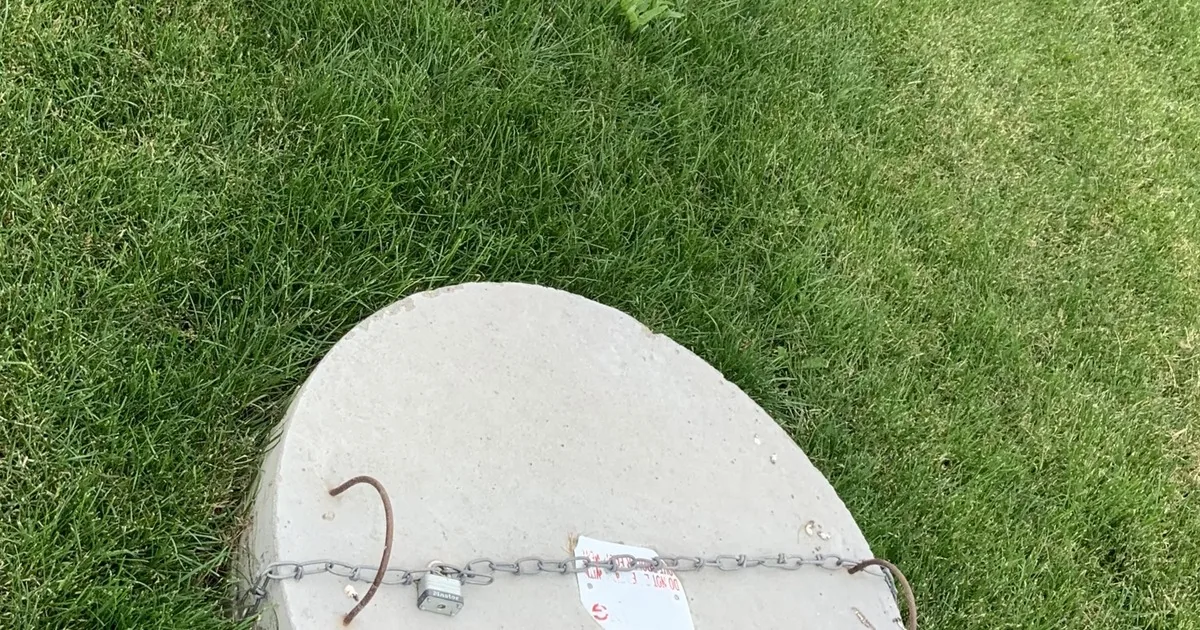
A caller opens with six anxious words: “The septic inspection failed. Now what?” The office cannot answer from that sentence. “Failed” may describe active sewage at the surface, a damaged tank component, an incomplete inspection, or a report that calls for an engineer and local review.
Start with the written report. Ask whether sewage is backing up or surfacing right now, then collect the exact finding, inspection purpose, property address, owner authorization, and any deadline. Book the next step named by the evidence. Do not promise a repair, replacement, permit, closing date, or party responsible before the report and local process are clear.
Get the complete report before booking a remedy
Ask the caller to send every page of the inspection report, including photographs, diagrams, attachments, the conclusion, and the inspector's contact information. A screenshot of one sentence can hide the conditions, limitations, and recommended follow-up around it.
Confirm who performed the inspection and why. Was it a routine system check, a property-transfer inspection, a lender request, or an investigation after symptoms appeared? Record the inspection date and the names of the buyer, seller, owner, property manager, or agent involved. The person calling may have the report but lack authority to approve work.
Read the finding back without translating it. “The report says liquid was observed at the ground surface near the dispersal area” is useful. “The drainfield is dead” adds a diagnosis the office has not made. Preserve terms such as “unsatisfactory,” “further evaluation required,” “component inaccessible,” or “repair recommended” exactly as written.
The Massachusetts Department of Environmental Protection requires approved inspectors and report forms for its Title 5 process. It also requires an inspector to document components that could not be located or inspected. Other states and counties use different forms and standards. That variation is why reception should identify the jurisdiction and report type before treating the result as a work order.
Screen for an active sewage exposure first
A failed report can arrive during an ordinary real-estate timeline. It can also arrive while wastewater is entering a basement shower or surfacing in a yard. Those calls should not sit in the same estimate queue.
Ask four direct questions:
- Is sewage backing up through a toilet, tub, shower, floor drain, or sink?
- Is liquid surfacing near the tank, pump chamber, distribution area, or drainfield?
- Is any lid, opening, or soil collapse accessible to children, pets, tenants, or visitors?
- Has the condition changed since the inspection?
The U.S. Environmental Protection Agency lists plumbing backup, slow drains, standing water near the tank or drainfield, odors, and unusually wet ground among possible signs of malfunction. EPA also warns people to avoid sewage contact. Clemson Cooperative Extension points to backup, exposed system parts, soggy ground, and collapsing structures as reasons for professional attention.
If the caller reports active exposure, follow the company's urgent policy. Tell them to keep people and animals away from sewage and unsafe openings. Reception should never ask someone to remove a lid, lean over a tank, enter a confined space, probe wet ground, or test electrical controls.
If there is no active exposure, say so in the ticket: “Report follow-up only; caller denies indoor backup, surfacing liquid, unsafe opening, and new symptoms.” That sentence keeps the urgency decision visible.
Route the finding, not the word “failed”
The report's finding should determine which professional reviews the case. A damaged baffle, cracked lid, inaccessible component, pump problem, distribution concern, saturated area, or undocumented system may lead to different site work. One office may handle some of those scopes and refer others.
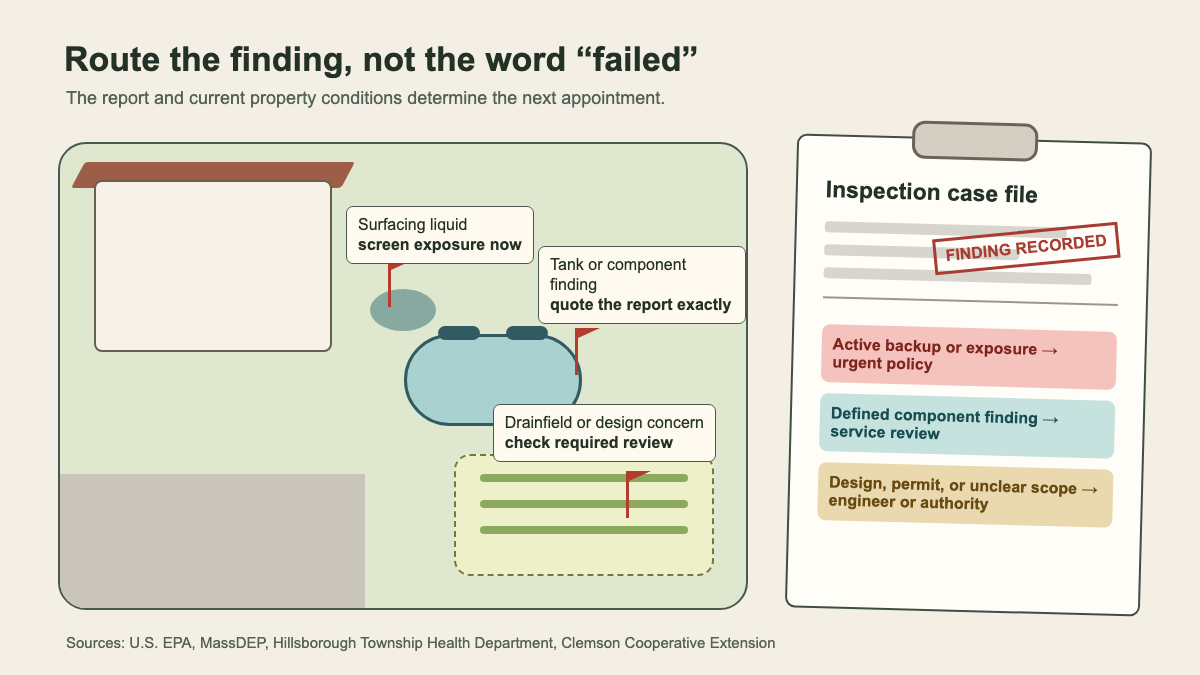
A useful intake note separates three routes.
Urgent exposure route. Use this for current backup, surfacing sewage, an unsecured opening, or another immediate condition covered by company policy. Record where the condition is visible, when it began, whether the building is occupied, and how the crew can enter the property safely.
Defined service-review route. Use this when the report identifies a component or observable condition that the company evaluates. Attach the complete report. Record tank and system information if known, prior service records, access conditions, the inspector's recommendation, and whether the office needs photos or a technician review before offering an appointment type.
Engineering or authority route. Use this when the report calls for design work, soil evaluation, a permit, an alteration, regulatory review, or further evaluation beyond the company's scope. Capture the named authority and required document. Do not turn “needs engineering review” into a replacement quote.
Hillsborough Township's published process offers a useful example of the distinction. Its health department reviews the complete inspection documents and proposed repair scope. Some work can be considered a repair, while other conditions may require a professional engineer or further evaluation. A denied repair request does not automatically mean that a new system must be installed. That is a local example, not a rule for every property, but it shows why a receptionist should leave the remedy open.
Keep the transaction questions separate from the septic scope
Buyers, sellers, agents, and lenders may ask who must pay, whether the property can close, or whether they can cancel a contract. A septic service office should not interpret a purchase agreement or give legal advice. Record the deadline and refer responsibility questions to the caller's agent, attorney, lender, or local authority.
Ask for the actual date and source of the deadline. “Closing is next Friday” differs from “the county issued a correction deadline” or “the buyer's inspection contingency expires tomorrow.” Put the source next to the date in the ticket.
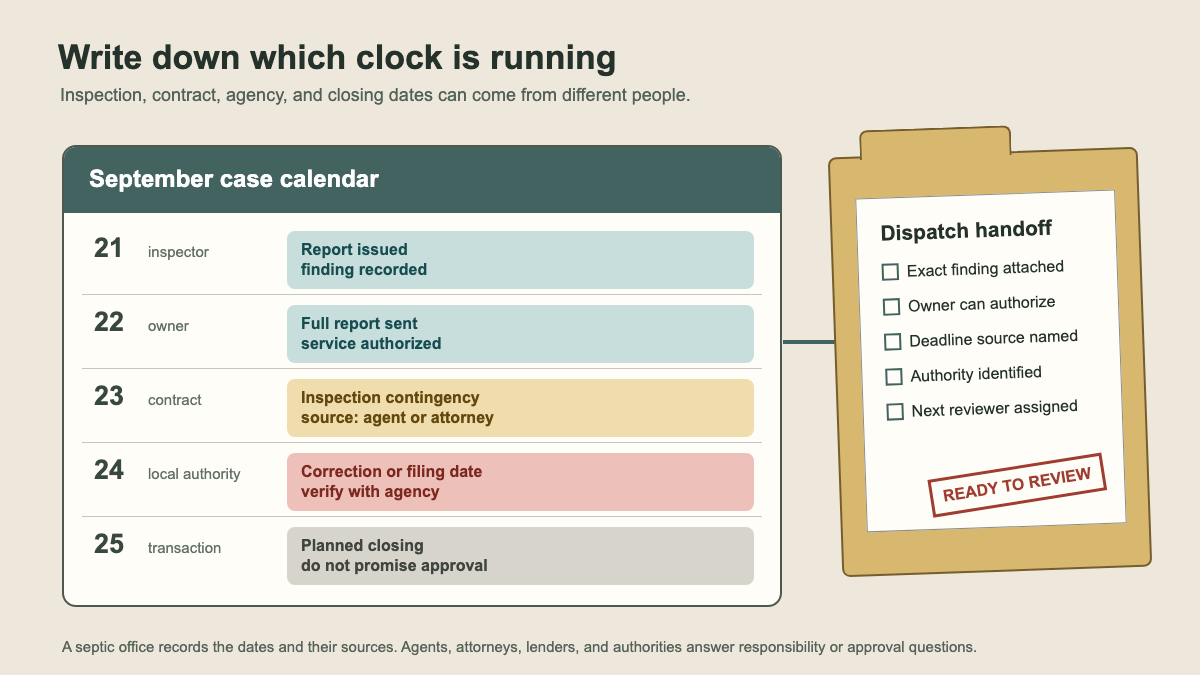
Confirm these details before anyone schedules work:
- Full property address and parcel number if the report includes one
- Current legal owner and the person authorized to approve service
- Caller role and best callback number
- Inspector name, company, and inspection date
- Exact conclusion and recommended next action
- Local health department or onsite wastewater authority named in the report
- Transaction, lender, agency, or correction deadline and its source
- Known permits, as-built drawings, pumping records, and prior repairs
- Gate, tenant, pet, parking, tank-access, and drainfield conditions
Do not promise that pumping will change the inspection result. Pumping can be part of an inspection or service process, but a pump-out does not repair every tank, distribution, design, or drainfield problem. The existing guide to septic pumping and backup call intake covers routine pumping details and backup routing.
Set a next step the company can actually deliver
End the call with one named handoff. For example: “We have the full report and property contact. Our service manager will review whether the listed outlet-baffle finding fits our repair scope, then the office will call with the correct appointment type.” If the report calls for an engineer, say that the office is confirming whether it can provide or refer that review.
Use response times the company can honor. A rushed promise about permit approval or closing can create a second problem beside the septic issue.
An inspection also has limits. MassDEP says its inspection assesses the system's current condition and does not guarantee future performance. Hillsborough Township says a repair permit is not a warranty that the system will perform for any length of time. The safe office language is narrower: the report documents observed conditions, and the next professional will review the listed scope.
For calls that arrive before any inspection has happened, use the separate guide to scheduling septic inspections before a home sale. If an alarm is sounding now, collect the panel and exposure details in the septic alarm call workflow.
A voice receptionist can collect the report, caller role, deadline, exposure screen, and property access details after hours. The final ticket should let the service manager see the finding in the inspector's words and choose the next qualified reviewer without reconstructing the call the next morning.