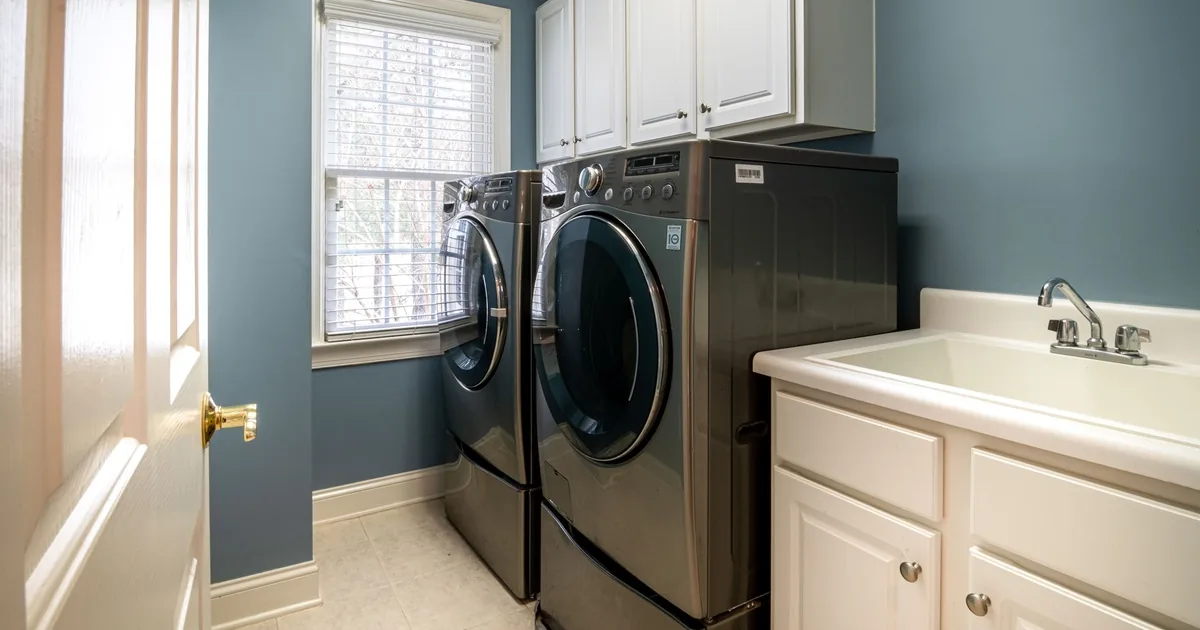
The caller did six loads of laundry on Saturday, hosted relatives overnight, and heard the downstairs shower gurgle on Sunday morning. She wants to know whether the septic system is full. The office cannot answer that from the sequence alone. It can find out whether wastewater is backing up now, reconstruct the water-use event, check for wet-weather pressure, and give the field team a useful service note.
That order matters. Heavy water use may expose an existing maintenance or drainage problem, or the symptoms may ease after the household load drops. A phone conversation cannot distinguish those cases with confidence. Treat the water event as evidence, not a diagnosis.
Start with the current symptom
Ask what is happening at the moment. “The septic is overwhelmed” is the caller’s conclusion. The office needs the observation beneath it.
Is wastewater coming up through a toilet, shower, floor drain, or sink? Are several fixtures draining slowly, or only one? Does the plumbing gurgle when a toilet flushes? Outside, can the caller see standing liquid, unusually damp ground, or sewage at the tank or drainfield while remaining on firm ground at a safe distance? Note any odor, but do not use smell to decide whether the area is safe.
A current sewage backup or surfacing wastewater needs prompt routing under the company’s hazard procedure. Tell the caller to keep children and pets away from affected areas and to avoid contact with untreated wastewater. The office should not direct anyone to open a tank, lift a lid, probe the ground, or walk onto a wet drainfield.
If the report is limited to one slow sink or tub, capture that too. A single fixture can point to a building-plumbing issue, while several affected fixtures may change the route. The article on slow drains in homes with septic systems gives the office a fuller comparison. Either way, the technician makes the diagnosis.
Reconstruct the water-use event
Next, build a short timeline. Start with: “What was different about water use before you noticed the problem?”
The useful details are ordinary household events. Ask how many laundry loads ran and whether they were back to back. Ask about overnight guests, long showers, baths, dishwasher cycles, a recently filled tub, or a water-softener regeneration. A running toilet, dripping tub valve, or hose left on can create sustained flow that the caller never counted as an event.
Get times. “Laundry all weekend” is vague. “Four loads between 8 a.m. and noon, then the shower began gurgling at 1:30” gives the field team a sequence. Record when the symptoms began, whether they stopped, and what water-using equipment is still running.
EPA explains that all household water sent down the pipes enters the septic system. It specifically advises households to spread washing machine use through the week because concentrating all laundry into one day can leave too little treatment time in the tank and may flood the drainfield. Penn State Extension describes the same operating problem as water overloading: excess flow can move through the tank too quickly for normal separation and then burden the absorption area.
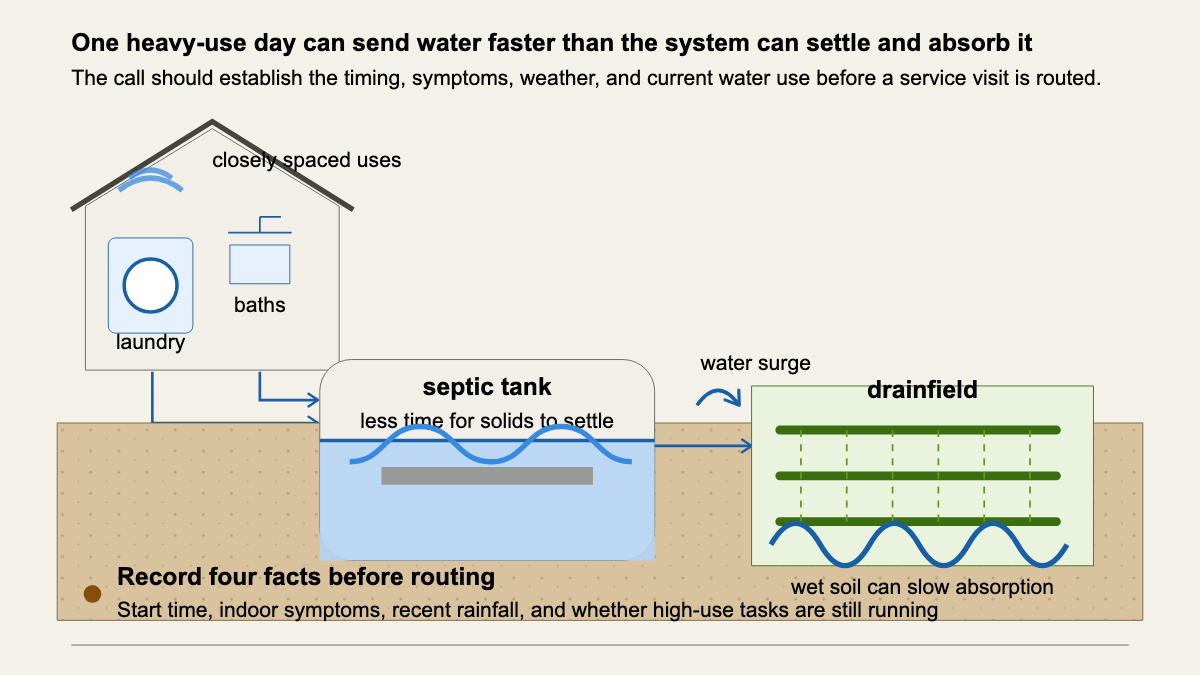
The office does not need to teach septic hydraulics on the call. One sentence is enough: “Closely spaced water use can affect the system, so I’m documenting the timing and the symptoms for the technician.” Then keep gathering facts.
Check rain, snowmelt, and outside drainage
A Saturday laundry marathon and a Sunday backup may look like a simple cause-and-effect story. Recent weather can change it.
Ask whether the property had heavy rain, rapid snowmelt, or standing water before the plumbing symptoms appeared. Find out whether the drainfield area looks wetter than the rest of the yard from a safe viewing point. Ask whether a sump pump, roof downspout, driveway drain, or other drainage outlet sends water toward the septic area. EPA advises keeping roof drains, sump pumps, and similar rainwater discharges away from a drainfield because excess water can slow or stop the treatment process.
Do not ask the caller to cross saturated ground for a better look. A photo taken from a dry, established walkway can help if company policy allows it, but the absence of visible water proves little. Important system components are underground.
Weather also changes scheduling and access. A pump truck or inspection vehicle may need a stable approach. Note soft ground, a steep drive, gates, parked vehicles, snow cover, and any known tank location. Let the field team decide whether the site can be served safely under current conditions.
Record maintenance and system details
The field team needs context beyond the weekend timeline. Ask when the tank was last pumped and when the system was last inspected. If the caller has an invoice or service report, request the date and provider name. Never turn a hazy memory into a firm interval.
EPA says pumping frequency depends on tank size, household size, water-use habits, and accumulated solids. System type matters too. An alternative system may have pumps, controls, floats, or an alarm that calls for a different route. If an alarm is sounding, record the light or panel message without asking the caller to open equipment. Use the company’s septic alarm call procedure.
Capture these items in the work order:
- Service address, caller name, callback number, and whether the caller owns or rents the property
- Current symptoms at each affected fixture and any wastewater visible outside
- High-use activities, start and stop times, and whether optional water use has paused
- Recent rain or snowmelt, standing water, and drainage directed near the field
- Last known pumping or inspection, system type if known, alarm status, and prior repairs
- Occupancy, guests, access constraints, animals, gates, and safe truck approach
- Photos supplied from safe footing, with the caller’s description of where each photo was taken
For a caller asking whether the tank “just needs pumping,” keep the answer measured. Pumping may be part of the service, but a phone description cannot establish the cause or the right remedy. The broader pumping and backup call intake guide covers service-history and access questions in more detail.
Give a clear next step without promising the outcome
Once the facts are captured, classify the call according to the company’s own service rules. Active backup, surfacing wastewater, an alarm with system symptoms, or exposure risk may require urgent review. A problem that appeared after unusual water use and then stopped may still justify an inspection, especially when maintenance history is unknown or the symptoms have happened before.
The safest immediate guidance is narrow. Callers can pause optional high-water-use tasks while they wait for the company’s direction. That may include extra laundry, dishwasher cycles, baths, and other postponable use. Do not promise that reduced use will fix the problem. Do not tell anyone to add chemicals, open the tank, handle wastewater, or enter a wet area.
Local rules also matter. EPA notes that individual onsite systems are regulated by state, tribal, and local authorities. The office should avoid promising permit requirements, repair authority, or inspection timing until the service address and local process are checked.
A good closing sounds plain: “I have the timeline, the fixtures affected, the recent rain, and your last known service date. I’m routing this for review. Until we call back, please avoid optional high-water-use tasks and keep people and pets away from any wastewater or wet area.”
Build the intake around sequence
The most useful note tells a story the technician can follow: what water use changed, when the first symptom appeared, what is happening now, what the weather and site look like, and what is known about the system. “Septic full after laundry” leaves almost every decision open. “Four laundry loads ended at noon; two fixtures began gurgling at 1:30; no backup is visible; heavy rain fell overnight; last pump date unknown” gives the crew somewhere to start.
An AI receptionist can capture the same sequence after hours and apply the company’s escalation rules, but the intake logic matters more than the tool. On Monday morning, the dispatcher should be able to read one clean record and know why the call is in that queue.