The customer says, “The tank is somewhere behind the house. The last owner had it pumped.” That sounds like a location. It is not enough to schedule a routine pump-out as though the access opening were waiting at grade.
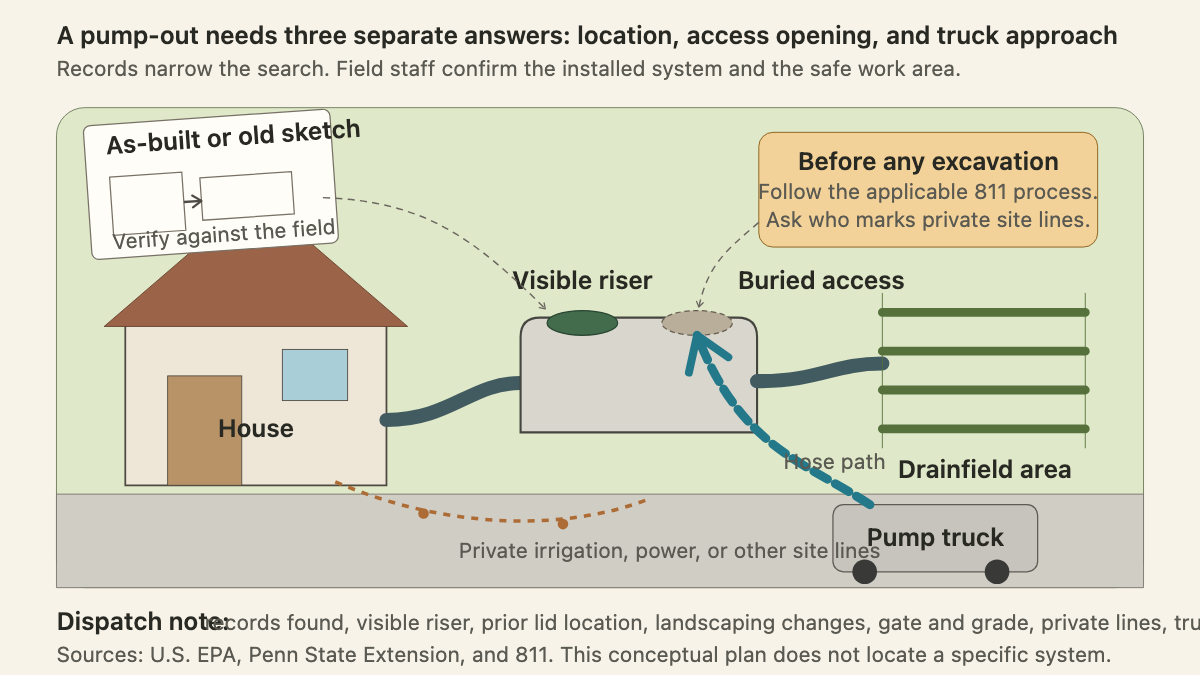
Before confirming the visit, the office needs three separate answers: where the tank is believed to be, whether the pumping access is visible or buried, and whether the truck can reach a workable position. Ask about records, prior service, risers, landscaping changes, gates, slopes, and private lines. Then explain who will locate and expose the access under your company’s policy.
That conversation prevents a familiar arrival: the truck is parked, the customer points at half an acre of lawn, and nobody knows whether locating or digging was included.
Location, access, and truck approach are different facts
A caller may know the tank location because a prior contractor marked it on a sketch. The lid can still be buried. Another caller may see a green riser but have a locked gate between the road and the yard. A third may have clear access to the yard, yet the only available truck position would put the hose across a neighbor’s driveway.
Treat each issue on its own.
Location means the reported position of the tank or access opening. The source might be an as-built drawing, a permit, a previous pumping invoice, a marker placed by a technician, or the owner’s memory.
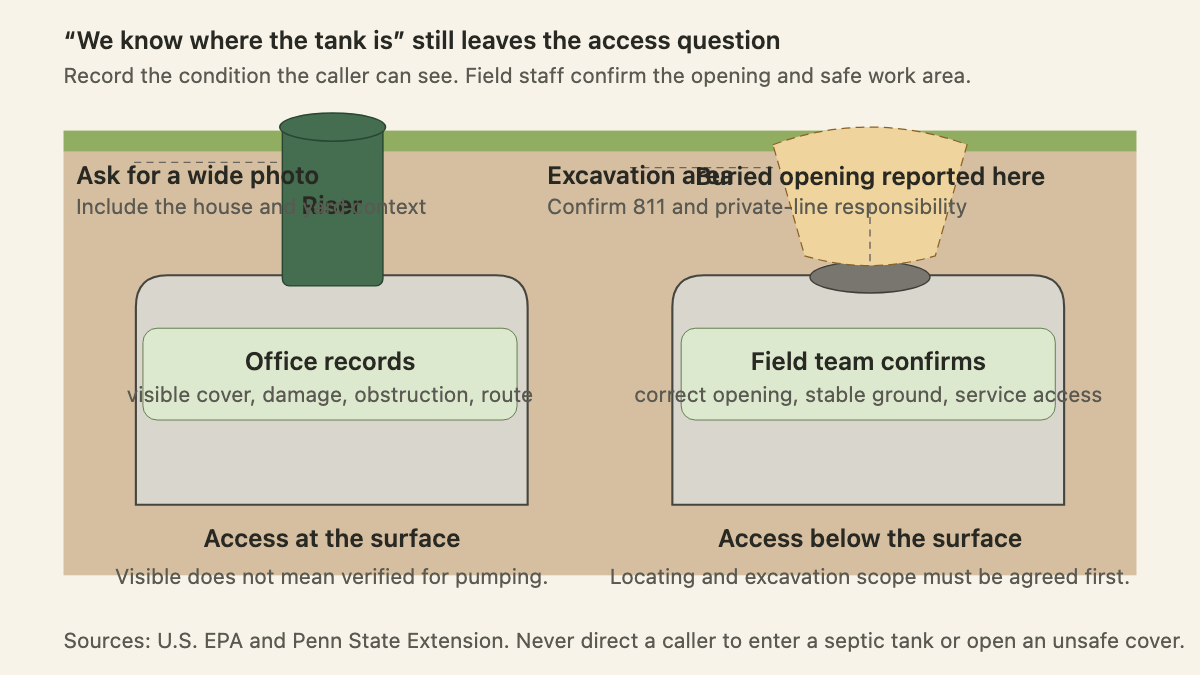
Access opening means the part that must be opened for the planned service. Ask whether it is at the surface, covered by soil, hidden under mulch, or obstructed by a patio, shed, deck, fence, or planting. Do not assume the visible cap is the pumping opening.
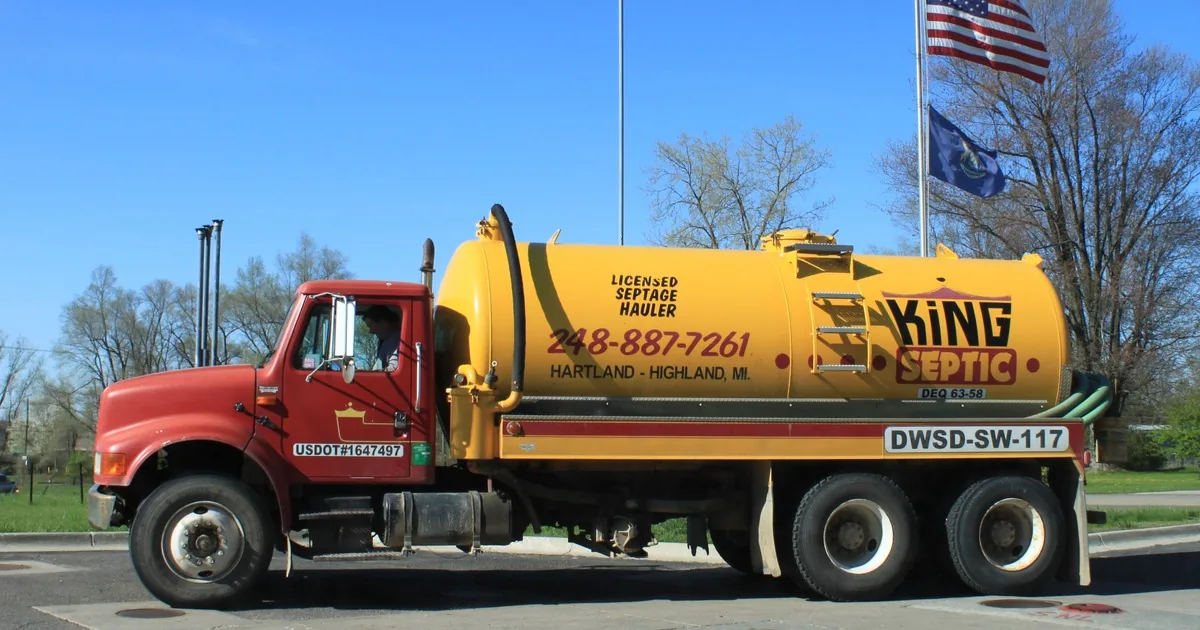
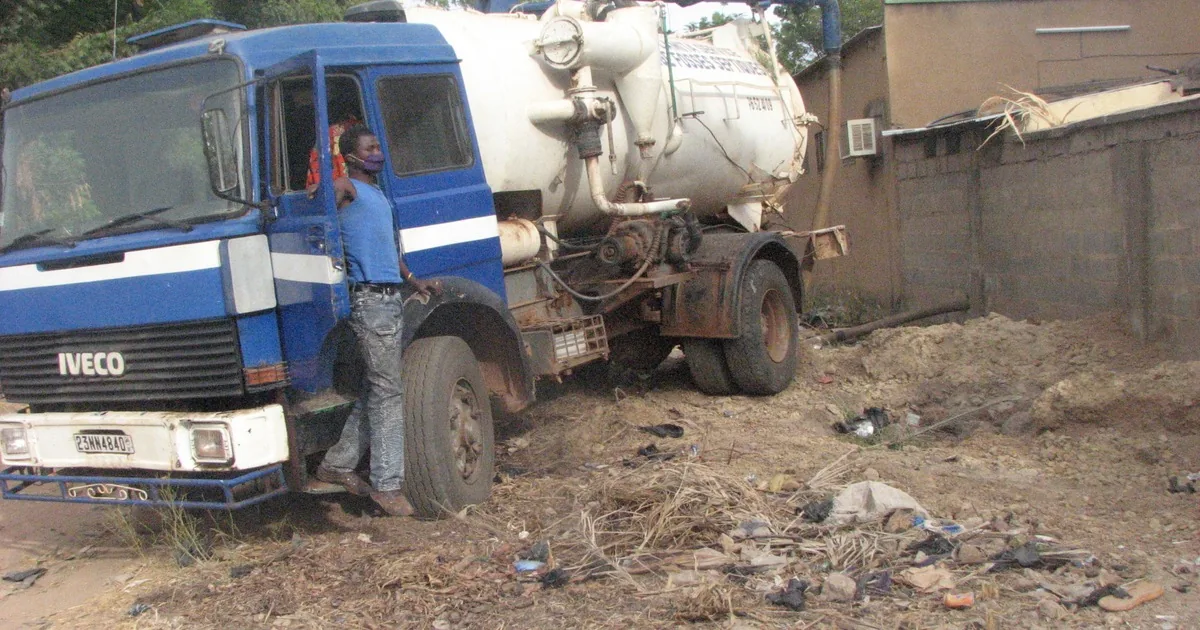
Truck approach covers legal parking, gate width, grade, soft ground, overhead branches, hose route, pets, and permission to cross any shared area. The dispatcher does not need to design the setup. The crew needs an honest description and useful photos.
Start with records and the last pump-out
The best first question is simple: “Do you have a septic drawing, permit, inspection report, or invoice from the last pumping?”
The U.S. Environmental Protection Agency says a local health or environmental permitting authority may have the property’s septic record drawing, often called an as-built, along with permit information. Penn State Extension recommends keeping a sketch that shows the tank and drainfield in relation to the house and private well, plus inspection and pumping records.
Those documents narrow the search. They do not prove that every line or opening is exactly where a faded sketch appears to place it. Property work changes what crews encounter. An addition may cover an old reference point. A fence can divide the original access route. Soil, mulch, and grading can hide a feature that used to sit near the surface.
Ask the caller to send a full image of the document, including the property outline and any legend. A cropped photo of one hand-drawn rectangle can remove the reference points that make the sketch useful.
Prior service details can be even better:
- Which company pumped the tank, and when?
- Did that crew locate the tank, dig to the opening, or use a surface riser?
- Where did the truck park, and which side of the house did the hose follow?
- Was the opening marked afterward with a stake, measurement, photo, or note on the invoice?
- Has the yard, driveway, deck, fence, or landscaping changed since that visit?
A former contractor may still have a service record. Ask the customer for permission before suggesting that your office contact another company or public office on the customer’s behalf.
Ask what the caller can see without asking them to investigate
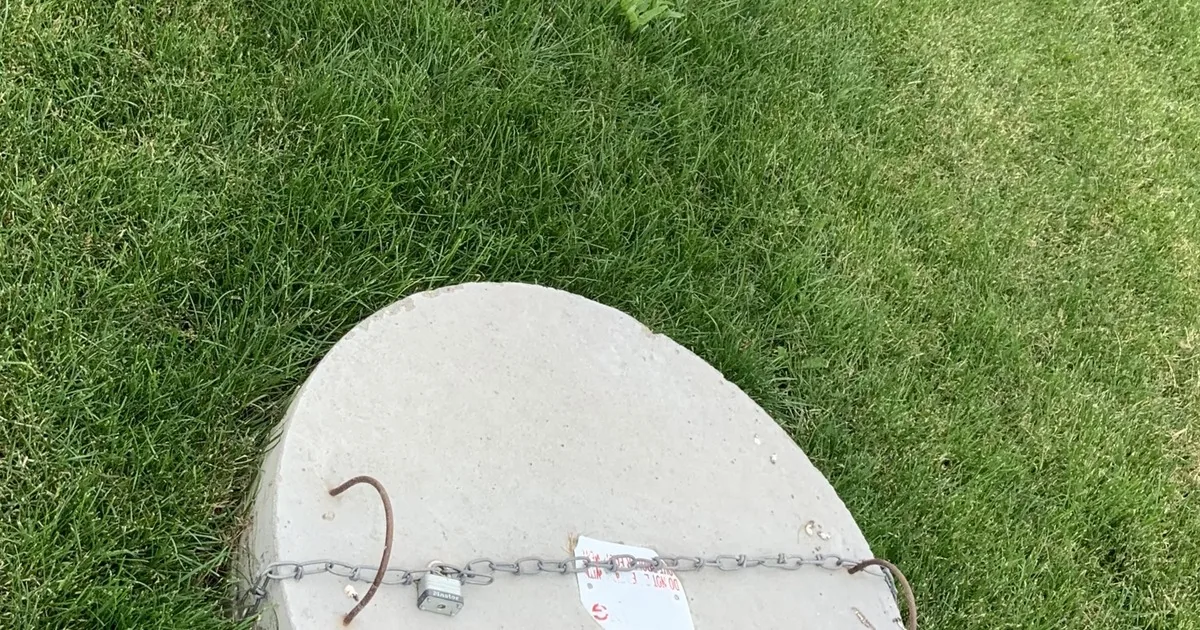
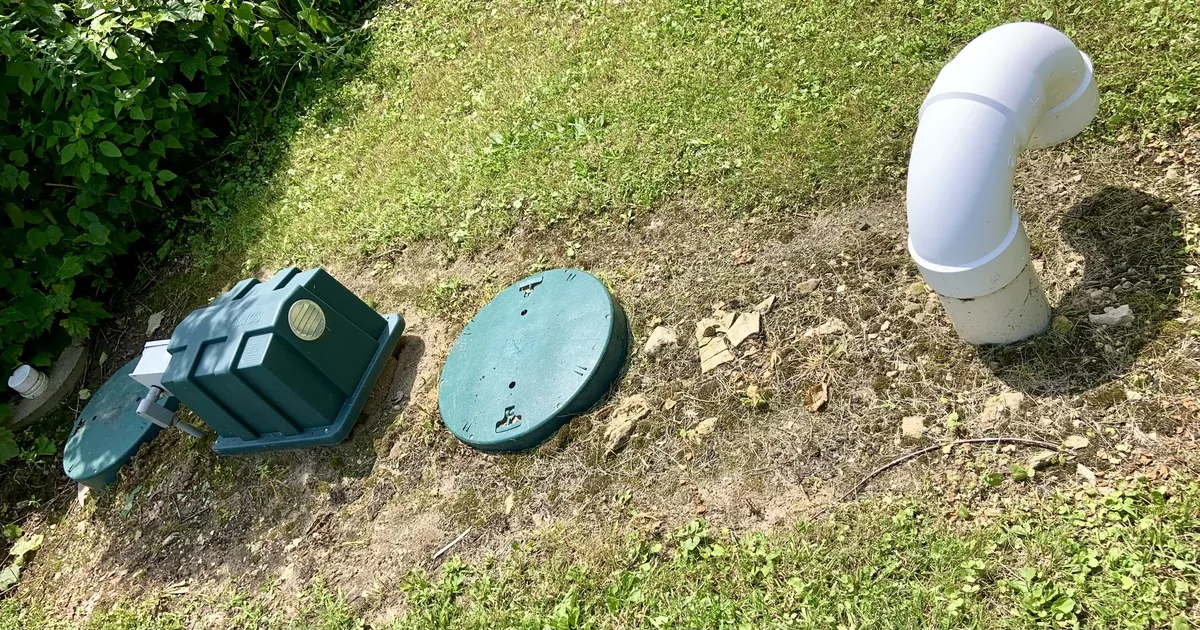
A visible riser is useful evidence. EPA guidance notes that an access riser may appear as a black or green disc. Penn State’s pumping guidance recommends bringing access ports to the soil surface with risers and marking the tank location for future cleaning and inspection.
Keep the caller on observation. “Can you see a round or rectangular cover in the yard?” is a reasonable question. “Open it and tell me what is underneath” is not.
Request wide photos before close-ups. One image should show the house wall and the suspected area in the same frame. Another can show the cover, marker, or disturbed patch of soil. A third should show the proposed route from the street or driveway. Wide context helps a technician match the image to the property. A close photo of grass and a plastic disc often does not.
Record what the caller actually reports:
- the side of the house where the main plumbing appears to leave
- visible covers, risers, cleanouts, alarm panels, or old markers
- the position relative to a fixed feature, such as a corner of the house
- recent excavation, grading, paving, or landscaping
- standing water, unusually soft ground, sewage odors, or wastewater at the surface
- whether anyone has driven or parked over the suspected tank or drainfield area
Surface wastewater, sewage backing into the building, or a damaged cover changes the call. Use the company’s urgent safety route, keep people and animals away from the affected area, and give the field team the observed condition. A routine locating discussion should never bury an active exposure problem in the notes.
Set the digging boundary before the appointment
Every septic company needs a written answer to four questions: Does the standard pump-out include locating? Does it include excavation? Who replaces the soil? What happens when the crew cannot safely expose the correct access?
Read that policy plainly. If locating or digging has a separate charge, explain how it is determined without inventing a price before the site facts are known. If the customer must expose the access, define what “exposed” means under company policy. Do not tell a caller to probe blindly, operate excavation equipment, remove a questionable cover, or enter the tank.
Penn State’s safety guidance is direct: never enter a septic tank. The gases inside can kill. Reception should also avoid asking a customer to lean over an open tank or leave an opening unsecured while waiting for service.
Excavation creates another boundary. The national 811 service directs people planning to dig to contact 811 or their state 811 center before excavation so participating utilities can mark approximate facility locations. The local notice period and process vary. Public utility marks may not cover privately owned irrigation, electrical, propane, invisible fencing, well, or septic lines. Ask who is responsible for private locating at that property and record the answer. Never promise that an 811 ticket clears every buried feature in the work area.
If the customer says, “I already dug it up,” ask whether the area is stable and protected from people, animals, and vehicles. The crew still decides whether the opening and surrounding ground are safe to use.
Build a dispatch note the crew can trust
A useful note distinguishes evidence from assumption. Write “customer reports green round cover behind garage” rather than “tank behind garage.” Write “2018 invoice includes hand sketch” rather than “location confirmed.”
The handoff should include the service address, caller and onsite contact, document or photo links, source of the reported location, visible access condition, prior digging history, route from truck to suspected access, gates and pets, slope or soft-ground concerns, recent property changes, known private lines, and the agreed responsibility for locating and exposure.
Then set the arrival expectation: the field team will compare the records and visible clues with the installed system, confirm safe access, and explain any added locating or excavation work before proceeding under company policy.
For calls that also involve slow drains, backup, alarms, or surfacing wastewater, use the broader septic pumping and backup call intake guide. A real estate deadline belongs in the pre-sale septic inspection scheduling workflow, where the inspection scope and parties involved need their own record.
The final line in the appointment should be concrete: “I have your old sketch, the photos of the suspected riser, the locked-gate note, and your agreement about who exposes the access. The technician will confirm the field location before pumping.” That is a serviceable dispatch record, even when the tank is still somewhere behind the house.