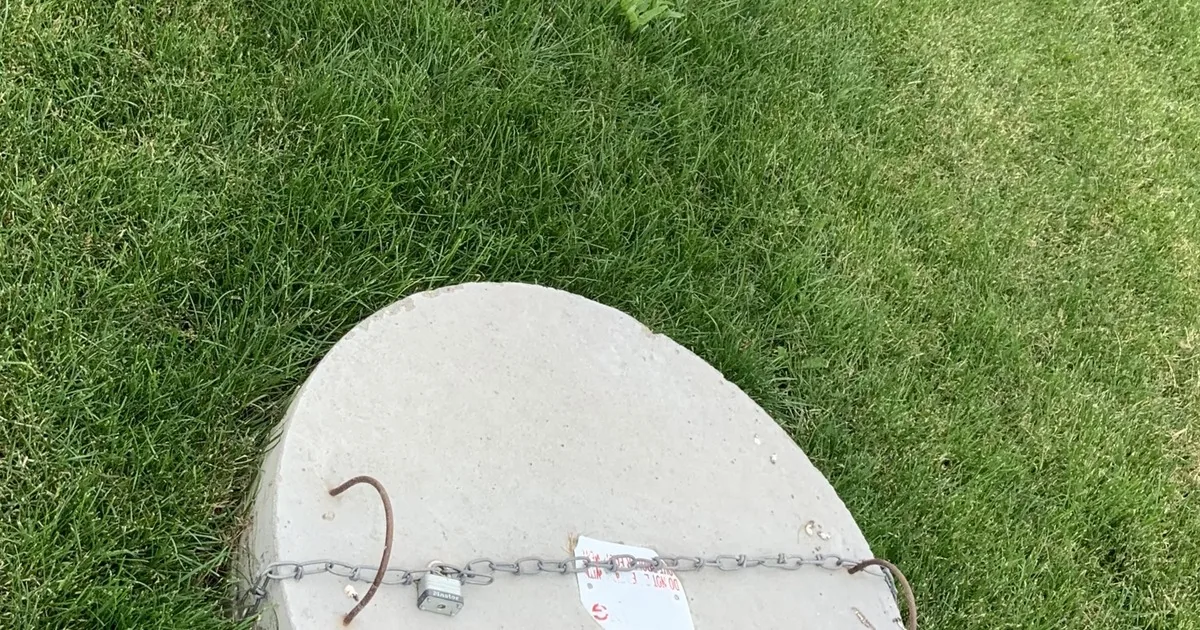
A homeowner calls after finding a renewal card in a kitchen drawer. “Does this cover pumping if the alarm goes off?” The office can answer only after opening the agreement and identifying the system at that address.
A sound signup call starts with the installed system and any permit or manufacturer requirements. Then explain the visit frequency, work included in the base price, separately charged work, owner responsibilities, alarm response, reports, term, renewal, and cancellation. State how added work gets approved. Never compress all of that into “we take care of everything.”
That phrase creates trouble later. The customer hears free repairs and automatic emergency service. The contract may promise two inspections and a report.
Start with the system, permit, and service history
Ask for the service address before describing the plan. Pull the customer record, permit, as-built drawing, installation documents, previous reports, and equipment notes. If the property is new to your company, gather what the owner has and mark every unknown for field confirmation.
The first intake question should be: “Do you know whether you have a conventional tank and drainfield, or a system with a pump, aerator, control panel, alarm, disinfection unit, drip field, or spray equipment?” Most callers will not know the formal name. Ask what they can see without directing them to open a tank or touch electrical equipment.
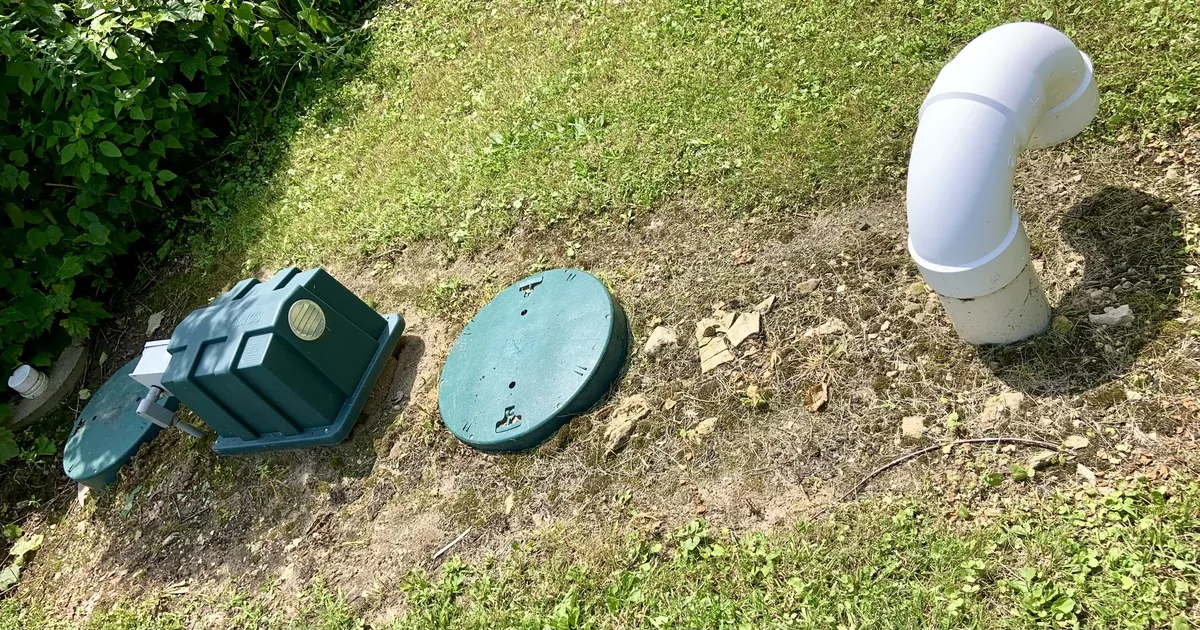
Useful observations include a control panel on the house, an alarm light, more than one access cover, an aerator sound, spray heads, a pump chamber, and labels on installed equipment. Photos of the panel face and equipment labels can help. The technician still confirms the installed system.
This distinction controls the rest of the call. The U.S. Environmental Protection Agency says a typical household system should generally be inspected at least every three years, while alternative systems with pumps, float switches, or mechanical parts generally need annual inspection. Pumping for a household tank commonly falls within a three-to-five-year range, but household size, wastewater volume, solids, and tank size affect the actual need.
Those are national care guidelines, not a universal contract schedule. The permit, local authority, system designer, manufacturer instructions, and your written agreement may set different duties. NC State Extension notes that some advanced systems require a certified operator under state rules. Ask which jurisdiction issued the permit and whether the owner already has an operating permit, required reports, or an expiring provider agreement.
Translate the agreement into work the customer can picture
A customer hears “maintenance” and may imagine pumping, emergency repairs, parts, inspections, testing, and every future visit. The office should use the contract’s nouns and verbs.
Texas A&M AgriLife Extension separates monitoring, operation checks, maintenance, reporting, repair, replacement, and troubleshooting. Its homeowner contract guide says the agreement should identify service frequency, base services, extra-charge work, included parts, excluded activities, owner duties, complaint response, disinfection responsibility, and approval for added charges.
For each plan line, say what the provider does and what record the owner receives. “Two scheduled inspections” is clearer than “routine coverage.” “We inspect the control panel and document its condition” is different from “all electrical repairs are included.” If a filter cleaning, chlorine supply, laboratory sample, permit report, pumping visit, or emergency call carries a separate charge, say so before enrollment.
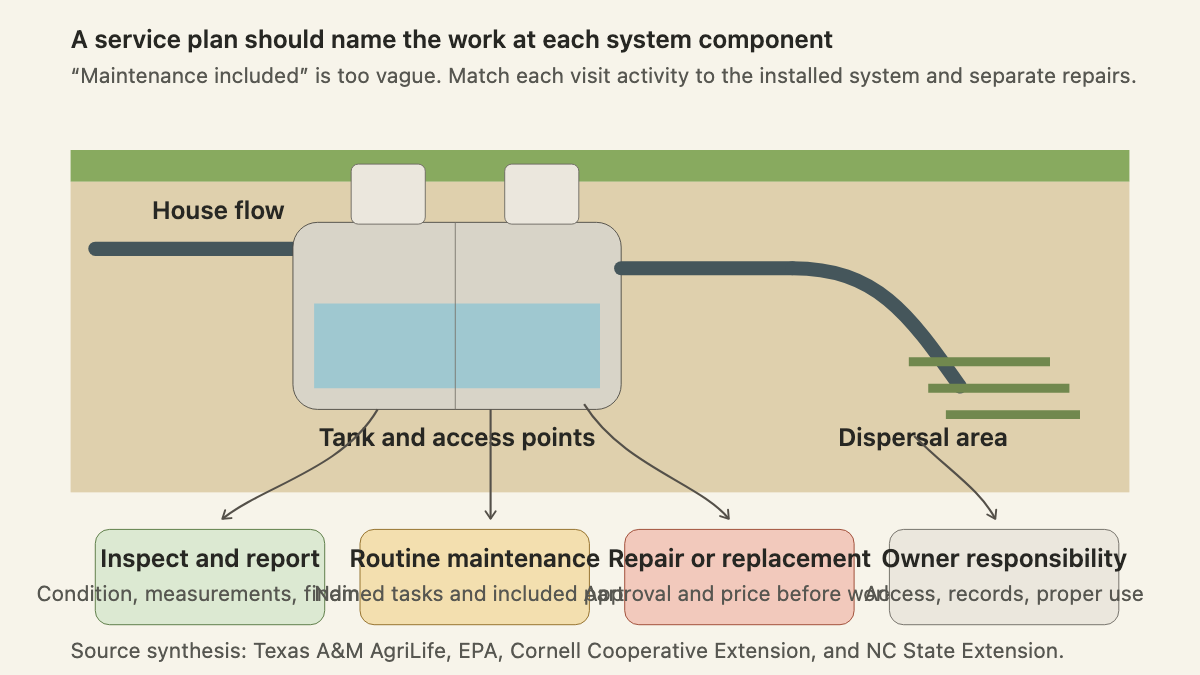
The cleanest explanation follows the wastewater path. Start at the building and move through the tank or pretreatment equipment, pumps or controls, and final dispersal area. Name the activities covered at each point. Then name the boundary where inspection ends and separately approved work begins.
A practical call record should capture:
- system type and known components, plus the source of that information
- permit authority, required visit or reporting terms, and any deadline the caller reports
- visit frequency and the activities included during each visit
- parts, supplies, pumping, testing, repair labor, and emergency calls included or excluded
- owner duties for access, gates, pets, vegetation, water use, disinfection supplies, and record retention
- the method used to request and authorize added work
- complaint and alarm contact instructions, response terms, agreement dates, renewal, cancellation, and transfer terms
Do not improvise when the caller asks, “Would a new pump be covered?” Read the repair clause. If the answer depends on the failed component, diagnosis, warranty, or selected plan, say that a technician must identify the work and the office will follow the agreement’s approval process.
Give every obligation its own clock
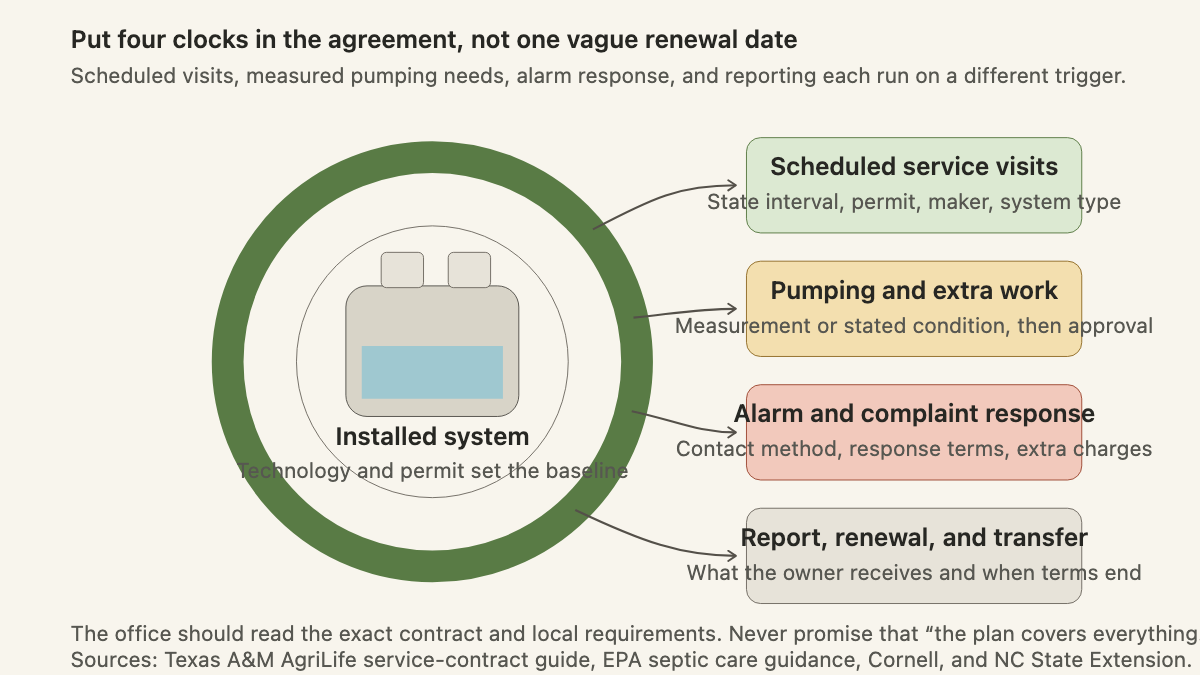
One annual renewal date tells the customer almost nothing about when service happens. A useful explanation separates scheduled visits, condition-based work, alarm response, and records.
Scheduled visits follow the written frequency. Confirm whether the company schedules them automatically, contacts the owner first, or expects the owner to call. State the access window and whether someone must be present. If missed access leads to a return-trip charge, the customer should hear that during signup.
Pumping often has another trigger. EPA guidance tells owners to keep sludge and scum measurements and service records because those findings help determine when pumping is needed. A plan may include tank inspection while charging separately for pumping. Another may include a defined pumping service. Read the clause and avoid converting an inspection interval into a pumping promise.
Alarm and complaint response runs on a third clock. Give the approved contact method, covered hours, expected response terms in the agreement, and how an extra visit is charged. An alarm does not identify the failed component. If sewage is backing up indoors or wastewater is surfacing, use the urgent route in the septic alarm call guide, not the routine plan-enrollment script.
Reports and renewal have their own dates. Explain whether the customer receives a field report after each visit, whether the provider submits required information to an authority, and what the owner must retain. Cornell Cooperative Extension recommends keeping inspection, pumping, repair, tank, and contractor records. The caller should know where those records will arrive and whom to contact when a name, email address, property owner, or mailing address changes.
Quote the plan without inventing coverage
Keep a current approved summary beside the full agreement, but treat the signed terms as the authority. Old price sheets and prior versions create confident mistakes. The office should identify the plan name, term dates, base price, payment schedule, taxes or filing fees if applicable, and every selected option.
When a customer compares two plans, compare named work. A lower-priced monitoring plan may cover testing and reporting while leaving maintenance to the owner. A broader agreement may add operation checks or routine maintenance. The words used by providers differ, so the label alone proves little.
Use a direct explanation:
“Our plan includes the scheduled visits listed here, the inspection and routine tasks named for your system, and the report after each visit. Pumping, repair parts, and work outside that list are handled under these separate terms. We ask for approval through this contact before chargeable work begins. Alarm calls use this number and follow the response section of the agreement.”
Then pause. Ask the customer to explain back which visits are included, whether pumping is included, and how added repairs are approved. This is a useful accuracy check, not a sales trick.
Finish with a serviceable enrollment record
Before taking payment or sending a signature request, confirm the legal property owner or authorized signer, service address, billing contact, onsite contact, email, phone, gate instructions, pets, access covers, panel location, and any tenant or property-manager arrangement. Record the effective date and the status of the prior agreement. Never assume a contract transfers with a home sale.
If the system type, permit requirement, or previous service record is missing, set the next step your company actually supports. That might be a records request, site assessment, or technician review before final plan selection. Do not force an unknown system into a familiar plan because the customer is ready to pay.
The same rule applies to a caller who only wants a pump-out. Use the septic pumping call intake guide to qualify that visit, then discuss ongoing service after the immediate scope is clear.
An AI receptionist can capture the system, permit, access, and contact fields after hours, but the approved agreement and company policy must supply every coverage answer. The best final note is plain: “Customer selected Plan B for the listed aerobic system, pumping and repair parts are separate, added work requires approval by text to the owner, and the first inspection is scheduled for October 14.” The technician, office, and customer can all work from that sentence.