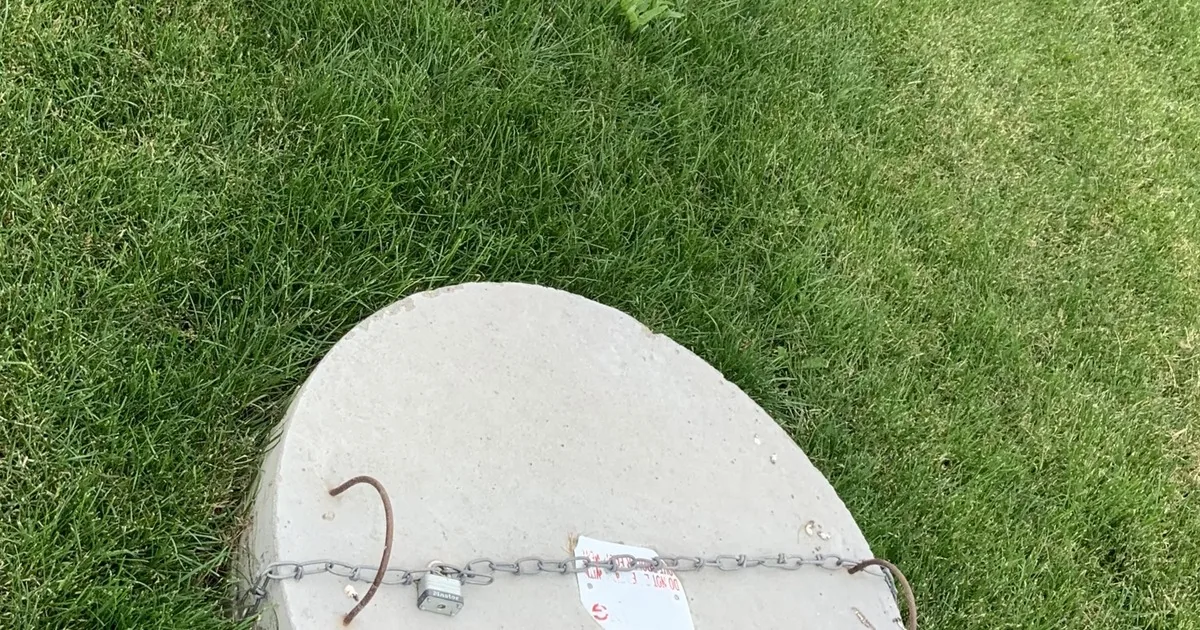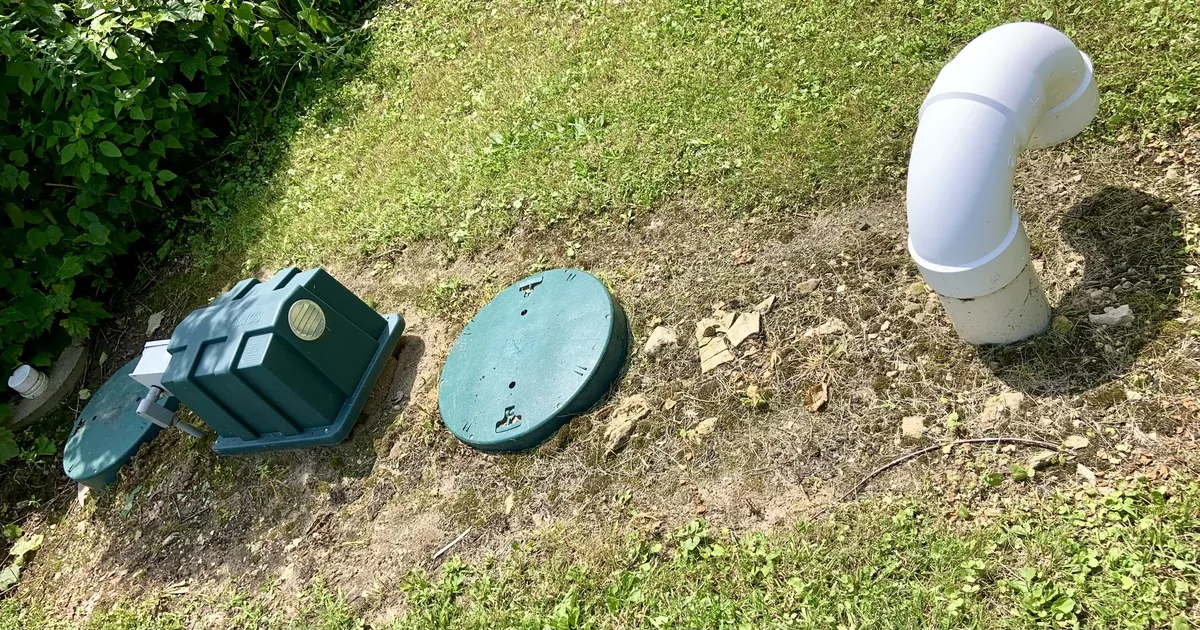
Hero photo: Dwight Burdette, CC BY 3.0, via Wikimedia Commons.
A homeowner calls and asks, “How often should I pump my septic tank?” The useful first answer is short: the U.S. Environmental Protection Agency says household septic tanks are typically pumped every three to five years. Then the office needs to qualify that range. Tank size, household size, wastewater use, solids load, system type, inspection findings, and local rules can all change the next service date.
That distinction matters. Three to five years is a sound opening range for a typical household tank. The range cannot diagnose the tank under this caller’s yard. A good intake turns the general question into the right appointment: routine pumping, an inspection, a records check, or faster handling for active symptoms.
Give the range, then ask for the record
Start plainly: “Many household tanks are pumped every three to five years, but the right timing depends on your system and how it is used. Let me get a few details.” This gives the caller a real answer without pretending the office can see underground.
The last service record is the best next fact. Ask when the tank was last pumped and whether the caller has the service report. A useful report may identify the tank capacity, system type, condition, repairs, and measured sludge or scum levels. The EPA recommends keeping maintenance records, including levels recorded by the service professional.
If the owner says, “We bought the house four years ago and have no idea,” do not convert four years of ownership into four years since pumping. Ask whether the closing file included an inspection, a pump receipt, an as-built drawing, or a maintenance agreement. The local health or environmental department may hold permit and design records. The appointment may need to begin as an inspection or record-based evaluation if the history remains unknown.
This is narrower than a full pumping and backup call intake. The caller came for a frequency answer. Keep the call centered on the facts that make that answer more accurate.
Record what has changed since the last pump-out
A date by itself is weak evidence. The same tank can accumulate solids at a different rate after the household changes.
Ask how many people live at the property now and whether that number changed since the last service. Record full-time occupancy separately from frequent guests or a seasonal pattern. Then ask about water use that has changed materially: an added bathroom, a new tenant, repeated large laundry days, or a running fixture that was recently repaired. Reception does not need to estimate gallons. The field team needs the change.
Kitchen habits belong in the note too. The EPA says garbage disposal use adds food solids and can increase pumping frequency. A caller who added a disposal after the previous pump-out has supplied a meaningful service fact, even if nobody can calculate an exact new interval over the phone.
System type is another fork. A conventional gravity tank and drainfield usually follow a different maintenance plan from an alternative system with pumps, float switches, or mechanical treatment components. EPA guidance says those alternative systems should generally be inspected more often, often once a year. Ask whether the property has an alarm panel, pump tank, aerobic treatment unit, maintenance contract, or required inspection schedule. If the caller is unsure, record that uncertainty and ask for a photo of the control panel or the last service report under company policy.
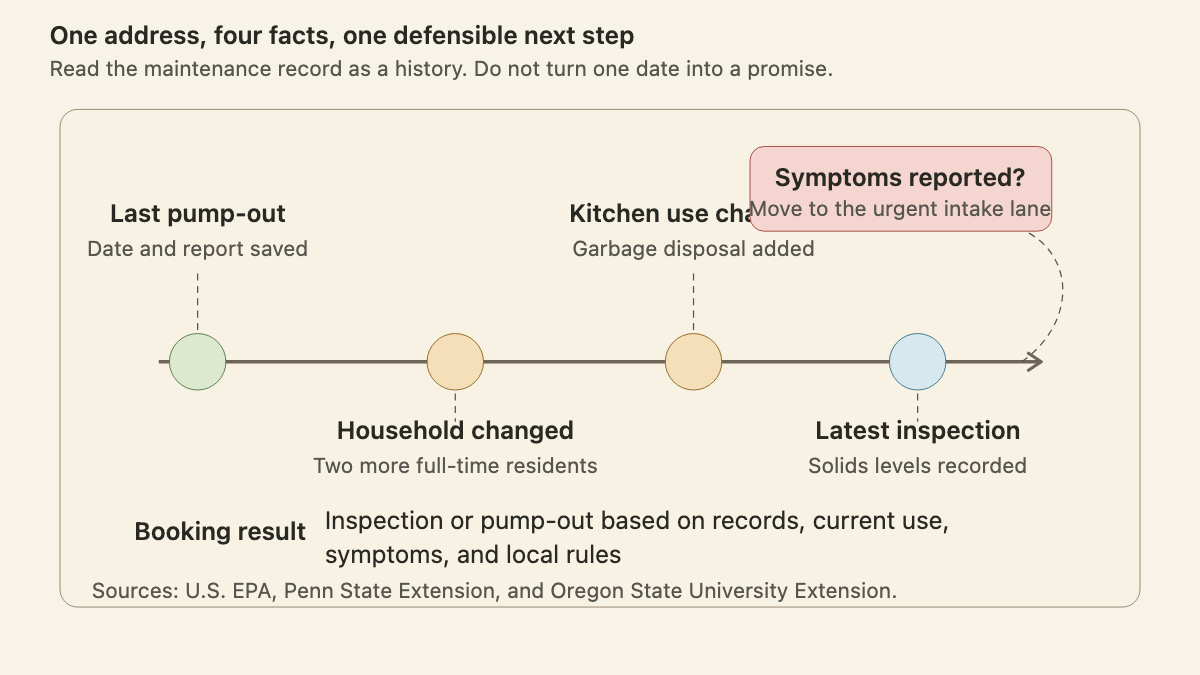
A compact intake for the ordinary frequency call should capture:
- property address and jurisdiction
- date of the last pump-out and any inspection report
- known tank size and system type
- current household size and meaningful occupancy changes
- garbage disposal use and major water-use changes
- local notice, permit condition, or maintenance-contract deadline
- current backup, drainage, odor, alarm, or wet-ground symptoms
- tank-lid location and access notes if service is booked
That list gives dispatch something better than “customer thinks it is due.”
Let the tank measurement sharpen the schedule
The calendar is a screening tool. The tank itself holds the property-specific evidence.
Inside a conventional septic tank, heavier solids settle into sludge, lighter material forms a scum layer, and liquid occupies the space between them. The outlet tee or baffle helps keep those solids from leaving for the drainfield. Over time, the working liquid space shrinks as sludge and scum accumulate.
During service, a septic professional can inspect the tank and measure those layers. EPA guidance says pumping is indicated when the bottom of the scum layer is within six inches of the bottom of the outlet, when the top of the sludge is within 12 inches of the outlet, or when sludge and scum exceed 25 percent of the liquid depth. Penn State Extension also describes inspection findings as a pumping trigger and notes that local schedules may apply.
Those measurements explain why a responsible office avoids telling every four-person household with a 1,000-gallon tank to use the same interval. Published schedule tables can help frame a conversation, but they rely on assumptions about year-round use, flow, tank capacity, and solids accumulation. Oregon State University Extension labels its table as estimated pumping frequencies. Treat it that way.
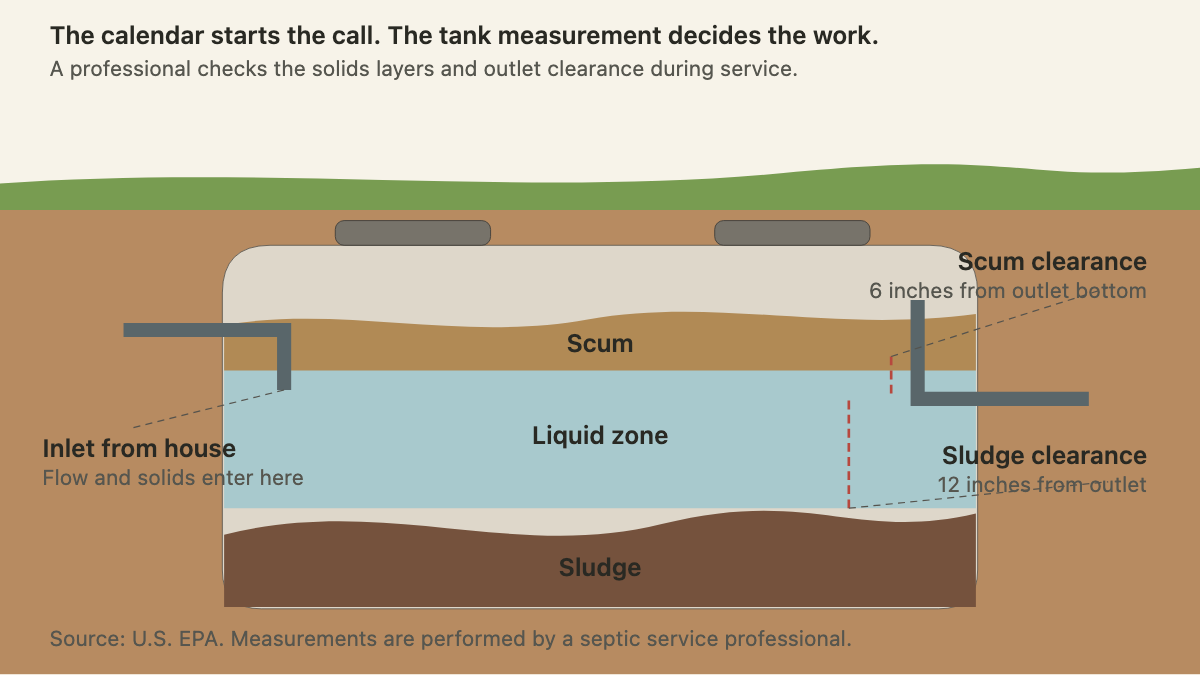
The service report closes the loop. Save the date, tank condition, measured levels, repairs, and the professional’s recommended follow-up. When the owner calls again, the office can answer from that property’s history instead of restarting with a generic range.
Move active symptoms out of the maintenance lane
Some callers ask about frequency because something changed this morning. “It has been about four years” may be followed by “and now the downstairs shower gurgles when we flush.” That is a symptom call.
Ask early whether wastewater is backing up, drains are unusually slow, plumbing is gurgling, an alarm is sounding, sewage odor is present, or the ground near the tank or drainfield is wet or spongy. The EPA lists those observations among common signs associated with a failing system. They do not prove that a full tank is the cause. Pumping alone should never be promised as the fix.
Route active conditions under the company’s urgent-call policy. Capture which fixtures are affected, when the change started, whether wastewater has surfaced, whether people or pets could contact it, and whether the alarm is active. The field professional decides what inspection and service are required.
Keep safety boundaries firm. Nobody should enter a septic tank. Oregon State University Extension warns that toxic gases and oxygen deficiency can kill within minutes. Reception should never coach a homeowner to open, enter, lean into, or work inside a tank. Lid access and digging questions before pumping are planning details for trained service personnel.
Check the address before promising a maintenance date
Septic requirements are local. States, tribes, counties, and municipalities may set inspection, reporting, or pumping rules for individual systems. A real-estate transaction, operating permit, alternative treatment unit, or local maintenance program can create a deadline that differs from a general household recommendation.
Ask for the service address and the wording on any notice. Do not interpret a county letter from memory. Record the issuing authority, due date, permit or parcel number, required service, and whether the owner has an approved provider list. Then verify the current rule through the appropriate local source or route the question to someone who does.
Price and scope also need the address. Distance, lid access, buried covers, hose reach, tank size, disposal fees, and inspection requirements can change the job. The office can explain its diagnostic or pumping fee once it knows what appointment it is actually quoting.
Write the note so the technician can act on it
A weak work order says, “Due for pumping, customer thinks five years.” A field-ready note preserves the evidence and the gaps:
“Owner purchased property in May 2022. Last pump date unknown. Closing file has a 2022 inspection but no pump receipt. Four full-time residents now; two lived there at purchase. Garbage disposal added in 2024. Conventional system according to owner, capacity unknown. No backup, alarm, odor, slow drains, or wet ground reported. Green riser visible beside rear patio. County notice not involved. Booked inspection with pump-out authorization if field findings support it.”
That note does not pretend to know the tank condition. It tells the technician what changed, what documents exist, what symptoms were screened, and where access begins.
A consistent phone workflow can be handled by a trained receptionist or an AI receptionist after hours. The standard should stay the same: give the supported range, collect the property history, screen for symptoms, and leave the physical determination to the septic professional. The next call then starts with a dated service report, measured levels, and an interval tied to one actual tank.