The closing folder is still on the kitchen counter when a new owner calls: “We have septic now. What are we supposed to do?” There may be an inspection report in the folder, an old pumping receipt in a drawer, and a white pipe somewhere in the yard. The caller wants a schedule. The septic office first needs a property file.
A useful orientation call should establish five things early: whether there is an active problem, which records survived the sale, what system type is documented, where the service areas are believed to be, and who can authorize and provide access for a visit. Do that work once. Every later pumping, alarm, inspection, and repair call becomes easier to route.
Separate a routine orientation from an active problem
Start with the present tense. Ask whether toilets or drains are backing up, several fixtures are slow or gurgling, an alarm is sounding, sewage is visible outdoors, or a strong sewage odor has appeared inside. A caller who says, “Everything seems fine” belongs in the orientation path. Active wastewater, an alarm with symptoms, or an exposure concern belongs in the company’s urgent routing process.
The office should not diagnose the cause over the phone. It should also avoid asking the owner to open a tank, remove a lid, probe the yard, enter a wet area, or handle wastewater. Clemson Cooperative Extension warns that septic systems can contain noxious fumes, confined spaces, and other hazards. Inspection and maintenance belong with qualified professionals.
If the issue is tied to a sale deadline or unresolved inspection finding, route it through the pre-sale septic inspection workflow. An orientation call begins after the keys change hands and creates the baseline for ownership.
Build the property file from documents first
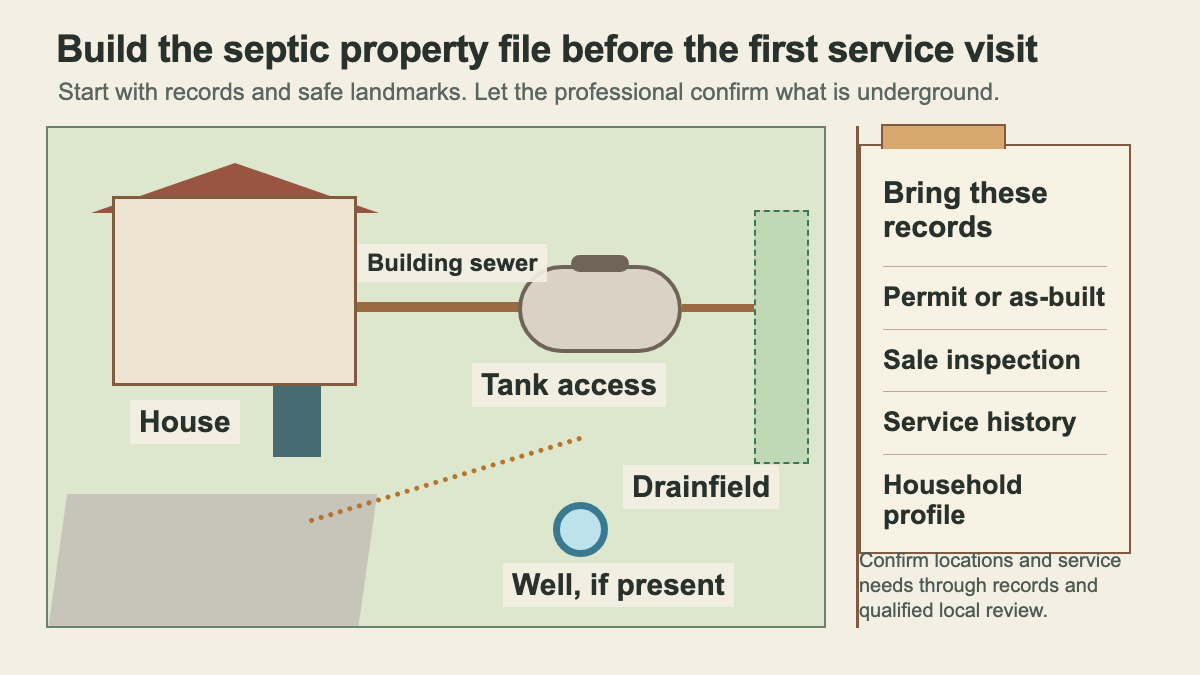
Ask the caller to gather the purchase documents before trying to describe the yard. The best starting item is often a septic permit, as-built drawing, site plan, or inspection report. Names vary by jurisdiction. The document may identify the tank, drainfield, distribution components, system type, installation date, design capacity, well, replacement area, or service access.
The EPA’s new homebuyer guidance covers how a septic system works, why inspection matters before purchase, and what everyday and preventive care looks like after moving in. That makes the sale inspection report useful, but it does not turn the report into a warranty. Record the inspection date, who performed it, what the stated scope covered, and any limitations or recommendations.
Then look for service history. A pumping invoice can provide the contractor, service date, tank location notes, access method, and observations. Repair permits may identify replaced components. An alarm panel label may show a service company or system model. Keep facts tied to their source. “Seller said it was pumped last spring” should remain a caller-reported statement until a receipt or contractor record confirms it.
A good office record preserves the files themselves, not a receptionist’s compressed interpretation. Attach the drawing and inspection report if the company’s system allows it. Record the agency, contractor, document date, and page that supports each key detail.
Map safe landmarks without sending the owner digging
Once the documents are open, ask the caller to orient the plan to the house. Which wall does the building sewer leave? Where does the drawing place the tank and access? Which part of the lot is marked as the drainfield? Is there a private well, reserve area, pump chamber, control panel, or visible riser?
Treat every location as provisional until it is confirmed by records and qualified field review. Old drawings can be incomplete. Landscaping changes. Additions, patios, fences, sheds, driveways, and grading can alter access or hide earlier landmarks. A neighbor’s tank location proves nothing about this property.
The owner can describe what is visible from normal, firm footing: riser covers, panel lights, fences, gates, parked vehicles, slopes, soft ground, retaining walls, pets, and the route a service vehicle might use. Photos can help when company policy permits them. No photo should require opening equipment or crossing a suspect wet area.
Tank location and service access are different facts. A tank may be shown on a drawing while the opening remains buried, blocked, damaged, or difficult for a hose to reach. The tank location and digging intake guide covers that narrower appointment in detail.
Explain the system in plain language
A new owner does not need a wastewater engineering lecture. A short explanation is enough: household wastewater flows to the tank, where materials separate; liquid then moves to a drainfield or another treatment component; soil or treatment media completes much of the process. Alternative systems can include pumps, floats, controls, treatment units, or alarms that need their own service plan.
Use the documents to name the actual system. If the records say “conventional gravity,” “mound,” “aerobic treatment unit,” “pressure distribution,” or another design, copy the wording accurately. If no one knows, record “system type unknown” and let the inspection resolve it. Do not infer a design from a lid, panel, or yard shape.
The same restraint applies to capacity. Bedroom count, occupancy, and water use can help the service provider understand demand, but the office should not invent tank size or design capacity. Ask how many people live there, whether the property is full-time or seasonal, and whether it has a garbage disposal, water softener, large tub, frequent guests, or a known running fixture. These details support a professional recommendation later.
Give the owner four protection rules
The first call should leave the owner with a few actions that are safe across ordinary systems. EPA care guidance groups maintenance around inspection and pumping, efficient water use, proper waste disposal, and drainfield protection.
Keep the advice concrete:
- Do not drive, park, build, or place heavy equipment over the tank or drainfield. Ask a qualified local professional before changing the area.
- Keep roof drains, sump discharge, and other concentrated stormwater away from the drainfield.
- Flush human waste and toilet paper. Keep wipes, grease, paint, solvents, medicines, and other unsuitable material out of drains and toilets.
- Spread high-water-use work when practical, fix leaks, and call when backups, alarms, surfacing wastewater, or persistent sewage odors appear.
Avoid turning those points into a promise that careful use prevents every failure. Age, design, soil, installation, damage, weather, maintenance, and household load can all affect a system. The owner’s job is to protect the area, keep records, and report changes. The professional’s job is to inspect and recommend service.
Set a maintenance baseline without guessing
New owners often ask, “How often should we pump it?” The wrong answer is a calendar interval delivered before the office knows the property. EPA lists household size, total wastewater, solids volume, and tank size among the factors that affect pumping frequency. Alternative systems with mechanical parts may need a different inspection cadence.
Start with the last documented inspection and pumping date. Add the system type, occupancy, known tank details, prior findings, and local requirements. Then schedule the appropriate first visit under company policy. The dedicated guide to septic pumping frequency calls explains how to answer without substituting elapsed time for an inspection.
Local rules belong in the record too. Ask which county, municipality, tribe, district, or health authority has jurisdiction. The office can check permit files, required service contracts, reporting rules, and approved provider requirements after it has the exact address. Never promise that a transfer inspection, seller disclosure, or old permit satisfies the current local process.
Finish with one clean orientation note
The completed note should identify the caller and property, ownership or authorization status, current symptoms, document list, last confirmed inspection and pumping dates, documented system type, believed tank and drainfield locations, well or reserve area if shown, occupancy, water-use facts, alarms or mechanical components, gates and access limits, pets, and the agreed next step.
Read back the uncertain items. “I have the tank location from a 2019 permit drawing, the last pumping date from a 2023 invoice, and the system type is still unconfirmed” is far better than “We have everything.” The distinction tells the technician what can be trusted before arrival.
An AI receptionist can collect these fields after hours and place the documents in the right queue, but the record design matters more than the answering tool. Months later, when an alarm sounds or the owner books routine service, the office should see the property clearly without asking the family to reconstruct closing week again.