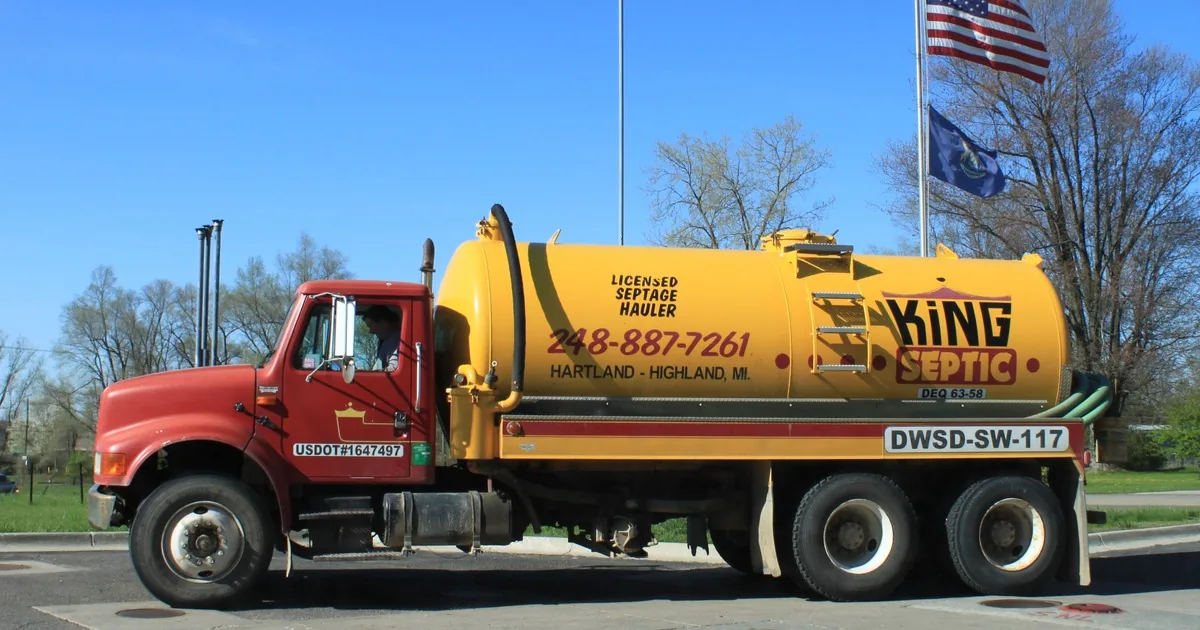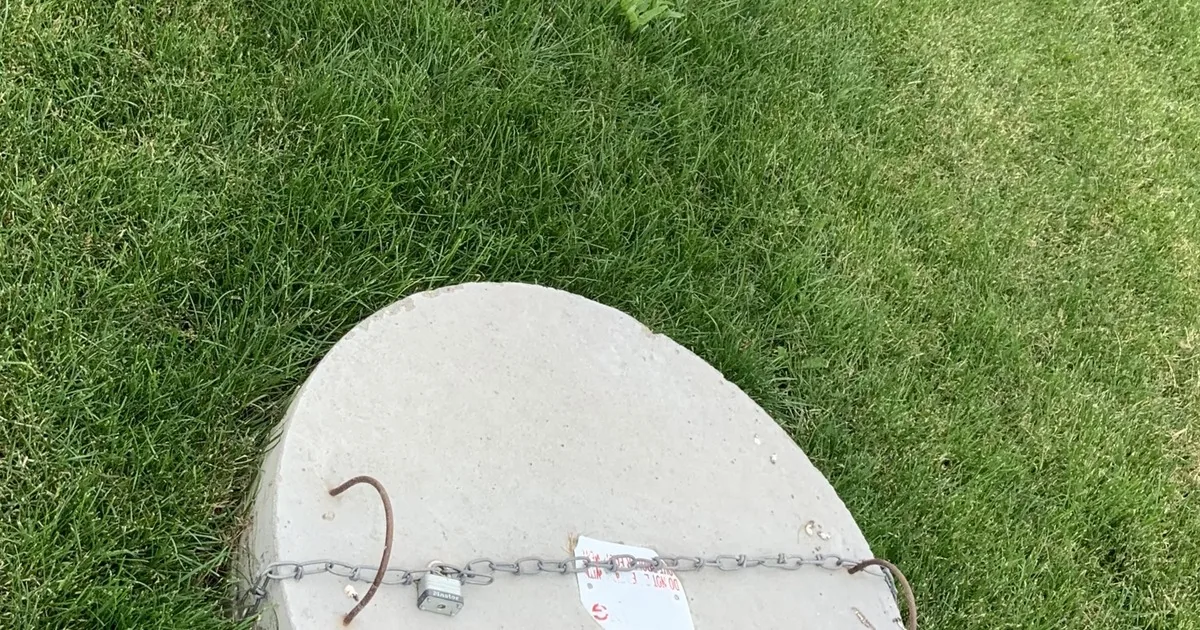
A homeowner calls and says, “I want one of those green lids so nobody has to dig up the yard next time.” That sounds like a simple product request. It may be. But the office still needs to know which tank opening is buried, how deep it sits, whether the tank has one access point or several, and what stands between the driveway and the work area.
A good intake does not try to design the installation by phone. It collects enough evidence to choose the right next step: a site assessment, a riser installation visit, pumping plus assessment, tank location work, or urgent service for an active septic problem.
First, find out what the caller means by “riser”
Homeowners use several terms for septic access. One caller may mean a new extension that brings a buried tank opening to grade. Another may be asking for a replacement lid on an existing riser. A third has never seen the tank and wants the crew to find it, uncover it, pump it, and add easier access during the same visit.
Open with a plain question: “What are you hoping will be easier after this work?” Then record the answer in the caller’s own words.
The next questions should separate an access upgrade from a service problem:
- Is there an existing lid or riser visible at the surface?
- Is any cover cracked, loose, missing, sunken, or exposed?
- Is the request connected to a pumping appointment, inspection, property sale, alarm, slow drains, backup, odor, or wet ground?
- Has another contractor already uncovered the tank or recommended risers?
- Does the caller want a quote, an assessment, or installation during a scheduled service visit?
A backup, surfacing sewage, unstable cover, or active alarm belongs in the company’s urgent routing policy. Use the separate guide for septic alarm calls. A riser does not repair a failed pump, damaged tank, blocked line, or saturated drainfield.
Pull the record drawing before anyone guesses
The strongest first artifact is often the as-built drawing or septic permit record. The U.S. Environmental Protection Agency notes that local health or environmental departments commonly hold septic records, design drawings, and permits. Those documents may show tank location, system type, installation date, and component layout.
Ask whether the caller has any of the following:
- An as-built or record drawing
- A permit or inspection report
- A recent pumping invoice with tank notes
- Photos from the last time the tank was uncovered
- A property survey or sale inspection packet
- The installer or tank manufacturer’s information
Records can be wrong, incomplete, or outdated after landscaping and renovations. Treat them as a starting point. They still give the technician more than “somewhere behind the garage.”
If no records are available and the tank location is unknown, create a tank-location or assessment task under company policy. Do not turn a riser quote into an improvised promise to locate, excavate, inspect, and install for one fixed price.
Record the opening, depth, and tank clues
A caller may safely describe what is already visible. The office should never ask someone to remove a cover, lean over an opening, probe near buried utilities, or enter a tank. Penn State Extension’s septic tank pumping guidance gives the boundary in blunt terms: never enter a septic tank because the gases can kill.
For visible or previously documented access points, collect:
- How many lids or openings are known
- Whether each opening appears round, square, or rectangular
- Approximate dimensions from an old invoice or safe surface measurement
- Whether the current lid is at grade, above grade, or buried
- Approximate soil depth over the tank, if a prior contractor recorded it
- Tank material and age, if known
- Whether a pump chamber, treatment unit, or distribution box is also present
- Any cracking, settlement, water intrusion, corrosion, or damaged concrete noted during prior service
The office is collecting clues, not selecting a kit. Clallam County Environmental Health’s access-riser guidance shows why: opening shapes vary, some installations need adapter plates, riser height follows the measured depth, and different tank configurations can require more than one access point.
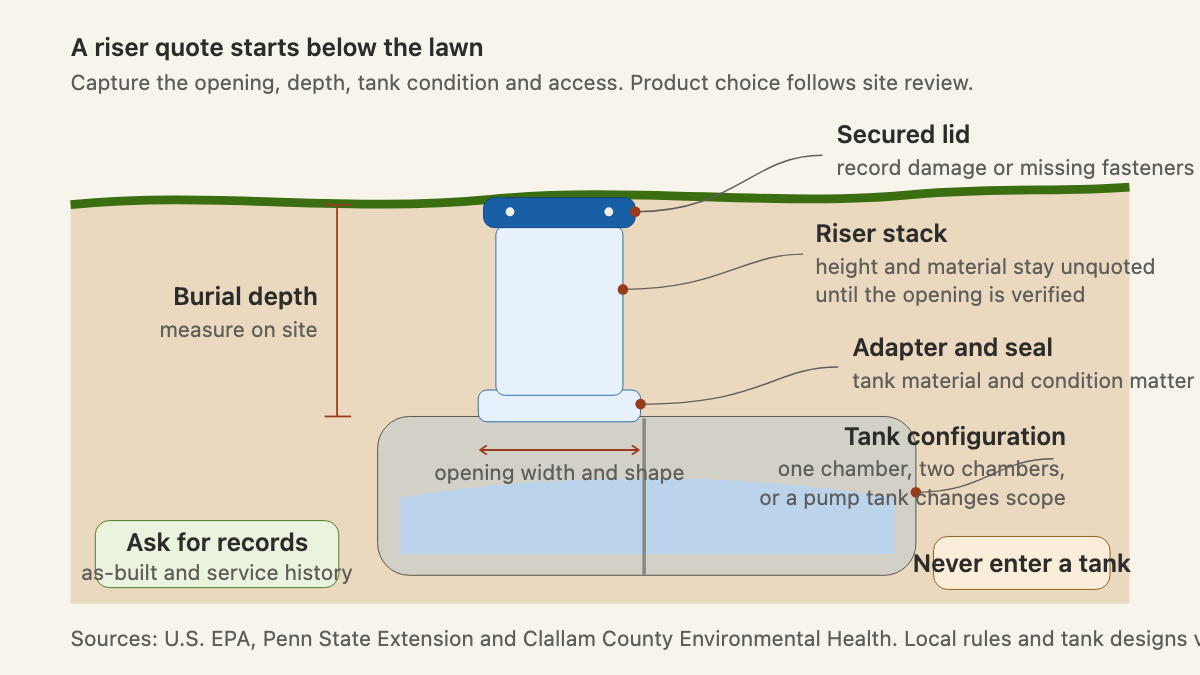
A useful call note might read: “Owner wants surface access before the next pump-out. Two round green lids are visible near the rear patio, but one lid sits below surrounding grade. Tank material and opening size unknown. Last service invoice says two-compartment concrete tank. No backup, alarm, odor, or wet ground reported. Site assessment required before product and price are confirmed.”
That note gives the field technician a reason for the visit and a list of unknowns. It avoids a product promise based on a photograph.
Ask whether pumping and riser work should share a visit
Riser requests often arrive because the last pumping crew had to excavate buried lids. Ask when the tank was last pumped, who serviced it, and whether the company has notes from that visit.
Penn State Extension explains that septic tanks should be pumped through the central access ports used for cleaning, and recommends bringing access to the soil surface to make later service easier. This is the practical reason many owners want risers: future inspection and pumping access can begin at the lid instead of with a search and excavation.
The schedule still depends on company policy. Some septic businesses prefer to expose and inspect the tank before committing to riser materials. Some combine pumping, tank-condition review, measurements, and installation. Others split assessment and installation into separate visits.
Route the call according to that real workflow. If pumping is due or tank condition is unknown, link the request to the pumping and backup call intake guide. Record whether the caller authorizes pumping if the technician finds it necessary. Do not imply that pumping will correct a damaged access opening or a failing system.
Map the route to the tank
The tank may be easy to see and hard to reach. A narrow gate, retaining wall, new patio, steep slope, locked fence, parked trailer, irrigation line, or soft lawn can change the visit.
Ask where the service vehicle can park and how the crew reaches the tank from there. Record gate width if equipment must pass through. Note steps, slopes, fences, pets, children, landscaping, and any structure built near the access area. Ask whether the tank or drainfield lies under or beside a driveway.
The drainfield deserves its own line in the intake. EPA guidance warns against driving heavy vehicles over a drainfield because weight can compact soil and damage pipes. King County’s septic landscaping guidance also tells owners to keep vehicles, patios, sheds, and other obstructions clear of septic areas.
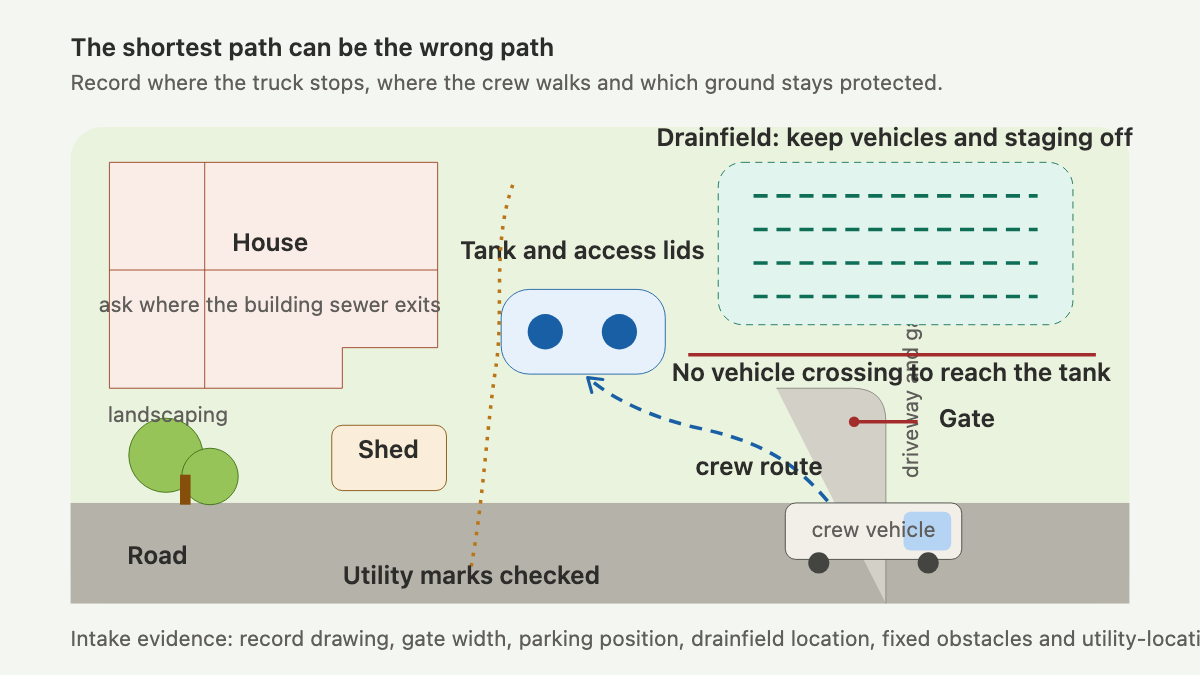
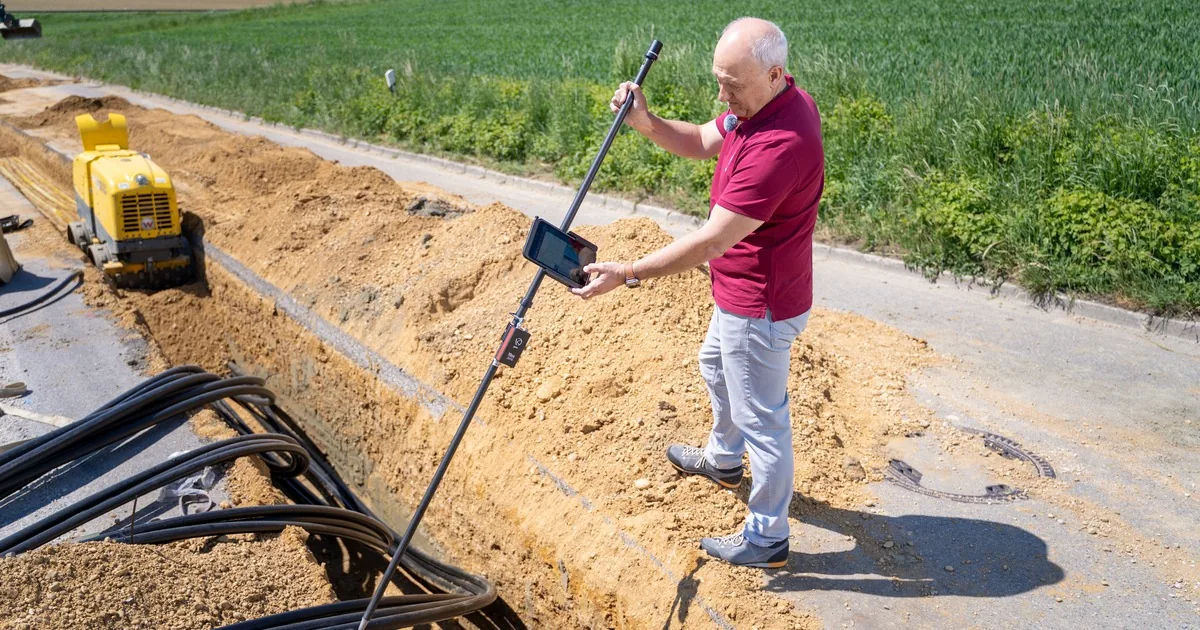
Ask whether underground utilities have been marked or whether the contractor handles that step. Requirements and responsibilities differ by location, so the office should follow its written policy. “The owner knows where the cable runs” is not the same as a completed utility locate.
Keep permit answers local
Riser, lid, and tank-access requirements vary by state, county, system type, and permit history. Some jurisdictions require surface access for certain systems or trigger an upgrade during another permitted action. Others handle a basic retrofit differently.
The office should avoid a national yes-or-no answer. Use one of two routes: verify the address against the company’s current service-area rules, or tell the caller which local health or permitting authority must confirm the requirement. For a property transaction, keep the riser request separate from the inspection deadline and authorization chain described in the septic sale inspection scheduling guide.
Record who will obtain any required approval and whether the quote excludes permit fees, repair work, pumping, tank location, landscaping restoration, or additional access points. The exact exclusions belong in the company’s estimate, not in a receptionist’s improvised explanation.
Build a dispatch note the crew can use
Before the call ends, the record should answer five practical questions: What does the owner want? What is known about the system? What can be seen safely? Can the crew reach the work area? What must be verified on site?
A concise dispatch note might say: “Riser assessment requested after last pump-out required excavation. County as-built attached. Concrete tank installed in 2004, two access locations shown; opening dimensions and burial depth unverified. Rear-yard access through 42-inch gate. Crew can park on driveway and walk equipment along east fence. Drainfield is beyond tank and marked on drawing; no vehicle crossing authorized. Owner reports no alarm, backup, odor, surfacing liquid, or damaged cover. Verify local permit requirements, tank condition, opening configuration, depth, lid security, and installation scope before quoting.”
That is enough to prepare the visit without pretending the phone call settled the job. If call coverage is the weak point, an AI receptionist can collect the same approved intake fields after hours and flag urgent symptoms for the right handoff. The policy still comes first. The last field should always remain open for what the technician finds under the soil.