The phone rings at 7:10 p.m. A homeowner says, “The red light is on and the alarm is screaming.” That sentence describes a warning, but it does not tell the septic office whether wastewater is backing into the house, surfacing beside the tank, or simply sitting above a control point in a pump chamber.
Ask about sewage first. If wastewater is backing up indoors, surfacing in the yard, or creating an immediate exposure, route the call under the company’s urgent policy. If the alarm is the only observed problem, reduce avoidable water use, collect the panel and property details, and arrange professional review. Reception should never identify a failed pump, float, panel, or drainfield over the phone.
That order matters. The alarm gets the caller’s attention. The conditions at the property set the route.
Ask about sewage before asking about the panel
Start with one plain question: “Is any sewage backing up inside or surfacing outside right now?” Then pause. A caller may have focused so completely on the buzzer that they forgot to mention a shower drain filling with wastewater.
The University of Minnesota Onsite Sewage Treatment Program lists sounding or flashing alarms among possible indicators of a failing or failed system. Its warning signs also include sewage backing into the house, water or sewage surfacing in the yard, and odors indoors or outdoors. The University of Maryland Extension identifies a sounding alarm on a pump system or treatment unit alongside slow drains, wet spots, backup, and foul odors.
These are observations, not diagnoses. They still give dispatch a useful first gate.
Ask the caller:
- Is wastewater coming up through a toilet, tub, shower, floor drain, or other low fixture?
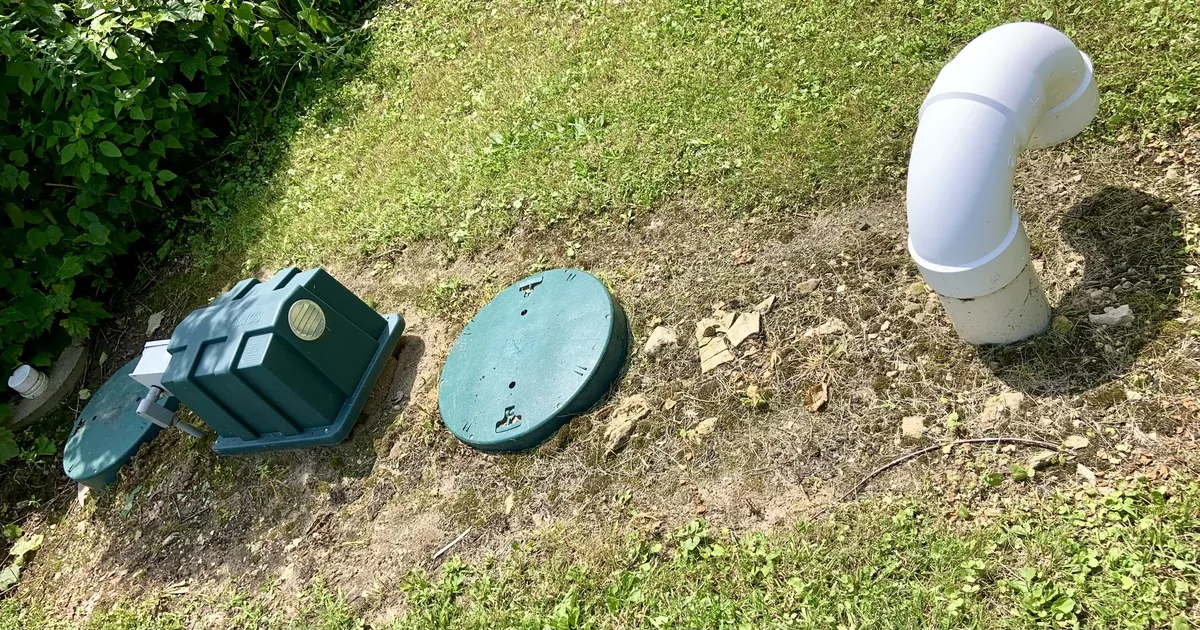
- Is there wet, spongy, or discolored ground near the tank, risers, treatment unit, or drainfield?
- Is liquid visibly surfacing, and can people or animals reach it?
- Is there a strong sewage odor inside or concentrated around a wet area outside?
- Are drains slow throughout the building, or is one fixture affected?
- Is the alarm sounding now, flashing only, or no longer active?
If sewage is present, tell the caller to keep people and animals away from the affected area and follow the company’s urgent routing policy. Do not ask anyone to lift a tank lid, reach into a panel, handle wastewater, or walk across saturated ground for a better description.
An alarm-only call still needs service review. It simply arrives with a different evidence set than a call involving active backup or surfacing wastewater. Make that distinction explicit in the dispatch note.
Record the signal without naming the failed part
Many alternative septic systems use pumps, electrical controls, and float switches. The EPA’s septic-system care guidance notes that systems with electrical float switches, pumps, or other mechanical components need professional inspection more often than a conventional gravity system. The exact panel and alarm behavior depend on what was installed.
Ask what the caller can see without opening anything. Useful details include the panel brand or model, the color and behavior of indicator lights, whether the audible alarm is active, and any words displayed on the panel. Request a photo of the closed panel if the company accepts images. A wide photo showing where the panel sits can help too.
Do not translate a red light into “bad pump” or a buzzer into “full tank.” A high-water condition can have more than one cause, and some treatment systems have alarms for conditions other than water level. The technician needs the installed-system record, field observations, and tests.
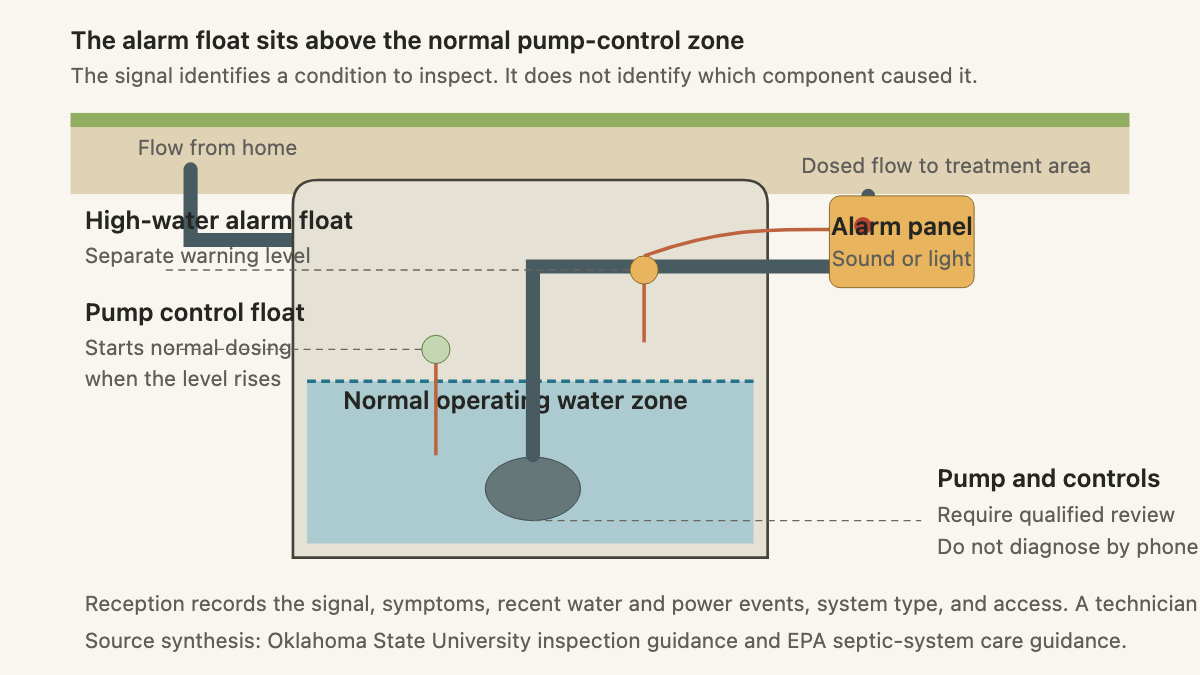
Oklahoma State University Extension’s inspection guidance describes separate floats for pump control, override operation, and a high-water alarm in relevant systems. Qualified inspectors test those parts. The front desk should preserve the evidence and leave the component conclusion open.
A clean panel note might read: “Audible alarm active at 7:10 p.m.; red light steady; green power light visible; caller sent closed-panel photo; system type unknown.” That is far more useful than “pump broken.”
Capture what changed before the alarm
Once immediate exposure has been ruled out, ask what happened during the previous day or two. You are looking for context the technician can test, not a cause reception can announce.
Record unusually heavy household water use, a running toilet, several loads of laundry, guests, recent plumbing work, heavy rain, flooding, a power outage, a tripped breaker, or recent septic service. Ask whether the alarm began during the event or later. If the property has a known treatment unit or pump chamber, capture that name from service records or the panel label.
EPA explains that all household water sent down the pipes reaches the septic system. Reducing avoidable water use while the condition is reviewed limits additional flow. The office can say, “Please avoid laundry, dishwashing, long showers, and other nonessential water use until we confirm the next step.” Do not promise that reduced use will clear the alarm or repair the underlying condition.
Power questions need careful wording. Ask whether the home lost power or whether the caller noticed a tripped breaker. Follow company policy on what, if anything, a caller may observe from a safe location. Reception should not coach someone through electrical testing, repeated resets, panel opening, or contact with wet equipment.
The same boundary applies to an alarm silence button. Muting a buzzer may stop the sound on some panels, but it does not resolve the condition that triggered the warning. Use the installed manufacturer instructions and company policy. Never improvise a universal reset sequence.
Build the dispatch note around the whole property
A useful alarm ticket combines five areas: current exposure, panel evidence, recent events, system identity, and access. If one area is missing, the technician may have to repeat the call before leaving the shop.
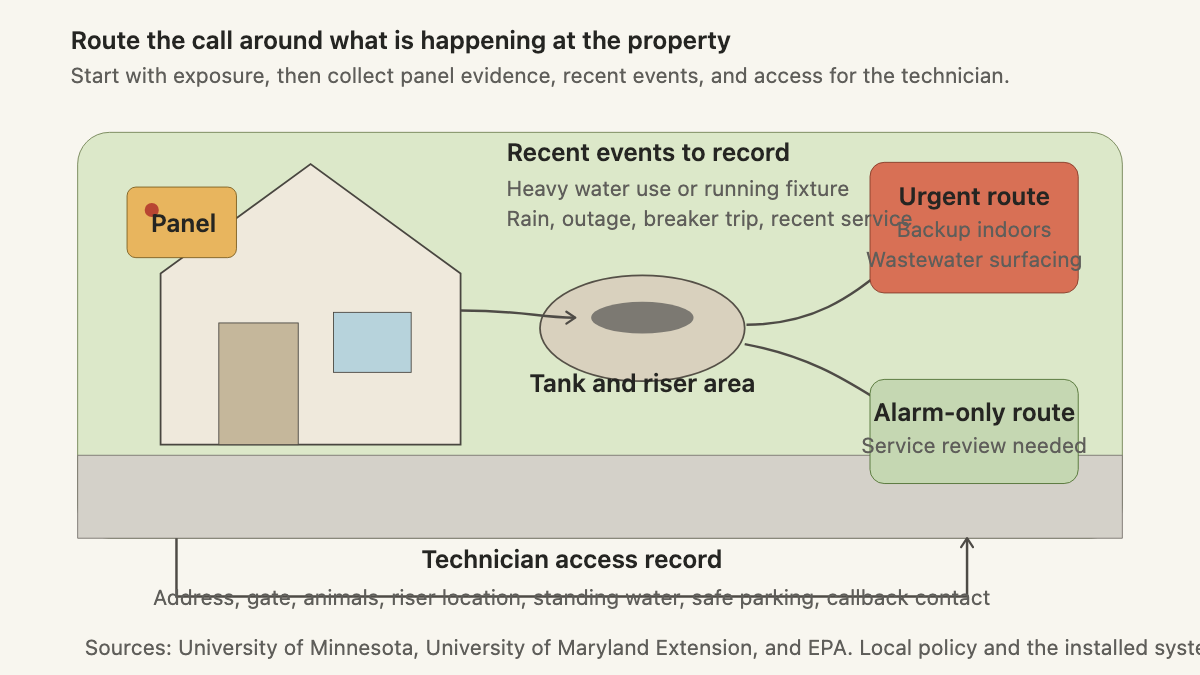
Confirm the full service address and the best callback number. Ask where the panel, tank, treatment unit, and visible risers are located, if known. Record gates, dogs, tenants, locked areas, soft ground, steep drives, low branches, and how close a service vehicle can park. A photograph of the yard can help, provided the caller takes it from a safe place.
Find out who is on site and who can authorize service. A tenant reporting an alarm may not be able to approve repairs. A property manager may need the homeowner’s authorization. Capture both contacts before dispatch.
If the caller has prior service paperwork, ask for the installer or maintenance provider, system type, last service date, and any maintenance agreement. This can matter for specialized treatment units. It also helps the office avoid sending a technician who does not service that equipment.
The handoff should state the route clearly near the top:
“Urgent: sewage backing into basement shower, keep occupants away, alarm sounding, technician callback requested.”
Or:
“Alarm only: no backup, no surfacing liquid, no strong odor, heavy laundry today, brief outage yesterday, reduced water use requested, panel photo attached.”
Both notes contain facts. Neither pretends the phone call found the failed part.
Keep alarm intake separate from pumping intake
A homeowner may assume the tank needs pumping because an alarm is active. Pumping may be part of the response in some cases, but the alarm does not prove that a routine pump-out is the complete answer. Book against the company’s alarm-service policy, system type, and technician review.
This narrower intake complements the broader guide to septic pumping and backup calls. The pumping page helps size routine service and identify active backups. Alarm intake adds panel state, float-and-pump context, power history, rainfall, treatment-system records, and the alarm-only route.
A sale-related call has another set of deadlines and authorization questions. Use the separate guide for septic inspections before a home sale when a buyer, seller, agent, lender, or county requirement drives the appointment.
Set the next expectation without promising a diagnosis
Tell the caller what will happen next in operational terms. The office might confirm that the on-call technician will review the note, that dispatch will call with availability, or that the alarm ticket has been placed in the urgent queue. Use only response times the company can honor.
Avoid phrases such as “It is probably only the float,” “You have plenty of time,” or “Pumping will fix it.” The installed system, current water level, cause, and safe response have not been established. Even two houses with similar panels can have different equipment and site conditions.
An AI receptionist can ask the same exposure-first questions after hours, request a closed-panel photo, and deliver a structured alarm ticket to the on-call team. Its job remains intake. The technician decides what the alarm means at that property.
The best final note gives the technician a picture before the truck moves: no sewage exposure or a clear description of it, exact panel behavior, recent water and power events, known system records, and a safe way onto the site.